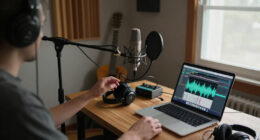
The Sennheiser HD 490 PRO is my best overall pick among the best studio headphones because its open-back design suits detailed mixing and long listening sessions. For recording where sound leakage matters, the beyerdynamic DT 770 Pro (80 Ohm) offers a closed-back fit, while the Audio-Technica ATH-M40x is a practical value pick for everyday studio work. The main choice is between open-back spaciousness and closed-back isolation, with comfort, source power, and replaceable parts also shaping the decision. No single tuning works equally well for tracking, editing, and mixing. Read on for the full comparison and the right fit for your studio.

Get the latest gadgets delivered free with Prime
- Fast, free delivery on millions of items
- Prime Video, Amazon Music and more included
- Member-only deals all year
Complete the kit


Key Takeaways
- The HD 490 PRO leads for open-back mixing: it is the broadest fit for detail-focused work, while the HD 560S and HD 600 offer alternatives with different listening priorities.
- Closed-back models are the practical tracking choices: the DT 770 Pro and DT 770 Pro X focus on isolation, while the ATH-M40x and SRH440A offer more compact studio options.
- Impedance affects setup compatibility: the DT 990 Pro’s 250-ohm design is a less straightforward match for weak headphone outputs than lower-impedance picks such as the DT 770 Pro X.
- Portable convenience and mixing neutrality are different goals: the ATH-M50x folds for easier transport, while open-back choices such as the DT 900 PRO X are better suited to quiet rooms.
- Entry-level picks involve tradeoffs: the ATH-M20x and ATH-M30x cover basic monitoring needs, but buyers seeking greater detail or longer-term flexibility may prefer stepping up to the ATH-M40x.
| Sennheiser HD 490 PRO Open-Back Professional Studio Headphones |  | Best for Detailed Mixing | Design: Open-back | Frequency response: 5–36,000 Hz | Ear pads: Two washable, replaceable sets for mixing and producing | VIEW LATEST PRICE | See Our Full Breakdown |
| Sennheiser HD 560S Open-Back Over-Ear Wired Headphones |  | Best Reference Pick for Beginners | Model: HD 560S | Type: Open-back over-ear headphones | Connectivity: Wired | VIEW LATEST PRICE | See Our Full Breakdown |
| beyerdynamic DT 770 Pro (80 Ohm) Closed-Back Studio Headphones, Black |  | Best for Recording and Tracking | Type: Closed-back, over-ear studio headphones | Impedance: 80 ohms | Ear pads: Replaceable grey velour | VIEW LATEST PRICE | See Our Full Breakdown |
| Sennheiser HD 600 Audiophile Open-Back Wired Headphones |  | Best for Amp-Driven Critical Listening | Design: Open-back, over-ear | Impedance: 300 ohms | Frequency response: 12–39,000 Hz | VIEW LATEST PRICE | See Our Full Breakdown |
| Audio-Technica ATH-M40x Professional Studio Monitor Headphones, Black |  | Best for One-Ear Monitoring | Driver size: 40 mm | Driver type: Rare-earth magnets with copper-clad aluminum wire voice coils | Design: Circumaural, around-ear | VIEW LATEST PRICE | See Our Full Breakdown |
| Audio-Technica ATH-M50x Professional Studio Monitor Headphones, Black | 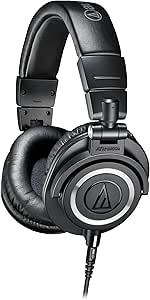 | Best for Versatile Studio Monitoring | Brand: Audio-Technica | Model: ATH-M50x | Driver size: 45mm | VIEW LATEST PRICE | See Our Full Breakdown |
| Audio-Technica ATH-M30x Professional Studio Monitor Headphones, Black |  | Best for Portable Tracking | Brand: Audio-Technica | Model: ATH-M30x | Driver size: 40mm | VIEW LATEST PRICE | See Our Full Breakdown |
| Shure SRH440A Over-Ear Wired Studio Headphones for Recording |  | Best for Interface and Laptop Recording | Type: Over-ear, closed-back, wired | Use: Recording, monitoring, mixing, critical listening | Headband: Adjustable | VIEW LATEST PRICE | See Our Full Breakdown |
| beyerdynamic DT 990 Pro (250 Ohm) Open-Back Studio Headphones, Black |  | Best for Open-Back Mixing | Brand: beyerdynamic | Model: DT 990 PRO 250 | Impedance: 250 Ohms | VIEW LATEST PRICE | See Our Full Breakdown |
| beyerdynamic DT 770 Pro X (48 Ohm) Closed-Back Studio Headphones, Black |  | Best for Amp-Free Closed-Back Recording | Brand: beyerdynamic | Model: DT 770 Pro X | Impedance: 48 Ohms | VIEW LATEST PRICE | See Our Full Breakdown |
| AKG K240 Studio Semi-Open Studio Headphones | 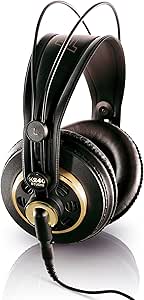 | Best Semi-Open Value | Type: Semi-open, over-ear, wired | Transducers: 30 mm XXL with Varimotion diaphragms | Cable length: 3 meters (9.9 feet) | VIEW LATEST PRICE | See Our Full Breakdown |
| beyerdynamic DT 900 PRO X Open-Back Studio Headphones |  | Best for Open-Back Critical Listening | Type: Open-back studio headphones | Impedance: 48 ohms | Driver: STELLAR.45 | VIEW LATEST PRICE | See Our Full Breakdown |
| Audio-Technica ATH-M20x Professional Studio Monitor Headphones, Black |  | Best for Entry-Level Tracking | Driver size: 40 mm | Driver type: Rare-earth magnets with copper-clad aluminum wire voice coils | Design: Circumaural over-ear | VIEW LATEST PRICE | See Our Full Breakdown |
| Sennheiser HD 280 Pro Over-Ear Headphones, Black |  | Best for Noise Isolation | Type: Wired, closed-back over-ear headphones | Sound attenuation: Up to 32 dB | Cord length: 3.3–9.8 feet, coiled and extended | VIEW LATEST PRICE | See Our Full Breakdown |
| Sony MDR7506 Professional Large Diaphragm Headphones | 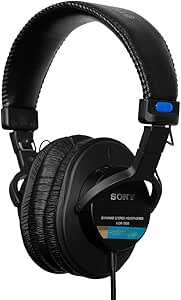 | Best for Portable Studio Monitoring | Driver size: 40 mm | Magnet type: Neodymium | Frequency response: 10 Hz–20 kHz | VIEW LATEST PRICE | See Our Full Breakdown |
| studio headphone | Design | Cable |
|---|---|---|
| Sennheiser HD 490 PRO Open-Bac | Open-back | Detachable, 1.8 m |
| Sennheiser HD 560S Open-Back O | — | — |
| beyerdynamic DT 770 Pro | — | Fixed 3 m straight cable |
| Sennheiser HD 600 Audiophile O | Open-back, over-ear | Detachable Kevlar-reinforced OFC copper |
| Audio-Technica ATH-M40x Profes | Circumaural, around-ear | — |
| Audio-Technica ATH-M50x Profes | — | Detachable |
| Audio-Technica ATH-M30x Profes | Circumaural over-ear | — |
| Shure SRH440A Over-Ear Wired S | Collapsible | Detachable locking cable |
| beyerdynamic DT 990 Pro | Open-back | Fixed 3m coiled cable with 1/4-inch adapter |
| beyerdynamic DT 770 Pro X | Closed-back, over-ear | Detachable 3m mini-XLR |
| AKG K240 Studio Semi-Open Stud | — | — |
| beyerdynamic DT 900 PRO X Open | — | Detachable mini-XLR cable |
| Audio-Technica ATH-M20x Profes | Circumaural over-ear | — |
| Sennheiser HD 280 Pro Over-Ear | — | — |
| Sony MDR7506 Professional Larg | Closed-ear, foldable | — |
More Details on Our Top Picks
Sennheiser HD 490 PRO Open-Back Professional Studio Headphones
The HD 490 PRO earns its place for mix work where spacious imaging and a neutral presentation help separate instruments and judge placement. Its two washable, replaceable pad sets give producers and mixers different listening options, while the included dearVR MIX-SE plugin adds a virtual mixing environment in a DAW. Compared with the more straightforward HD 560S, this model offers more workflow flexibility through its alternate pads and software. The tradeoff is its open-back construction: sound escapes, and outside noise comes through, so it is a poor fit for vocal tracking beside a live microphone or for noisy rooms. I’d choose it for a quiet production space where its wide, dimensional soundstage can guide detailed decisions.
Pros:- Wide, dimensional soundstage supports precise instrument placement.
- Uncolored frequency response helps with reference listening and mix decisions.
- Two washable, replaceable pad sets suit producing and mixing.
- Lightweight ergonomic design is intended to reduce fatigue during long sessions.
Cons:- Open-back cups offer little isolation and can leak into recording microphones.
- Less suited to tracking than closed-back options such as the DT 770 Pro.
- The included virtual mixing software is useful only to buyers who want that DAW workflow.
Best for: Mixers and producers working in a quiet room who want spatial detail and alternate pad voicings for different tasks.
Not ideal for: Vocalists recording near a microphone or anyone monitoring in a noisy room, because the open-back design leaks sound and provides little isolation.
- Design:Open-back
- Frequency response:5–36,000 Hz
- Ear pads:Two washable, replaceable sets for mixing and producing
- Cable:Detachable, 1.8 m
- Included software:dearVR MIX-SE plugin
- Engineering:German-engineered
Our verdict“Choose the HD 490 PRO for detailed mixing in a quiet studio, and the DT 770 Pro if recording isolation matters more.”
Sennheiser HD 560S Open-Back Over-Ear Wired Headphones
The HD 560S is a straightforward entry into open-back reference listening: its natural, detailed sound and spacious presentation can help newer producers hear balances without paying for extra workflow features. Angled drivers support a lifelike sense of placement, while the clear bass gives low-end parts definition. Compared with the HD 490 PRO, it has a simpler package, without two task-specific pad sets or a virtual mixing plugin; that makes the choice easier if you want a direct headphone reference. Its open-back design also means sound passes both ways, so it belongs in a quiet room rather than a vocal booth. The wired connection and 1/4-inch connector suit a stationary setup, but they limit convenience for casual mobile listening.
Pros:- Natural, detailed presentation supports reference listening.
- Open-back earcups create a spacious soundstage.
- Angled drivers contribute to lifelike audio placement.
- Clear bass with extended low-end reach helps assess bass parts.
Cons:- Open-back construction leaks sound and does not block room noise.
- Wired connection limits mobility.
- Offers fewer mixing workflow extras than the HD 490 PRO.
Best for: New producers or home-studio listeners seeking a natural open-back reference headphone for quiet-room editing and mixing.
Not ideal for: Vocalists recording beside a microphone or buyers who need isolation, wireless use, or a compact portable setup.
- Model:HD 560S
- Type:Open-back over-ear headphones
- Connectivity:Wired
- Connector:1/4-inch
- Weight:600 g
- Warranty:2 years
Our verdict“Pick the HD 560S for an uncomplicated open-back reference in a quiet studio, especially if the HD 490 PRO’s extras are unnecessary.”
beyerdynamic DT 770 Pro (80 Ohm) Closed-Back Studio Headphones, Black
For recording, the DT 770 Pro’s closed-back isolation is the decisive advantage: it helps keep monitor sound out of a vocal microphone and makes headphone cues easier to hear in a busy room. That makes it a more practical tracking choice than the open-back HD 600, which is better suited to quiet listening and mix work. The 80-ohm design can work from many laptops and also scales with an interface or headphone amp, though it performs best with dedicated studio gear. Replaceable velour pads and a spring-steel headband support long-term studio use. The fixed 3 m cable is useful at a desk but cumbersome when moving around, and the sealed presentation gives up the open, airy stage offered by the Sennheiser open-back models.
Pros:- Closed-back design provides useful isolation for tracking.
- 80-ohm impedance can work with many laptops and benefits from an interface or amp.
- Replaceable grey velour ear pads support ongoing studio use.
- Spring-steel headband is built for durability.
Cons:- Fixed 3 m cable cannot be detached or easily replaced.
- Long cable can get in the way for portable use.
- Best performance may require an audio interface or headphone amp.
Best for: Vocalists, podcasters, and recording musicians who need closed-back monitoring in a booth or shared room.
Not ideal for: Mixers prioritizing an open-back soundstage or mobile users who need a short, detachable cable.
- Type:Closed-back, over-ear studio headphones
- Impedance:80 ohms
- Ear pads:Replaceable grey velour
- Headband:Spring steel
- Cable:Fixed 3 m straight cable
- Adapter:1/4-inch (6.35 mm)
- Color:Black
Our verdict“Choose the DT 770 Pro for isolated vocal and instrument tracking; choose the HD 560S for open-back listening in a quiet room.”
Sennheiser HD 600 Audiophile Open-Back Wired Headphones
The HD 600 suits buyers who want an open-back, low-distortion reference for critical listening and careful mix checks. Its 300-ohm impedance makes a capable headphone amp part of the setup, so it is a more demanding choice than the HD 560S for someone connecting directly to everyday devices. In return, the lightweight 260 g build, plush circumaural pads, and detachable reinforced cable support extended stationary sessions. The open construction gives up the isolation of the DT 770 Pro, making the HD 600 a poor recording-booth monitor when microphone bleed matters. I’d place it with listeners who already have suitable amplification and value a familiar, spacious presentation over the HD 560S’s simpler plug-in setup.
Pros:- Open-back presentation supports spacious critical listening.
- Low stated THD of 0.1% suits detail-focused listening.
- Lightweight 260 g construction and plush pads suit extended sessions.
- Detachable Kevlar-reinforced cable is designed for durability and low handling noise.
Cons:- 300-ohm impedance calls for a capable headphone amplifier.
- Open-back design offers little isolation and can leak sound.
- No built-in microphone or wireless functionality.
Best for: Critical listeners and mix engineers with a headphone amplifier who work in a quiet room and favor a lightweight open-back design.
Not ideal for: Mobile users without an amp, or vocalists who need closed-back isolation while tracking.
- Design:Open-back, over-ear
- Impedance:300 ohms
- Frequency response:12–39,000 Hz
- Total harmonic distortion:0.1%
- Weight:260 g
- Cable:Detachable Kevlar-reinforced OFC copper
- Connector:1/4-inch and 1/8-inch jack
Our verdict“Choose the HD 600 for amp-driven critical listening in a quiet space, while the DT 770 Pro is the practical pick for isolated tracking.”
Audio-Technica ATH-M40x Professional Studio Monitor Headphones, Black
The ATH-M40x is the lineup’s practical pick for producers who need closed-back isolation and quick one-ear checks. Its 90-degree swiveling earcups make it easier to monitor a live source while keeping one ear free, a workflow advantage over the DT 770 Pro’s fixed earcups. Detachable cables also make replacement simpler than with that beyerdynamic model’s fixed lead. The circumaural fit helps contain sound in louder spaces, while the 40 mm drivers use rare-earth magnets and copper-clad aluminum voice coils. Its tradeoff is comfort: the pro-grade pads and headband may feel firm until broken in, so buyers planning long uninterrupted sessions may prefer a softer-fitting alternative. For tracking and cue work, its swivel-and-isolate design is the key reason to choose it.
Pros:- Circumaural design provides sound isolation in louder environments.
- 90-degree swiveling earcups support one-ear monitoring.
- Detachable cables are easier to replace than a fixed cable.
- Pro-grade earpads and headband are built for studio use.
Cons:- Pro-grade materials may feel firm during long sessions until broken in.
- Closed-back design does not offer the spacious presentation of the HD 490 PRO or HD 560S.
Best for: DJs, tracking musicians, and home-studio operators who need isolation and frequent one-ear monitoring.
Not ideal for: Listeners who prioritize open-back spaciousness or need a particularly soft fit for long sessions from the start.
- Driver size:40 mm
- Driver type:Rare-earth magnets with copper-clad aluminum wire voice coils
- Design:Circumaural, around-ear
- Earcup rotation:90 degrees
- Cables:Detachable, included
- Color:Black
Our verdict“Choose the ATH-M40x for isolated tracking and one-ear checks; choose the HD 560S when open-back spaciousness matters more.”
Audio-Technica ATH-M50x Professional Studio Monitor Headphones, Black
The ATH-M50x is the most adaptable closed-back pick in this group for tracking and everyday studio monitoring. Its 45mm drivers and circumaural cups are designed to deliver clear detail while reducing outside sound, and the 90-degree swiveling earcups make one-ear cue checks easier. Compared with the ATH-M30x, it adds swiveling cups and a more fully featured monitoring design; the Shure SRH440A is another closed-back choice, but emphasizes a collapsible build and locking cable. The M50x’s detachable cable is easier to replace than the DT 990 Pro’s fixed lead. The tradeoff is fit: the headband may feel tight on larger heads during long sessions, and its closed-back presentation does not provide the open, spacious image of the DT 990 Pro.
Pros:- Circumaural cups provide passive isolation for tracking
- 90-degree swiveling earcups support one-ear monitoring
- Detachable cable is replaceable
- 45mm drivers are specified for clear detail and accurate bass
Cons:- Fit may feel tight on larger heads during extended sessions
- Closed-back design gives a less open stereo presentation than the DT 990 Pro
Best for: Home and project-studio users who need isolated, one-ear monitoring for recording and general production
Not ideal for: Listeners with larger heads who need a loose fit for long sessions, or mix engineers seeking an open-back stereo image
- Brand:Audio-Technica
- Model:ATH-M50x
- Driver size:45mm
- Earcup design:Circumaural, 90-degree swiveling
- Cable:Detachable
- Color:Black
- Warranty:2 years on parts and labor
Our verdict“Choose the ATH-M50x for flexible, isolated studio monitoring with swiveling cups and a replaceable cable, provided its fit suits you.”
Audio-Technica ATH-M30x Professional Studio Monitor Headphones, Black
The ATH-M30x makes sense for recording work that moves between a studio desk and a field kit. Its collapsible design and included protective case make it easier to pack than the non-folding beyerdynamic DT 770 Pro X, while the circumaural cups help limit outside sound during tracking. Audio-Technica specifies the 40mm drivers for detail and midrange definition, a useful focus when monitoring vocals or instruments. The ATH-M50x offers larger drivers and swiveling earcups for one-ear checks, so it is the more flexible choice for frequent cue monitoring. The M30x’s tradeoffs are a simpler feature set and a single-sided cable exit; it is also tuned for studio monitoring, which may not suit listeners who want a more forgiving everyday sound.
Pros:- Collapsible design and protective case aid transport
- Circumaural cups provide isolation in loud environments
- 40mm drivers are tuned for detail and midrange definition
- Pro-grade materials are intended for studio use
Cons:- Does not have the ATH-M50x’s swiveling earcups
- Single-sided cable exit may not suit every setup
- Studio-focused tuning may be less appealing for casual listening
Best for: Mobile recording and tracking users who want foldable over-ear headphones with a case and clear midrange monitoring
Not ideal for: Engineers who need swiveling cups for one-ear cue checks or listeners seeking headphones primarily for casual listening
- Brand:Audio-Technica
- Model:ATH-M30x
- Driver size:40mm
- Driver type:Rare earth magnets with copper-clad aluminum wire voice coils
- Design:Circumaural over-ear
- Cable exit:Single-sided
- Portability:Collapsible
- Included accessories:Protective case, cable, screw-on adapter, user manual
Our verdict“Pick the ATH-M30x for portable, isolated tracking with a useful midrange focus, and step up to the ATH-M50x if one-ear monitoring matters.”
Shure SRH440A Over-Ear Wired Studio Headphones for Recording
The Shure SRH440A is a practical closed-back option for recording setups that move between an audio interface, mixer, and laptop. Shure describes its sound as accurate and transparent, while the adjustable headband and cushioned cups are aimed at longer monitoring sessions. Its detachable locking cable is designed to stay connected during use and can be replaced if damaged. Compared with the Audio-Technica ATH-M30x, the SRH440A makes the cable connection a more explicit durability feature; the M30x, by contrast, includes a protective case and collapses for travel. Neither closed-back model offers the broad, airy presentation of the open-backed DT 990 Pro. The Shure’s cable still tethers the listener, and its isolation is passive, so it will not actively cancel ambient noise.
Pros:- Closed-back design provides passive noise isolation
- Detachable locking cable supports a secure connection and replacement
- Adjustable headband and cushioned earcups suit extended monitoring
- Collapsible construction aids storage
Cons:- Wired connection limits movement away from the source
- Passive isolation does not actively cancel ambient noise
Best for: Recording musicians and home-studio operators who switch among interfaces, mixers, and laptops and want a replaceable locking cable
Not ideal for: Buyers who need wireless freedom, active noise cancellation, or an open-back soundstage for mixing
- Type:Over-ear, closed-back, wired
- Use:Recording, monitoring, mixing, critical listening
- Headband:Adjustable
- Design:Collapsible
- Cable:Detachable locking cable
- Compatibility:Audio interfaces, mixers, laptops, portable devices
Our verdict“Choose the SRH440A for adaptable wired recording with a locking replaceable cable, but look to the DT 990 Pro for open-back mixing.”
beyerdynamic DT 990 Pro (250 Ohm) Open-Back Studio Headphones, Black
The DT 990 Pro stands apart from the closed-back headphones here by using an open-back design for a wide, natural stereo image. That presentation suits mix and mastering work where judging space and depth matters; for recording near a live microphone, the ATH-M50x or DT 770 Pro X is a safer fit because their closed cups help contain sound. The DT 990 Pro’s 250-ohm impedance is the main setup constraint: it is intended for an audio interface or headphone amplifier, rather than direct use from many phones. Soft, replaceable velour pads and a spring-steel headband support long sessions, but the fixed coiled cable is less convenient to replace than the detachable leads on the Shure SRH440A and DT 770 Pro X. Sound also leaks in both directions.
Pros:- Open-back design creates a wide, natural stereo image
- 250-ohm format suits interface or headphone-amp setups
- Replaceable velour ear pads support maintenance
- Spring-steel headband and German manufacture are specified in the product data
Cons:- High impedance may require an audio interface or headphone amplifier
- Open cups leak sound and provide little isolation
- Fixed 3m coiled cable cannot be detached
Best for: Mix engineers working at a desk with an audio interface or headphone amp who value an open stereo presentation
Not ideal for: Musicians recording beside sensitive microphones, mobile listeners without an amp, or anyone needing strong isolation
- Brand:beyerdynamic
- Model:DT 990 PRO 250
- Impedance:250 Ohms
- Frequency response:5–35,000 Hz
- Design:Open-back
- Cable:Fixed 3m coiled cable with 1/4-inch adapter
- Ear pads:Replaceable grey velour
- Country of origin:Germany
Our verdict“Choose the DT 990 Pro for open-back mixing at an amp-equipped desk, and avoid it for isolated tracking or phone-first use.”
beyerdynamic DT 770 Pro X (48 Ohm) Closed-Back Studio Headphones, Black
The DT 770 Pro X combines closed-back isolation with a 48-ohm impedance, making it the more convenient beyerdynamic choice for listeners connecting directly to a laptop, phone, console, or interface. That lower-impedance design contrasts with the DT 990 Pro, whose 250-ohm specification points toward an amp-equipped desk setup and whose open cups leak sound. For tracking, the DT 770 Pro X’s closed cups help limit headphone bleed into microphones. A detachable mini-XLR cable and replaceable velour pads also make upkeep easier than on the DT 990 Pro’s fixed lead. Its STELLAR.45 driver is specified for precise sound, but the product data does not provide a frequency response or foldable design; the full-size build may be less convenient to pack than the collapsible ATH-M30x.
Pros:- 48-ohm impedance supports direct connection to common devices
- Closed-back cups help reduce headphone bleed during recording
- Detachable mini-XLR cable and replaceable velour pads aid maintenance
- STELLAR.45 driver is specified for precise, high-resolution sound
Cons:- Wired design does not provide wireless listening
- Non-folding construction is less convenient to pack than the ATH-M30x
Best for: Recording musicians and hybrid studio users who need closed-back isolation and easy drive from common devices without a separate amp
Not ideal for: Travel-focused users who need folding headphones, or mix engineers who prefer an open-back presentation
- Brand:beyerdynamic
- Model:DT 770 Pro X
- Impedance:48 Ohms
- Driver:STELLAR.45
- Design:Closed-back, over-ear
- Connectivity:Wired, 3.5 mm jack
- Cable:Detachable 3m mini-XLR
- Ear pads:Replaceable velour
- Country of origin:Germany
Our verdict“Pick the DT 770 Pro X for isolated recording and straightforward device compatibility, especially if the DT 990 Pro’s amp requirement is a mismatch.”
AKG K240 Studio Semi-Open Studio Headphones
The AKG K240 Studio suits home producers who want a spacious, less enclosed presentation for editing and general mixing. Its semi-open design gives sound more room than the closed-back ATH-M20x, but that openness also lets playback leak into nearby microphones and makes it a poor choice in noisy rooms. The 30 mm Varimotion transducers are described as delivering solid bass and clear highs, while the self-adjusting headband is aimed at comfort during longer sessions. Compared with the open-back DT 900 PRO X, the K240 is a simpler studio option with a 3-meter cable and both 1/8-inch and screw-on 1/4-inch connections. It remains wired and offers little isolation, so tracking beside a live mic or listening around other people calls for a closed-back pick.
Pros:- Semi-open presentation suited to mixing and general listening in quiet spaces
- 30 mm Varimotion transducers are specified for solid bass and clear highs
- Self-adjusting headband and over-ear pads support longer sessions
- Includes a 1/8-inch plug and screw-on 1/4-inch adapter
Cons:- Semi-open cups leak sound and provide little isolation
- Wired connection limits movement and has no wireless option
- Less suitable for recording near sensitive microphones than closed-back alternatives
Best for: Home producers and editors who work in a quiet room and want semi-open headphones with both common studio plug sizes.
Not ideal for: Vocalists tracking beside a live microphone or commuters who need strong isolation or wireless listening.
- Type:Semi-open, over-ear, wired
- Transducers:30 mm XXL with Varimotion diaphragms
- Cable length:3 meters (9.9 feet)
- Connectors:1/8-inch stereo plug with screw-on 1/4-inch adapter
- Intended use:Studio mixing, mastering, podcasting, and Hi-Fi listening
- Brand:AKG
- Model:K240 Studio
Our verdict“Choose the K240 Studio for comfortable, semi-open work in a quiet room; pick the ATH-M20x for isolation or the DT 900 PRO X for an open-back design.”
beyerdynamic DT 900 PRO X Open-Back Studio Headphones
The DT 900 PRO X is the open-back pick here for listeners who need to hear mix details in a spacious presentation and want to plug directly into everyday gear. Its 48-ohm STELLAR.45 driver is specified to reach full volume from sources such as laptops, interfaces, and phones without a dedicated headphone amp. That makes it easier to use across a home setup than the 250-ohm DT 990 Pro, though both open-back models let sound escape and provide little isolation. The detachable mini-XLR cable and included carrying case add practical flexibility, and its 12.2-ounce weight is listed for a long-session fit assessment. Its main limitation is the open construction: nearby people may hear playback, and outside noise can distract. Choose the HD 280 Pro or DT 770 Pro when tracking demands closed cups.
Pros:- 48-ohm design is specified to work at full volume from laptops, phones, and interfaces without a headphone amp
- Open-back presentation is suited to mixing, mastering, and critical listening
- Detachable mini-XLR cable and included case add flexibility for transport and replacement
- Includes a 1/4-inch adapter
Cons:- Open cups leak audio and do little to block outside noise
- Wired-only connection does not support wireless listening
- Less appropriate for vocal tracking near a microphone than the closed-back HD 280 Pro
Best for: Mixers and critical listeners who work in a quiet space and want open-back headphones that can run from common devices without a dedicated amp.
Not ideal for: Recording artists in shared rooms, commuters, or anyone who needs sound isolation and contained playback.
- Type:Open-back studio headphones
- Impedance:48 ohms
- Driver:STELLAR.45
- Connectivity:Wired, 3.5 mm jack
- Weight:12.2 ounces
- Cable:Detachable mini-XLR cable
- Included:1/4-inch adapter and protective case
- Warranty:2-year manufacturer warranty
- Made in:Germany
Our verdict“Pick the DT 900 PRO X for amp-free open-back listening in a quiet room, and choose the HD 280 Pro when isolation matters more.”
Audio-Technica ATH-M20x Professional Studio Monitor Headphones, Black
The ATH-M20x is the straightforward tracking choice for someone setting up a first recording station in a room where outside sound can interfere. Its circumaural closed design is described as providing isolation in loud environments, giving it a practical advantage over the semi-open AKG K240 Studio when monitoring a microphone. The 40 mm drivers use rare-earth magnets and copper-clad aluminum wire voice coils, with tuning intended to emphasize low frequencies; that can help make bass audible during tracking, though it is a different stated emphasis from the K240’s solid-bass, clear-highs profile. A single-side cable exit keeps the lead routed from one earcup. The available product details do not specify cable length, foldability, or replaceable parts, so buyers wanting those documented conveniences may prefer the HD 280 Pro or MDR7506.
Pros:- Closed circumaural design is specified to provide isolation in loud environments
- 40 mm drivers are tuned for enhanced low-frequency performance
- Single-side cable exit keeps the lead routed from one earcup
- Designed for studio tracking and mixing
Cons:- Low-frequency emphasis may not suit listeners seeking a more neutral tonal balance
- Product details do not specify a detachable cable or folding design
- No customer review data is provided in the supplied product information to assess real-world durability
Best for: First-time home recordists who need wired, closed-back headphones to monitor takes in a room with some outside noise.
Not ideal for: Mixers seeking an open, spacious presentation or buyers who need documented folding storage, a detachable cable, or detailed service-part information.
- Driver size:40 mm
- Driver type:Rare-earth magnets with copper-clad aluminum wire voice coils
- Design:Circumaural over-ear
- Cable exit:Single side
- Color:Black
- Intended use:Studio tracking and mixing
Our verdict“Choose the ATH-M20x for basic isolated tracking, while the AKG K240 Studio better fits quiet-room sessions that benefit from a semi-open design.”
Sennheiser HD 280 Pro Over-Ear Headphones, Black
When outside noise and microphone bleed are the main problems, the Sennheiser HD 280 Pro makes a stronger case than the semi-open AKG K240 Studio. Its closed cups are rated for up to 32 dB of sound attenuation, which can help a performer focus on a cue mix and reduce the chance of headphone audio reaching a nearby mic. The listed warm, natural sound and padded earcups suit monitoring, while collapsible earpieces make it easier to pack than a fixed design. Replaceable earpads, headband padding, and audio cord are also practical for owners who expect regular studio use. Against the Sony MDR7506, the HD 280 Pro offers a coiled cord that extends from 3.3 to 9.8 feet and specified replaceable parts; its cable is still wired and may feel cumbersome when fully extended.
Pros:- Closed-back design is specified for up to 32 dB of outside sound attenuation
- Warm, natural sound reproduction for monitoring
- Collapsible earpieces help with storage and transport
- Earpads, headband padding, and audio cord are replaceable
Cons:- Wired connection limits movement
- Coiled cord can extend to 9.8 feet and may be cumbersome
- Closed-back construction does not provide the open presentation of the DT 900 PRO X
Best for: Vocalists, podcasters, and tracking engineers who need closed-back monitoring with substantial stated sound attenuation.
Not ideal for: Open-back mixing enthusiasts or mobile listeners who want a short, lightweight cable and wireless freedom.
- Type:Wired, closed-back over-ear headphones
- Sound attenuation:Up to 32 dB
- Cord length:3.3–9.8 feet, coiled and extended
- Included adapter:Screw-type 1/4-inch adapter
- Replaceable parts:Earpads, headband padding, and audio cord
- Warranty:2 years
- Model number:506845
- Color:Black
Our verdict“Choose the HD 280 Pro for isolated tracking and replaceable wear parts; the DT 900 PRO X is a better fit for quiet-room open-back listening.”
Sony MDR7506 Professional Large Diaphragm Headphones
The Sony MDR7506 is a practical fit for engineers who move between recording, radio, film, and video-monitoring setups and want closed-ear headphones that fold for transport. Its 40 mm neodymium drivers, 10 Hz–20 kHz stated frequency response, and wired connection make it a familiar monitoring format; the soft case and 1/4-inch adapter help it travel between sources. Compared with the HD 280 Pro, the MDR7506 folds and includes a case, while the Sennheiser specifies replaceable earpads, headband padding, and cord. The Sony’s main compromise is its non-detachable 9.8-foot cable: the length can get in the way on the move, and damage cannot be addressed by swapping in a detachable lead. Its closed design also favors isolation over the spacious feel of the DT 900 PRO X.
Pros:- Foldable closed-ear design is convenient for transport
- 40 mm drivers use neodymium magnets
- Includes a soft carrying case and 1/4-inch adapter
- Gold-plated 1/8-inch plug supports connection with the included adapter
Cons:- Non-detachable cable cannot be replaced independently
- Fixed 9.8-foot cord may be cumbersome for portable use
- Closed-ear design is less spacious than the open-back DT 900 PRO X
Best for: Location sound, radio, and video-monitoring workers who need foldable wired headphones with a carrying case and 1/4-inch connectivity.
Not ideal for: Buyers who need a detachable cable, a compact short lead, or an open-back presentation for quiet-room mixing.
- Driver size:40 mm
- Magnet type:Neodymium
- Frequency response:10 Hz–20 kHz
- Design:Closed-ear, foldable
- Cord length:9.8 feet
- Cord type:Oxygen-free copper, non-detachable
- Connectivity:Wired
- Plug:Gold-plated 1/8-inch with 1/4-inch adapter
- Included accessories:Soft case and 1/4-inch adapter
Our verdict“Pick the MDR7506 for foldable closed-back monitoring on the move, but choose the HD 280 Pro if replaceable cable and padding matter more.”

How We Picked
I ranked these headphones by how well they serve studio tasks: tracking, editing, mixing, and general monitoring. I weighed open- or closed-back design, tonal usefulness, comfort for long sessions, cable and build practicality, and how demanding each model is on the audio source. The top positions go to models with a clear role and broad usefulness; specialized or more setup-dependent options rank lower for general studio buyers.
I also compared choices within the lineup rather than treating every feature as a benefit. Isolation matters when recording near a microphone, while an open design can suit mixing in a quiet room but leaks sound and offers little isolation. Portability, impedance, and replaceable parts can change the better pick for a particular setup, so the order reflects studio fit rather than a claim that one tuning is right for every listener.
Factors to Consider When Choosing Best Studio Headphones
Before choosing a pair, match its design and connection needs to the work you actually do. These broader checks can prevent common mismatches that a model name or feature list alone will not reveal.
Choose open or closed back based on your room
Open-back headphones allow sound to pass through the earcups, which can make listening feel less enclosed in a quiet room. They also leak audio, so a nearby microphone may pick up playback, and outside noise can distract you. Closed-back designs reduce that leakage and help with tracking, shared rooms, or mobile recording. Buyers sometimes choose open-back headphones for their reputation in mixing without checking whether their workspace is quiet enough. If one pair must handle both recording and mixing, decide which task creates the bigger problem in your setup. Some studios keep separate pairs because isolation and open listening serve different jobs.
Check the headphone output before choosing impedance
Impedance alone does not tell you whether a headphone will play loudly enough from a particular device. Sensitivity, the headphone output, and the recording interface all affect usable volume and headroom. A high-impedance model may work well with a suitable interface yet feel underpowered from a phone or a modest laptop jack. Check the specifications for the device you will use most, then leave room to monitor without running the output at its limit. Avoid buying an amplifier by default; first confirm that your current source actually struggles. This check can save you from an unnecessary extra purchase or an awkward studio pairing.
Treat tuning as a monitoring reference, not a verdict
Headphones can expose edits and details, but their tonal balance may shape how you judge bass, treble, and vocal presence. A mix that sounds balanced on headphones can translate differently to speakers, earbuds, or a car system. Rather than searching for a universally flat-sounding pair, learn how your chosen model compares with familiar recordings you trust. Use the same reference tracks and listening level when comparing options; louder playback can seem clearer even when it is not more accurate. If headphones will be your only mixing reference, build in checks on other playback systems. A second reference helps reveal habits in your listening setup.
Fit and heat matter over a full session
A comfortable fit is a work feature: pressure, warmth, or a poor seal can distract you and change how the headphones sit from one session to another. Head shape, glasses, hair, and room temperature all affect comfort, so another listener’s fit report may not predict yours. Look at whether pads and cables can be replaced, since wear parts often determine how practical a pair remains over time. A secure seal is particularly relevant for closed-back listening because a shifted earcup can change the bass you hear. For long sessions, prioritize stable comfort over a short audition’s first impression. If possible, check the return terms before choosing a fit-sensitive model.
Separate tracking needs from portable use
Studio headphones often pull double duty at a desk, in a rehearsal space, and on the road, but those settings reward different features. A folding design and a detachable cable can make transport and cable replacement easier, while a fixed cable may be simpler but less flexible if damaged. For vocal recording, ask whether the cable, earcups, and fit let you move without brushing the microphone or disrupting the seal. For a permanent control-room setup, portability may matter less than comfort and a consistent listening reference. Buyers can avoid paying attention to travel features they will never use by listing their actual locations first. If the headphones will leave the studio, include storage and cable handling in the decision.
Frequently Asked Questions
Can one pair of studio headphones work for both recording and mixing?
Yes, but the room and microphone placement decide how well that works. Closed-back headphones are usually the more practical choice for recording because less playback escapes toward the microphone. Open-back models can suit mixing in a quiet room, but they are a poor fit when isolation is needed. If you need one pair for both jobs, prioritize the task where leakage or outside noise would cause the most trouble. You can still use the same pair for rough mix checks, then compare the result on other playback systems.
Do I need a headphone amplifier for a high-impedance model?
Not automatically. The output on your interface or other source may already provide enough level, and impedance by itself does not establish what an amplifier is needed for. Check the headphone’s sensitivity and your source’s output specifications, then judge whether it reaches a comfortable level without strain. If it is quiet or lacks headroom, an amplifier may help; if not, it adds cost and another device without solving a real problem. Make that decision around your actual signal chain rather than the impedance number alone.
Are open-back headphones a good choice for recording vocals?
They can work in some setups, but sound leakage can reach a sensitive microphone, especially during quiet vocal passages. Closed-back headphones are generally easier to manage when the performer is recording close to a mic. If you prefer an open-back sound, test it at the monitoring level you plan to use and listen for leakage in a recording. Lowering headphone volume may help, though it can make cues harder to hear. For a shared room or live recording, isolation usually deserves priority.
Should I choose headphones labeled for studio monitoring over audiophile headphones?
The label alone does not tell you whether a model suits your work. Compare the design, tonal balance, fit, source requirements, and serviceable parts against your recording and mixing needs. Some headphones presented for listening can still be useful references, while a studio label does not guarantee that a particular tuning will translate well for you. Use familiar recordings to learn what your headphones emphasize or soften. If accurate decisions matter, check your work on more than one playback system.
What should I prioritize if I am buying my first pair?
Start with the room and the main task: choose isolation for recording near microphones, or consider open-back designs for mixing in a quiet space. Next, confirm that your interface or device can drive the headphones comfortably. Fit matters because an uncomfortable pair can shorten sessions and distract from listening, while replaceable pads or cables can extend useful life. Do not assume the most feature-rich model is the easiest starting point. A straightforward pair that matches your setup and lets you learn its sound is a better foundation.
Conclusion
For most readers seeking one pair for a quiet studio, I recommend the Sennheiser HD 490 PRO as the best overall choice. The Audio-Technica ATH-M40x is my best value pick for versatile closed-back monitoring, while the HD 600 is the best premium option for listeners who want an open-back reference and have a suitable source. Beginners who want basic, practical monitoring can start with the ATH-M30x; choose the ATH-M20x when simple entry-level use matters most. For recording isolation, look at the DT 770 Pro or DT 770 Pro X; for a quiet mixing room, consider the DT 900 PRO X. Match the design to your room and the source to your headphones, and the shortlist becomes much easier to decide.
Halloween Picks
halloween
As an affiliate, we earn on qualifying purchases.