
The best LGA 1700 motherboard overall in this roundup is the ASUS TUF Gaming B760-Plus WiFi, balancing practical features and a straightforward build experience without requiring a Z-series chipset. For more expansion and overclocking options, the GIGABYTE Z790 AORUS Elite AX stands out, while the MSI PRO B760M-P DDR4 is a simpler fit for a compact, budget-conscious system. The main tradeoffs are chipset capability, DDR4 versus DDR5 support, board size, and how much connectivity your build actually needs. A premium board can add flexibility, but it may not improve everyday performance if your CPU and components do not use those extras. Read on for the full breakdown and help matching a board to your build.

Get the latest gadgets delivered free with Prime
- Fast, free delivery on millions of items
- Prime Video, Amazon Music and more included
- Member-only deals all year
Complete the kit



Key Takeaways
- B760 is the practical center of this lineup: the ASUS TUF Gaming B760-Plus WiFi and MSI PRO B760-P WiFi DDR4 offer different memory and form-factor choices without requiring Z790 features.
- Z790 is for added flexibility, not an automatic speed boost: the MSI PRO Z790-A WiFi II and GIGABYTE Z790 AORUS Elite AX make more sense when you want overclocking support or broader expansion.
- DDR4 remains a deliberate platform choice: several B760 and H610 boards here use DDR4, which can suit an existing memory kit, but DDR4 and DDR5 are not interchangeable on the same motherboard.
- Small boards require closer planning: the micro-ATX and H610 options can suit compact or basic builds, but check expansion slots, storage placement, and rear connectivity against your parts list.
- The premium ASUS ROG Maximus Z790 Hero is a specialist pick: its higher-end feature set is most defensible for a feature-heavy build, while many everyday gaming systems can use a less elaborate board.
| ASRock B760M Pro-A/D4 WiFi Micro-ATX Motherboard |  | Best DDR4 Feature Set | Form factor: Micro-ATX, 9.6 x 9.6 in | Socket and processors: LGA1700; 12th, 13th, and 14th Gen Intel Core | Chipset: Intel B760 | VIEW LATEST PRICE | See Our Full Breakdown |
| GIGABYTE B760M DS3H AX DDR4 Micro-ATX Motherboard |  | Best Straightforward DDR4 Upgrade | Form factor: Micro-ATX | Socket and processors: LGA1700; 12th, 13th, and 14th Gen Intel Core | Chipset: Intel B760 | VIEW LATEST PRICE | See Our Full Breakdown |
| GIGABYTE Z790 Eagle AX ATX Motherboard |  | Best for a DDR5 Z790 Build | Form factor: ATX | Socket and processors: LGA1700; 12th, 13th, and 14th Gen Intel Core | Chipset: Intel Z790 | VIEW LATEST PRICE | See Our Full Breakdown |
| ASUS Z790-AYW WiFi W II ATX Motherboard for Intel LGA 1700 |  | Best White Z790 Build | Form factor: ATX | Socket and processors: LGA1700; Intel Core 12th, 13th, and 14th Gen, Pentium Gold, and Celeron | Chipset: Intel Z790 | VIEW LATEST PRICE | See Our Full Breakdown |
| MSI PRO H610M-G DDR4 Micro-ATX Motherboard |  | Best for a Basic Budget Build | Form factor: Micro-ATX | Socket and processors: LGA1700; Intel Core 12th, 13th, and 14th Gen, Pentium Gold, and Celeron | Chipset: Intel H610 | VIEW LATEST PRICE | See Our Full Breakdown |
| ASUS TUF Gaming B760-Plus WiFi ATX Motherboard |  | Best Balanced DDR5 B760 Pick | Socket: LGA 1700 | Chipset: Intel B760 | Form factor: ATX | VIEW LATEST PRICE | See Our Full Breakdown |
| ASUS TUF Gaming Z790-Plus WiFi ATX Motherboard |  | Best Feature-Rich Z790 Value | Socket: LGA 1700 | Chipset: Intel Z790 | Form factor: ATX | VIEW LATEST PRICE | See Our Full Breakdown |
| ASUS ROG Maximus Z790 Hero WiFi 6E ATX Gaming Motherboard | 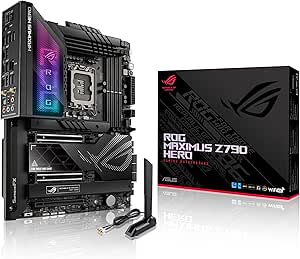 | Best Premium LGA 1700 Board | Socket: LGA 1700 | Chipset: Intel Z790 | Form factor: ATX | VIEW LATEST PRICE | See Our Full Breakdown |
| ASRock H610M-HDV/M.2 R2.0 Micro-ATX Motherboard |  | Best Compact DDR4 Basics | Socket: LGA 1700 | Chipset: Intel H610 | Form factor: Micro-ATX | VIEW LATEST PRICE | See Our Full Breakdown |
| MSI PRO B760-P WiFi DDR4 ATX Motherboard |  | Best for Reusing DDR4 Memory | Socket: LGA 1700 | Chipset: Intel B760 | Form factor: ATX | VIEW LATEST PRICE | See Our Full Breakdown |
| GIGABYTE Z790 AORUS Elite AX ATX Motherboard |  | Best for Storage Expansion | Socket and chipset: LGA 1700; Intel Z790 | Form factor: ATX | Processor support: 12th, 13th, and 14th Gen Intel Core | VIEW LATEST PRICE | See Our Full Breakdown |
| MSI PRO B760M-P DDR4 Micro-ATX Motherboard |  | Best for Basic DDR4 Builds | Socket and chipset: LGA 1700; Intel B760 | Form factor: Micro-ATX | Processor support: 12th, 13th, and 14th Gen Intel; Pentium Gold; Celeron | VIEW LATEST PRICE | See Our Full Breakdown |
| MSI PRO Z790-A WiFi II ATX Motherboard for Intel LGA 1700 |  | Best for High-Capacity DDR5 | Socket and chipset: LGA 1700; Intel Z790 | Form factor: ATX | Processor support: 12th, 13th, and 14th Gen Intel Core; Pentium Gold; Celeron | VIEW LATEST PRICE | See Our Full Breakdown |
| ASUS B760M-AYW WiFi D4 II microATX Motherboard |  | Best Compact DDR4 Board with Wi-Fi | Socket and chipset: LGA 1700; Intel B760 | Form factor: MicroATX | Processor support: 12th, 13th, and 14th Gen Intel; Pentium Gold; Celeron | VIEW LATEST PRICE | See Our Full Breakdown |
| ASUS Z790 MAX Gaming WiFi 7 ATX Motherboard |  | Best for Wi-Fi 7 Connectivity | Socket and chipset: LGA 1700; Intel Z790 | Form factor: ATX | Processor support: 12th, 13th, and 14th Gen Intel; Pentium Gold; Celeron | VIEW LATEST PRICE | See Our Full Breakdown |
| LGA 1700 motherboard | Form factor | Memory | Networking | Storage |
|---|---|---|---|---|
| ASRock B760M Pro-A/D4 WiFi Mic | Micro-ATX, 9.6 x 9.6 in | 4 DDR4 slots; up to 128 GB; up to 5333+ MHz (OC) | 2.5G LAN, Wi-Fi 6E, and Bluetooth 5.3 | 2 Gen4x4 M.2 slots and 4 SATA3 ports |
| GIGABYTE B760M DS3H AX DDR4 Mi | Micro-ATX | 4 DDR4 slots; up to 128 GB | Wi-Fi 6E and 2.5GbE LAN | 2 PCIe 4.0 M.2 slots and 4 SATA ports |
| GIGABYTE Z790 Eagle AX ATX Mot | ATX | 4 DDR5 DIMM slots; up to 256 GB | Wi-Fi 6E and 2.5GbE | 3 M.2 slots and SATA 3 support |
| ASUS Z790-AYW WiFi W II ATX Mo | ATX | 4 DDR5 slots; up to 192 GB | Wi-Fi 6 and 2.5Gb LAN | 3 M.2 slots and 4 SATA ports |
| MSI PRO H610M-G DDR4 Micro-ATX | Micro-ATX | 2 DDR4 slots; up to 64 GB; up to 3200 MHz | 1 Gbps LAN | M.2 slot and 4 SATA ports |
| ASUS TUF Gaming B760-Plus WiFi | ATX | DDR5; 4 slots; up to 128 GB | Wi-Fi 6; Realtek 2.5Gb Ethernet | — |
| ASUS TUF Gaming Z790-Plus WiFi | ATX | DDR5; up to 256 GB; up to 7200 MHz | Wi-Fi 6; Intel 2.5Gb LAN | — |
| ASUS ROG Maximus Z790 Hero WiF | ATX | DDR5; up to 128 GB; up to 7000 MHz | Wi-Fi 6E; Bluetooth 5.2; Intel 2.5Gb Ethernet | 5 M.2 slots; 6 SATA ports |
| ASRock H610M-HDV/M.2 R2.0 Micr | Micro-ATX | DDR4; 2 slots; up to 64 GB | — | Ultra M.2; 4 SATA ports |
| MSI PRO B760-P WiFi DDR4 ATX M | ATX | DDR4 dual-channel; 4 slots; up to 128 GB | — | — |
| GIGABYTE Z790 AORUS Elite AX A | ATX | DDR5; 4 slots; up to 128 GB | Wi-Fi 6E; 2.5GbE | 4 PCIe 4.0 x4 M.2 slots; 6 SATA ports |
| MSI PRO B760M-P DDR4 Micro-ATX | Micro-ATX | Dual-channel DDR4; 4 slots; up to 128 GB | — | 1 PCIe 4.0 M.2 slot with Shield Frozr; 4 SATA ports |
| MSI PRO Z790-A WiFi II ATX Mot | ATX | DDR5; 4 DIMM slots; up to 256 GB | Wi-Fi 6E; Bluetooth 5.3; 2.5Gbps Ethernet | 4 M.2 Gen4 x4 slots; 6 SATA ports |
| ASUS B760M-AYW WiFi D4 II micr | MicroATX | DDR4; 2 slots; up to 96 GB | Wi-Fi 6; Realtek 2.5Gb Ethernet | 2 M.2 slots; 4 SATA ports |
| ASUS Z790 MAX Gaming WiFi 7 AT | ATX | DDR5; 4 slots; up to 192 GB | Wi-Fi 7; Realtek 1Gb Ethernet | — |
More Details on Our Top Picks
ASRock B760M Pro-A/D4 WiFi Micro-ATX Motherboard
I’d choose the ASRock B760M Pro-A/D4 WiFi for a compact LGA 1700 build that needs more onboard connectivity than a basic B760 board. Its Wi-Fi 6E, Bluetooth 5.3, and 2.5G LAN cover wireless and wired networking, while two Gen4 M.2 slots and four SATA ports leave room for a mix of fast and legacy storage. Compared with the GIGABYTE B760M DS3H AX DDR4, it adds a second listed PCIe 4.0 x16 slot and HDMI and DisplayPort outputs, though the GIGABYTE specifies a faster USB-C connection. Both use DDR4, so neither suits a new DDR5 memory build. The tradeoff here is a compact board and a 7+1+1 phase power design; I’d favor a less demanding processor setup over pairing it with expectations of extensive power headroom.
Pros:- Supports 12th, 13th, and 14th Gen Intel Core processors
- Wi-Fi 6E, Bluetooth 5.3, and 2.5G LAN are built in
- Two Gen4 M.2 slots plus four SATA ports support varied storage setups
- Includes HDMI 2.1 and DisplayPort 1.4 video outputs
Cons:- Requires DDR4 memory and cannot support a DDR5 build
- 7+1+1 phase power design offers less stated headroom than more substantial Z790 options
- Micro-ATX dimensions may not suit buyers who want more room for expansion
Best for: Builders reusing DDR4 who want a Micro-ATX LGA 1700 board with Wi-Fi 6E, 2.5G networking, and two Gen4 M.2 slots.
Not ideal for: Buyers building around DDR5, or those who need an ATX layout or a board specified with a more robust power design.
- Form factor:Micro-ATX, 9.6 x 9.6 in
- Socket and processors:LGA1700; 12th, 13th, and 14th Gen Intel Core
- Chipset:Intel B760
- Memory:4 DDR4 slots; up to 128 GB; up to 5333+ MHz (OC)
- Expansion:2 PCIe 4.0 x16 slots and 1 PCIe 4.0 x1 slot
- Storage:2 Gen4x4 M.2 slots and 4 SATA3 ports
- Networking:2.5G LAN, Wi-Fi 6E, and Bluetooth 5.3
- Video outputs:HDMI 2.1 and DisplayPort 1.4
- Power design:7+1+1 phase Dr.MOS
Our verdict“Pick the ASRock if you want a well-connected compact DDR4 platform, but skip it for a DDR5 build or a high-expansion system.”
GIGABYTE B760M DS3H AX DDR4 Micro-ATX Motherboard
The GIGABYTE B760M DS3H AX DDR4 is a sensible fit for a compact LGA 1700 PC when the priority is a clear, practical feature set rather than extra expansion. It supports up to 128 GB of DDR4, has two PCIe 4.0 M.2 slots, and pairs Wi-Fi 6E with 2.5GbE, covering the connections many home and gaming builds need without add-in cards. Against the ASRock B760M Pro-A/D4 WiFi, the GIGABYTE lists a USB 3.2 Gen 2 Type-C port, while the ASRock provides Bluetooth 5.3 and specifies additional PCIe slots and display outputs. That makes the GIGABYTE an easier pick for a USB-C-focused setup, but its supplied specs leave less detail about expansion and video connections. Its DDR4-only platform also rules it out for buyers starting with DDR5.
Pros:- Supports 12th, 13th, and 14th Gen Intel Core processors
- Two PCIe 4.0 M.2 slots provide room for fast storage
- Wi-Fi 6E and 2.5GbE are included
- USB 3.2 Gen 2 Type-C offers a faster specified USB-C connection than the ASRock B760M Pro-A/D4 WiFi
Cons:- DDR4-only memory support limits upgrade paths to DDR5
- The supplied specs do not specify video outputs or Bluetooth
- Micro-ATX provides less board area than ATX alternatives such as the GIGABYTE Z790 Eagle AX
Best for: Compact-PC builders reusing DDR4 who want built-in Wi-Fi 6E, 2.5GbE, and two M.2 slots without moving to a Z790 board.
Not ideal for: DDR5 buyers or builders who need clearly specified additional PCIe slots, Bluetooth details, or motherboard video outputs.
- Form factor:Micro-ATX
- Socket and processors:LGA1700; 12th, 13th, and 14th Gen Intel Core
- Chipset:Intel B760
- Memory:4 DDR4 slots; up to 128 GB
- Expansion:1 PCIe 4.0 x16 slot
- Storage:2 PCIe 4.0 M.2 slots and 4 SATA ports
- Networking:Wi-Fi 6E and 2.5GbE LAN
- USB-C:1 USB 3.2 Gen 2 Type-C port
Our verdict“Choose this GIGABYTE for a compact DDR4 system centered on Wi-Fi, 2.5GbE, and USB-C, not for a DDR5 or expansion-heavy build.”
GIGABYTE Z790 Eagle AX ATX Motherboard
For a buyer ready to build around DDR5, the GIGABYTE Z790 Eagle AX brings a broader platform than the B760 DDR4 boards here. Its Z790 chipset, 12+1+1 phase digital VRM, PCIe 5.0 support, and three M.2 slots give a system more room for fast storage and future expansion. It also supports up to 256 GB of DDR5 in the supplied specs, along with Wi-Fi 6E, 2.5GbE, and USB-C 3.2 Gen 2×2. Compared with the ASUS Z790-AYW WiFi W II, the GIGABYTE lists Wi-Fi 6E and a 12+1+1 power design, while the ASUS specifies three M.2 slots and a USB4 header. The GIGABYTE’s tradeoff is a full ATX footprint and DDR5 requirement, so it makes less sense for compact builds or anyone reusing DDR4.
Pros:- Z790 platform supports 12th, 13th, and 14th Gen Intel Core processors
- DDR5 support with up to 256 GB listed capacity
- Three M.2 slots and PCIe 5.0 provide storage and expansion flexibility
- Wi-Fi 6E, 2.5GbE, and USB-C 3.2 Gen 2×2 are included
Cons:- Requires DDR5 memory, unlike the DDR4 B760M boards in this roundup
- ATX dimensions need a compatible full-size case
- Does not list Wi-Fi 7 or USB4 header support found in some other platform options
Best for: Builders planning a full-size LGA 1700 system with DDR5, multiple M.2 drives, and PCIe 5.0 support.
Not ideal for: DDR4 owners, Micro-ATX case builders, or buyers who need a motherboard with specified USB4 header support.
- Form factor:ATX
- Socket and processors:LGA1700; 12th, 13th, and 14th Gen Intel Core
- Chipset:Intel Z790
- Memory:4 DDR5 DIMM slots; up to 256 GB
- Power design:12+1+1 phase digital VRM
- Storage:3 M.2 slots and SATA 3 support
- Expansion:PCIe 5.0 support
- Networking:Wi-Fi 6E and 2.5GbE
- USB-C:USB-C 3.2 Gen 2×2
Our verdict“Pick the Z790 Eagle AX for a DDR5-based full-size build needing broad storage and connectivity, but not for a compact DDR4 refresh.”
ASUS Z790-AYW WiFi W II ATX Motherboard for Intel LGA 1700
The ASUS Z790-AYW WiFi W II is the most visually distinctive pick here: its white finish and Aura Sync RGB support suit a coordinated showcase build, while its Z790 platform brings DDR5, PCIe 5.0 graphics, and three M.2 slots. It also has 2.5Gb LAN, Wi-Fi 6, USB-C at 10Gbps, and a USB4 header for builders planning compatible expansion. Compared with the GIGABYTE Z790 Eagle AX, ASUS lists USB4 header support and a clear 192 GB memory ceiling, while the GIGABYTE specifies Wi-Fi 6E and a 12+1+1 power design. The ASUS’s wireless standard is Wi-Fi 6 rather than 6E, and the USB4 feature needs a compatible add-in connection. DDR5 speeds above 4800 MHz require overclocking, another setup detail for buyers chasing higher memory rates.
Pros:- White styling and Aura Sync RGB suit coordinated showcase builds
- PCIe 5.0 x16 graphics interface and three M.2 slots
- 2.5Gb LAN, Wi-Fi 6, and USB-C 10Gbps are specified
- USB4 header support gives an upgrade route with compatible hardware
Cons:- Wi-Fi 6 rather than Wi-Fi 6E, which the GIGABYTE Z790 Eagle AX specifies
- USB4 requires a compatible header connection rather than being a complete standalone feature
- DDR5 speeds above 4800 MHz require overclocking
Best for: Showcase-PC builders who want a white ATX LGA 1700 board with DDR5, PCIe 5.0 graphics, and room for three M.2 drives.
Not ideal for: Buyers prioritizing Wi-Fi 6E, a compact form factor, or USB4 connectivity without adding compatible hardware.
- Form factor:ATX
- Socket and processors:LGA1700; Intel Core 12th, 13th, and 14th Gen, Pentium Gold, and Celeron
- Chipset:Intel Z790
- Memory:4 DDR5 slots; up to 192 GB
- Graphics interface:PCI Express 5.0 x16
- Storage:3 M.2 slots and 4 SATA ports
- Networking:Wi-Fi 6 and 2.5Gb LAN
- USB-C:USB 10Gbps
- USB4 support:USB4 header support
Our verdict“Choose this ASUS for a white DDR5 showcase build with PCIe 5.0 and M.2 capacity, but look elsewhere if Wi-Fi 6E is a priority.”
MSI PRO H610M-G DDR4 Micro-ATX Motherboard
The MSI PRO H610M-G DDR4 is the stripped-back choice for a basic LGA 1700 PC: it supports compatible 12th-, 13th-, and 14th-Gen Intel processors and includes DDR4, PCIe 4.0, an M.2 slot, four SATA ports, and gigabit LAN. That covers a modest everyday system, but its two memory slots and 64 GB ceiling leave less room to expand than either B760M option, which supports four slots and up to 128 GB. It also lacks the built-in Wi-Fi 6E and 2.5Gb networking offered by the ASRock B760M Pro-A/D4 WiFi. I’d treat this as a fit-first board for a simple build, not a foundation for a feature-rich gaming system. The limited memory capacity and 1 Gbps LAN are real constraints as workloads and network needs grow.
Pros:- Supports 12th, 13th, and 14th Gen Intel Core processors, plus compatible Pentium Gold and Celeron CPUs
- DDR4 support suits buyers reusing existing memory
- PCIe 4.0 and an M.2 slot support modern expansion and storage
- Four SATA ports accommodate additional drives
Cons:- Two memory slots and a 64 GB maximum limit future memory expansion
- 1 Gbps LAN is slower than the 2.5G networking on the B760M alternatives
- No onboard Wi-Fi is listed
Best for: Builders assembling a basic DDR4 LGA 1700 desktop with modest memory needs who do not require onboard Wi-Fi.
Not ideal for: Gaming or workstation builders needing more than 64 GB RAM, built-in Wi-Fi, 2.5Gb networking, or greater expansion flexibility.
- Form factor:Micro-ATX
- Socket and processors:LGA1700; Intel Core 12th, 13th, and 14th Gen, Pentium Gold, and Celeron
- Chipset:Intel H610
- Memory:2 DDR4 slots; up to 64 GB; up to 3200 MHz
- Expansion:PCIe 4.0; PCIe x16 graphics interface
- Storage:M.2 slot and 4 SATA ports
- Networking:1 Gbps LAN
- Warranty:3 years
Our verdict“Choose the MSI for a simple DDR4 system with modest expansion needs, but step up to a B760M board for more memory capacity and networking.”
ASUS TUF Gaming B760-Plus WiFi ATX Motherboard
The ASUS TUF Gaming B760-Plus WiFi suits builders who want a modern DDR5 platform without moving up to a Z790 board. Its PCIe 5.0 graphics slot, three M.2 slots, Wi-Fi 6, and 2.5Gb Ethernet cover the needs of a capable gaming or general-purpose PC, while heatsinks and hybrid fan headers help manage system temperatures. Compared with the MSI PRO B760-P WiFi DDR4, this ASUS pick trades DDR4 compatibility for DDR5 and PCIe 5.0 graphics support; that makes it a better fit for a new-memory build, but less useful if you want to reuse DDR4. The B760 chipset also gives up the Z790 model’s broader enthusiast feature set, so I’d choose it for a balanced build rather than extensive tuning or maximum expansion.
Pros:- DDR5 support with four memory slots and up to 128 GB capacity
- PCIe 5.0 graphics support and three M.2 slots
- Wi-Fi 6 and 2.5Gb Ethernet are built in
- VRM and M.2 heatsinks support temperature management
Cons:- Requires DDR5 memory, so existing DDR4 cannot be carried over
- B760 chipset offers fewer enthusiast-oriented features than the Z790 boards in this roundup
Best for: Builders assembling a new LGA 1700 gaming PC who want DDR5, Wi-Fi, and multiple M.2 drives without stepping up to Z790.
Not ideal for: Anyone reusing DDR4 memory or planning a feature-heavy build that calls for a Z790 chipset.
- Socket:LGA 1700
- Chipset:Intel B760
- Form factor:ATX
- Memory:DDR5; 4 slots; up to 128 GB
- M.2 slots:3
- Graphics interface:PCIe 5.0
- Networking:Wi-Fi 6; Realtek 2.5Gb Ethernet
- SATA ports:4
Our verdict“Choose this ASUS for a well-equipped DDR5 B760 build; pick the MSI PRO B760-P instead if DDR4 reuse matters more.”
ASUS TUF Gaming Z790-Plus WiFi ATX Motherboard
The ASUS TUF Gaming Z790-Plus WiFi is a strong middle ground for builders who want Z790 expansion without the flagship focus of the ROG Maximus Z790 Hero. It supports 12th-, 13th-, and 14th-generation Intel Core processors, DDR5 memory up to 256 GB, four M.2 drives, and PCIe 5.0 graphics. Its 16+1 DrMOS power delivery and heatsinks suit a performance-oriented system, while Wi-Fi 6 and 2.5Gb LAN cover everyday networking. Compared with the ASUS TUF Gaming B760-Plus WiFi, this board gives you more M.2 capacity and a Z790 chipset, but still requires DDR5 and costs you the simplicity of a more modest platform. The Thunderbolt 4 feature is only a header, not a pair of built-in ports, so plan on compatible add-in hardware if you need that connection.
Pros:- Supports 12th-, 13th-, and 14th-generation Intel Core processors
- Four M.2 slots and PCIe 5.0 graphics support
- Up to 256 GB DDR5 capacity across four slots
- Wi-Fi 6, 2.5Gb Ethernet, and 16+1 DrMOS power delivery
Cons:- Requires DDR5 memory
- Thunderbolt 4 requires compatible hardware connected to the onboard header
Best for: Enthusiast PC builders seeking Z790 expansion, four M.2 slots, and DDR5 support without choosing a flagship motherboard.
Not ideal for: DDR4 owners or buyers who expect Thunderbolt 4 ports directly on the rear I/O rather than a header.
- Socket:LGA 1700
- Chipset:Intel Z790
- Form factor:ATX
- Compatible processors:12th-, 13th-, and 14th-generation Intel Core
- Memory:DDR5; up to 256 GB; up to 7200 MHz
- Power delivery:16+1 DrMOS
- M.2 slots:4
- Networking:Wi-Fi 6; Intel 2.5Gb LAN
- Thunderbolt:Thunderbolt 4 (USB4) header
Our verdict“Pick this TUF Z790 board for broad storage and processor support, but choose the Maximus Hero if you specifically need built-in Thunderbolt ports and more premium expansion.”
ASUS ROG Maximus Z790 Hero WiFi 6E ATX Gaming Motherboard
The ROG Maximus Z790 Hero is the premium choice here for a high-end LGA 1700 build with extensive storage and connectivity. Its 20+1 power stages rated for 90 A, five M.2 slots, six SATA ports, and two Thunderbolt 4 ports put it ahead of the TUF Z790-Plus when a system needs more onboard expansion and direct high-speed connections. Wi-Fi 6E, Bluetooth 5.2, and 2.5Gb Ethernet round out a broad feature set. That abundance comes with a clear compromise: memory capacity tops out at 128 GB, half the TUF’s listed maximum, and its premium hardware may be unnecessary for a typical gaming PC. I’d reserve this board for a build that can use its power delivery, storage options, and ports rather than choosing it simply because it sits at the top of the lineup.
Pros:- 20+1 power stages rated for 90 A
- Five M.2 slots and six SATA ports
- Two built-in Thunderbolt 4 ports
- Wi-Fi 6E, Bluetooth 5.2, and 2.5Gb Ethernet
Cons:- DDR5 memory is required
- Maximum memory capacity is 128 GB, below the TUF Z790-Plus listing
- Its extensive feature set can exceed the needs of a conventional gaming build
Best for: Enthusiasts building a high-end LGA 1700 system that needs multiple M.2 drives, Thunderbolt 4 ports, and robust power delivery.
Not ideal for: Mainstream gamers, DDR4 owners, or users who do not need its expanded connectivity and storage options.
- Socket:LGA 1700
- Chipset:Intel Z790
- Form factor:ATX
- Compatible processors:12th-, 13th-, and 14th-generation Intel Core
- Memory:DDR5; up to 128 GB; up to 7000 MHz
- Power stages:20+1, rated for 90 A
- Storage:5 M.2 slots; 6 SATA ports
- Networking:Wi-Fi 6E; Bluetooth 5.2; Intel 2.5Gb Ethernet
- Thunderbolt:2 Thunderbolt ports
Our verdict“Choose the Maximus Hero when its Thunderbolt ports, five M.2 slots, and high-end power delivery will be put to use; otherwise, the TUF Z790-Plus is a more restrained fit.”
ASRock H610M-HDV/M.2 R2.0 Micro-ATX Motherboard
The ASRock H610M-HDV/M.2 R2.0 is the compact, essentials-first choice in this group. Its Micro-ATX size and DDR4 support can suit a straightforward LGA 1700 system, and it supports 12th-, 13th-, and 14th-generation Intel Core processors. PCIe 4.0 graphics, Ultra M.2, four SATA ports, and triple-display support give a modest office or home PC useful flexibility. Compared with the full-size MSI PRO B760-P WiFi DDR4, though, the ASRock has only two memory slots, a 64 GB ceiling, and an H610 chipset. That limits memory upgrades and expansion, and the listed specs do not include built-in Wi-Fi. I’d favor it for a compact build with modest needs, not for a system expected to grow into a storage-heavy or high-performance workstation.
Pros:- Micro-ATX form factor for more compact cases
- DDR4 support suits builders reusing compatible memory
- PCIe 4.0 graphics interface and Ultra M.2 support
- Triple-display support and four SATA ports
Cons:- Two memory slots and a 64 GB maximum limit upgrade headroom
- H610 is a more basic chipset than the B760 boards in this roundup
- Built-in Wi-Fi is not listed in the supplied specifications
Best for: Compact-PC builders and basic home or office users who want LGA 1700 compatibility with DDR4 and limited expansion needs.
Not ideal for: Buyers planning substantial memory upgrades, built-in Wi-Fi, or a performance build with broad expansion needs.
- Socket:LGA 1700
- Chipset:Intel H610
- Form factor:Micro-ATX
- Compatible processors:12th-, 13th-, and 14th-generation Intel Core
- Memory:DDR4; 2 slots; up to 64 GB
- Graphics interface:PCI Express 4.0
- Storage:Ultra M.2; 4 SATA ports
- Display support:Triple-display support
Our verdict“Choose this ASRock for a compact, basic DDR4 system; the MSI PRO B760-P is a better match if you want ATX expansion and up to 128 GB of memory.”
MSI PRO B760-P WiFi DDR4 ATX Motherboard
The MSI PRO B760-P WiFi DDR4 is the practical pick for buyers moving to LGA 1700 while keeping a compatible DDR4 kit. It supports 12th-, 13th-, and 14th-generation Intel processors, offers four memory slots and up to 128 GB, and includes Wi-Fi plus heatsinks for the board and M.2 storage. Compared with the DDR5-based ASUS TUF Gaming B760-Plus WiFi, the MSI prioritizes memory reuse over a newer memory standard; that can simplify a rebuild, but it is not the choice for someone starting fresh and specifically seeking DDR5. Its stated memory speed of 5333+ MHz requires overclocking, and the supplied specs list fewer connectivity details than some alternatives, including no stated Ethernet speed. This is a sensible workhorse board, not a feature showcase.
Pros:- DDR4 support helps reuse compatible memory
- Four slots allow up to 128 GB of memory
- Supports 12th-, 13th-, and 14th-generation Intel processors
- Wi-Fi and heatsinks for M.2 drives and the board
Cons:- Does not support DDR5 memory
- The listed 5333+ MHz memory speed requires overclocking
- Supplied specifications do not state Ethernet speed or M.2 slot count
Best for: PC upgraders with compatible DDR4 memory who want an ATX LGA 1700 board for a 12th-, 13th-, or 14th-generation Intel build.
Not ideal for: New-build buyers set on DDR5, or users who need detailed onboard connectivity and expansion features beyond those listed.
- Socket:LGA 1700
- Chipset:Intel B760
- Form factor:ATX
- Compatible processors:12th-, 13th-, and 14th-generation Intel Core; Pentium Gold; Celeron
- Memory:DDR4 dual-channel; 4 slots; up to 128 GB
- Memory speed:Up to 5333+ MHz (overclocking)
- PCB:6-layer, 2 oz copper
- SATA ports:4
- Connectivity:Wi-Fi; 1 HDMI port; 1 Ethernet port
Our verdict“Pick the MSI for a DDR4-based LGA 1700 upgrade; choose the ASUS TUF B760-Plus WiFi if you want DDR5 and PCIe 5.0 graphics support.”
GIGABYTE Z790 AORUS Elite AX ATX Motherboard
The GIGABYTE Z790 AORUS Elite AX suits builders who want a roomy LGA 1700 ATX platform for several fast drives and a current-generation Intel CPU. Its four M.2 slots, six SATA ports, and PCIe 5.0 support give it a broader expansion mix than the ASUS B760M-AYW WiFi D4 II, which has two M.2 slots and a compact microATX layout. Wi-Fi 6E and 2.5GbE also cover wireless and wired networking without requiring an add-in card. The tradeoff is a DDR5-only design, so existing DDR4 memory cannot carry over, and its listed maximum of 128 GB is lower than the MSI PRO Z790-A WiFi II’s 256 GB. I’d pick this board when storage flexibility matters more than maximum memory capacity or newer Wi-Fi standards.
Pros:- Four M.2 slots plus six SATA ports provide flexible storage expansion.
- Supports 12th, 13th, and 14th Gen Intel Core processors.
- Wi-Fi 6E and 2.5GbE are built in.
- PCIe 5.0 support and a 16+1+2 phase power design.
Cons:- DDR4 memory is not supported.
- Maximum listed memory capacity is 128 GB, below the MSI PRO Z790-A WiFi II’s 256 GB.
- Its ATX size is a poor fit for compact cases.
Best for: LGA 1700 builders planning several M.2 drives, a PCIe 5.0 graphics card, and DDR5 memory in an ATX case.
Not ideal for: PC upgraders with DDR4 kits, or users who need more than 128 GB of RAM or Wi-Fi 7.
- Socket and chipset:LGA 1700; Intel Z790
- Form factor:ATX
- Processor support:12th, 13th, and 14th Gen Intel Core
- Memory:DDR5; 4 slots; up to 128 GB
- Power phases:16+1+2
- Storage:4 PCIe 4.0 x4 M.2 slots; 6 SATA ports
- Networking:Wi-Fi 6E; 2.5GbE
- Expansion:PCIe 5.0 support
Our verdict“Choose the Z790 AORUS Elite AX if you want four M.2 slots and broad storage expansion on a DDR5 LGA 1700 build.”
MSI PRO B760M-P DDR4 Micro-ATX Motherboard
The MSI PRO B760M-P DDR4 is the practical choice for a straightforward LGA 1700 PC that can reuse DDR4 memory. Its four DIMM slots support up to 128 GB, while the microATX format leaves room for smaller cases than the ATX GIGABYTE Z790 AORUS Elite AX. An M.2 slot with Shield Frozr and PCIe 4.0 support cover everyday storage and expansion needs, and HDMI plus DisplayPort provide display outputs when paired with a compatible processor. The tradeoff is a simpler feature set: unlike the ASUS B760M-AYW WiFi D4 II, the supplied details list no built-in Wi-Fi, and this board offers only one M.2 slot. It makes more sense for an economical, modest system than a storage-heavy or wireless-first build.
Pros:- DDR4 support lets owners carry compatible memory into a new LGA 1700 build.
- Four memory slots support up to 128 GB.
- MicroATX form factor suits smaller cases.
- Includes PCIe 4.0 M.2 storage with Shield Frozr and HDMI and DisplayPort outputs.
Cons:- Only one M.2 slot is listed.
- Built-in wireless networking is not listed in the supplied specifications.
- DDR5 memory is not supported.
Best for: Builders reusing DDR4 memory for a compact, everyday LGA 1700 desktop with one primary M.2 drive.
Not ideal for: Buyers who need built-in Wi-Fi, several M.2 drives, or the newer PCIe 5.0 graphics support listed for the ASUS B760M-AYW WiFi D4 II.
- Socket and chipset:LGA 1700; Intel B760
- Form factor:Micro-ATX
- Processor support:12th, 13th, and 14th Gen Intel; Pentium Gold; Celeron
- Memory:Dual-channel DDR4; 4 slots; up to 128 GB
- Memory speed:Up to 4800+ MHz (OC)
- Storage:1 PCIe 4.0 M.2 slot with Shield Frozr; 4 SATA ports
- Display outputs:HDMI; DisplayPort
- Warranty:3 years
Our verdict“Pick this MSI for a basic compact build that reuses DDR4 and needs only one M.2 drive.”
MSI PRO Z790-A WiFi II ATX Motherboard for Intel LGA 1700
For a Z790 build where memory capacity and connectivity rank ahead of cost-conscious simplicity, the MSI PRO Z790-A WiFi II has the strongest stated memory ceiling in this group: 256 GB across four DDR5 slots. That gives it a clear advantage over the GIGABYTE Z790 AORUS Elite AX, which lists a 128 GB maximum, while retaining four M.2 Gen4 slots and six SATA ports for a large storage setup. Wi-Fi 6E, Bluetooth 5.3, 2.5Gbps Ethernet, and rear USB 20Gbps Type-C make it a capable ATX hub for a connected desktop. The cost of that flexibility is a full-size board and memory speeds above standard that require overclocking. I’d choose it over the ASUS Z790 MAX Gaming WiFi 7 when RAM capacity matters more than Wi-Fi 7.
Pros:- Supports up to 256 GB of DDR5 memory across four slots.
- Four M.2 Gen4 slots and six SATA ports accommodate extensive storage.
- PCIe 5.0 x16 graphics interface.
- Wi-Fi 6E, Bluetooth 5.3, 2.5Gbps Ethernet, and rear USB 20Gbps Type-C.
Cons:- DDR4 memory is not supported.
- Memory speeds above standard settings require overclocking.
- ATX size is not suited to compact cases.
Best for: Content creators, workstation users, and advanced desktop builders who need up to 256 GB of DDR5 memory and multiple internal drives.
Not ideal for: Compact-PC builders, DDR4 owners, or buyers whose priority is Wi-Fi 7 rather than high RAM capacity.
- Socket and chipset:LGA 1700; Intel Z790
- Form factor:ATX
- Processor support:12th, 13th, and 14th Gen Intel Core; Pentium Gold; Celeron
- Memory:DDR5; 4 DIMM slots; up to 256 GB
- Memory speed:Up to 7800+ MT/s overclocked
- Graphics interface:PCIe 5.0 x16
- Storage:4 M.2 Gen4 x4 slots; 6 SATA ports
- Networking:Wi-Fi 6E; Bluetooth 5.3; 2.5Gbps Ethernet
- Rear connectivity:USB 20Gbps Type-C; HDMI 2.1; DisplayPort 1.4
Our verdict“Choose the MSI PRO Z790-A WiFi II if you need unusually high DDR5 capacity and broad connectivity on an ATX LGA 1700 board.”
ASUS B760M-AYW WiFi D4 II microATX Motherboard
The ASUS B760M-AYW WiFi D4 II is a better fit than the MSI PRO B760M-P DDR4 when a compact build needs integrated wireless and PCIe 5.0 graphics support. Its microATX footprint, Wi-Fi 6, and 2.5Gb Ethernet keep a small system connected without extra cards, while two M.2 slots provide more room for SSDs than the MSI board’s single listed M.2 slot. Fan Xpert 2+ and hybrid fan headers also give builders useful cooling control. The tradeoffs are its two-slot memory layout and 96 GB ceiling, both narrower than the MSI PRO B760M-P DDR4’s four slots and 128 GB maximum. It uses DDR4 rather than DDR5, so this is a sensible compact-platform choice, not a route to the higher memory capacity offered by the MSI PRO Z790-A WiFi II.
Pros:- Compact microATX layout with built-in Wi-Fi 6 and 2.5Gb Ethernet.
- PCIe 5.0 x16 graphics support.
- Two M.2 slots and four SATA ports.
- Fan Xpert 2+ controls, hybrid fan headers, and Aura Sync lighting.
Cons:- Two memory slots limit upgrade flexibility.
- Maximum memory capacity is 96 GB, below the MSI PRO B760M-P DDR4’s 128 GB.
- DDR5 memory is not supported.
Best for: Small-form-factor builders reusing DDR4 who want built-in Wi-Fi, 2.5Gb Ethernet, and two M.2 slots.
Not ideal for: Users who need more than 96 GB of memory, four DIMM slots, or DDR5 support.
- Socket and chipset:LGA 1700; Intel B760
- Form factor:MicroATX
- Processor support:12th, 13th, and 14th Gen Intel; Pentium Gold; Celeron
- Memory:DDR4; 2 slots; up to 96 GB
- Graphics interface:PCIe 5.0 x16
- Storage:2 M.2 slots; 4 SATA ports
- Networking:Wi-Fi 6; Realtek 2.5Gb Ethernet
- USB:Front and rear USB 5Gbps support
- Cooling and lighting:Hybrid fan headers; Fan Xpert 2+; Aura Sync
Our verdict“Pick the ASUS B760M-AYW WiFi D4 II for a compact DDR4 system that needs built-in wireless and two M.2 slots.”
ASUS Z790 MAX Gaming WiFi 7 ATX Motherboard
The ASUS Z790 MAX Gaming WiFi 7 is the connectivity-focused pick in this group. Wi-Fi 7, rear USB 20Gbps Type-C, front USB Type-C, and a Thunderbolt (USB4) header give it a modern set of connection options, while DDR5 support up to 192 GB and PCIe 5.0 make it a capable base for a performance-oriented LGA 1700 system. Compared with the MSI PRO Z790-A WiFi II, it trades that board’s four M.2 slots and 2.5Gb Ethernet for Wi-Fi 7 and USB expansion; this ASUS has three M.2 slots and 1Gb Ethernet. There is also an operating-system caveat: full Wi-Fi 7 functionality calls for Windows 11 24H2 or later, and no Windows 10 Wi-Fi driver is listed. I’d favor it for a new, up-to-date build rather than a Windows 10 upgrade.
Pros:- Wi-Fi 7 provides the newest wireless standard in this lineup.
- Rear USB 20Gbps Type-C, front USB Type-C, and Thunderbolt (USB4) header support.
- DDR5 capacity up to 192 GB and PCIe 5.0 support.
- Supports 12th, 13th, and 14th Gen Intel processors.
Cons:- Full Wi-Fi 7 functionality requires Windows 11 24H2 or later.
- No Wi-Fi driver is listed for Windows 10.
- 1Gb Ethernet and three M.2 slots provide less wired bandwidth and M.2 capacity than the MSI PRO Z790-A WiFi II.
Best for: Builders using Windows 11 24H2 or later who want Wi-Fi 7, USB-C connectivity, and a Thunderbolt (USB4) header on a Z790 platform.
Not ideal for: Windows 10 users who need listed Wi-Fi driver support, or wired-network and storage-heavy builders who prefer 2.5Gb Ethernet and four M.2 slots.
- Socket and chipset:LGA 1700; Intel Z790
- Form factor:ATX
- Processor support:12th, 13th, and 14th Gen Intel; Pentium Gold; Celeron
- Memory:DDR5; 4 slots; up to 192 GB
- Power solution:14+1 DrMOS
- Expansion and storage:PCIe 5.0; 5 total PCIe ports; 3 M.2 slots; 4 SATA ports
- Networking:Wi-Fi 7; Realtek 1Gb Ethernet
- USB and Thunderbolt:Rear USB 20Gbps Type-C; front USB 5Gbps Type-C; Thunderbolt (USB4) header
- Wi-Fi operating-system note:Full Wi-Fi 7 functionality requires Windows 11 24H2 or later; no Windows 10 Wi-Fi driver is listed
Our verdict“Choose this ASUS if Wi-Fi 7 and USB-C connectivity are priorities and your system will run Windows 11 24H2 or later.”

How We Picked
I compared these 15 LGA 1700 boards by the decisions that most affect a finished Intel PC: chipset capability, memory type, form factor, expansion, connectivity, and build practicality. I also separated basic H610 boards from more flexible B760 models and Z790 boards, since those chipsets serve different budgets and plans. A DDR4 model is not interchangeable with a DDR5 version, and a compact board may limit future add-ins even when its socket and chipset suit the CPU.
The ranking favors boards that offer a useful mix of features for their likely buyer, rather than simply placing every Z790 model above every B760 option. Usable connectivity and upgrade flexibility count more than features a typical build may never use. Entry-level boards remain relevant for modest systems, but their narrower expansion and feature sets place them lower for general recommendations. Premium models rank highly for specialized needs, not as default choices for every LGA 1700 build.
| LGA 1700 motherboard | Form factor | Chipset |
|---|---|---|
| ASRock B760M Pro-A/D4 WiFi Mic | Micro-ATX, 9.6 x 9.6 in | Intel B760 |
| GIGABYTE B760M DS3H AX DDR4 Mi | Micro-ATX | Intel B760 |
| GIGABYTE Z790 Eagle AX ATX Mot | ATX | Intel Z790 |
| ASUS Z790-AYW WiFi W II ATX Mo | ATX | Intel Z790 |
| MSI PRO H610M-G DDR4 Micro-ATX | Micro-ATX | Intel H610 |
| ASUS TUF Gaming B760-Plus WiFi | ATX | Intel B760 |
| ASUS TUF Gaming Z790-Plus WiFi | ATX | Intel Z790 |
| ASUS ROG Maximus Z790 Hero WiF | ATX | Intel Z790 |
| ASRock H610M-HDV/M.2 R2.0 Micr | Micro-ATX | Intel H610 |
| MSI PRO B760-P WiFi DDR4 ATX M | ATX | Intel B760 |
| GIGABYTE Z790 AORUS Elite AX A | ATX | — |
| MSI PRO B760M-P DDR4 Micro-ATX | Micro-ATX | — |
| MSI PRO Z790-A WiFi II ATX Mot | ATX | — |
| ASUS B760M-AYW WiFi D4 II micr | MicroATX | — |
| ASUS Z790 MAX Gaming WiFi 7 AT | ATX | — |
Factors to Consider When Choosing Best LGA 1700 Motherboards
Before choosing from this group, I would match the board to the CPU, memory kit, case, and planned add-in cards—not just the processor socket. These broader checks can prevent compatibility surprises and help avoid paying for features that will sit unused.
Match the Chipset to Your CPU Plans
H610, B760, and Z790 boards differ in capability, so pick based on the features you intend to use rather than chipset prestige. A basic H610 board can suit a straightforward system, but it is a less flexible base for multiple add-in cards or a growing storage setup. B760 is a sensible middle ground for many builds, while Z790 is the better fit when you want CPU overclocking support and a wider set of expansion options. Check the exact CPU support list and BIOS requirements for your chosen board, especially with a processor generation that may need a BIOS update. A stronger chipset does not automatically make games or everyday tasks faster. I would spend on Z790 only when its extra controls or connectivity solve a real need.
Choose DDR4 or DDR5 Before Buying
Memory type is a hard compatibility choice: a DDR4 motherboard cannot take DDR5, and a DDR5 board cannot use a DDR4 kit. This roundup includes several DDR4 models, which can make sense when reusing memory from an existing build. A new build should compare the full platform cost and intended memory capacity, not just the motherboard specification. Do not assume two similarly named versions of a board use the same memory standard; confirm the exact model suffix and specification sheet. Mixing memory types is not a way to gain flexibility after purchase. Choose the motherboard and memory as a pair before ordering either.
Check Board Size Against Your Case and Expansion Needs
ATX boards generally provide more room for slots and connectors, while micro-ATX models can fit smaller cases and leave a shorter footprint. That compact format can be a good choice for a simple build, but it may leave fewer places for capture cards, network adapters, or other expansion hardware. Case support also depends on more than the board’s nominal size: check standoff positions, clearance around the CPU cooler, and access to cable headers. A small case can make installation and later maintenance harder even when every component technically fits. Before choosing micro-ATX, count the expansion cards and storage devices you expect to use. Buying a larger board is only useful if your case can accommodate it and you need its layout.
Plan Connectivity and Storage Around Your Actual Devices
Make a list of the connections you use now and those you are likely to add, including USB devices, networking, storage drives, and front-panel ports. Wi-Fi on a board can simplify a build where Ethernet is not convenient, but check the exact wireless generation and whether the board includes the antenna hardware you need. Count M.2 and SATA connections against your drive plan rather than assuming that a board with several slots can use every connector in every configuration. Some layouts share lanes or disable a port when another slot is occupied, so consult the manual for those interactions. Rear USB quantity and type matter more if your peripherals stay connected at the desk. This quick inventory is often a better guide than a long feature list.
Match Power Delivery and Cooling to the CPU
Motherboard power design and cooling matter most when the processor draws substantial power for extended workloads or when you plan to tune performance. A basic board can be adequate for a modest CPU, but a high-end chip can place heavier demands on the board and case airflow. Look at the board’s power-delivery design and heatsinks alongside the CPU’s power limits, rather than treating chipset tier as a direct measure of thermal capacity. Also plan airflow across the case; a board heatsink cannot compensate for poor ventilation. Overclocking support is useful only if the processor, cooling, power supply, and user goals align. For a stock-speed build, dependable compatibility and the right ports may matter more than elaborate power features.
Check BIOS Support and Assembly Practicalities
BIOS support can affect whether a board boots with a particular LGA 1700 processor, so verify the supported CPU list and minimum BIOS version before assembly. Some models offer a BIOS flash feature that can help when an update is needed, but its presence and procedure vary by board. Read the manual for front-panel, fan, and storage connector locations; convenient placement can make a first build less frustrating. Confirm that the board includes the wireless antenna, screws, or other accessories your planned setup expects rather than assuming every box is equipped alike. Keep the exact product revision and model name handy when checking documentation. These small checks can save time when troubleshooting a new build.
Frequently Asked Questions
Should I choose a B760 or Z790 motherboard for a gaming PC?
I would choose B760 if you plan to run a compatible processor at stock settings and do not need the extra tuning or expansion options associated with Z790. Z790 is a better match for CPU overclocking and builds that benefit from more connectivity or add-in flexibility. The motherboard chipset alone does not determine gaming performance; the CPU, graphics card, cooling, and memory also shape results. Compare the exact board layouts because features vary within each chipset family. If the extra Z790 capabilities will go unused, a capable B760 board can be the more sensible choice.
Can I reuse my DDR4 memory with any LGA 1700 motherboard?
No. LGA 1700 describes the CPU socket, not the memory type, and each motherboard supports either DDR4 or DDR5. The DDR4 boards in this roundup can suit a build that already has a compatible kit, while a DDR5 board requires DDR5 memory. Check the exact model name and manufacturer specifications before buying, since versions with similar names can differ. Do not order the memory based only on the chipset or socket. Choose the board and memory together to avoid an incompatible combination.
Is an H610 motherboard enough for a Core i5 build?
It can be enough for a compatible Core i5 system with modest expansion needs, but the specific CPU, board support list, and intended workload matter. H610 models in this roundup are more basic than the B760 and Z790 choices, so check their storage, USB, memory, and expansion options carefully. A higher-power CPU or a plan to add several drives or cards may make a more capable board a better fit. Confirm BIOS support for the exact processor before assembly. I would choose H610 for a simple, clearly defined build rather than as a platform with lots of room to grow.
Will a micro-ATX LGA 1700 motherboard fit in an ATX case?
Most ATX cases that support micro-ATX can accept a micro-ATX motherboard, but check the case specification before purchase. A smaller board will typically leave more unused space, yet it may have fewer expansion slots and different connector placement than an ATX alternative. Verify that the case supports the board’s mounting pattern and that the cooler, graphics card, and storage devices have enough clearance. Check where front-panel and fan headers sit, since tight cable routing can be awkward in some layouts. Case compatibility is more than matching the board’s width and height.
Does a premium Z790 motherboard make sense if I will not overclock?
It can make sense if you need its particular connectivity, storage options, or build features, even when the CPU will run at stock settings. But a premium board does not automatically improve everyday performance, and many users will get what they need from a less elaborate B760 or Z790 model. Compare the exact ports, expansion layout, and storage support against your device list. If those features do not solve a practical need, redirecting the budget to the graphics card, memory, or cooling may better suit the build. Choose a premium model for capabilities you will use, not the chipset label alone.
Conclusion
For most buyers, I recommend the ASUS TUF Gaming B760-Plus WiFi as the best overall balance in this lineup. The MSI PRO B760-P WiFi DDR4 is my best-value direction for builders reusing DDR4, while the ASUS ROG Maximus Z790 Hero is the best premium choice for a feature-heavy system that can use its extras. New builders who want a straightforward, practical platform can start with the ASUS TUF Gaming B760-Plus WiFi, after checking memory and CPU compatibility. For a compact build, compare the micro-ATX B760 boards; for a basic system, the H610 options may be sufficient. Pick Z790 when its tuning and expansion options matter to your plans, not simply because it is the highest chipset tier.
Fall Picks
fall essentials
As an affiliate, we earn on qualifying purchases.