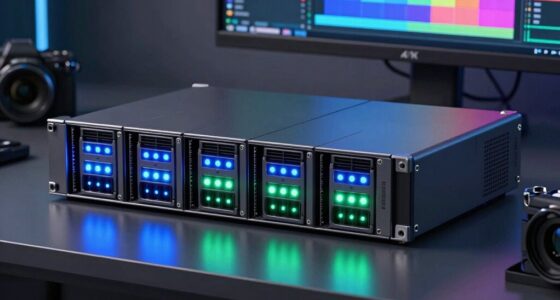

The best Thunderbolt 5 docks in 2026 turn one cable into a full workstation, but the right pick depends on whether you prioritize port count, display bandwidth, or charging power. The CalDigit TS5 stands out as the best overall choice thanks to its 15-port layout, high-wattage laptop charging, and refined build. If your budget is tighter, the Plugable TBT-UDH2 delivers dual 8K output and 140W charging at a friendlier price, while the OWC Thunderbolt 5 Hub is the smart pick for anyone who mainly needs extra Thunderbolt ports rather than a full dock. The core tradeoff in this category is between all-in-one desktop docks and compact hubs, and between raw port counts and the bandwidth each port actually receives. Read on for the full breakdown of all 14 options.

Get the latest gadgets delivered free — and shop member deals
- Fast, free delivery on millions of items
- Access to Prime Big Deal Days deals on October 6–7
- Prime Video, Amazon Music and more included
Complete the kit



Key Takeaways
- Thunderbolt 5 hubs (OWC, CalDigit Element 5) and full docks (TS5, iVANKY FusionDock Max 2) serve different buyers: hubs maximize downstream Thunderbolt bandwidth, docks maximize peripheral variety.
- Charging wattage varied more than any other spec in this lineup, ranging from around 90W on hubs to 300W on the Dell SD25TB5 Pro — a deciding factor for power-hungry workstations.
- The iVANKY FusionDock Max 2 and WAVLINK 13-in-1 with NVMe slot push beyond standard I/O into built-in storage, a differentiator for video editors and Mac users who want a dock that also expands capacity.
- Three UGREEN Maxidok variants appear in this comparison, and the differences between them (display output, port count) matter more than the shared name suggests.
- Smart docks from Dell and Lenovo add fleet-management features that home users pay for without needing — making them better values only in managed IT environments.
| Plugable Thunderbolt 5 Docking Station (TBT-UDH2) |  | Best Overall | Total Ports: 16-in-1 | Video Outputs: Dual native HDMI 2.1 | Max Resolution: 8K 60Hz or 4K 144Hz (TB5); dual 4K 120Hz (TB4) | VIEW LATEST PRICE | See Our Full Breakdown |
| WAVLINK Thunderbolt 5 Docking Station |  | Best Value | Upstream Port: 1x Thunderbolt 5, up to 120 Gbps, 140W PD | Downstream Ports: 3x Thunderbolt 5 (80 Gbps, 15W/30W PD), 4x USB-A 3.2 | Display Support: Single 8K 144Hz; dual 8K 60Hz; triple 4K 144Hz (Windows 11+) | VIEW LATEST PRICE | See Our Full Breakdown |
| UGREEN Maxidok Thunderbolt 5 Docking Station |  | Best for Power Users | Total Ports: 17 | Thunderbolt Bandwidth: Up to 120Gbps | M.2 Slot: NVMe PCIe Gen4x4, 2230-2280 SSDs up to 8TB | VIEW LATEST PRICE | See Our Full Breakdown |
| WAVLINK 13-in-1 Thunderbolt 5 Docking Station with NVMe M.2 SSD Slot |  | Best Storage-First Value | Total Ports: 13 | Thunderbolt: 1x upstream TB5 (120Gb/s, 140W), 3x downstream TB5 (80Gb/s) | M.2 Slot: PCIe Gen4x4 NVMe, M Key, 2280 | VIEW LATEST PRICE | See Our Full Breakdown |
| OWC Thunderbolt 5 Hub 5-Port Connectivity Solution |  | Best Compact | Total Ports: 5 | Data Speed: Up to 80Gb/s bi-directional; 120Gb/s display bandwidth | Display Support: 4K, 5K, 6K, and up to three 8K displays | VIEW LATEST PRICE | See Our Full Breakdown |
| CalDigit Element 5 Thunderbolt 5 Hub (E5) |  | Best Compact Thunderbolt 5 Hub | Ports: 9 (4x TB5, 3x USB-A, 2x USB-C 10Gb/s) | Thunderbolt Speed: 80Gb/s (up to 120Gb/s display boost) | Host Charging: 90W | VIEW LATEST PRICE | See Our Full Breakdown |
| CalDigit TS5 Thunderbolt 5 Dock |  | Best Full Desktop Dock | Ports: 15 | Thunderbolt 5: 1 host + 3 downstream at 80Gb/s | Ethernet: 2.5GbE | VIEW LATEST PRICE | See Our Full Breakdown |
| Dell SD25TB5 Pro 300W 12-Port Thunderbolt 5 Smart Dock |  | Best for Power-Hungry Workstations | Ports: 12 (2x TB5, 2x DP 2.1, 1x HDMI 2.1, 5x USB) | Max Displays: 4 (4K@120Hz each) | Max Resolution: 8K @ 60Hz | VIEW LATEST PRICE | See Our Full Breakdown |
| UGREEN Maxidok Thunderbolt 5 Docking Station |  | Best Value Full-Featured Dock | Connectivity: 3x TB5, 3x USB-A 10Gbps, DP 2.1, Gigabit Ethernet, SD/TF | Transfer Speed: 120Gbps unidirectional / 80Gbps bidirectional | Display Support: Triple 4K@144Hz or 8K@60Hz | VIEW LATEST PRICE | See Our Full Breakdown |
| iVANKY FusionDock Max 2 23-in-1 Thunderbolt 5 Docking Station |  | Best for MacBook Pro Max Users | Total Ports: 23-in-1 (26 connections) | Thunderbolt 5: 3 ports at 120Gbps each | USB Ports: 10 (up to 10Gbps) | VIEW LATEST PRICE | See Our Full Breakdown |
| OWC Thunderbolt 5 Dock 11-Port Connectivity Solution |  | Best for Silent Workspaces | Total Ports: 11 | Thunderbolt Ports: 3 x Thunderbolt 5 | Compatibility: Thunderbolt 5/4/3, USB4, USB-C | VIEW LATEST PRICE | See Our Full Breakdown |
| Anker Prime TB5 14-in-1 Thunderbolt 5 Docking Station for Laptops |  | Best Port Count | Interface: Thunderbolt 5 | Port Count: 14-in-1 | Downstream Ports: 2 x Thunderbolt 5, 2 x USB-C, 3 x USB-A | VIEW LATEST PRICE | See Our Full Breakdown |
| UGREEN Maxidok Thunderbolt 5 Docking Station, Triple 4K@60Hz, 4x TBT5 Ports |  | Best for Bandwidth-Heavy Workflows | Thunderbolt Ports: 4 x Thunderbolt 5 (120Gbps) | Display Support: Triple 4K@144Hz, dual 6K@60Hz, single 8K | Max Power Delivery: 140W | VIEW LATEST PRICE | See Our Full Breakdown |
| Lenovo ThinkPad Thunderbolt 5 Smart Dock 7500 |  | Best for IT Fleet Deployment | Data Transfer Speed: Up to 120 Gbps | Power Delivery: Up to 180W, PD 3.1 | Display Support: Up to three 8K 60Hz displays | VIEW LATEST PRICE | See Our Full Breakdown |
| Thunderbolt 5 dock | Ethernet | Display Support | Total Ports |
|---|---|---|---|
| Plugable Thunderbolt 5 Docking | 2.5Gbps | — | 16-in-1 |
| WAVLINK Thunderbolt 5 Docking | 2.5G RJ45 | Single 8K 144Hz; dual 8K 60Hz; triple 4K 144Hz (Windows 11+) | — |
| UGREEN Maxidok Thunderbolt 5 D | 2.5GbE | — | 17 |
| WAVLINK 13-in-1 Thunderbolt 5 | 2.5G RJ45 | Single 8K@144Hz, dual 8K@60Hz, triple 4K@144Hz | 13 |
| OWC Thunderbolt 5 Hub 5-Port C | — | 4K, 5K, 6K, and up to three 8K displays | 5 |
| CalDigit Element 5 Thunderbolt | — | Single 8K, dual 6K/8K, dual 4K@240Hz | — |
| CalDigit TS5 Thunderbolt 5 Doc | 2.5GbE | — | — |
| Dell SD25TB5 Pro 300W 12-Port | — | — | — |
| UGREEN Maxidok Thunderbolt 5 D | — | Triple 4K@144Hz or 8K@60Hz | — |
| iVANKY FusionDock Max 2 23-in- | 2.5GbE RJ45 | Dual 6K@60Hz + 4K@60Hz on Max chips | 23-in-1 (26 connections) |
| OWC Thunderbolt 5 Dock 11-Port | 2.5x faster than standard Ethernet | Up to three 8K displays | 11 |
| Anker Prime TB5 14-in-1 Thunde | 2.5 Gbps | — | — |
| UGREEN Maxidok Thunderbolt 5 D | 2.5GbE | Triple 4K@144Hz, dual 6K@60Hz, single 8K | 13 |
| Lenovo ThinkPad Thunderbolt 5 | 2.5 Gbps | Up to three 8K 60Hz displays | — |
More Details on Our Top Picks
Plugable Thunderbolt 5 Docking Station (TBT-UDH2)
Of everything in this roundup, the Plugable TBT-UDH2 strikes the most balanced mix of connectivity, power, and practicality. What sets it apart from the WAVLINK Thunderbolt 5 Dock and the UGREEN Maxidok is its dual native HDMI 2.1 ports — no adapters, no dongles, just plug your monitors straight in. That matters for anyone tired of DisplayPort-to-HDMI conversion cables, and the fact that it runs up to 8K 60Hz or dual 4K 144Hz without extra hardware is genuinely rare. Add 140W laptop charging, two front-facing 30W USB-C ports for phone charging, and a driverless TAA-compliant design, and this works equally well in a corporate IT rollout or a home office. The tradeoffs are real, though: base Apple Silicon Macs are limited to a single display, and Thunderbolt 3, Windows ARM, and gaming laptops with a DisplayPort MUX are simply out of luck. Intel hosts need 12th Gen or newer. For most Thunderbolt 5 or 4 laptop owners, however, this pick makes the most sense as the do-everything default.
Pros:- Dual native HDMI 2.1 ports support up to 8K 60Hz or dual 4K 144Hz without adapters
- 140W laptop charging plus two front-facing 30W USB-C charging ports for phones and accessories
- Driverless, TAA-compliant design works for both corporate IT deployments and home offices
- Lifetime technical support from a North American team
Cons:- Base M1/M2/M3 MacBooks support only a single external display
- Thunderbolt 3, USB-C-only, and Windows ARM hosts are not supported, and Intel hosts require 12th Gen or newer
Best for: Windows 11 or modern Mac users who want a plug-and-play dock with native dual HDMI monitors and serious charging power
Not ideal for: Owners of older Thunderbolt 3 laptops, Windows ARM devices, or gaming laptops with DisplayPort MUX — compatibility simply isn’t there
- Total Ports:16-in-1
- Video Outputs:Dual native HDMI 2.1
- Max Resolution:8K 60Hz or 4K 144Hz (TB5); dual 4K 120Hz (TB4)
- Laptop Charging:140W
- Front Charging Ports:2x USB-C at 30W
- Ethernet:2.5Gbps
- Card Readers:UHS-II
- Compatibility:Thunderbolt 5/4, USB4; Windows 11+, macOS 13+
Our verdict“If you want one dock that handles dual HDMI monitors, 140W charging, and everything in between without adapters, this is the safest all-around choice.”
WAVLINK Thunderbolt 5 Docking Station
Not everyone needs the kitchen-sink approach of the UGREEN Maxidok or the enterprise polish of the Dell SD25TB5. The WAVLINK Thunderbolt 5 Dock covers the essentials — four downstream Thunderbolt and USB ports, 2.5G Ethernet, an SD 4.0 reader, and audio — at a friendlier price point than most TB5 docks in this lineup. Compared with the OWC Thunderbolt 5 Hub, it trades the hub’s fanless silence and compact size for a much broader port selection, including Ethernet that the OWC lacks entirely. Its upstream port delivers 140W power delivery, so it charges even power-hungry workstations, and display support stretches to a single 8K at 144Hz or triple 4K at 144Hz. The catch is that those multi-display figures only apply to compatible Windows 11 PCs; macOS tops out at two displays, and your mileage varies by host. HDMI and DisplayPort cables aren’t in the box either, so budget a little extra. Still, for a straightforward, no-frills expansion of a modern laptop, this option stands out as the sensible mid-range pick.
Pros:- Wide port range including three downstream Thunderbolt 5 ports, 2.5G Ethernet, and SD 4.0 card reader
- Up to 140W power delivery to the connected computer
- Supports single 8K 144Hz, dual 8K 60Hz, or triple 4K 144Hz on compatible Windows PCs
- Includes a two-year warranty and Kensington security slot
Cons:- Triple external displays require a compatible Windows 11 or later PC; macOS is limited to two
- HDMI/DisplayPort cables and the security lock are not included
Best for: Budget-conscious Windows 11 users who want core Thunderbolt 5 connectivity and multi-monitor support without paying premium dock prices
Not ideal for: Mac users wanting more than two displays, or anyone expecting every cable in the box — video cables and the security lock are sold separately
- Upstream Port:1x Thunderbolt 5, up to 120 Gbps, 140W PD
- Downstream Ports:3x Thunderbolt 5 (80 Gbps, 15W/30W PD), 4x USB-A 3.2
- Display Support:Single 8K 144Hz; dual 8K 60Hz; triple 4K 144Hz (Windows 11+)
- Ethernet:2.5G RJ45
- Card Reader:SD 4.0, up to 312 MB/s
- Audio:3.5mm audio/mic combo jack
- Warranty:2 years
Our verdict“A solid middle-ground dock that delivers Thunderbolt 5 speeds and 140W charging for Windows users who don’t need every port under the sun.”
UGREEN Maxidok Thunderbolt 5 Docking Station
The UGREEN Maxidok is the most ambitious dock in this batch, with 17 ports, an aluminum unibody, AI-assisted cooling, and up to 240W of total system power. Its signature trick is the built-in M.2 NVMe Gen4x4 slot supporting up to 8TB — something neither the Plugable TBT-UDH2 nor the OWC Thunderbolt 5 Hub offers. For video editors and creators who move massive project files, having that storage riding inside the dock at full Thunderbolt 5 bandwidth changes how you work. This model is better suited to complex desks with triple independent Windows displays, 2.5GbE networking, and multiple audio outputs than the simpler WAVLINK dock, which offers a fraction of the I/O. But the extra capability brings friction: the DisplayPort output doesn’t support DP++, so HDMI monitors need active adapters, and the SSD slot only fits drives with heatsinks under specific dimensions. The 60mm cooling fan stays under 30dB but isn’t silent like the fanless OWC. If your desk resembles a small studio, those compromises are worth it; minimalists should look elsewhere.
Pros:- 17-port layout including dual Thunderbolt 5 downstream ports and 2.5GbE Ethernet
- Built-in M.2 NVMe Gen4x4 slot supports SSDs up to 8TB at full speed
- Up to 240W total system power handles demanding workstation setups
- Durable aluminum chassis with security lock support
Cons:- DisplayPort lacks DP++ support, so HDMI monitors require active adapters
- M.2 SSD compatibility is limited by heatsink height (≤12mm) and width (≤24mm)
- Cooling fan produces audible noise during heavy operation
Best for: Content creators and power users who want integrated high-speed NVMe storage alongside extensive multi-monitor connectivity
Not ideal for: Anyone wanting a silent, low-maintenance desk setup — the cooling fan runs audibly and the M.2 slot has fussy heatsink size limits
- Total Ports:17
- Thunderbolt Bandwidth:Up to 120Gbps
- M.2 Slot:NVMe PCIe Gen4x4, 2230-2280 SSDs up to 8TB
- Video:DisplayPort 1.4, 2x Thunderbolt 5 downstream
- USB:3x USB-A 10Gbps, 3x USB-C 10Gbps (2 share 60W charging)
- Ethernet:2.5GbE
- Total Power:Up to 240W
- Cooling:AI smart cooling, 60mm fan under 30 dB
Our verdict“The dock to buy when your desk is a production rig and internal 8TB storage matters more than silence or simplicity.”
WAVLINK 13-in-1 Thunderbolt 5 Docking Station with NVMe M.2 SSD Slot
Think of this WAVLINK 13-in-1 as a middle path between the storage-less Plugable TBT-UDH2 and the oversized UGREEN Maxidok. It includes the same headline feature that makes the Maxidok appealing — a PCIe Gen4x4 M.2 slot for fast local caching — but in a leaner, more affordable 13-port package that still delivers 140W host charging and three downstream Thunderbolt 5 ports. Display output matches its bigger rivals too: single 8K at 144Hz, dual 8K at 60Hz, or triple 4K at 144Hz on a compatible Windows 11 machine with a Thunderbolt 5 port. Compared with the WAVLINK Thunderbolt 5 Dock above, you give up one USB-A port but gain the SSD slot, which is a worthwhile trade for photographers or business users who want scratch storage built into the dock. Just remember the drive isn’t included, macOS users are capped at two displays, and you’ll need to supply your own video cables. For buyers whose priority is fast storage plus solid connectivity without the Maxidok’s fan and bulk, this option makes the most sense.
Pros:- Built-in PCIe Gen4x4 M.2 slot enables fast local storage and caching
- Up to 140W host charging through the Thunderbolt 5 upstream port
- Supports single 8K 144Hz, dual 8K 60Hz, or triple 4K 144Hz workflows
- Versatile port selection including 2.5G Ethernet, SD 4.0, and audio
Cons:- M.2 NVMe SSD is not included
- Triple external display requires Windows 11 with a Thunderbolt 5 port; macOS is limited to two displays
- USB-C to HDMI/DP cables and security lock are not included
Best for: Professionals who want built-in NVMe storage and multi-display support at a lower cost than the flagship storage docks
Not ideal for: Mac users needing triple displays, or anyone expecting a bundled SSD — it’s an empty slot, and video cables aren’t included either
- Total Ports:13
- Thunderbolt:1x upstream TB5 (120Gb/s, 140W), 3x downstream TB5 (80Gb/s)
- M.2 Slot:PCIe Gen4x4 NVMe, M Key, 2280
- Display Support:Single 8K@144Hz, dual 8K@60Hz, triple 4K@144Hz
- USB-A:4x USB-A 3.2
- Ethernet:2.5G RJ45
- Power:180W (20V DC)
- Warranty:2 years
Our verdict“A smart compromise pick that adds fast NVMe storage and 140W charging without the price or footprint of a full flagship dock.”
OWC Thunderbolt 5 Hub 5-Port Connectivity Solution
Some buyers don’t need a dock at all — they need more Thunderbolt ports. That’s exactly what the OWC Thunderbolt 5 Hub delivers in a compact 3×6-inch fanless aluminum slab. Where the Plugable TBT-UDH2 and the WAVLINK 13-in-1 pile on card readers, audio jacks, and Ethernet, this hub keeps things ruthlessly simple: five ports total, up to 140W charging, and enough display bandwidth for up to three 8K monitors on a Thunderbolt 5 host. Its fanless design means zero noise — a genuine advantage over the actively cooled UGREEN Maxidok — and its compatibility list is the broadest here, stretching back to Thunderbolt 3 and even plain USB-C hosts. The tradeoffs follow directly from the minimalism: no Ethernet, only three USB ports, and no card reader. You’re also expected to bring your own adapters if your monitors use HDMI. This model is better suited to MacBook and iPad Pro owners who want silent desk expansion through daisy-chaining rather than a traditional dock, and who already own Thunderbolt-native displays or peripherals.
Pros:- Up to 80Gb/s bi-directional data and 120Gb/s display bandwidth on Thunderbolt 5 hosts
- Drives up to three 8K displays with broad Thunderbolt 3-through-5 and USB-C compatibility
- 140W charging with power supply and Thunderbolt 5 cable included
- Fanless aluminum enclosure runs completely silent
Cons:- No built-in Ethernet port
- Only five total ports, with no card reader or audio jack
Best for: Mac, PC, or iPad Pro owners who want silent, compact port multiplication and already have Thunderbolt or USB-C displays
Not ideal for: Anyone who needs Ethernet, card readers, or analog audio — you’ll end up bolting on adapters and losing the simplicity you paid for
- Total Ports:5
- Data Speed:Up to 80Gb/s bi-directional; 120Gb/s display bandwidth
- Display Support:4K, 5K, 6K, and up to three 8K displays
- Power Delivery:Up to 140W
- Compatibility:Mac, PC, iPad Pro; TB5/TB4/TB3, USB4, USB-C
- Enclosure:Fanless aluminum
- Included:Thunderbolt 5 cable, 140W power supply
Our verdict“The right buy if you value silence and simplicity over port count — pair it with Thunderbolt monitors and skip the adapter tangle.”
CalDigit Element 5 Thunderbolt 5 Hub (E5)
At just 8.9 ounces, the Element 5 delivers full 80Gb/s Thunderbolt 5 throughput in a footprint smaller than a paperback, and that portability is its entire reason for existing. Four Thunderbolt 5 downstream ports means it chains hubs, drives, and displays as freely as the larger CalDigit TS5, but without the desk-dock heft, card readers, or Ethernet. The 90W of sustained charging covers most MacBooks and many Windows laptops, though power-hungry workstation machines will want the TS5’s 140W or the Dell SD25TB5’s 240W+. Compared with the OWC Thunderbolt 5 Hub, it trades one downstream TB5 port for three USB-A ports, which still matters for older peripherals.
The tradeoff for the compact size is no SD card reader, no Ethernet, and display topology that leans on host capability — base M-series Macs won’t do dual displays, and triple-display output is Windows TB5-only.
Pros:- Four downstream Thunderbolt 5/USB4 v2 ports in an ultralight 8.9 oz body
- Up to 120Gb/s display bandwidth boost for high-refresh multi-monitor setups
- 90W sustained charging with offline charging for phones and tablets
- 6,200MB/s PCIe performance for external NVMe storage
Cons:- No Ethernet, SD card reader, or dedicated video outputs — it’s a hub, not a full dock
- Base M1–M3 Macs cannot drive dual displays; triple displays require a Windows TB5 host
Best for: Mobile professionals and Mac users who want full Thunderbolt 5 expansion in a bag-friendly hub they can move between home and office
Not ideal for: Photographers and video editors who need built-in SD readers and 2.5GbE — the OWC Dock or CalDigit TS5 cover that without adapters
- Ports:9 (4x TB5, 3x USB-A, 2x USB-C 10Gb/s)
- Thunderbolt Speed:80Gb/s (up to 120Gb/s display boost)
- Host Charging:90W
- Power Supply:180W
- Display Support:Single 8K, dual 6K/8K, dual 4K@240Hz
- Dimensions:4.5 x 2.75 x 1.12 in, 8.9 oz
Our verdict“Buy it if you want the most capable Thunderbolt 5 expansion per ounce; skip it if your desk setup needs card readers and wired networking.”
CalDigit TS5 Thunderbolt 5 Dock
The TS5 is the one-cable desk replacement: 15 ports covering 2.5GbE Ethernet, UHS-II SD and microSD readers, three audio jacks, and three downstream Thunderbolt 5 ports, all fed by a 240W power supply that pushes up to 140W to the host. Where the Element 5 is a hub you toss in a bag, the TS5 is the fixture your monitors, speakers, storage, and card readers permanently live on. Compared with the Dell SD25TB5 Pro, it’s platform-agnostic rather than Dell-optimized, and adds card readers Dell omits — but its 140W ceiling falls well short of Dell’s 300W for mobile workstations.
Display output relies on DisplayPort 2.1 and host capability rather than the HDMI flexibility of the UGREEN Maxidok, so check your monitor inputs before committing.
Pros:- 15-port selection including 2.5GbE, UHS-II SD/microSD, and three audio jacks
- 140W host charging comfortably covers 16-inch MacBooks and most Windows laptops
- DisplayPort 2.1 output supports dual 8K 60Hz on capable TB5 hosts
- Backward compatible with Thunderbolt 3/4, USB4, and USB-C devices
Cons:- Older Thunderbolt 3/4 and USB-C hosts get reduced functionality and slower display limits
- No HDMI ports — HDMI monitors need adapters or DP-to-HDMI cabling
Best for: Professionals with a permanent dual-monitor desk setup who want every connection type — Ethernet, card readers, audio — from a single Thunderbolt 5 cable
Not ideal for: Dell Precision or gaming laptop owners needing more than 140W charge-through while under full load
- Ports:15
- Thunderbolt 5:1 host + 3 downstream at 80Gb/s
- Ethernet:2.5GbE
- Card Readers:SD 4.0 and microSD 4.0 UHS-II
- Host Charging:Up to 140W (240W PSU)
- Display Output:DisplayPort 2.1, up to dual 8K 60Hz
Our verdict“The most complete single-cable desk solution in this lineup for Mac and mixed-OS users who need card readers and networking built in.”
Dell SD25TB5 Pro 300W 12-Port Thunderbolt 5 Smart Dock
Nothing else in this roundup comes close on power: the SD25TB5 Pro delivers 300W to Dell systems and 240W to everyone else, enough to run a Precision or XPS under full CPU/GPU load without the battery quietly draining — a real failure mode on docks like the CalDigit TS5 (140W) or UGREEN Maxidok (100W). Its video configuration is also unusually flexible: two DisplayPort 2.1 ports plus HDMI 2.1, supporting up to four displays at 4K/120Hz or a single 8K/60Hz panel, which spares you the adapter gymnastics the TS5’s DP-only outputs demand. Linux support across Ubuntu and RHEL is a genuine rarity here.
The tradeoffs: only two Thunderbolt 5 ports versus four on the Element 5, no card readers, and non-Dell laptops take a 60W haircut.
Pros:- 300W power delivery to Dell systems, 240W to others — the highest in this lineup
- Native HDMI 2.1 plus dual DisplayPort 2.1 for up to four displays
- Official Linux support (Ubuntu, RHEL) alongside Windows, macOS, and ChromeOS
- 12 ports including dual Thunderbolt 5 and five USB ports
Cons:- Only two Thunderbolt 5 ports, limiting daisy-chaining versus four-port hubs
- Non-Dell laptops receive a reduced 240W ceiling
- No SD/microSD card reader despite the port count
Best for: Dell mobile-workstation owners and multi-monitor power users who need maximum charge-through and four displays from one cable
Not ideal for: Mac-centric photographers — no SD reader, and macOS display limits will undercut the quad-monitor pitch
- Ports:12 (2x TB5, 2x DP 2.1, 1x HDMI 2.1, 5x USB)
- Max Displays:4 (4K@120Hz each)
- Max Resolution:8K @ 60Hz
- Power Delivery:300W Dell / 240W non-Dell
- Compatible OS:Windows 10/11, macOS, ChromeOS, Ubuntu, RHEL
Our verdict“The pick when wattage is the bottleneck — ideal for Dell workstations, overkill for a MacBook Air.”
UGREEN Maxidok Thunderbolt 5 Docking Station
The Maxidok hits the feature checklist most buyers actually have — DisplayPort 2.1, Gigabit Ethernet, SD/TF reader, three Thunderbolt 5 downstream ports — at a price point below the CalDigit and Dell flagships. Triple 4K at 144Hz is the headline for gamers and traders, a refresh-rate claim the iVANKY FusionDock Max 2 can’t match, and the fanless aluminum chassis means no whine on a quiet desk. Compared with the CalDigit TS5, you give up 2.5GbE for plain Gigabit and 40W of charging headroom (100W vs 140W), but most mainstream laptops won’t notice either difference. It’s also the more sensible pick than the Dell SD25TB5 for anyone not driving four monitors.
Two annoyances: HDMI monitors need an active adapter, and Mac users must be on macOS 15 or later for full functionality.
Pros:- Triple 4K@144Hz or dual/single 8K@60Hz display support
- Fanless design with internal thermal management for silent operation
- Well-rounded port mix: 3x TB5, 3x USB-A 10Gbps, DP 2.1, Ethernet, SD/TF
- Up to 100W laptop charging from a 140W total budget
Cons:- Gigabit Ethernet only — slower than the 2.5GbE on the TS5 and FusionDock
- HDMI connections require an active DP-to-HDMI adapter or cable
- Mac users need macOS 15+ for full compatibility
Best for: Value-focused buyers who want card readers, Ethernet, and high-refresh multi-monitor support without flagship-dock pricing
Not ideal for: Workstation owners pushing past 100W draw, and 2.5GbE network users stuck on its Gigabit port
- Connectivity:3x TB5, 3x USB-A 10Gbps, DP 2.1, Gigabit Ethernet, SD/TF
- Transfer Speed:120Gbps unidirectional / 80Gbps bidirectional
- Display Support:Triple 4K@144Hz or 8K@60Hz
- Power:140W total; up to 100W to laptop
- Design:Fanless aluminum, 1.6 kg, with security lock
Our verdict“The smart middle ground for most single- or dual-monitor setups — nearly flagship capability at a friendlier price.”
iVANKY FusionDock Max 2 23-in-1 Thunderbolt 5 Docking Station
The FusionDock Max 2 is unapologetically Mac-only, and that focus buys things no generalist dock here offers: triple-display support (dual 6K@60Hz plus 4K@60Hz) on Max-chip MacBooks, ten USB ports, 2.5GbE, and UHS-II-class card readers in one fanless aluminum chassis. Against the UGREEN Maxidok, it counters the Gigabit-only Ethernet with 2.5GbE and adds far more USB capacity; against the CalDigit TS5, it matches the 140W charging while nearly doubling the port count. The copper-and-graphene passive cooling keeps it silent and cool to the touch under sustained loads, and the 24-month warranty is a real differentiator at this tier.
The cost of specialization is steep: it’s incompatible with Windows and ChromeOS, supports only one Mac at a time, and display capability drops sharply on Pro-tier and base chips.
Pros:- Triple displays (dual 6K@60Hz + 4K@60Hz) on Max-chip MacBooks
- Massive port selection: 3x TB5 at 120Gbps, 10 USB ports, SD/TF 4.0, 2.5GbE
- Silent fanless cooling with copper/graphene thermal construction
- 24-month warranty with replacement guarantee
Cons:- Mac-only — no Windows or ChromeOS support at all
- Display capability varies heavily by chip tier, so Pro and base Macs get far less
- Single-host design with no KVM-style switching between computers
Best for: MacBook Pro M-series Max owners who want the maximum port count and true triple-display output from a single silent dock
Not ideal for: Anyone with a Windows laptop, a mixed-OS household, or a base/Pro-chip Mac that can’t exploit the triple-display support
- Total Ports:23-in-1 (26 connections)
- Thunderbolt 5:3 ports at 120Gbps each
- USB Ports:10 (up to 10Gbps)
- Ethernet:2.5GbE RJ45
- Display Support:Dual 6K@60Hz + 4K@60Hz on Max chips
- Power Delivery:140W
- Warranty:24 months
Our verdict“If your desk is anchored by a Max-chip MacBook Pro, this is the most complete Mac-native dock here — everyone else should look elsewhere.”
OWC Thunderbolt 5 Dock 11-Port Connectivity Solution
Where most Thunderbolt 5 docks lean on fans to cope with sustained throughput, this OWC model keeps everything fanless inside an aluminum chassis, which makes it the natural pick for recording studios, editing bays, or any desk where silence matters. Compared with the Anker Prime TB5, you trade three ports for quiet operation — a fair swap if you never found 11 connections limiting. The inclusion of both SD and microSD UHS-II readers mirrors the CalDigit TS5’s convenience without the larger footprint, and 140W charging covers power-hungry MacBooks. That said, hitting three 8K displays depends entirely on a Thunderbolt 5 host, so owners of older machines are paying for headroom they can’t use. Compared with the OWC Thunderbolt 5 Hub, this dock adds card readers, Ethernet, and host charging that the hub deliberately omits.
Pros:- Fanless aluminum design produces zero operational noise
- Built-in SD and microSD UHS-II readers eliminate a separate card reader
- 140W charging handles demanding MacBooks
- Three daisy chains preserve expandability beyond the 11 onboard ports
Cons:- Three 8K displays require a Thunderbolt 5 host; older machines get reduced output
- 11 ports is arguably more connectivity than casual users need, and the price reflects it
Best for: Photographers, video editors, and audio professionals who need card readers, fast Ethernet, and silent operation at a single desk
Not ideal for: Owners of Thunderbolt 3 or pre-M4 base MacBooks — display and bandwidth limits will leave paid-for capability unused
- Total Ports:11
- Thunderbolt Ports:3 x Thunderbolt 5
- Compatibility:Thunderbolt 5/4/3, USB4, USB-C
- Ethernet:2.5x faster than standard Ethernet
- Card Readers:SD 4.0 and microSD UHS-II
- Power Delivery:Up to 140W
- Display Support:Up to three 8K displays
- Warranty:2-year limited warranty
Our verdict“Buy this if silence and integrated card readers matter more than maximum port count.”
Anker Prime TB5 14-in-1 Thunderbolt 5 Docking Station for Laptops
If the OWC 11-Port leaves you juggling adapters for audio or legacy USB-A drives, the Anker Prime TB5 answers with a 14-in-1 layout that covers essentially every peripheral a laptop owner carries — including HDMI 2.1 or DisplayPort 2.1, something the UGREEN Maxidok lacks entirely. The choice of active cooling rather than passive aluminum is the key tradeoff: Anker sustains full-load performance more consistently, but you accept potential fan noise where the OWC stays silent. Dual 8K@60Hz output on compatible Windows laptops is genuinely rare at this port count. One quibble: the front USB-C ports share a 45W budget, so charging a phone and earbuds simultaneously splits that figure — a small compromise for this much connectivity in one box.
Pros:- 14-in-1 connectivity including HDMI 2.1 or DisplayPort 2.1 video output
- Dual 8K@60Hz support on compatible Thunderbolt 5 Windows laptops
- 140W power delivery through the upstream Thunderbolt 5 port
- Active cooling sustains performance during heavy sustained transfers
Cons:- Front USB-C ports share 45W, limiting simultaneous device charging
- Fan noise is possible under full load, unlike fanless rivals
- Full speed and dual-8K output require Thunderbolt 5 host hardware
Best for: Laptop owners who want one dock to replace every adapter — legacy USB-A, SD cards, Ethernet, audio, and modern display output included
Not ideal for: Noise-sensitive home offices or studios — the fan can become audible under sustained heavy loads
- Interface:Thunderbolt 5
- Port Count:14-in-1
- Downstream Ports:2 x Thunderbolt 5, 2 x USB-C, 3 x USB-A
- Ethernet:2.5 Gbps
- Max Display Resolution:8K@60Hz single; dual 8K@60Hz on TB5 Windows laptops
- Power Delivery:140W max upstream; 45W shared front USB-C
- Cooling:Active cooling system
- Warranty:24 months
Our verdict“The most complete single-box expansion here, provided a small amount of fan noise doesn’t bother you.”
UGREEN Maxidok Thunderbolt 5 Docking Station, Triple 4K@60Hz, 4x TBT5 Ports
This Maxidok is built around a single priority: Intel-certified 120Gbps throughput across four Thunderbolt 5 ports, making it the strongest option here for RAID arrays, external GPUs, and multi-drive scratch disks. Where the Anker Prime TB5 spreads its port budget across USB-A and HDMI, UGREEN concentrates on Thunderbolt — which means no built-in HDMI or DisplayPort, so your monitors must connect via Thunderbolt or USB-C. That restriction will alienate buyers with older displays, but video professionals already running Thunderbolt-native monitors won’t miss a thing. The compact 180W GaN adapter with interchangeable US/EU/UK plugs is a smarter travel story than the bulkier bricks that ship with the CalDigit TS5, and 140W dynamic charging keeps a MacBook Pro fed while drives pull hard. Compared with the OWC, the dual-layer aluminum chassis trades port count for sustained thermal headroom.
Pros:- Intel-certified 120Gbps Thunderbolt 5 bandwidth across 4 ports
- Flexible display scaling from triple 4K@144Hz up to single 8K
- Compact 180W GaN power adapter with US/EU/UK plugs suits international use
- Dual-layer aluminum chassis with thermal silicone handles sustained loads
Cons:- No Thunderbolt 3 backward compatibility, unlike the OWC dock
- Displays must connect through Thunderbolt — no HDMI or DisplayPort ports
Best for: Video editors and data professionals moving huge files to Thunderbolt SSDs or RAIDs who need certified 120Gbps speeds
Not ideal for: Users with HDMI- or DisplayPort-only monitors — this dock has no native video outputs at all
- Thunderbolt Ports:4 x Thunderbolt 5 (120Gbps)
- Display Support:Triple 4K@144Hz, dual 6K@60Hz, single 8K
- Max Power Delivery:140W
- Power Adapter:180W GaN with US/EU/UK plugs
- Ethernet:2.5GbE
- USB Ports:5 (2x USB-A 3.2, 2x USB-A 3.0, 1x USB-C 3.2)
- Card Slots:UHS-II SD/TF 4.0 (312MB/s)
- Total Ports:13
Our verdict“The clear pick when certified maximum bandwidth matters more than universal monitor compatibility.”
Lenovo ThinkPad Thunderbolt 5 Smart Dock 7500
The 7500 is the only dock in this lineup designed as much for the IT administrator as the end user. Its cloud-based fleet management, powered by AWS, lets teams push firmware updates and monitor docks remotely — a capability nothing from OWC, Anker, or UGREEN offers. It also out-muscles every consumer model here on power: 180W PD 3.1 versus the 140W ceiling of the OWC and Maxidok, enough for larger mobile workstations under full load. Native HDMI 2.1 and DisplayPort 2.1 outputs make it plug-compatible with existing office monitors, avoiding the dongle math the UGREEN Maxidok forces. The chassis built from 90% recycled materials supports corporate sustainability targets. The tradeoff: this is a managed-business product, so a solo buyer paying a premium for fleet tooling they’ll never open is better served by the Anker Prime TB5.
Pros:- Cloud-based fleet management enables remote firmware updates and monitoring at scale
- 180W PD 3.1 exceeds the 140W ceiling of consumer docks in this roundup
- Native HDMI 2.1 and DisplayPort 2.1 outputs connect directly to standard office monitors
- Chassis made from 90% recycled materials supports corporate sustainability goals
Cons:- Fleet-management features are dead weight for individual buyers and inflate the price
- ThinkPad-first design and tooling may feel out of place in a mixed or Mac-centric environment
Best for: IT departments deploying standardized docks across hybrid workforces that need remote management and high-wattage laptop charging
Not ideal for: Individual home-office buyers — fleet management features add cost with no personal benefit
- Data Transfer Speed:Up to 120 Gbps
- Power Delivery:Up to 180W, PD 3.1
- Display Support:Up to three 8K 60Hz displays
- Ethernet:2.5 Gbps
- Ports:Thunderbolt 5, HDMI 2.1, DisplayPort 2.1, USB-A/C, RJ45, combo audio
- Fleet Management:Lenovo Accessories Fleet Manager, cloud-based (AWS)
- Materials:90% recycled materials
Our verdict“The obvious choice for managed deployments, and overkill for everyone else.”

How We Picked
My ranking logic starts with bandwidth allocation, because Thunderbolt 5’s headline improvement is 80Gbps (up to 120Gbps for displays), and docks vary widely in how much of that reaches your monitors versus your storage drives. I then weighed display support — the number of external screens, their resolutions, and whether dual 8K or high-refresh 4K is actually achievable — since that is why most buyers upgrade from Thunderbolt 4. The third criterion was charging output: a dock that can’t keep a 16-inch MacBook Pro or mobile workstation at full battery under load undermines its own convenience.
From there, I evaluated port diversity and build quality, favoring docks that pair generous I/O with reliable firmware rather than those that simply stack on the most ports. Finally, I factored in value and intended audience — a $400 dock with 23 ports is not automatically better than a $200 hub if you only need three Thunderbolt downstream ports. That lens is why hubs and full docks are ranked side by side rather than against each other on raw spec sheets alone.
Factors to Consider When Choosing Best Thunderbolt 5 Docks
Before settling on a specific dock, it helps to understand the broader tradeoffs in the Thunderbolt 5 market — these are the mistakes and priorities that trip up most buyers.Hub or Dock: Know Which Problem You’re Solving
The most common mistake in this category is buying a dock when a hub would do, or vice versa. A Thunderbolt 5 hub like the OWC or CalDigit Element 5 exists to multiply your Thunderbolt ports — ideal if you already own Thunderbolt drives, captures cards, or an external GPU enclosure. A full dock adds display outputs, card readers, Ethernet, and USB-A for legacy gear, which matters if your desk is a tangle of adapters. Hubs preserve nearly all bandwidth for downstream Thunderbolt devices, while docks split bandwidth across many port types. Buy the wrong one and you’ll either overspend on ports you never touch or run out of flexibility within a month.
Display Bandwidth Is the Real Upgrade
Thunderbolt 5’s bandwidth boost exists almost entirely for displays, so match the dock to your monitor plans before anything else. If you run dual 6K panels or want 8K at 60Hz, only docks with full dual-display support — like the Plugable TBT-UDH2 or CalDigit TS5 — will hold up. Buyers running a single 4K monitor gain little from Thunderbolt 5 and would be better served by a cheaper Thunderbolt 4 dock. Also check whether display output uses native Thunderbolt or requires DisplayPort Alt Mode, since chaining behavior differs between Mac and PC. This single factor explains most of the price spread in this roundup.
Charging Power: Read the Fine Print
Manufacturers advertise total power supply wattage, but what reaches your laptop is what counts. A dock with a 180W PSU might only deliver 90W to the host after feeding its own ports, which is fine for a MacBook Air but marginal for a 16-inch MacBook Pro under sustained load. Workstation-class docks like the Dell SD25TB5 Pro at 300W exist precisely for this reason. If your laptop charges at 140W natively, buying a dock that tops out lower means slow charging or battery drain during heavy sessions. Check the host charging spec, not the PSU number on the box.
Mac, PC, or Mixed Environment
Dock compatibility diverges more than spec sheets suggest. Some docks, like the iVANKY FusionDock Max 2, are tuned for Mac-first workflows with features like built-in NVMe storage that macOS handles gracefully. Others, particularly the Dell and Lenovo smart docks, include fleet-management and PXE boot features that only matter in corporate Windows environments. Mixed-OS households should verify driver availability for both platforms, since firmware quirks around sleep and wake behavior differ. A dock that behaves flawlessly on one platform can be a source of daily frustration on another.
Built-In Storage and Future Expansion
A newer trend in this lineup is integrated NVMe slots, seen in the WAVLINK 13-in-1 and iVANKY FusionDock Max 2. For video editors and photographers, a dock that houses a fast SSD eliminates a separate enclosure and keeps desk clutter down. The tradeoff is thermal: sustained drive speeds inside a dock can throttle if cooling is an afterthought. If your storage needs will grow, also count downstream Thunderbolt ports — hubs with four TB5 ports let you chain drives and still reserve bandwidth for displays. Ports you don’t use today are cheaper than replacements later.
Price Tiers and When to Pay More
Thunderbolt 5 docks cluster into rough tiers: hubs around the low end, mainstream 12-to-15-port docks in the middle, and premium 20-plus-port or smart docks at the top. Paying more buys higher charging wattage, more Thunderbolt downstream ports, and better firmware support — not just a longer spec list. Budget buyers with simple needs genuinely lose nothing by choosing a hub. But bargain-hunting on no-name docks with thin documentation is where Thunderbolt buyers most often regret purchases, since certification and cable quality affect stability more than raw specs. Spend up when reliability, not port count, is what you actually need.
Frequently Asked Questions
Is a Thunderbolt 5 dock worth it if I only use 4K monitors?
Only if you have other bandwidth-hungry devices or plan to upgrade displays. A single 4K monitor at 60Hz uses a fraction of Thunderbolt 4’s already generous bandwidth, so the upgrade benefit is mostly theoretical for that setup. Thunderbolt 5 pays off when you run dual high-resolution panels, fast NVMe arrays, or 10GbE networking simultaneously — that’s where the extra 40Gbps of headroom stops traffic jams between devices. If your setup is one monitor plus a keyboard and mouse, a quality Thunderbolt 4 dock delivers the same experience for less.
Do all Thunderbolt 5 docks work with both Mac and Windows laptops?
Most are physically compatible, but behavior varies in the details. Macs cap external display configurations differently than Windows machines, so a dock rated for three 4K screens may only drive two on a base-model MacBook. Windows laptops vary in how much charging power they accept and whether they support all DisplayPort modes. Corporate-focused docks like the Dell and Lenovo models include management features that macOS ignores entirely. Check the manufacturer’s per-platform display and charging tables before buying rather than relying on the headline specs.
Can I use a Thunderbolt 5 dock with a Thunderbolt 4 or USB4 laptop?
Yes — the connection is backward compatible, but you’ll be limited to Thunderbolt 4 speeds and display capabilities. That means 40Gbps bandwidth instead of 80, and display configs fall back to what your laptop’s controller supports. The dock itself won’t be damaged, and in some cases buying ahead makes sense if a laptop upgrade is coming within a year. What doesn’t make sense is paying a premium for triple 8K support you can’t use until then. Match the dock generation to your most demanding current device unless an upgrade is imminent.
Why do some docks have an NVMe slot, and is it worth paying for?
An internal M.2 bay turns the dock into both a hub and an external drive, which saves desk space and one Thunderbolt port. For video editors working with large media libraries, this is genuinely useful — the drive is always connected and sleeps with your workstation. The tradeoffs are heat and portability: sustained transfers inside a dock can run warmer than a dedicated enclosure with better cooling, and the drive stays tethered to your desk. If you already own a fast Thunderbolt SSD, the slot adds little. If you’re buying storage anyway, a dock with a bay can be the tidier path.
What’s the difference between the UGREEN Maxidok variants in this roundup?
The three Maxidok models share a design language but differ in display output and port layout, which is why they occupy different spots in my ranking rather than being interchangeable. One variant emphasizes triple 4K at 60Hz with four TB5 ports, making it the pick for multi-monitor users; the others balance port counts differently for buyers with fewer screens and more peripherals. Read the display and charging specs carefully rather than the shared name, because buying the wrong variant means either paying for outputs you don’t need or falling short of the monitor setup you planned. The differences are meaningful enough that I’d treat them as separate products entirely.
Conclusion
For most buyers, the CalDigit TS5 is the best overall pick — its 15 ports, strong host charging, and polished firmware cover nearly every desk scenario without compromise. The Plugable TBT-UDH2 is the best value, delivering dual 8K output and 140W charging at a price well below the premium tier. On the premium end, the iVANKY FusionDock Max 2 justifies its cost for Mac power users who want 23 ports plus built-in storage, while the Dell SD25TB5 Pro earns its spot for workstations needing 300W of delivery.
Beginners and minimalists should skip the big docks entirely and grab the OWC Thunderbolt 5 Hub or CalDigit Element 5 — both are simpler, cheaper, and preserve full bandwidth for the devices that actually need it. For specific needs: the WAVLINK 13-in-1 with NVMe slot suits storage-focused setups, the Lenovo ThinkPad Smart Dock fits managed corporate fleets, and the UGREEN Maxidok triple-display variant handles multi-monitor arrays on a mid-range budget. Match the dock to your monitors and charging needs first, and the rest of the decision falls into place.
Fall Picks
fall essentials
As an affiliate, we earn on qualifying purchases.