

📊 Full opportunity report: Preparing Your Business For A Platform Switch: Risk-Assessment Essentials on IdeaNavigator AI — validation score, market gap, and execution plan.

Get the latest gadgets delivered free with Prime
- Fast, free delivery on millions of items
- Prime Video, Amazon Music and more included
- Member-only deals all year
TL;DR
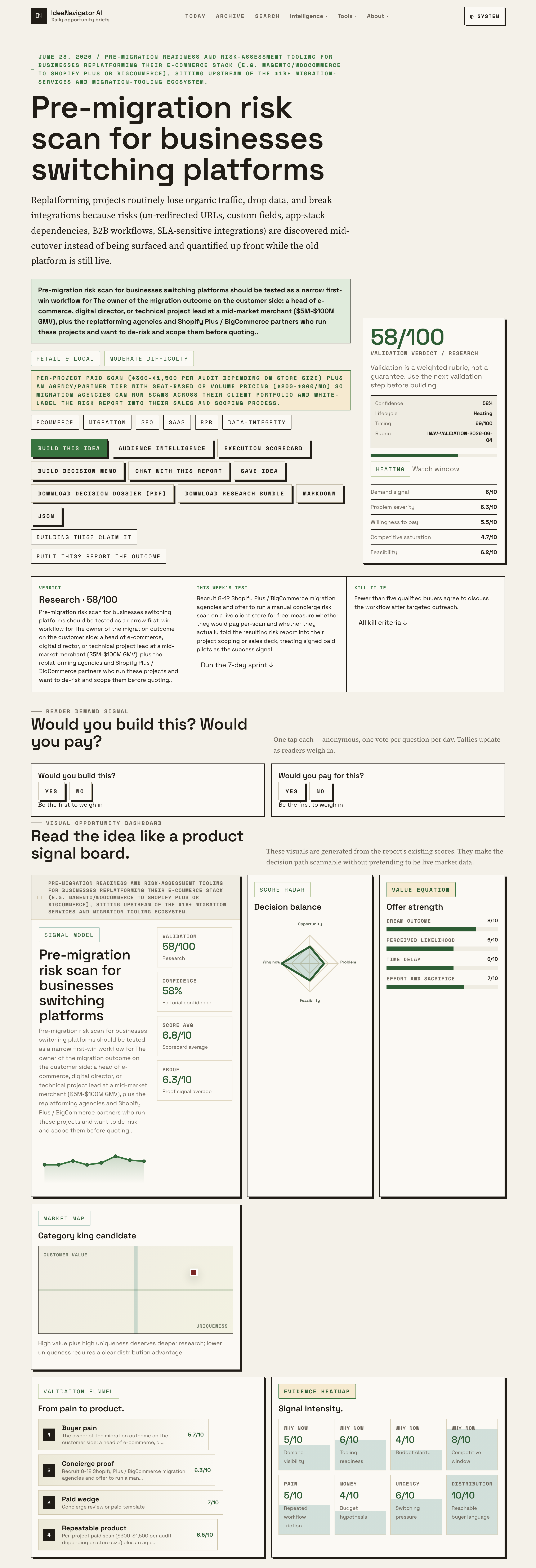
A new risk-assessment tool for e-commerce platform replatforming is being tested, aiming to help businesses identify potential migration risks upfront. This approach could reduce costly errors and improve project outcomes.
A new pre-migration risk scan tool is being tested to help mid-market e-commerce businesses identify potential issues before switching platforms. This initiative aims to reduce common migration pitfalls such as traffic loss, data gaps, and broken integrations, which often occur when risks are discovered late in the process. The tool, developed by IdeaNavigator AI, connects to source stores and produces a detailed risk report, enabling more accurate scoping and planning before a migration begins.
The risk scan is designed for owners of e-commerce stores with annual gross merchandise volume (GMV) between $5 million and $100 million, as well as replatforming agencies and Shopify Plus or BigCommerce partners. It assesses key areas such as URL redirects, SEO assets, app dependencies, custom fields, and data completeness, providing a quantified risk score and a prioritized remediation checklist. The goal is to surface potential issues while the source platform remains live, avoiding surprises during cutover.
Currently, the tool is being piloted with select agencies through free manual scans on live client stores. Early feedback indicates that agencies are interested in paying for such scans, with pricing expected to range from $300 to $1,500 per project depending on store size. The platform aims to sit upstream of the $1 billion+ migration services ecosystem, filling a gap left by automated migration tools that typically cover only 50-60% of the process.
Why Early Risk Assessment Changes Migration Outcomes
This development matters because it addresses a critical pain point in e-commerce replatforming: unforeseen risks that cause traffic drops, data loss, and broken integrations. By quantifying risks upfront, businesses and agencies can better scope projects, allocate resources, and avoid costly delays. As only 14% of merchants are satisfied with their current platforms and 77% plan to migrate within a year, this tool could significantly improve success rates for the rapidly growing replatforming market.
e-commerce platform migration risk assessment tool
As an affiliate, we earn on qualifying purchases.
As an affiliate, we earn on qualifying purchases.
The Growing Need for Pre-Migration Risk Tools
Replatforming is becoming increasingly urgent due to end-of-life deadlines for legacy systems like Magento 1 and the dissatisfaction with current platforms. Automated migration tools, while helpful, only partially address the complexity of these projects, often missing critical risks. Currently, most risk detection occurs late in the process, leading to costly fixes and downtime. The new risk scan approach aims to shift risk detection earlier, providing a more comprehensive view of potential issues before migration begins.
Uncertainties Around Adoption and Effectiveness
It remains unclear how widely the risk scan tool will be adopted by agencies and whether it will demonstrate consistent effectiveness across different store sizes and platforms. The pilot phase is ongoing, and early feedback is promising but limited. Further validation is needed to confirm whether agencies will integrate the risk report into their standard scoping and sales processes at scale.
Next Steps for Validation and Market Penetration
The next phase involves recruiting 8-12 Shopify Plus and BigCommerce migration agencies to run free manual risk scans on live client stores. The focus will be on measuring willingness to pay, integration into project workflows, and overall impact on migration success. If successful, the platform aims to expand its client base and refine the tool based on user feedback, eventually scaling to broader markets.
Key Questions
How does the risk scan tool work?
The tool connects to the source store via URL crawl and optional API access, analyzing URL redirects, SEO assets, app dependencies, custom fields, and data completeness to produce a detailed risk report.
Who is the target user for this risk assessment?
The primary users are e-commerce business owners, digital directors, and technical project leads at mid-market stores, along with replatforming agencies and platform partners like Shopify Plus and BigCommerce.
What are the main benefits of early risk detection?
Early detection allows better project scoping, resource allocation, and risk mitigation, reducing the likelihood of traffic loss, data gaps, and broken integrations during migration.
Is this tool a replacement for automated migration solutions?
No, it complements existing tools by providing a detailed risk overview upfront, whereas automated solutions handle the actual data transfer and platform switch.
When will the tool be available for broader use?
The pilot program is ongoing, with plans to expand after validating the approach through early agency partnerships. A wider release could occur within the next 6-12 months, depending on pilot results.
Source: IdeaNavigator AI
Fall Picks
fall essentials
As an affiliate, we earn on qualifying purchases.