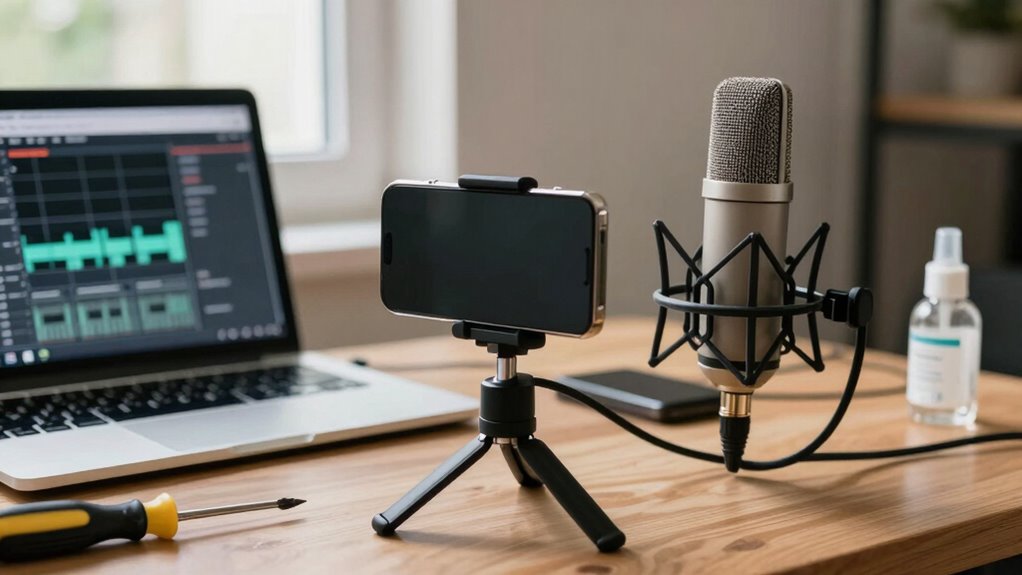

To fix poor microphone quality at home, start by managing your environment—turn off noisy appliances, close windows, and add soft materials like curtains or carpets to reduce echo. Use built-in audio tools like noise suppression and equalization, and consider upgrading to an external, directional microphone for clearer sound. Keep your equipment clean and up to date for best results. If you want to discover more tips, there’s plenty to learn that can make a real difference.

Get the latest gadgets delivered free with Prime
- Fast, free delivery on millions of items
- Prime Video, Amazon Music and more included
- Member-only deals all year
Key Takeaways
- Use built-in or software noise suppression and equalization tools to enhance audio clarity.
- Minimize background noise by turning off appliances and closing windows.
- Upgrade to an external microphone with directional pickup for better sound capture.
- Improve room acoustics with sound-absorbing materials and proper microphone placement.
- Regularly clean microphone ports and keep drivers/software updated for optimal performance.
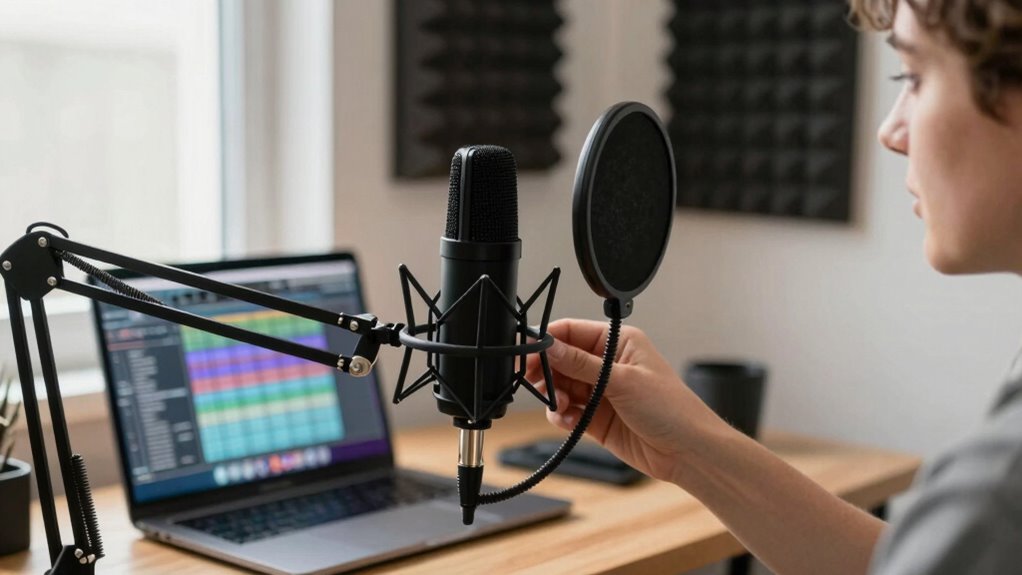
Poor microphone quality can be frustrating, especially when you need clear audio for calls, recordings, or streaming. When your microphone picks up too much background noise or sounds muffled, it hampers your communication and makes your content less professional. Luckily, there are simple steps you can take at home to improve your microphone’s performance. One of the first things to take into account is audio enhancement. Many devices and software offer built-in features that can boost your voice clarity, remove unwanted noise, and balance audio levels. Check your microphone settings or recording software for options like noise suppression, echo cancellation, or equalization. These tools help clean up your sound, making your voice stand out even if your environment isn’t perfectly quiet. Additionally, understanding sound reflection and how it affects audio quality can help you better arrange your space for clearer recordings. Creating a soundproofed environment can further help minimize echo and background noise, enhancing overall audio quality. Incorporating proper room acoustics can also significantly improve your microphone’s ability to capture clear sound.
Improve your audio with built-in noise suppression, echo cancellation, and equalization features.
Background noise is often the biggest culprit behind poor microphone quality. If you’re recording in a noisy space, your microphone will pick up everything around you, making it hard for your audience to focus on your voice. To combat this, try to create a quieter environment. Turn off fans, air conditioners, or any appliances that generate constant noise. If possible, close windows and doors to block out outside sounds. Using soft materials like carpets, curtains, or foam panels can also absorb sound reflections and reduce echo, further improving audio clarity. If you don’t have dedicated soundproofing gear, even rearranging your room to sit away from noisy sources can make a difference. Understanding audio setup principles can help you optimize your environment for better sound quality. Being aware of room acoustics and how they influence sound can help you make better choices in arranging your space.
Another effective way to fix poor microphone quality is to invest in a better microphone or use an external one if you’re currently relying on a built-in laptop or webcam mic. External microphones generally provide clearer sound and are less susceptible to background noise. When choosing a new microphone, look for one with features like directional pickup patterns, which focus on capturing your voice and minimize ambient sounds. Proper placement is equally important—keep the microphone close to your mouth, ideally at a consistent distance, to ensure your voice is recorded clearly without having to speak loudly or strain. Regularly testing your microphone setup can also help identify and address issues before important recordings or calls.
Finally, regular maintenance can improve your microphone’s performance. Clean the microphone port and connectors to remove dust or debris that may cause static or muffled sound. Keep your drivers and audio software up to date, as updates often include improvements for noise reduction and audio quality. By applying these tips—leveraging audio enhancement features, controlling background noise, upgrading your gear, and maintaining it—you’ll notice a significant boost in your microphone’s quality, giving you crisp, clear sound every time you record or communicate.
external directional microphone for PC
As an affiliate, we earn on qualifying purchases.
As an affiliate, we earn on qualifying purchases.
Frequently Asked Questions
Can Software Updates Improve Microphone Sound Quality?
Yes, software updates can improve your microphone sound quality by enhancing features like voice enhancement and noise suppression. When you update your software, you often get access to the latest improvements, which can clear up background noise and make your voice sound clearer. Keep your drivers and audio software current, and you’ll notice better microphone performance, making your calls and recordings much more professional and crisp.
How Does Room Acoustics Affect Microphone Performance?
Ever wondered why your microphone sounds off? Room acoustics play a huge role in performance. Hard surfaces reflect sound, causing echoes and muddiness, while soft materials absorb unwanted noise. Using room treatment like acoustic panels helps control sound reflections and improve clarity. Proper placement of these panels can make your microphone capture your voice more accurately, reducing background noise and ensuring clear, professional-quality recordings.
Are There Specific Microphone Settings for Different Environments?
Yes, there are specific microphone settings for different environments. You should adjust microphone placement to minimize background noise and optimize sound capture. Use directional microphones in noisy settings to focus on your voice, and set the gain appropriately to avoid distortion. Enable noise suppression features if available, and test different settings until you find the right balance, ensuring clear audio regardless of your environment.
What Are Signs of a Failing Microphone?
Signs of a failing microphone include distorted sound, inconsistent volume levels, or static noise during recordings or calls. You might notice the microphone suddenly stops working or produces low-quality audio. To address this, perform microphone maintenance by cleaning the hardware and checking connections. If issues persist, hardware troubleshooting can help identify if the microphone needs repair or replacement, ensuring peak performance for your recordings and communications.
Can Using Multiple Microphones Cause Audio Issues?
Using multiple microphones can cause audio issues if your microphone placement isn’t strategic. When multiple mics pick up the same sound source, it can lead to echo or phase cancellation, resulting in poor quality. Background noise becomes a bigger problem too, as it gets amplified or picked up unevenly. To avoid this, make sure microphones are properly positioned, avoid overlapping sound capture, and use noise gates or filters to minimize background noise.
Conclusion
Think of your microphone like a musical instrument—you need to tune it just right. When I first started recording, my audio sounded like a broken radio until I adjusted my settings and cleaned my mic. Just like a musician practices daily, tweaking and maintaining your setup can transform poor quality into crystal-clear sound. Don’t give up—small adjustments make all the difference, turning your home setup into a professional-sounding studio.
Halloween Picks
halloween
As an affiliate, we earn on qualifying purchases.