
TL;DR

Get the latest gadgets delivered free — and shop member deals
- Fast, free delivery on millions of items
- Access to Prime Big Deal Days deals on October 6–7
- Prime Video, Amazon Music and more included
Wireless noise-cancelling headphones use microphones and audio processing to reduce some surrounding sound, especially steady low-frequency noise such as airplane or ventilation hum. Their fit, comfort, sound, battery life, and useful features matter as much as the ANC label, and they do not silence voices, alarms, or every sudden sound.
The low growl of an airplane engine can fade into the background when you put on a good pair of wireless noise-cancelling headphones. Then a nearby child laughs, someone speaks, and the cabin is still very much there.
That difference explains what these headphones can—and cannot—do. You’ll learn how ANC and passive isolation work, which features matter in everyday use, and how to choose a pair for flights, commutes, or a busy desk.
ANC generally reduces steady low-frequency noise better than speech, alarms, or sudden sounds.
A comfortable fit and good earcup or eartip seal support isolation and make long sessions easier.
Compare battery life with ANC on, since cancellation often uses extra power.
Multipoint can connect headphones to a phone and computer at once, but compatibility varies.
Use transparency and keep enough awareness of your surroundings when nearby sounds matter for safety.
How Wireless Noise-Cancelling Headphones Reduce Background Noise
Wireless noise-cancelling headphones use microphones and audio processing to reduce some outside sound, while their earcups or eartips physically block more. Active noise cancellation, or ANC, is generally strongest against steady, low-frequency sounds such as engine rumble, ventilation, or road hum. These sounds change slowly enough for the headphones to measure them and produce a counteracting signal. Irregular sounds, especially speech and sudden noises, change too quickly or contain too many frequencies for ANC to remove as consistently.
Think of ANC as a sound-focused dimmer switch, not a mute button. On a flight, the deep, even engine drone may soften enough for you to hear a podcast at a comfortable volume, but a flight attendant’s voice can still cut through. That distinction matters: reducing a persistent rumble can make a long trip feel less tiring, but cancellation does not make it safe to ignore announcements or assume nearby people cannot be heard.
Many models use hybrid ANC, with microphones inside and outside the earcups, and offer adjustable cancellation or transparency modes. External microphones can detect sound before it reaches your ears; internal ones can help account for what gets through the seal. More microphones or modes do not guarantee better results, though. The design has to work with the fit and the sounds around you, and stronger cancellation can feel less comfortable to some listeners. What matters in practice varies by model: an impressive feature list cannot promise the same result for every listener or setting.
[1] Passive isolation does the physical work. Cushioned earcups or well-fitted eartips create a barrier, and gaps can weaken that barrier and reduce ANC’s effect. This is why fit affects more than comfort: a poor seal lets sound reach your ear and gives cancellation less control over what you hear. Imagine wearing a winter coat with the zipper open: the material helps, but the fit leaves an obvious way for cold air to get in. For headphones, a secure seal can improve isolation, but it should not require painful pressure.Which Features Matter Most When You Compare Models?
When comparing wireless noise-cancelling headphones, put fit, comfort, and sound near the top of your list, then check battery life and features against your daily routine. These qualities interact: a comfortable seal supports isolation, while excessive clamping force can make a theoretically effective pair unpleasant to wear. A small specification difference means little if a headband gives you a sore spot after an hour or the earcups press against your ears.
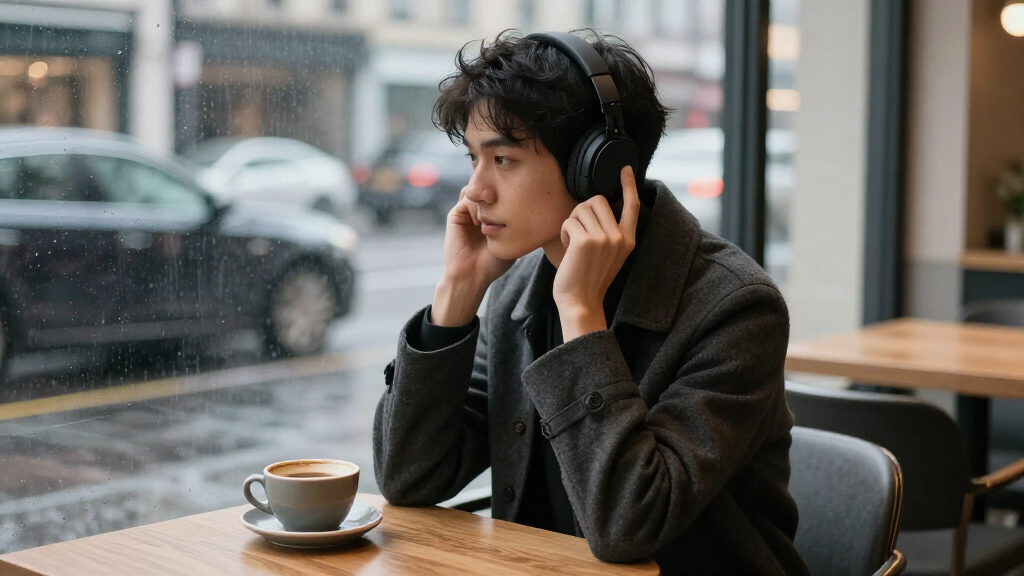
For example, someone working at a café may value comfortable padding and easy transparency controls, while a frequent flyer may care more about long battery life and a compact case. The tradeoff is that a portable pair or one with many features may not suit every head shape, listening preference, or device. Use the table to focus your shortlist on what you’ll actually use.
| Feature | What to check | Why it matters |
|---|---|---|
| Fit and comfort | Weight, headband pressure, earcup space, or eartip sizes | A comfortable seal helps during long listening sessions. Pressure or gaps can undermine both comfort and isolation. |
| Sound | Tuning, clarity, bass, and equalizer controls | ANC alone does not tell you whether music will sound good to you. Try familiar tracks because your preference matters more than a feature label. |
| Battery | Stated runtime with ANC on and off | ANC often uses more power; volume and other features can affect runtime too. The estimate with ANC on is the more useful comparison if you expect to leave it enabled. |
| Calls | Microphone quality and noise processing | Wind and busy streets can still make calls difficult. Processing may help voices stand out, but it cannot remove every competing sound. |
| Connections | Multipoint, stability, latency, and device support | Multipoint can connect to a phone and computer at once; codec support varies and does not guarantee better sound. Compatibility and reliable switching matter more if you regularly move between devices. |
| Practical details | Controls, app support, case size, durability, and wired use | Convenience depends on where and how you use the headphones. For instance, a compact case is easier to carry, while wired support may be useful when wireless features are unavailable. |
Check battery estimates under the mode you expect to use. If you leave ANC on during a full workday, an advertised runtime measured with it off may not match your experience. Compare like with like, and leave some margin if you cannot recharge during the day.
How to Choose a Pair That Fits Your Day
Choose wireless noise-cancelling headphones by starting with the place you’ll wear them most, then try the fit and check the features that support that use. Your main setting shapes the tradeoffs: a pair built for an airplane seat may prioritize long battery life and a carrying case, while those priorities may add weight or bulk you notice every day. A pair designed for travel may also be a poor match for a sweaty run or a small backpack.
- Name your main setting. For flights or commutes, look for comfortable ANC and a case you’ll carry. For office calls, prioritize microphone performance, device switching, and controls you can reach quickly. Consider the sounds you need to reduce: steady engine or train rumble is where ANC is most useful, while changing conversations may remain audible.
- Try the fit if possible. Wear over-ear headphones for several minutes and check for pressure, heat, or contact with your ears. For in-ear models, try the included tips and see whether they stay secure. A good seal can improve isolation, but if it hurts or shifts as you move, it may not be practical for long sessions.
- Test the sound and modes. Listen to familiar music with ANC on and off, then try transparency. The change between modes can help you judge whether cancellation is comfortable and whether transparency makes voices and announcements clear enough for your needs. If you often switch between a laptop and phone, test whether multipoint handles the change smoothly.
- Check the everyday details. Compare battery estimates with ANC on, the case size, water resistance, app controls, and whether a wired cable works when the battery is depleted. Wired features depend on the model. A feature only helps if it works with your devices and fits your routine.
Picture a commuter boarding a packed train: a secure fit, quick access to transparency, and reliable phone switching may help more than a codec name on the box. They can reduce the effort of managing the headphones while leaving a way to hear station information. For another listener, lighter earbuds that disappear into a pocket may be the better fit, even if they prefer the sound or cancellation of an over-ear pair.
Neither over-ear nor in-ear headphones always cancel more noise. Over-ear models cover the ears; in-ear models depend on a good eartip seal and are often easier to carry. The better choice depends on the shape of your ears, how long you wear them, and the noises you encounter. Comfort and fit decide a lot.
What ANC Can’t Block—and When to Use Transparency
Noise cancellation does not make headphones silent: steady low-frequency sounds usually fade more than voices, alarms, announcements, or abrupt noises. The limits matter on a commute, where rail rumble may recede while a station announcement remains audible—or gets harder to hear through music. ANC reduces one part of the sound around you; it does not tell you which sounds are important or ensure you will notice them.
If strong cancellation feels uncomfortable, try a lower setting or transparency mode. Transparency uses microphones to pass outside sound through, which can help you hear a colleague or an airport announcement without taking the headphones off; it may sound less natural than hearing the room directly. The usefulness depends on how clearly voices come through and how much background sound the mode also lets in, so try it in a setting similar to where you plan to use it.
Do not rely on headphones to hide sounds you need to hear for safety. On a walk near traffic, lower the volume and use a setting that lets you notice your surroundings. Even transparency cannot guarantee that every vehicle, warning, or other sound will be heard, especially if music is loud or the headphones fit closely. ANC reduces distraction; it does not replace awareness.
ANC can quiet a steady rumble, but it cannot promise silence or make every surrounding sound safe to ignore.
Some listeners also find that ANC changes how music sounds, and it generally uses additional battery power. Both effects vary by product and listening mode: processing may alter the balance you hear, while the extra power use can shorten listening time. Try your usual music and check the battery estimate with cancellation switched on so those tradeoffs are part of your choice.
Which Newer Features Are Worth Your Attention?
Recent product generations have focused on adaptive ANC, clearer transparency, call processing, and multipoint, though exact features and performance change by model. Adaptive settings may respond to your surroundings or movement, which can suit someone moving between a quiet office and a noisy street. The benefit is less need to change settings yourself; the tradeoff is that automatic adjustments may not match your preference in every environment, so a manual option can still matter.
Spatial audio and head tracking create a separate listening effect; they do not cancel noise, and support varies by device and content. Bluetooth LE Audio and its LC3 codec are emerging standards intended to improve wireless audio efficiency and enable new features, but both your headphones and source device need compatible support. A newer standard is useful only when it works across the devices and services you actually use.
For instance, a feature listed in a headphone app may be unavailable with an older phone or computer. Check compatibility across the devices you actually own, and treat vendor descriptions as claims about that model rather than proof of a universal performance gain. If a feature solves a regular problem—such as switching between work and personal devices—it may be worth prioritizing; if not, comfort and reliable basics are likely to matter more.
Frequently Asked Questions
What is the difference between ANC and noise isolation?
ANC uses microphones and audio processing to reduce some outside sound; passive isolation comes from the physical seal of earcups or eartips. The two can work together, and fit affects how well that barrier performs.
Do noise-cancelling headphones block voices?
They can reduce some speech, but ANC generally works better on steady, low-frequency noise. Fit and passive isolation also affect what you hear, so voices may remain noticeable even when engine hum fades.
Can I use wireless headphones when the battery is dead?
It depends on the model. Some support wired listening, but features may change by connection type, and a cable may not work when the battery is depleted.
Do over-ear or in-ear headphones cancel noise better?
Neither style is always better. Over-ear headphones cover your ears, while in-ear models rely on eartip fit; comfort, seal, and the sounds around you all affect the result.
Does ANC affect battery life or sound quality?
ANC usually uses additional power and can change how music sounds, though the size of those effects varies by model and mode. Compare the manufacturer’s battery estimate with ANC on and try your own familiar tracks before choosing.
Conclusion
Choose headphones for the place you’ll wear them most, and give comfort and fit the same attention as cancellation claims. A good pair can turn a rough engine drone into a soft backdrop—but the world still has a voice.
Fall Picks
fall essentials
As an affiliate, we earn on qualifying purchases.