
AIThis post was created with the assistance of artificial intelligence (AI).

🔍 Read the full analysis: What’s Wrong With The Astra Vs Fable Benchmark’s Simplification? on ThorstenMeyerAI.com

TL;DR

Recent analysis shows that the Astra vs Fable benchmark comparison is flawed due to index revisions, misinterpreted data, and architectural differences. The widely circulated narrative oversimplifies the actual performance and cost-efficiency of Astra.

Recent scrutiny reveals that the widely circulated comparison between GPT-6 Astra and Fable 5.1 is based on outdated or inconsistent benchmark data, leading to misleading conclusions about their relative performance and cost-efficiency.The core issue is that the benchmark index used to compare Astra and Fable has been revised multiple times, causing the numerical scores to shift without clear notice. Initially, Astra was reported to score 61 on the Artificial Analysis Intelligence Index, while Fable scored 66, suggesting Fable’s superiority. However, subsequent updates to the index, including the removal of certain evaluation components and the addition of new metrics, resulted in different scores — Astra at 55 and Fable at 57 — indicating a much narrower performance gap. This inconsistency stems from the fact that the benchmark is a moving target, and quoting different versions leads to conflicting narratives. Further complicating the picture is the interpretation of what the scores measure. Artificial Analysis explicitly states that Astra is more expensive and less efficient at general intelligence tasks than its predecessor, despite some coding-specific efficiencies. The circulating story that Astra ‘attacks the economics’ of intelligence is a misrepresentation, as the actual data shows Astra’s higher costs and lower overall efficiency in intelligence metrics. The only genuine efficiency gain appears in the coding agent index, where Astra outperforms Fable in cost per token, but this does not translate to general intelligence performance. Adding to the confusion are architectural differences in Astra, which reportedly employs a looped or recurrent transformer mechanism. This design allows Astra to reason internally in latent space without generating verbose tokens, making token counts an unreliable proxy for compute or intelligence in this context. The benchmark’s reliance on token-based metrics, therefore, misrepresents Astra’s true efficiency, as it measures output tokens rather than the actual computational effort involved in its reasoning process.
At a glance
reportWhen: developing; issues surfaced after Astra…
The developmentThe Astra vs Fable benchmark comparison has been challenged due to changing metrics, misaligned interpretations, and architectural complexities, raising questions about its validity.
Five Points That Became Two — Reality Check
AI Dispatch · Reality Check · 5 September 2026

Five points that became two: what’s wrong with the Astra vs Fable benchmark

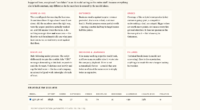
The comparison everyone is quoting — Fable 66, Astra 61, “not a rounding error” — is built on numbers that were stale when written, measuring a quantity that no longer means what it used to, aggregated in a way that hides the reversals that matter. The benchmark isn’t broken. The way it’s being read is.

Problem 1 — the numbers moved: Index v4.1.1 → v4.2 during launch week
as quotedAA today (v4.2)
Claude Fable 5.16657 max effort
GPT-6 Astra6155 max · a third source says 60
gap: 5 2 “Five points is not a rounding error.” Two points, on an aggregate of ten evals that just swapped three of them (GPQA Diamond out; AA-Briefcase + GDP.pdf in), is exactly a rounding error. Not AA’s fault — revising an index is how you keep it honest. The error is downstream: quote the version, or don’t quote the number.
◆ Problem 3 — the tell: Astra’s effort dial isn’t connected to the engine
non-reasoning554.4M tok · $990
medium52
xhigh54$2,778
max55$3,020
Non-reasoning = max. Same score, 3× the cost. Because Astra is reported to be a looped / recurrent-depth transformer — it reasons in latent space, without emitting tokens. The Index prices cost in tokens, measures verbosity in tokens, computes time in tokens. For this architecture it’s counting the receipt, not the work. “140M vs 42M tokens” compares Fable’s verbalized reasoning to Astra’s post-loop output — an artefact, not an efficiency finding. Nobody outside OpenAI knows what the loops cost in GPU-seconds.
The other three problems
02
AA’s own conclusion is the opposite of the story
AA’s benchmarking note: Astra is 75% more expensive than GPT-5.6 Sol at max effort and “largely sits behind its predecessor on the Intelligence Index vs cost frontier.” Price went 2.5× ($4/$20 → $10/$50); token savings only partly offset it. The genuine efficiency win lives in one place: the Coding Agent Index, where Astra equals Fable 5 at under half the cost. “Astra attacks the economics” stretched a true coding result over an intelligence index where AA says the reverse.
04
“Max effort” isn’t the same experiment twice
Fable at max = more tokens. Astra at max = ~nothing (see ladder). And OpenAI’s docs say Astra does not support `none` reasoning effort — yet AA lists a “non-reasoning” score. The most efficient-looking config on the leaderboard may not be one you can buy.
05
The aggregate hides the reversals
Index: Fable +2. OpenAI’s own evals (self-reported): Astra ahead 6 of 7 — AutomationBench, BenchCAD, Terminal-Bench 4.0, DeepSWE, TB-Science, FrontierMath T4; Fable takes HLE+tools. A 6–1 task split became a two-point average, and the average became the story. Ten choices deep, two points is noise wearing a number.
✓ What actually changed — and it’s not on the leaderboard
Hallucination rate 92% → 51% on AA-Omniscience — a 41-point drop; matters more than any 2 Index points “Same headline price” hides cache read $1.00 vs $0.25 (4×) + a 25% cache-write premium — the line that dominates agentic bills Coding Agent Index: Astra = Fable 5 at < half the cost — real, and narrow
The take

Three things happened at once: the Index was revised (five became two), the architecture changed (tokens stopped being compute), and the aggregate did what aggregates do (6–1 became +2). A leaderboard position now tells you less than it ever has — and the more advanced the architecture, the less it tells you. Latent reasoning is only the first architecture to break the token proxy. So with your Astra access: ignore the Index number. Take your ten real tasks. Run both models at the effort setting you’ll actually pay for. Measure the bill including the cache line. Measure the failure rate — the 41-point hallucination drop is the one number here I’d bet money on. The benchmark can’t decide for you anymore.

Sources: Artificial Analysis Intelligence Index v4.2 / v4.1.1 model pages (Fable 5.1; Astra non-reasoning/low/medium/high/xhigh/max — scores, tokens, total cost, cost-per-task method incl. cache-write & reasoning tokens) and “Benchmarking GPT-6 Astra” (75% vs Sol, cost frontier, Coding Agent Index, 92%→51% hallucination, 2.5× price, cache terms); OpenAI GPT-6 Astra developer docs (`none` unsupported, cache-write billing, logprobs removed); Alan D. Thompson, The Memo 4 Sep 2026 (looped-transformer read, unconfirmed); OpenAI’s self-reported Astra-vs-Fable table; the circulating 66/61 comparison (pre-v4.2). Scores are version-dependent and were changing at time of writing. Not investment advice.
thorstenmeyerai.com

Implications for AI Benchmark Reliability

The discrepancies and misinterpretations in the Astra vs Fable benchmark highlight the risks of relying on static or outdated metrics to assess AI performance. For developers, investors, and researchers, this means that current comparisons may be misleading, potentially overestimating the efficiency of some models while undervaluing others. The case underscores the importance of transparent, version-controlled benchmarking and a nuanced understanding of architectural differences, especially as models evolve to incorporate new reasoning mechanisms that break traditional proxy measures like token counts. Ultimately, this controversy impacts how the AI community evaluates progress and competitiveness, emphasizing the need for more precise and stable measurement standards.
Amazon

AI benchmarking analysis tools

As an affiliate, we earn on qualifying purchases.

As an affiliate, we earn on qualifying purchases.

Background on Benchmark Evolution and Architectural Shifts

The Artificial Analysis Intelligence Index has undergone multiple revisions, with versions 4.1.1 and 4.2 reflecting changes in evaluation components and scoring methods. These updates are designed to keep the benchmark aligned with evolving AI models and capabilities. Astra’s launch introduced a model architecture that employs a looped transformer, allowing reasoning in latent space without extensive token output. This architectural shift fundamentally alters how efficiency and performance should be measured, rendering token-based metrics less meaningful for Astra. The initial comparisons between Astra and Fable were based on a snapshot of the index that no longer reflects the current scoring framework, leading to conflicting interpretations of their relative performance. Prior to Astra’s release, benchmarks focused on token output and cost per task, but Astra’s design challenges these metrics, revealing their limitations for modern, internally reasoning models.

“The numbers moved while nobody was looking. The benchmark was revised, and the scores shifted, but many are still quoting outdated figures.”

— Thorsten Meyer

Unresolved Questions About Benchmark Validity

It remains unclear how much the architectural differences in Astra affect the validity of token-based efficiency metrics. The actual computational cost of Astra’s latent reasoning loops is not publicly documented, and current benchmarks do not account for these internal processes. Additionally, the extent to which index revisions influence the comparability of past and present scores is uncertain, raising questions about the reliability of longitudinal assessments. The community has yet to agree on standardized evaluation methods that can fairly compare models with fundamentally different architectures.

Next Steps for Benchmark Standardization and Transparency

The AI community needs to develop clearer, version-controlled benchmarks that account for architectural innovations like Astra’s latent reasoning. OpenAI and other organizations may release more detailed performance data, clarifying how internal reasoning mechanisms impact efficiency metrics. Future evaluations should incorporate multiple metrics beyond token counts, including actual compute time and energy consumption, to better reflect true model performance. Researchers and analysts will likely scrutinize Astra’s architecture further, seeking to establish more accurate and fair comparison standards for next-generation models.

Key Questions

Why do the benchmark scores for Astra keep changing?

Because the Artificial Analysis Index has been revised multiple times, updating evaluation components and scoring methods, which causes the scores to shift when different versions are referenced.

Does Astra really outperform Fable in any way?

Yes, Astra shows genuine efficiency improvements in coding tasks, especially in token reduction, but its overall performance on general intelligence metrics is lower and more costly than Fable, according to official benchmarks.

Why are token counts not a reliable measure for Astra’s efficiency?

Because Astra employs a looped transformer architecture that reasons in latent space without generating many tokens, making token-based metrics an unreliable proxy for actual computational effort.

What should I trust more: the benchmark scores or the architectural details?

Architectural details provide crucial context, especially for models like Astra that reason internally. Benchmark scores should be interpreted with awareness of their limitations and the specific evaluation methods used.

Will future benchmarks improve fairness for comparing different architectures?

Likely, as the community recognizes the limitations of current token-based metrics and moves toward more comprehensive evaluation methods that account for architectural innovations and internal reasoning processes.

Source: ThorstenMeyerAI.com

You May Also Like

Analyzing XAI Grok 4.6’S Position In The Competitive AI Landscape

Grok 4.6 reportedly ranks third in a benchmark behind OpenAI and Anthropic, indicating a narrowing performance gap among top AI models. Details are limited.

The Growing Gap Between AI’s Data Needs And What It Can Access

The gap between AI’s increasing data demands and the limited access to quality training data raises legal, ethical, and technical concerns, with details still emerging.

Technology News and Gadgets: A Practical Guide to Choosing, Using, and Understanding Modern Tech

AIThis post was created with the assistance of artificial intelligence (AI).Technology moves…

SenseTime’s KAFD HQ: A Landmark Of AI And Modern Design

SenseTime is linked to a KAFD-based project titled PIF Partner HQ, with details on scope and status still unconfirmed. The project’s significance remains to be clarified.