
TL;DR

Get the latest gadgets delivered free with Prime
- Fast, free delivery on millions of items
- Prime Video, Amazon Music and more included
- Member-only deals all year
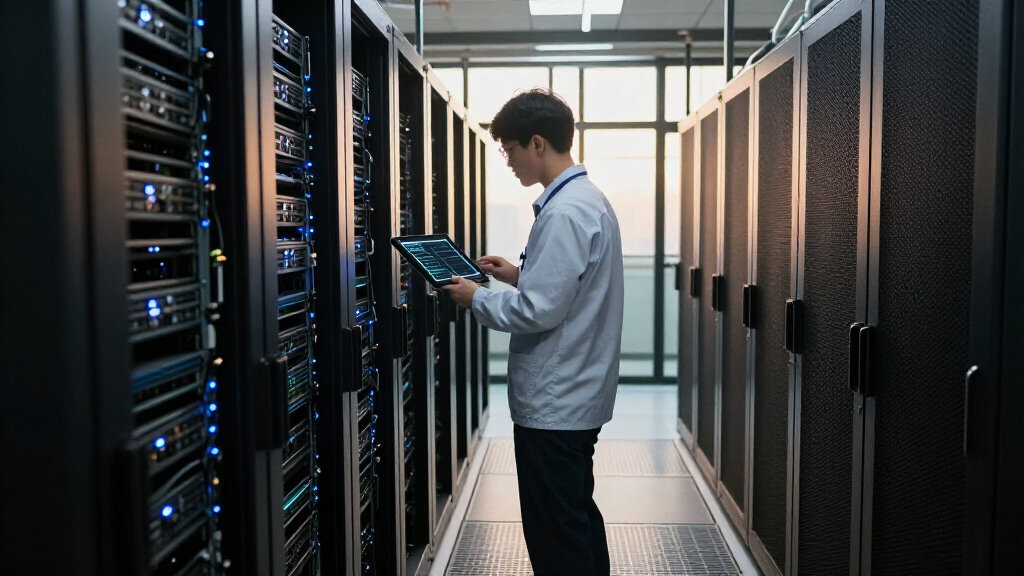
South Korea has brought Hangang, its sixth national supercomputer, into full operation. The government expects it to rank among the world’s top 10 systems and plans to connect it to a quantum computer in the first half of 2027, although the integration’s technical details and performance targets have not been disclosed.
South Korea has brought Hangang, its sixth national supercomputer, into full operation and plans to connect it with a quantum computer in the first half of 2027. The Ministry of Science and ICT and the Korea Institute of Science and Technology Information announced the launch at a ceremony in Daejeon on Nov. 2; the planned link is intended to combine conventional high-performance computing with quantum processing.
Hangang succeeds Nurion, South Korea’s fifth national supercomputer, introduced in 2018. According to Seoul Economic Daily’s report on the launch, the new system has 8,496 GPUs and 9,936 CPUs, including Nvidia GH200 chips that combine a central processing unit and a graphics processing unit. The government says Hangang’s theoretical computing performance is 24 times Nurion’s, while its storage capacity is 10 times greater and its network performance four times higher.
Those comparisons describe theoretical performance and system capacity; they do not by themselves establish how much faster particular research tasks will run. The government expects Hangang to place among the world’s top 10 supercomputers in rankings due at the International Supercomputing Conference early this month. That is an expectation, not a reported ranking result.
The system used a two-month trial service in October and November, supporting about 190 projects, including 20 grand-challenge projects and 17 national strategic projects. Requested resources amount to about 85% of the capacity Hangang can provide, the report said. Official service is scheduled to start on Dec. 16.
A Larger Platform for Research
Hangang gives South Korean researchers a substantially expanded national computing resource for work that requires large-scale processing, including AI-based science and technology research. The planned allocation reserves 55% of resources for research and development innovation, 30% for national strategic projects and 15% for industrial innovation research. The industrial allocation is intended to focus on small and medium-sized businesses and support commercialization, according to the report.
The proposed quantum connection could add another type of computing capability to that research infrastructure. KISTI President Lee Sik described the intended arrangement as a way to combine the strengths of conventional supercomputers and quantum computers. The potential value will depend on how the two systems are connected, which tasks can be assigned to each, and whether the combined system performs useful work better than existing approaches. The source material gives no measured results for such a hybrid system.
Hangang’s efficiency and security arrangements also matter for sustained access. KISTI says the new system uses direct liquid cooling and reports a power usage effectiveness figure of about 1.15, compared with 1.35 for Nurion. That metric reflects facility energy efficiency; it is not a measure of computing performance.
Products Worth Considering

DJI Mic 3 Wireless Microphone Kit (2 Transmitters, 1 Receiver, Charging Case)

Apple Watch Series 12 GPS 46mm Smartwatch

Samsung 27-Inch Odyssey OLED G5 QHD Gaming Monitor
As an affiliate, we earn on qualifying purchases.
From Nurion to Hangang
South Korea’s Ministry of Science and ICT and KISTI held the launch ceremony at KISTI headquarters in Daejeon on Nov. 2. Hangang is the country’s sixth national system and follows Nurion, which entered service in 2018. The agencies framed the new machine as infrastructure for research that brings together computing and scientific work.
The cooling design also changes from the previous system. KISTI Supercomputing Infrastructure Center head Hong Tae-young said Nurion used indirect liquid cooling, with cold water reaching the back of equipment cabinets, while Hangang circulates water over the chips. Hong said nearly all of Hangang’s equipment was built for direct liquid cooling and linked the design to the reported improvement in power usage effectiveness.
KISTI says it has used one-time-password, two-factor authentication since the early 2010s and is installing security solutions on the main servers users access. The source report notes that tighter internal security can reduce performance, a trade-off the institute says it will continue to address.
“With the fifth system, cold water circulated only as far as the back of the cabinet to absorb heat, but in the sixth system water circulates over the chips themselves, raising cooling efficiency.”
— Hong Tae-young, head of KISTI’s Supercomputing Infrastructure Center
Integration Details Still Pending
The government has set a target of connecting Hangang to a quantum computer in the first half of 2027, but the report does not identify the quantum machine, its provider, the connection architecture or the specific workloads the hybrid system will handle. It also gives no schedule for testing or public access to the integrated service.
The expected top-10 ranking remains unconfirmed in the supplied material; the government is looking to rankings due at the International Supercomputing Conference. Hangang’s theoretical performance figures also do not establish real-world gains across different research applications. How much computing capacity will be available to individual users after official service begins, and whether the current level of requests will affect access, is not specified.
KISTI says it is adding security measures, but the report does not detail the systems being installed or how they will affect user access and performance. Those operational details may become clearer as the official service proceeds.
Service Opens in December
KISTI is scheduled to begin Hangang’s official service on Dec. 16, following the October-November trial. The institute says it will focus on stable operations and user support. The government’s next stated milestone is the planned quantum-computer connection in the first half of 2027; no more detailed integration timetable is provided.
The global ranking cited by officials is also due at the International Supercomputing Conference early in November. Its published results will show whether Hangang meets the government’s expectation of a top-10 position. Further information on access, project allocation and the hybrid system’s capabilities will be needed to judge how the launch translates into research outcomes.
Key Questions
What is Hangang?
Hangang is South Korea’s sixth national supercomputer. It has 8,496 GPUs and 9,936 CPUs and succeeds Nurion, introduced in 2018.
When does Hangang open for official service?
Official service is scheduled to begin on Dec. 16, 2026. A trial service ran for about two months in October and November.
When will Hangang be connected to a quantum computer?
The government plans the connection for the first half of 2027. The report does not specify the quantum computer or give technical details about the integration.
Has Hangang been confirmed as a top-10 supercomputer?
No ranking result is reported in the source material. The government expects Hangang to rank among the world’s top 10, with rankings due at the International Supercomputing Conference early in November.
How will Hangang’s computing resources be allocated?
The reported plan assigns 55% to research and development innovation, 30% to national strategic projects and 15% to industrial innovation research, with a focus on small and medium-sized businesses in the industrial category.
Source: thequantuminsider.com