
TL;DR
IQM Quantum Computers has received an order from South Korean data-centre company QAI for an IQM Radiance R3 system with 54 qubits. Delivery and on-site installation in Seoul are expected by the end of 2027; QAI plans to offer access through its Quantum-as-a-Service platform, though availability and operating details have not been announced.
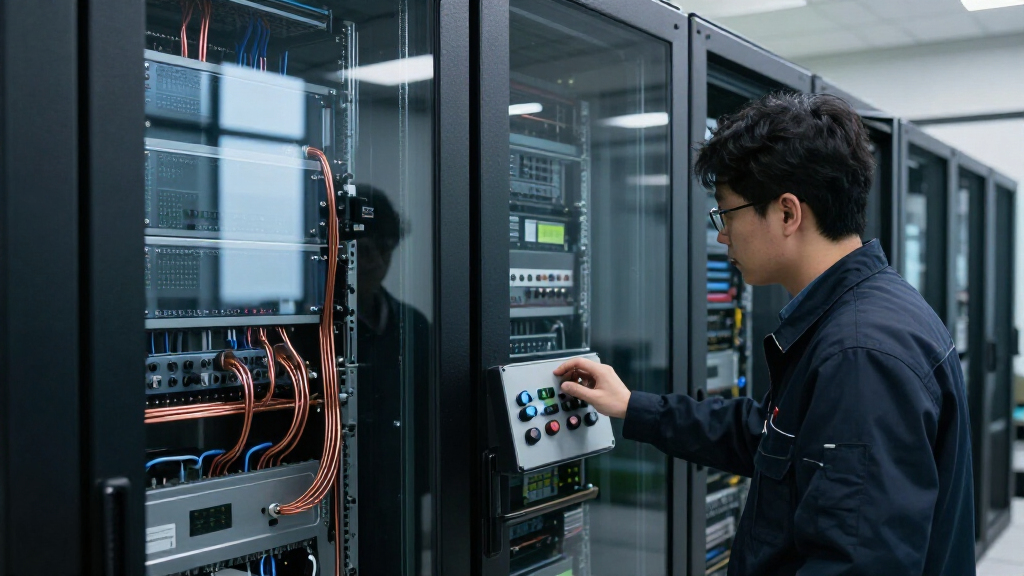
IQM Quantum Computers has received an order from South Korean company QAI for an IQM Radiance R3 54-qubit quantum computer to be installed at QAI’s data centre in Seoul. The system is expected to arrive and be installed by the end of 2027, after which QAI plans to offer customers access through its quantum-computing service.

Get the latest gadgets delivered free with Prime
- Fast, free delivery on millions of items
- Prime Video, Amazon Music and more included
- Member-only deals all year
The order covers an on-premises system and associated services, according to IQM’s announcement. IQM describes the deployment as its first quantum computer in a private data centre in Asia. The companies did not disclose the order’s price or other commercial terms.
QAI plans to make the machine available through its Quantum-as-a-Service (QaaS) offering, alongside GPU-based computing resources. The intended customer groups include businesses, research institutions and public-sector organizations. QAI says users will be able to work with quantum and conventional computing resources in the same data-centre environment; the companies have not detailed how the service will be priced or accessed.
The companies say initial exploration will cover computing-intensive areas such as drug discovery, battery and other materials research, financial portfolio optimization, and logistics and energy scheduling. These are planned areas of investigation, not reported results. Neither company has announced a specific application, performance benchmark or customer project for the system.
A Local Route to Quantum Access
The plan would put a quantum computer inside a commercial data centre in South Korea, rather than limiting access to a university or a system hosted abroad. If QAI’s service launches as intended, local enterprises and researchers could use the machine through a cloud-style offering, while QAI combines it with GPU resources for workloads that may involve both quantum and classical computing.
The deployment also has a national technology dimension. IQM’s chief commercial officer, Sylwia Barthel de Weydenthal, said local, on-premises access could support research, commercial application development and “sovereign quantum capabilities.” Those are the company’s stated aims; the announcement does not show that the system will deliver a particular economic, scientific or security outcome. The practical value will depend on installation, customer access and whether users can produce useful results.
For QAI, the order adds a quantum system to its existing data-centre proposition, which combines quantum and GPU computing. For IQM, it adds a planned installation to its presence in the Asia-Pacific region and places its equipment in a private-sector setting in South Korea.
Products Worth Considering

Sonos Era 100 SL Compact Microphone-Free Speaker, Black

DJI Mini 4K Drone with 4K UHD Camera

Bose QuietComfort Headphones (2nd Gen), Wireless Noise-Cancelling Over-Ear Headphones, Black
As an affiliate, we earn on qualifying purchases.
South Korea’s Quantum Plans
South Korea has identified quantum technology as a national strategic field. IQM’s announcement cites the government’s Sixth Basic Plan for Science and Technology, which includes more than 200 trillion South Korean won—approximately 135 billion euros—in research and development investment for 2026–2030 across fields that include quantum technology. The cited total covers the wider research and development plan, not quantum alone.
In January 2026, the Ministry of Science and ICT set out a plan for quantum science, technology and industry. Its stated targets include raising the use of quantum computers by 2035, training 10,000 quantum professionals and fostering 2,000 quantum companies. Those are government goals, not outcomes confirmed by this purchase.
The planned Seoul installation follows an earlier IQM deployment in South Korea: an IQM Spark system at Chungbuk National University, which IQM says was installed through the government’s official procurement process. IQM also opened a Seoul office in June 2025. The new order is intended for QAI’s commercial data-centre setting rather than a university site.
““This sale marks an important milestone for quantum computing in South Korea.””
— Sylwia Barthel de Weydenthal, chief commercial officer at IQM Quantum Computers
Delivery and Service Details Pending
The computer has been ordered but is not yet installed or available to customers. The stated schedule is delivery and on-site installation by the end of 2027; no more precise date or commissioning timetable was provided. It is not clear when QAI expects to open the service to users after installation.
The announcement gives no price for the system, QaaS access or use of the computer, and it does not name customers or research partners. Details such as service capacity, access rules, uptime, support arrangements and the process for connecting GPU and quantum workloads were also not supplied.
IQM describes the Radiance R3 as a 54-qubit system with high-fidelity gates, tunable couplers and a square-lattice layout designed to support surface-code error correction. Those are vendor descriptions. The announcement includes no independent test results, benchmark comparisons or evidence that the system has achieved a specified error-correction milestone.
Installation Planned for 2027
The next stated milestone is delivery and installation at QAI’s Seoul data centre by the end of 2027. After that, QAI plans to offer the computer through its QaaS platform to enterprise, research and public-sector customers. The companies have not provided dates for commissioning, the start of customer access or the first use cases.
Further updates would be needed to establish whether the system arrives on schedule, how QAI structures access and what workloads customers run. Any reported application results should be distinguished from the use cases the companies have listed as areas they intend to explore.
Key Questions
What has QAI ordered from IQM?
QAI ordered an IQM Radiance R3 quantum computer with 54 qubits, along with associated services, for installation at its data centre in Seoul.
When is the quantum computer expected to be installed?
IQM and QAI expect delivery and on-site installation by the end of 2027. They have not announced a specific date or a separate schedule for customer access.
Who is expected to use the system?
QAI plans to offer access through its Quantum-as-a-Service platform to businesses, research institutions and public-sector organizations. The companies have not named specific customers.
What applications will users explore?
The companies list drug discovery, materials research such as batteries, financial portfolio optimization, and scheduling for logistics and energy infrastructure as intended areas of exploration. These are planned use cases, not confirmed results.
What remains unknown about the deal?
The companies have not disclosed the price, detailed service terms, customer-access date or performance benchmarks. The system has not yet been installed, and the announced use cases have not been reported as completed projects.
Source: thequantuminsider.com