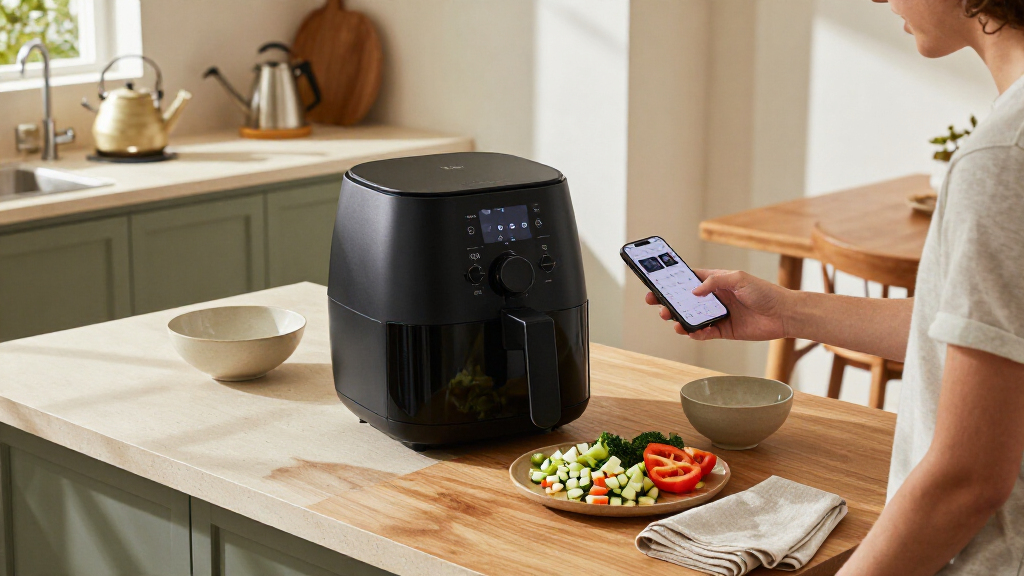

Shopping for smart kitchen gadgets usually comes down to a practical choice: pay for app-connected guidance and automation, or buy a simpler tool that does the job without a screen, account or wireless connection. Connected scales, thermometers, multicookers and coffee makers can make specific tasks easier, but their extra features matter most when they fit a routine you will actually use. A basic thermometer or timer may be the better buy for cooks who already know their methods and want dependable, low-fuss equipment.

Get the latest gadgets delivered free with Prime
- Fast, free delivery on millions of items
- Prime Video, Amazon Music and more included
- Member-only deals all year
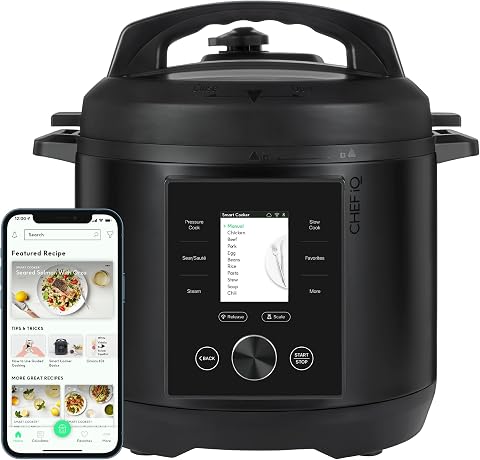
CHEF iQ Smart Pressure Cooker with WiFi and Built-In Scale, 6 Quart
- ✔ Capacity: 6 quarts
- ✔ Dimensions: 13 × 13 × 13 in
- ✔ Weight: 10.4 lb

Etekcity Smart Nutrition Kitchen Scale, 11 lb
- ✔ Maximum capacity: 11 lb (5000 g)
- ✔ Weighing range: 3–5000 g
- ✔ Increment: 1 g
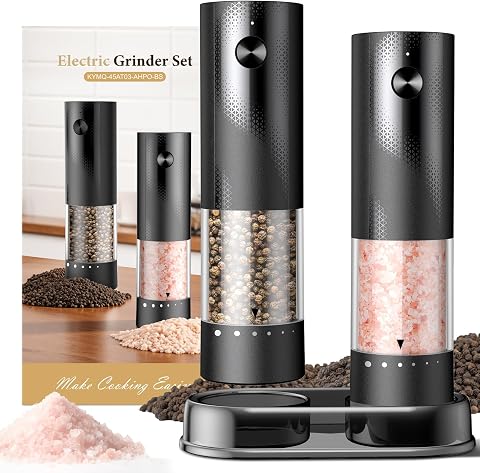
Gaivis Rechargeable Automatic Salt and Pepper Grinder Set, 2-Pack, Black
- ✔ Set size: 2 grinders
- ✔ Capacity: 100 ml (3.74 oz) each
- ✔ Operation: Automatic
This comparison looks at connected smart kitchen gadgets as a category against simple, non-connected alternatives. Connected models suit people who value remote monitoring, guided steps and records of what they cook. Simple models suit shoppers focused on price, immediate use and fewer things to maintain. The deciding tradeoff is whether digital assistance saves enough effort in your kitchen to justify its extra cost and reliance on software.
At a Glance
| Criteria | Connected smart kitchen gadgets | Simple, non-connected kitchen gadgets | Winner |
|---|---|---|---|
| Convenience and automation | Remote controls, alerts and automation can reduce hands-on monitoring for supported tasks. | Manual controls require more attention, but are usually ready as soon as the gadget is unpacked. | A |
| Guidance and learning | Apps may offer recipes, timers, saved settings and step-by-step prompts. | Instructions are often limited to labels or a printed guide; the cook supplies the know-how. | A |
| Accuracy and consistency | Sensors and preset programs can help repeat a process, though results depend on the device and setup. | Fewer automated steps can mean more variation, but a quality basic tool can be accurate. | Depends |
| Upfront cost and value | Typically costs more; value depends on regular use of its connected features. | Usually cheaper and can deliver strong value when the core function is all you need. | B |
| Setup and upkeep | May require an app, account, updates, pairing and occasional troubleshooting. | Typically simple to start, clean and maintain, with no app pairing or updates. | B |
| Privacy and connectivity | Some features rely on an internet connection or data sharing; check the manufacturer’s terms. | No app connection is needed, so there is less connected data to manage. | B |
| Durability and flexibility | Software support and app compatibility can affect features over the product’s life. | Core functions can remain useful without software or service support. | B |
CHEF iQ Smart Pressure Cooker with WiFi and Built-In Scale, 6 Quart
The CHEF iQ Smart Pressure Cooker has the broadest role in this lineup: it helps prepare a meal, not just measure or season one. Its six-quart capacity, guided app recipes, ingredient presets, and built-in scale bring several steps into a single appliance. The scale can also indicate the required liquid amount, which may help make unfamiliar recipes more approachable. Compared with the Etekcity scale, it connects weighing directly to cooking guidance; compared with Gaivis, it can shape a whole meal rather than automate one finishing touch.Its three pressure-release methods—quick, pulse, and natural—give cooks options for different recipes, while remote monitoring can make a long cook easier to keep track of. The steamer rack and basket add another use beyond pressure cooking. These capabilities make it our top pick for buyers who want a connected appliance to lead them through cooking, rather than simply log ingredients or grind spices.The tradeoff is commitment. At 13 inches on each side and 10.4 pounds, it needs a dedicated spot, and its connected cooking features and wireless updates depend on the app. The cooker is not recommended for use outside the United States and Canada. Buyers who already know their pressure-cooking routine, want a compact tool, or avoid app-led appliances may get more practical value from Etekcity’s small scale or Gaivis’s simpler grinders.
Pros:
- Built-in scale weighs ingredients and can indicate the required liquid amount.
- App provides guided recipes, videos, ingredient presets, and remote monitoring.
- Three pressure-release methods support different cooking needs.
- Steamer rack and basket extend its use beyond basic pressure cooking.
Cons:
- Connected cooking features and wireless updates require the app.
- The 13-inch footprint and 10.4-pound weight need meaningful storage or counter space.
- Use outside the United States and Canada is not recommended.
Best for: Home cooks who want guided recipes, ingredient weighing, and connected pressure cooking in one appliance.
Not ideal for: People with limited counter or storage space, cooks who prefer appliance controls without an app, or buyers outside the United States and Canada.
Bottom line: Choose CHEF iQ when you want the most complete smart cooking assistance in this group and are comfortable giving an app-connected multicooker a place in your kitchen.
“Choose CHEF iQ when you want the most complete smart cooking assistance in this group and are comfortable giving an app-connected multicooker a place in your kitchen.”
Etekcity Smart Nutrition Kitchen Scale, 11 lb
When the goal is understanding what goes into a meal, the Etekcity Smart Nutrition Kitchen Scale is the most focused choice here. It measures from 3 grams to 5,000 grams in one-gram increments, then sends food information to the VeSync app, which can track up to 19 nutrients. Apple Health and Fitbit integrations may suit people who already keep health data in those platforms. Compared with CHEF iQ, this scale does not guide a cooking process or replace an appliance; it gives you a dedicated way to weigh and record ingredients. Compared with Gaivis, it turns a kitchen action into data rather than a hands-free convenience.The stainless steel platform is food-grade 304 stainless steel, and its flat surface is easy to wipe clean. Tare helps subtract the bowl or container, while gram, ounce, pound-ounce, and liquid measurement options make the scale useful for recipes as well as tracking. That combination gives it a practical everyday role even when you are not logging nutrients. The backlit display also keeps the measurement visible as you work.Its smart value depends on whether you want to use the app and its food database. The barcode scanner is available only in the United States, which limits that particular shortcut elsewhere. Unlike CHEF iQ, Etekcity does not interpret ingredients as part of a guided recipe; unlike the Gaivis set, it needs three AAA batteries. We see it as the better fit for deliberate food logging, while occasional bakers or cooks who only need a basic weighing surface may not need the connected features.
Pros:
- Tracks up to 19 nutrients through the VeSync app.
- Stainless steel platform is durable and straightforward to clean.
- Tare function and multiple units support a range of recipes and containers.
- One-gram increments cover detailed portion weighing.
Cons:
- Barcode scanning is available only in the United States.
- Requires three AAA batteries.
- Nutrition tracking depends on using the app and its food database.
Best for: People who regularly weigh ingredients and want nutrition data linked with VeSync, Apple Health, or Fitbit.
Not ideal for: Buyers who do not want to use a companion app, need barcode scanning outside the United States, or want a rechargeable kitchen gadget.
Bottom line: Pick Etekcity when nutrition logging is the smart feature you will use most, and you want a compact scale that remains useful for ordinary recipe weighing.
“Pick Etekcity when nutrition logging is the smart feature you will use most, and you want a compact scale that remains useful for ordinary recipe weighing.”
Gaivis Rechargeable Automatic Salt and Pepper Grinder Set, 2-Pack, Black
The Gaivis grinder set is the least complicated smart kitchen gadget in this roundup, and that is its appeal. Two automatic grinders handle salt and pepper, with six external coarseness settings on each. Adjusting the grind without touching the outlet makes it easier to change texture while keeping the grinding area cleaner. A built-in LED helps illuminate the food as you season. Compared with Etekcity, Gaivis offers no nutrition data or weighing precision; compared with CHEF iQ, it does not guide a recipe. Its advantage is making a frequent, small task more convenient.Each grinder has a 100 ml hopper and a wide opening intended to simplify refilling and cleaning. Ceramic grinding cores, included cleaning brushes, and separate storage bases round out a set designed for regular table or counter use. The Type-C rechargeable design avoids the AAA battery requirement of the Etekcity scale, though the two products serve very different jobs. For buyers who want grinders ready at the table, this is a more targeted choice than adding a full multicooker.The compromises are also more focused. The body is plastic, so it may feel less substantial than metal or glass alternatives. The supplied details do not independently specify charge life or quick-charge duration, leaving battery expectations less clear than the charging connector itself. Unlike Etekcity and CHEF iQ, Gaivis has no app-based food record or recipe guidance. It belongs at the bottom of our ranking because its convenience is useful but narrower: choose it for seasoning, not as a broader cooking or tracking system.
Pros:
- Six external grind settings allow adjustment without handling the grinding outlet.
- Wide-opening 100 ml hoppers are designed for easier filling and cleaning.
- Built-in LED helps illuminate food while seasoning.
- Rechargeable Type-C design includes storage bases, brushes, and cables.
Cons:
- Plastic body may feel less durable than metal or glass.
- Charge life and quick-charge duration are not independently specified.
- Provides seasoning convenience but lacks the cooking guidance or food tracking of the other picks.
Best for: Cooks who season frequently and want two rechargeable grinders with adjustable coarseness and one-button automatic operation.
Not ideal for: Buyers seeking nutrition tracking, guided recipes, a premium-feeling metal body, or clear specified charge-life details.
Bottom line: Choose Gaivis if hands-free salt and pepper grinding is the specific kitchen task you want to simplify, and the plastic construction suits your expectations.
“Choose Gaivis if hands-free salt and pepper grinding is the specific kitchen task you want to simplify, and the plastic construction suits your expectations.”
As an Amazon Associate we earn from qualifying purchases.
Key Differences
The clearest advantage of connected gadgets is help during a task. An app-connected thermometer can send a temperature alert while you step away; a smart multicooker may guide settings or let you monitor a cycle remotely. Those features can make busy cooking less demanding and help newer cooks follow repeatable steps. The gain is greatest when the gadget supports a task you do often. A connected feature that is rarely opened adds little beyond a higher purchase price.
Simple gadgets win on independence. They tend to be easier to set up, do not rely on app support, and cost less to replace. That does not make them automatically more accurate or durable: build quality and design vary across both categories. It does mean that a simple device’s core usefulness is less tied to software, network access or a manufacturer’s continued app support. For many kitchens, that lower dependency is a meaningful form of value.
There is no category-wide winner for accuracy. A well-designed sensor and useful presets may improve consistency, but results still depend on calibration, placement, food size and how the tool is used. Compare the specific feature you need, not the word “smart.” If alerts will keep you from overcooking dinner, the connected premium may pay off. If you mainly need a reliable reading or a countdown, a basic model is likely the more sensible purchase.
Detailed Comparison
Convenience and automation (Connected smart kitchen gadgets wins — moderate)
Connected gadgets win by a moderate margin when remote alerts or automatic settings solve a real problem. A phone notification can help when you cannot stand beside the stove or grill, while presets can cut down on repeated manual adjustments. Simple tools still work immediately, but ask you to check or control the task yourself. If you are usually nearby and prefer hands-on cooking, that difference may be minor; if interruptions are common, it can matter every day.
Guidance and learning (Connected smart kitchen gadgets wins — moderate)
Connected models have a moderate edge for cooks who benefit from guided steps, saved recipes or reminders. App instructions can make an unfamiliar gadget less intimidating, and saved settings can help reproduce a preferred result. A simple model usually gives less coaching, leaving the cook to follow a recipe or rely on experience. The app is only useful if its guidance suits your cooking style and the device’s instructions are clear.
Accuracy and consistency (minor difference)
This is a close, product-specific comparison rather than an automatic win for smart gadgets. Sensors and presets can help reduce guesswork, but a connected thermometer is not accurate simply because it has an app. A quality basic thermometer or scale can perform its core task well, and poor placement or calibration can undermine either type. Check accuracy claims, measurement range, calibration options and independent product information for the gadget you plan to buy. The gap is usually minor unless one model has demonstrably better specifications.
Upfront cost and value (Simple, non-connected kitchen gadgets wins — moderate)
Simple gadgets win on purchase price, often by a moderate or major margin depending on the product. They are better value when the extra software features would sit unused. Paying more for a connected model makes sense when it replaces repeated effort, reduces mistakes you care about or supports a regular routine. Compare the price difference with how often you will use those particular features, rather than treating connectivity itself as added value.
Setup and upkeep (Simple, non-connected kitchen gadgets wins — moderate)
Simple gadgets win by a moderate margin for ease of ownership. They generally need fewer steps before first use and no app pairing, account setup or software updates. A connected model adds those tasks and can sometimes require troubleshooting if a phone, router or service changes. That setup may be worthwhile for a useful feature, but it is still part of the cost in time and attention. For a tool used occasionally, simplicity often wins.
Privacy and connectivity (Simple, non-connected kitchen gadgets wins — moderate)
Simple gadgets win by a moderate margin for people who want to limit connected devices in the kitchen. Without an app, they do not need a network connection or a device account to perform their core job. Connected models vary in what data they collect and which features work offline, so check the privacy policy and app requirements before buying. For a shopper comfortable managing those details, the tradeoff may be small; for others, fewer connections are a clear benefit.
Durability and flexibility (Simple, non-connected kitchen gadgets wins — moderate)
Simple gadgets have a moderate practical advantage because their core function is less dependent on software and service support. A connected product may remain physically sound yet lose an app feature if compatibility or support changes. That is not a guarantee that a basic gadget will last longer: materials, repairability, warranty and care matter more than the category label. If you want a tool to keep working without a phone, the simple option is the safer fit.
Connected smart kitchen gadgets: Pros and Cons
Pros:
- Remote alerts and controls can reduce the need to watch a task continuously.
- App guidance, saved recipes or settings can help build repeatable routines.
- Useful for cooks who value monitoring from another room or while busy.
Cons:
- Usually costs more, and unused digital features do not repay the premium.
- Setup, app support and connectivity can add friction.
- Some functions may depend on the manufacturer’s software or service.
Simple, non-connected kitchen gadgets: Pros and Cons
Pros:
- Lower purchase cost and strong value when the basic function is enough.
- Usually ready to use without accounts, pairing or software updates.
- Less dependent on network access, apps or ongoing service support.
Cons:
- Fewer prompts, alerts and remote controls.
- May require closer attention and more manual adjustments.
- Provides less built-in guidance for unfamiliar tasks.
Who Should Choose What
Choose Connected smart kitchen gadgets if:
- You cook often and will use remote alerts, monitoring or automatic settings regularly.
- You are learning a technique and value guided steps or saved settings.
- You multitask during cooking and a timely notification would prevent mistakes or save attention.
Choose Simple, non-connected kitchen gadgets if:
- You want an affordable tool for one clear task, such as weighing ingredients or checking temperature.
- You prefer straightforward controls and do not want another kitchen app or account.
- You want core functionality that does not depend on Wi-Fi, phone compatibility or app support.
Skip both if: Skip the connected-versus-simple framing if neither category matches the task: first decide whether you need the gadget at all, then compare products on the feature, accuracy, size and cleaning demands that matter for your kitchen.
Value for Money
Paying more is worthwhile when a connected feature will earn its place in a repeated routine. If an alert lets you manage dinner while helping children, or guided settings make a frequently used appliance easier to operate, the extra cost can buy real convenience. For those cooks, connected models can be better value even at a higher price because they solve a recurring problem.
For occasional use, a simple gadget is usually the stronger value. It avoids paying for an app or automation that may not change the result. Before choosing a premium model, identify the feature you expect to use and check whether it works without a subscription, reliable Wi-Fi or a specific phone. If the benefit is vague, keep the money and buy a well-reviewed basic tool.
Final Verdict
Choose connected smart kitchen gadgets if remote monitoring, alerts or in-app guidance address a real, recurring need in your cooking routine. Choose simple gadgets if you want dependable core functions at a lower cost and prefer tools that work without software or network access. The biggest deciding factor is not how advanced the device sounds; it is whether you will use its connected features often enough to justify their cost and upkeep. For most shoppers who just need a timer, scale or thermometer, start with a quality simple model. Pay the premium only when a specific smart feature will save time or reduce mistakes regularly.
Frequently Asked Questions
Are smart kitchen gadgets more accurate than basic ones?
Not by default. Accuracy depends on the sensor, design, calibration and how the tool is used. Compare specifications and product evidence for the particular models; an app connection alone does not make a measurement more reliable.
Is a smart kitchen gadget worth the higher price?
It can be if you regularly use its alerts, automation or guidance to save attention or improve a repeated task. If you mainly need the core function, a simple gadget is usually better value.
Do connected kitchen gadgets work without Wi-Fi?
It varies by product. Some retain basic controls while offline; others need an app or network for key features. Check the product requirements and what remains usable without a connection before purchasing.
Which type is better for a beginner cook?
A connected gadget with clear, useful instructions may help a beginner follow steps and repeat settings. A simple tool can still be a good choice when paired with a trusted recipe or basic instructions, and it may be easier to start using.