
🔍 Read the full analysis: A Closer Look At OpenAI’s Claim About AI And AMD Chip Designs on ThorstenMeyerAI.com

Get the latest gadgets delivered free with Prime
- Fast, free delivery on millions of items
- Prime Video, Amazon Music and more included
- Member-only deals all year
TL;DR
OpenAI said on November 18 that its models rewrote parts of AMD chip designs, reporting up to 14% gains in power, performance and area against heavily optimized baselines. AMD reportedly verified single-digit gains in selected blocks, but the figures and methods have not been independently audited, and key details about the best-case result remain undisclosed.
OpenAI said on November 18 that its AI models rewrote parts of AMD chip designs, reporting up to 14% improvements in power, performance and area on a flagship graphics processor. The company said some model-generated changes are in an AMD design sent for manufacturing, but the headline figure is an OpenAI-reported best case, and no independent audit of the results has been published.
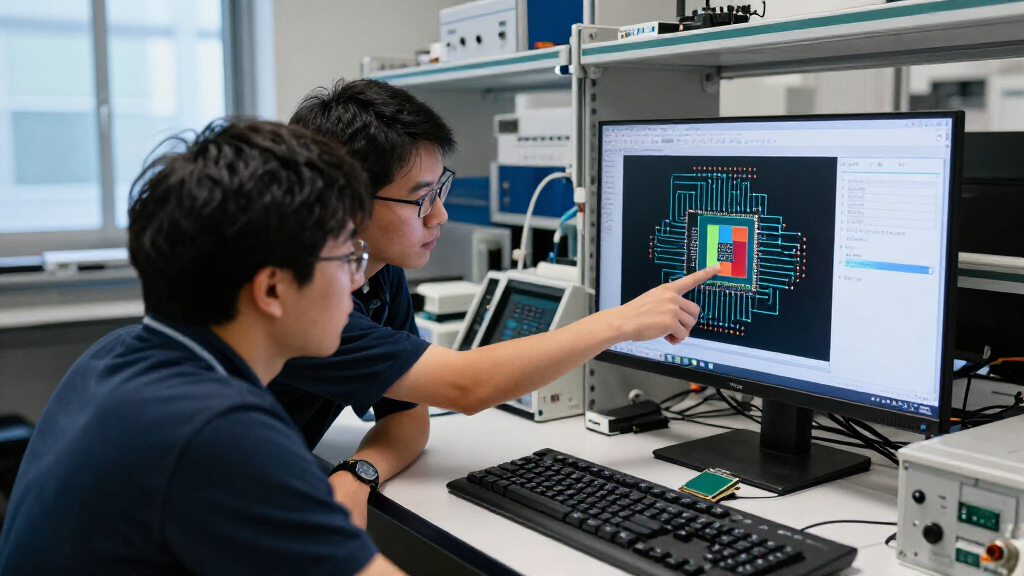
The work targeted register-transfer-level (RTL) code, which describes how a chip’s circuit blocks operate. OpenAI said its models proposed alternative circuit implementations, while Synopsys design tools checked whether the rewrites preserved the original behavior and evaluated power, performance and area. The models did not themselves provide the final correctness check, according to OpenAI’s account as reported by ANI and Inside AI.
OpenAI described separate results for several projects. For an AMD flagship GPU, it reported up to 14% better power, performance and area, or PPA, compared with “heavily optimised baselines.” For key blocks in AMD’s next flagship CPU, OpenAI said AMD had verified single-digit percentage gains. The company also said it had incorporated some GPU changes into a design sent for manufacturing, with other changes added to production design files for future versions.
OpenAI also reported results on its own Jalapeño inference chip: model-proposed changes reduced standard-cell area by about 13% in one unit and 10% in another. The company said those changes were validated after the first chips returned from manufacturing. A separate test used five OpenAI models on two open-source RISC-V processor cores, PicoRV32 and Ibex, with 9,881 scored runs. OpenAI said GPT-6.2 Astra achieved the highest score. That benchmark is distinct from the AMD PPA figures and does not independently verify them.
AI Rewrites Could Change Chip Development
If the reported gains hold up, the results suggest AI tools may help engineers improve hardware that will run future AI systems. Chip design involves repeated trade-offs among power, speed and area; better results in a useful block could affect a processor’s efficiency or capability. The reported use of some changes in a design sent for manufacturing also places the work beyond a purely experimental code exercise, although the eventual silicon performance is not established by the announcement alone.
The practical reach of the claim is still uncertain. A best-case improvement in an unnamed part of a chip does not show that the whole processor gains by the same amount. Nor does a change that passes design checks automatically establish an overall product benefit: manufacturing results and performance in a finished system matter. For readers watching AI infrastructure, the development is relevant because it could affect how quickly and efficiently companies produce the chips needed for computing, but the evidence available so far is largely supplied by the companies involved.
Products Worth Considering

LG 27GS60QC-B Ultragear 27-inch Curved Gaming Monitor (QHD, 180Hz, 1ms, 1000R)

Bose QuietComfort Ultra Earbuds (2nd Gen), Wireless Noise-Cancelling Earbuds, Black

Bose SoundTouch 30 Wireless Speaker, Black
As an affiliate, we earn on qualifying purchases.
From RTL Suggestions to Fabrication
RTL is an early, code-based description of a chip’s behavior. After engineers define a design at this level, synthesis tools convert it into logic gates, followed by later stages that place and connect those gates on silicon. OpenAI’s reported work focuses on generating alternative RTL implementations; conventional design tools then check behavior and estimate PPA. A rewrite that changes a circuit’s behavior would not be a valid improvement, which is why verification is a central part of the process.
OpenAI said AMD’s comparison was against designs its engineers had already optimized, rather than an unoptimized starting point. That makes the stated baseline more demanding, but the available reports do not identify which circuit blocks produced the best result, what share of the full chip they represent, or whether the figure was measured after synthesis or after placement and wiring. OpenAI president Greg Brockman described the pace as “roughly an additional year of progress” achieved in less than five months; that is his characterization of the work, not an independently established measure of development time saved.
The companies also have a commercial relationship. Since October 2025, OpenAI has held a warrant for up to 160 million AMD shares, which vests as AMD chips are deployed. That financial tie does not disprove the technical claims, but it is relevant when weighing figures released by OpenAI and not accompanied by a public independent audit.
“The source material says Su praised the results but does not provide her exact wording.”
— AMD chief executive Lisa Su, on X, as quoted by Stocktwits
The 14% Figure Lacks Public Detail
OpenAI has not publicly identified the blocks behind the 14% best-case result, their share of the GPU, or the average gains across the tested design. The reports also do not specify at which stage of chip development the GPU result was measured. Without those details, readers cannot determine how broadly the figure applies or compare it directly with results from other design methods.
AMD’s stated verification of single-digit gains applies to selected CPU blocks, not necessarily the whole processor. The source accounts differ on the name of one Jalapeño unit: ANI calls it a vector unit, while Inside AI calls it a warp engine. OpenAI says some GPU changes entered a design sent for manufacturing, but the reports do not establish what the finished silicon will deliver, when it will be available, or whether the results will be published in detail. No independent assessment of the claims is cited.
Silicon Results and Independent Checks
The next evidence point is whether the design sent for manufacturing produces results consistent with OpenAI’s reported gains. The source material does not give a manufacturing timetable, a product release date, or a schedule for public results. Further technical details from AMD or OpenAI could clarify which blocks changed, how PPA was measured, and whether improvements persisted through later design stages.
For now, the confirmed public development is that OpenAI has reported model-generated RTL changes and says some were used in an AMD design sent for manufacturing. The headline improvement remains OpenAI’s best-case claim; AMD’s reported verification is limited to single-digit gains in key CPU blocks, and independent validation has not been reported.
Key Questions
What did OpenAI say its models changed?
OpenAI said its models rewrote parts of chip designs at the RTL level, proposing alternative ways to implement circuit functions. Synopsys tools were used, according to OpenAI, to check behavior and assess design metrics.
Does AMD’s GPU have a confirmed 14% improvement?
OpenAI reported up to 14% improvement in power, performance and area against heavily optimized baselines. The source material does not include an independent audit, a typical result, or enough detail to establish a 14% gain across the full GPU.
What has AMD verified?
OpenAI said AMD verified single-digit percentage gains in key blocks of its next flagship CPU. The source material says AMD has not published its own figures.
Are the changes already in a manufactured AMD chip?
OpenAI said some model-generated changes were included in an AMD design sent for manufacturing. That does not establish what the finished silicon will achieve or when a product using it will be released.
Why is the companies’ financial relationship relevant?
OpenAI holds a warrant for up to 160 million AMD shares, vesting as AMD chips are deployed, according to the source material. The relationship does not settle whether the technical claims are correct, but it is relevant when evaluating claims that have not been independently audited.
Source: ThorstenMeyerAI.com