
Smartwatches measure your health data by using advanced sensors that track your heart rate, activity levels, and more in real-time. They employ photoplethysmography (PPG) technology to monitor blood flow through your skin, providing continuous updates. These devices sync with smartphone apps to analyze your trends and offer insights into your fitness and health. As technology advances, their accuracy and capabilities keep improving—so stay with us to discover all the ways they can help you stay healthier.

Get the latest gadgets delivered free — and shop member deals
- Fast, free delivery on millions of items
- Access to Prime Big Deal Days deals on October 6–7
- Prime Video, Amazon Music and more included
Key Takeaways
- Smartwatches use advanced sensors and photoplethysmography (PPG) technology to continuously monitor blood flow and heart rate.
- They track physical activity metrics like steps, calories burned, and workout duration to assess fitness levels.
- Data is synchronized with smartphone apps for trend analysis and personalized health insights.
- Continuous sensor updates improve measurement accuracy and expand smartwatch health capabilities.
- Smartwatches provide real-time alerts for abnormal heart rates and health concerns, supporting early intervention.

Smartwatches have revolutionized how we monitor our health by providing real-time data right on our wrists. With these devices, you can easily keep track of your fitness goals and stay motivated throughout the day. One of the main features that make smartwatches so effective is their ability to perform fitness tracking. They monitor your daily activity levels, counting steps, calories burned, and even measuring the duration and quality of your workouts. This data helps you understand your physical activity patterns, encouraging you to move more if you’re staying sedentary for too long. By providing instant feedback, smartwatches empower you to make healthier choices and stay committed to your fitness routines.
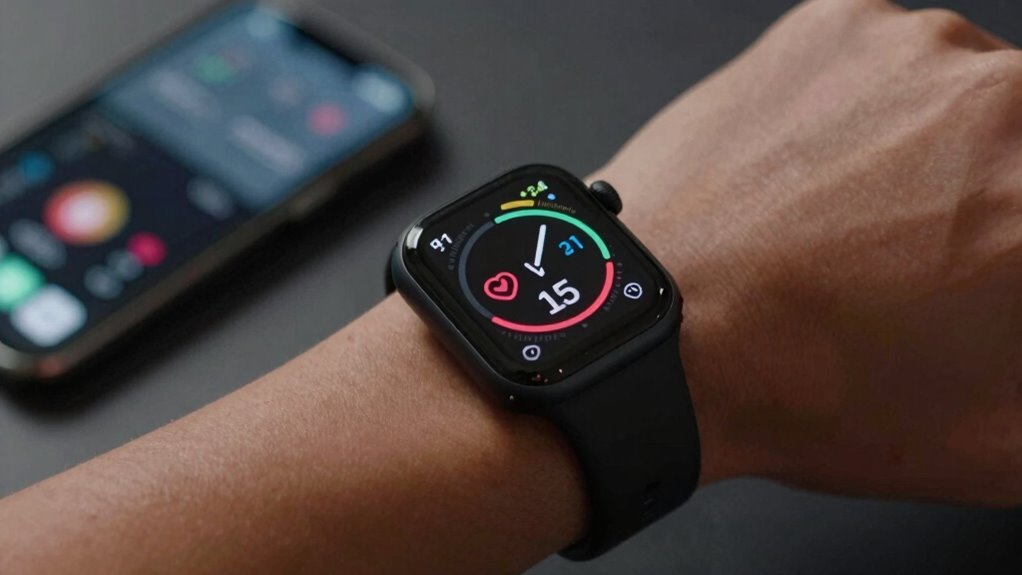
Another essential aspect of health monitoring that smartwatches excel at is heart rate monitoring. These devices use advanced sensors to keep a continuous eye on your heartbeat throughout the day and night. When you wear a smartwatch, it uses photoplethysmography (PPG), a technology that shines light into your skin and measures the blood flow through your veins. This process allows the watch to calculate your heart rate accurately, whether you’re resting, exercising, or simply going about your daily activities. Heart rate monitoring on smartwatches isn’t just about tracking; it can alert you if your heart rate becomes too high or too low, helping you identify potential health issues early on. This real-time data can be vital for athletes trying to optimize training or for individuals managing specific health conditions. Additionally, the technology behind sensor accuracy continues to improve, making these measurements more reliable than ever. Regular updates and advancements in sensor technology further enhance measurement precision and expand the capabilities of these devices.
The data collected from fitness tracking and heart rate monitoring is often synced with companion apps on your smartphone, giving you a detailed view of your health. These apps analyze the data, show trends, and provide insights that help you understand your progress over time. Some smartwatches even offer heart rate variability measurements, which can give clues about your stress levels, recovery status, and overall well-being. With constant updates and improvements in sensor technology, your smartwatch becomes a powerful tool for proactive health management. It’s like having a personal health coach on your wrist, guiding you toward healthier habits and alerting you to potential concerns before they become serious. Overall, smartwatches have made health data more accessible, actionable, and personalized, transforming how you approach fitness and wellness every day.
best smartwatch for heart rate monitoring
As an affiliate, we earn on qualifying purchases.
As an affiliate, we earn on qualifying purchases.
Frequently Asked Questions
How Accurate Are Smartwatch Health Measurements Compared to Medical Devices?
Smartwatch health measurements are generally fairly accurate but not as precise as medical devices. For example, they can reliably track your heart rate variability and blood oxygen levels during daily activities. However, factors like movement, skin type, or device placement can cause discrepancies. So, while smartwatches give useful insights, you should consult healthcare professionals for critical health assessments or if readings seem abnormal.
Can Smartwatches Detect Early Signs of Health Issues?
Yes, smartwatches with wearable sensors can detect early signs of health issues. They continuously collect data like heart rate, sleep patterns, and activity levels, which are then analyzed through data interpretation algorithms. This ongoing monitoring helps identify irregularities or early symptoms of conditions like arrhythmias or sleep disorders. While not a substitute for medical advice, your smartwatch can alert you to potential health concerns, encouraging timely medical consultation.
Do Different Smartwatch Brands Measure Health Data Differently?
You’ll notice that different smartwatch brands measure health data quite differently, like comparing a high-tech rocket to a bicycle. While some brands stick to strict measurement standards, ensuring consistency across devices, others might have their own quirks, causing slight variations. Brand consistency can be a challenge, but most reputable brands aim to follow standardized methods to give you reliable health insights. Always check each brand’s measurement standards for the most accurate data.
How Is Privacy Protected When Sharing Health Data From Smartwatches?
When sharing health data from your smartwatch, privacy is protected through data encryption and user consent. Your device encrypts data during transmission and storage, making it difficult for unauthorized parties to access. Additionally, you control what information to share and with whom, ensuring you give explicit consent. These measures help safeguard your personal health information, giving you confidence that your data remains private and secure.
Are There Any Health Conditions That Smartwatches Cannot Monitor?
Smartwatches can’t monitor every health condition, especially chronic conditions like diabetes or rare diseases that require specific tests or medical equipment. While they track heart rate, activity, and sleep, they lack the precision for conditions needing detailed analysis or lab results. If you have a chronic condition or rare disease, rely on your healthcare provider’s guidance and specialized tools, as smartwatches aren’t a substitute for extensive medical diagnostics.
Conclusion
As you glance at your smartwatch, it’s like holding a tiny, vigilant health guardian on your wrist. Coincidentally, every heartbeat, step, and calorie it records becomes a silent witness to your daily story. With each glance, you’re reminded that technology and health intertwine seamlessly—turning ordinary moments into a mosaic of wellness. In this small device, you find a surprising partner, quietly guiding you toward better health, one data point at a time.
Fall Picks
fall essentials
As an affiliate, we earn on qualifying purchases.