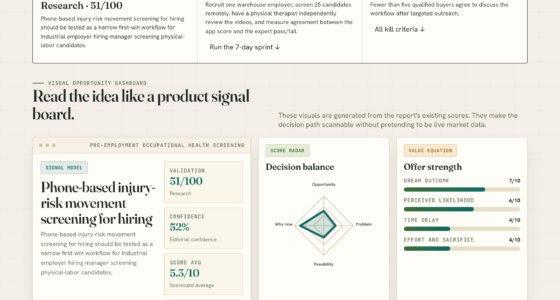
📊 Full opportunity report: The Rise Of VR Training In Manufacturing And EHS Safety Programs on IdeaNavigator AI — validation score, market gap, and execution plan.

Get the latest gadgets delivered free — and shop member deals
- Fast, free delivery on millions of items
- Access to Prime Big Deal Days deals on October 6–7
- Prime Video, Amazon Music and more included
TL;DR
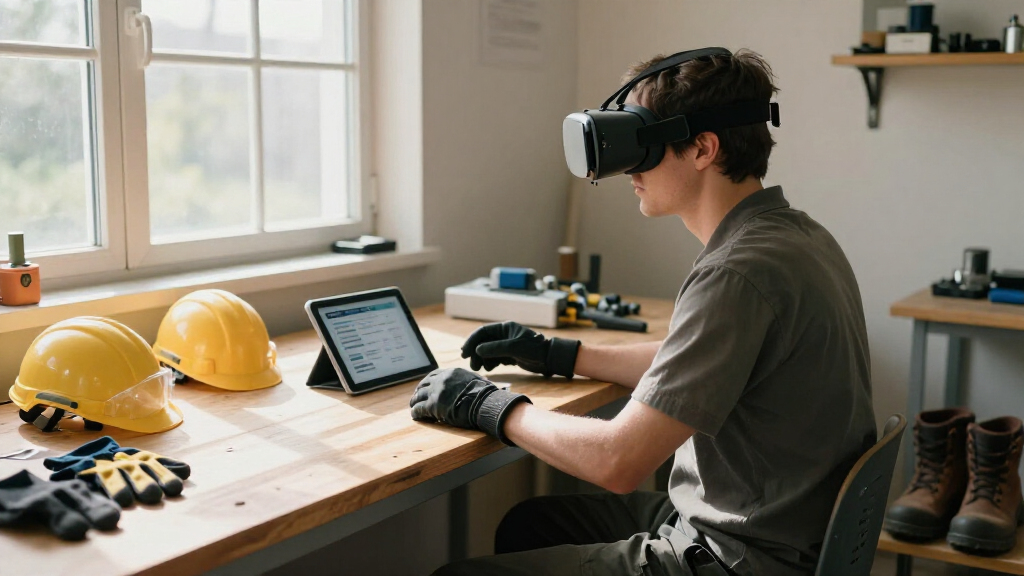
Manufacturers are adopting VR training modules to address workforce skills gaps and safety challenges. A pilot program demonstrates potential for faster onboarding and hazard recognition. The trend is driven by hardware affordability and market growth, with ongoing validation needed.
Manufacturers are increasingly adopting virtual reality (VR) training modules to improve onboarding efficiency and safety compliance amid labor shortages and rising safety risks. This shift is driven by recent pilot programs at mid-to-large manufacturing plants, which demonstrate VR’s potential to accelerate skill acquisition and hazard recognition, reducing incident rates and training costs.
Recent developments show that VR training modules, particularly for high-risk procedures like lockout/tagout and forklift safety, are being tested as part of a focused pilot program. For more on safety applications, see how AI enhances industrial safety. These modules are delivered via standalone headsets such as Meta Quest, paired with cloud dashboards that monitor worker progress, scoring, and hazard recognition accuracy. The pilot involves shipping 5-10 headsets to a plant, with the goal of measuring time-to-competency, hazard-spotting accuracy, and post-training assessment scores against traditional classroom methods.
Manufacturers face a severe labor shortage, with the U.S. manufacturing sector reporting approximately 409,000 unfilled positions in August 2025, and projections estimate a need for 3.8 million new workers by 2033. Traditional training methods are slow, inconsistent, and pose safety risks on live equipment, prompting a search for scalable, standardized solutions. The advent of affordable, cloud-connected XR hardware like Meta Quest and Pico headsets, combined with a growth rate of around 20% CAGR in immersive training markets, makes VR a feasible option for widespread deployment.
Market players are offering SaaS-based platforms with content libraries focused on high-value, high-risk procedures. This aligns with the broader trend of digital transformation in manufacturing, as discussed in Mercedes-Benz’s electric motor manufacturing. Revenue models include per-seat or per-headset subscriptions, custom scenario development, and optional hardware management services. The broader immersive enterprise training market was valued at USD 14.55 billion in 2025, indicating significant growth potential for VR-based training solutions.
Validation of VR training effectiveness involves running 60-90 day pilots, comparing VR cohorts with traditional classroom learners, and measuring improvements in speed, hazard recognition, and supervisor-rated readiness. Success hinges on statistically significant gains and commitment from EHS and L&D managers to expand VR use across more procedures and plants.
Impact of VR on Manufacturing Workforce Development
The adoption of VR training in manufacturing is poised to transform workforce development by enabling faster onboarding, enhancing safety compliance, and reducing incident rates. As labor shortages intensify, scalable VR solutions could help fill skills gaps more efficiently than traditional methods. Additionally, improved hazard recognition and standardized training may lead to safer work environments, lowering costs associated with accidents and high turnover. This shift could redefine how manufacturers approach employee training, making immersive learning a core component of operations.
VR headset for industrial training
As an affiliate, we earn on qualifying purchases.
As an affiliate, we earn on qualifying purchases.
Growing Need for Scalable, Safe Training Solutions
The manufacturing industry has faced persistent labor shortages, with the U.S. sector alone reporting nearly 410,000 unfilled positions in August 2025. The skills gap is compounded by the risks associated with training on dangerous machinery, which traditional classroom and on-the-floor methods struggle to address effectively. Concurrently, technological advances have made immersive VR hardware more affordable and accessible, with standalone headsets now capable of streaming enterprise content via cloud platforms.
Previous efforts to modernize training included digital simulations and e-learning modules, but these often lacked the engagement and realism needed for high-risk procedures. The emergence of dedicated VR modules tailored for manufacturing safety represents a significant step forward, promising more consistent and effective training outcomes. Industry leaders are now testing these solutions through pilot programs, with early results indicating potential for faster competency and better hazard awareness.
Uncertainties Around Long-Term Effectiveness
While initial pilots show promising results, it remains unclear how VR training will perform at scale over longer periods. Questions persist about the durability of skills gained through VR, integration with existing training programs, and the cost-effectiveness of widespread deployment. Further validation is needed to confirm whether improvements in hazard recognition and onboarding speed translate into measurable reductions in safety incidents and operational disruptions.
Next Steps for VR Training Adoption in Manufacturing
Manufacturers are expected to expand pilot programs into full-scale implementations over the next 12-24 months, with more companies testing VR modules across different procedures and plants. Industry stakeholders will monitor key metrics such as time-to-competency, hazard recognition accuracy, and incident rates to evaluate ROI. Additionally, vendors are likely to develop more comprehensive content libraries and enhance platform features, aiming for broader integration with enterprise learning management systems. The success of these pilots could accelerate the mainstream adoption of VR training in manufacturing and EHS safety programs.
Key Questions
How effective is VR training compared to traditional methods?
Early pilot results suggest VR training can reduce onboarding time and improve hazard recognition, but comprehensive, long-term studies are still underway to confirm its comparative effectiveness.
What are the main costs involved in implementing VR training?
Costs include hardware (standalone headsets), platform subscriptions, content development, and integration with existing systems. SaaS models aim to make these costs manageable for mid-to-large manufacturers.
Which procedures are best suited for VR training?
High-risk, high-complexity procedures such as lockout/tagout, forklift safety, and machine maintenance are prime candidates for VR modules due to their safety-critical nature and the benefits of immersive practice.
Will VR replace traditional classroom training entirely?
It is unlikely to replace classroom training entirely; instead, VR is expected to complement existing methods, providing scalable, standardized practice for high-risk procedures.
When will VR training become standard practice in manufacturing?
Widespread adoption depends on pilot success and cost reductions, but industry experts predict broader deployment could occur within the next 3-5 years.
Source: IdeaNavigator AI
Fall Picks
fall essentials
As an affiliate, we earn on qualifying purchases.