📊 Full opportunity report: Build A Compliance Workflow For Made-in-USA Claim Evidence on IdeaNavigator AI — validation score, market gap, and execution plan.

Get the latest gadgets delivered free with Prime
- Fast, free delivery on millions of items
- Prime Video, Amazon Music and more included
- Member-only deals all year
TL;DR
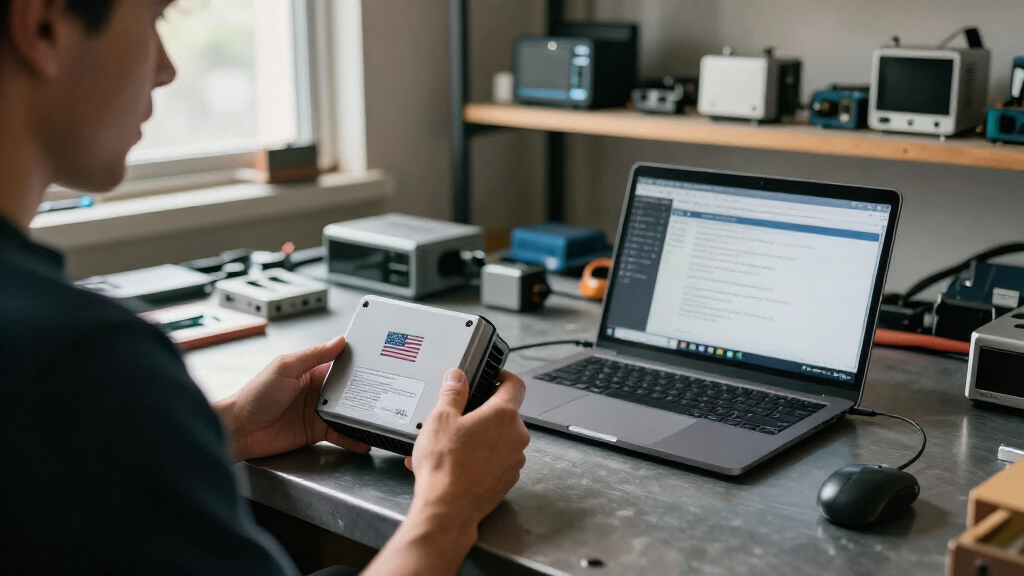
IdeaNavigator AI outlines a proposed workflow for consumer brands to link Made-in-USA claims to bills of materials, supplier affidavits and assembly locations. The proposal is not evidence that a product has been built, that brands have adopted it, or that an FTC enforcement sweep began in April 2026.
IdeaNavigator AI has outlined a proposed compliance workflow for consumer brands that print Made-in-USA claims on packaging, linking each product’s origin assertion to supplier and manufacturing records. The proposal describes a potential software product and validation plan, not a launched service or confirmed enforcement action; the underlying claim that the Federal Trade Commission opened an enforcement sweep in April 2026 is not independently substantiated in the material provided.
The proposed minimum viable product would maintain a record for each SKU, connecting its bill of materials, supplier affidavits and assembly location. It would assign a red, yellow or green status to claims across product lines, giving compliance or operations staff a way to spot where evidence is missing, incomplete or in need of review.
A second proposed feature would flag supplier changes through webhooks and alert compliance staff before marketing materials or packaging are released. The idea addresses a specific operational risk: if a supplier changes a factory or component source, records supporting an origin claim may no longer reflect the product’s current supply chain. The proposal does not specify which supplier systems would provide those notifications or how changes would be verified.
The suggested business model is an annual subscription priced by brand and SKU count, with a separate fee for an audit-response module. To test demand, IdeaNavigator AI proposes offering a fixed-fee substantiation audit to 15 brands that currently make origin claims, then measuring how many purchase ongoing monitoring. That is a proposed experiment, not a reported customer trial; no participating brands, results, prices or conversion figures are identified.
Support Made-in-USA claims with current evidence
IdeaNavigator AI proposes a workflow to connect product origin claims with supplier and manufacturing records. The concept and its market demand remain unproven.
Build a record for each product
The proposed workflow links each SKU’s origin claim to supporting records.
Link the bill of materials, supplier affidavits and assembly location.
Use red, yellow or green labels to flag claims needing attention.
Proposed alerts would notify compliance staff before packaging or marketing materials are released.
Who would use the workflow?
- Compliance staff review evidence gaps.
- Operations staff track product and supplier records.
- Keep claim records connected to current sourcing.
- Give procurement and marketing a clearer handoff.
How demand would be tested
The proposed experiment is a customer test, not a reported trial.
What remains unverified
No launch reported
The workflow is a proposal; no named customers or operating results are reported.
Alerts need validation
Supplier data sources and record accuracy checks are unspecified.
FTC sweep claim unconfirmed
The material provides no agency notice, case names or penalty details for the claimed April 2026 sweep.
Keeping Origin Evidence Current
For brands making U.S.-origin claims, the proposal focuses on a practical gap between the claim printed on a package and the records that support it. Supplier, component and assembly information can sit in separate files or email threads. A structured record linked to each SKU could help teams identify documentation gaps and review claims when sourcing changes, rather than reconstructing the evidence only after a question arises.
The workflow could also create a clearer handoff among compliance, procurement and marketing. A status label may help staff see which product claims need attention before packaging is approved, but it would not itself establish that a claim is legally supportable. That depends on the underlying facts, the completeness and accuracy of records, and the applicable legal standard. The proposal offers no test results showing that its alerts would be timely or that its status categories would align with regulatory requirements.
The commercial case is similarly unproven. A recurring subscription and paid audit-response feature are suggested revenue options, while the 15-brand audit is a way to gauge interest. Without evidence of customer interviews, paid pilots or conversion, the proposal should be read as a product hypothesis rather than proof of market demand.
Products Worth Considering

LG UltraGear 32-inch QHD Curved Gaming Monitor, 180Hz, 1ms, AMD FreeSync

LG UltraGear 27G640A-B 27-Inch QHD IPS Gaming Monitor, 300Hz, 1ms, G-SYNC Compatible, FreeSync Premium, DisplayHDR 400, HDMI 2.1, USB-C, Adj

Jackery Solar Generator 1000 V2 with 200W Solar Panel, 1,070Wh, 1,500W, Dune White
As an affiliate, we earn on qualifying purchases.
The Enforcement Claim Needs Checking
IdeaNavigator AI frames the opportunity around brands losing track of the records behind Made-in-USA claims, including a scenario in which a supplier quietly moves production overseas. It says an FTC enforcement sweep on origin claims opened in April 2026 and describes that development as turning a paperwork obligation into active legal exposure. The material supplies no agency announcement, case names, penalty details or links to support that specific account, so it cannot be treated here as confirmed.
The product concept is narrower than a general compliance platform: it is aimed at consumer brands placing origin claims on packaging and at the compliance or operations staff responsible for supporting them. Its proposed workflow combines evidence storage, product-level status tracking and supplier-change alerts. The description does not establish that a company has built or released the system, or that a regulator has endorsed this approach.
Product and Enforcement Details
No product launch, named customers or operating results are reported. The proposal does not identify a vendor, provide a development timetable, explain how it would ingest supplier data, or describe how the accuracy of affidavits and manufacturing records would be checked. It also does not state how long records would be retained or how access and corrections would be managed.
The claimed April 2026 FTC sweep remains unverified in the material available for this article. No specific enforcement cases, penalties, agency statements or dates beyond the claim itself are supplied. The proposed workflow’s legal scope is also unspecified: a red-yellow-green indicator is an internal review aid, not a legal determination, and the description does not explain how the system would account for differences among products or changes in sourcing.
Testing the Proposed Customer Demand
The next step described by IdeaNavigator AI is a fixed-fee substantiation audit offered to 15 brands that currently print origin claims. The proposed test would track whether those brands convert to a subscription for ongoing monitoring. No start date, participating companies, audit deliverables or success threshold is given, and there is no reported outcome yet.
Separately, the enforcement assertion would need confirmation from FTC announcements or case records before it could be reported as an established event. Until a pilot, product release or independently verifiable agency action is documented, the development remains a proposed compliance-software workflow rather than a confirmed market launch.
Source: IdeaNavigator AI
Key Questions
Has the proposed workflow been launched?
No launch is reported. The description presents a proposed minimum viable product and a plan to test customer demand, not an available service.
What records would the system connect?
The proposed registry would link each SKU to its bill of materials, supplier affidavits and assembly location, with a status indicator for claims across product lines.
Did the FTC open an enforcement sweep in April 2026?
The supplied description makes that claim, but provides no agency notice, cases or penalty details to verify it. It should not be treated as confirmed based on the information available here.
How would the proposal test whether brands will pay?
IdeaNavigator AI suggests conducting fixed-fee substantiation audits for 15 brands and measuring conversion to a monitoring subscription. No trial results or pricing are reported.
Source: IdeaNavigator AI