
TL;DR
A maker is testing rooted, second-hand Android phones as lower-cost alternatives to a Raspberry Pi setup for a project involving a camera, GPS and light controls. The phones include several components that would otherwise add to a Pi build’s cost, but camera performance, long-term reliability and the availability of matching devices at scale have not been established.
A maker is testing whether a used Android phone can replace a more expensive Raspberry Pi setup for a project requiring a high-resolution camera, GPS, storage and a microcontroller to control lights. In a report published in November 2026, the maker said a used Redmi 13C 5G or Huawei Mate 30 5G found on Taobao typically costs about ¥300–500, while a parts-based Pi 4 configuration is estimated at substantially more.

Get the latest gadgets delivered free with Prime
- Fast, free delivery on millions of items
- Prime Video, Amazon Music and more included
- Member-only deals all year
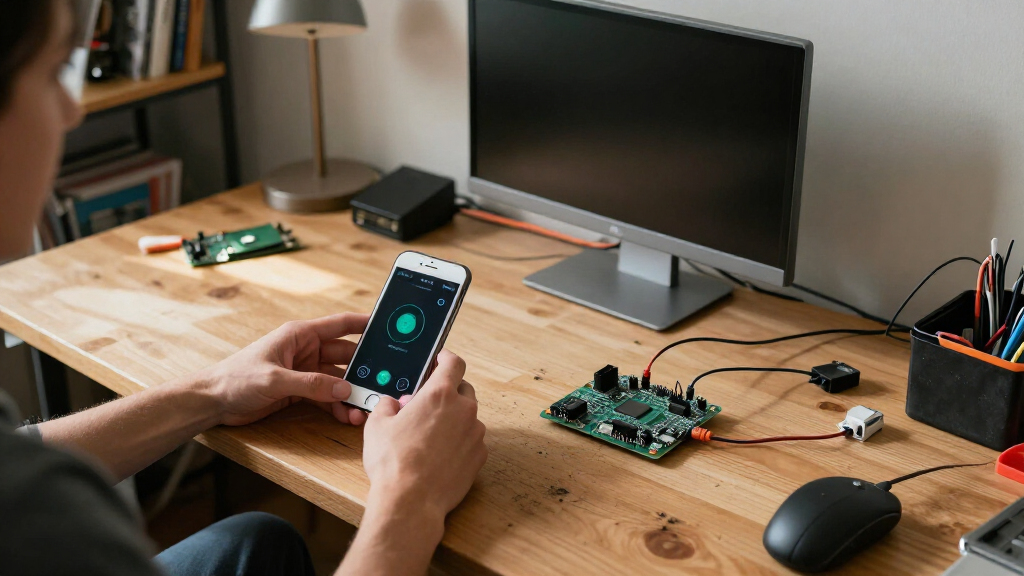
The comparison puts the phones’ cameras, GPS, storage, clock, battery, touchscreen and mobile-data capability in one device. The maker says the Redmi produces 50-megapixel JPEGs, while the Mate 30 has a 40-megapixel main camera and a telephoto lens. A phone’s USB-C port provides a way to connect it to a custom circuit board for controlling lights and other sensors.
For the Pi option, the report lists a Raspberry Pi 4 with 4GB of memory, an Arducam 64MP camera, GPS and a 64GB microSD card at an estimated core total of about ¥1,483. Adding functions such as a clock, battery backup, touchscreen and cellular connectivity brings its more fully equipped estimate to about ¥2,317, plus batteries. The phone estimate remains ¥300–500.
These are the maker’s illustrative November 2026 listings, not a controlled comparison of performance or lifetime cost. Neither estimate includes the custom light-controller board, a SIM or data plan, or an enclosure. The Pi total with cellular connectivity uses the GPS included in the cellular HAT rather than adding a separate GPS HAT; that modem is 4G, while the compared phones support 5G.
The Cost of an Integrated Build
The comparison matters to makers and installation teams because a phone may already contain several parts that a single-board-computer project needs to buy separately. If a suitable handset can run the required software and connect reliably to external electronics, it could reduce component costs and assembly work for individual projects.
The report also points to possible use in digital-art installations. The maker suggests that a configured phone could be sent to a client and connected to a display, with mobile data and remote access allowing maintenance without relying on a venue’s Wi-Fi or network access. That is a proposed use, not a demonstrated deployment across multiple installations. The practical value depends on whether the phone can run unattended and be supported over time.
Products Worth Considering

LG UltraGear evo 27-inch 5K Mini-LED Gaming Monitor

Apple AirPods Pro 3 Wireless Earbuds with Active Noise Cancellation

Samsung Odyssey OLED G5 27-Inch QHD Gaming Monitor
As an affiliate, we earn on qualifying purchases.
From Pi Parts to Phone Testing
The maker initially designed circuit-board adapters around a Raspberry Pi, an Arducam camera and a GPS module, and also said an ESP32-P4 board is under consideration. As parts accumulated, the total rose, prompting a comparison with two phones already available to the maker: a Redmi 13C 5G and a Huawei Mate 30 5G.
The maker reports unlocking and rooting the Redmi, testing its camera and getting it to sleep and wake on a schedule. The Huawei is described as harder to root, but the maker says a kiosk app can still run on it. A side-by-side camera test using the Redmi and Arducam is planned; the report cautions that a stated megapixel count alone does not establish which camera captures more useful detail.
The price conversions in the report use mid-market exchange rates dated 10 November 2026 and are rounded. The quoted second-hand phone prices and component listings are specific to the maker’s sourcing and are not a guarantee of availability or price in other markets.
Camera Tests and Supply Risks
The report does not establish whether either phone’s camera outperforms the Arducam in the maker’s intended setup. A side-by-side photograph test is planned, but results are not yet available; megapixel counts alone cannot answer the question of captured detail or suitability for the project.
It is also unclear whether the phones will remain dependable during extended unattended use, or whether the proposed approach can be repeated at scale. The maker says finding two suitable used handsets is easy, but sourcing a few hundred matching devices with healthy batteries and predictable camera behaviour would require more work. The report does not provide long-term reliability data, a completed installation trial or a full cost comparison that includes maintenance and replacement.
The Planned Camera Comparison
The maker plans to photograph the same target using the Redmi and Arducam side by side to compare the detail each captures. Further testing will need to show whether the phone can reliably handle scheduled work and communication with the light-controller board, and whether the approach is practical beyond the maker’s current setup.
The report says a separate post about the ESP32-P4 is also planned. No publication date is given for that post or the camera results, and the maker has not announced a final choice between the phone and the Pi-based design.
Key Questions
How much do the compared used phones cost?
The report gives an approximate Taobao price of ¥300–500 for a second-hand Redmi 13C 5G or Huawei Mate 30 5G. Prices may vary by device condition and listing.
How does that compare with the Pi estimate?
The maker estimates about ¥1,483 for a Pi 4 core setup with camera, GPS and storage, and about ¥2,317 for a more fully equipped version with additional functions. Both estimates exclude the custom controller board, SIM or data plan, and enclosure; the larger total also excludes batteries.
Has the phone camera been shown to be better?
No. The maker has tested the Redmi camera and plans a side-by-side comparison with the Arducam, but no results are reported. The stated megapixel counts do not establish which camera will perform better for the project.
Could this approach work for many installations?
That remains uncertain. The maker identifies sourcing a few hundred phones with healthy batteries and consistent camera behaviour as a challenge. The report describes a potential use for digital-art installations but does not document a large-scale deployment.
Source: so.long.thanks.fish