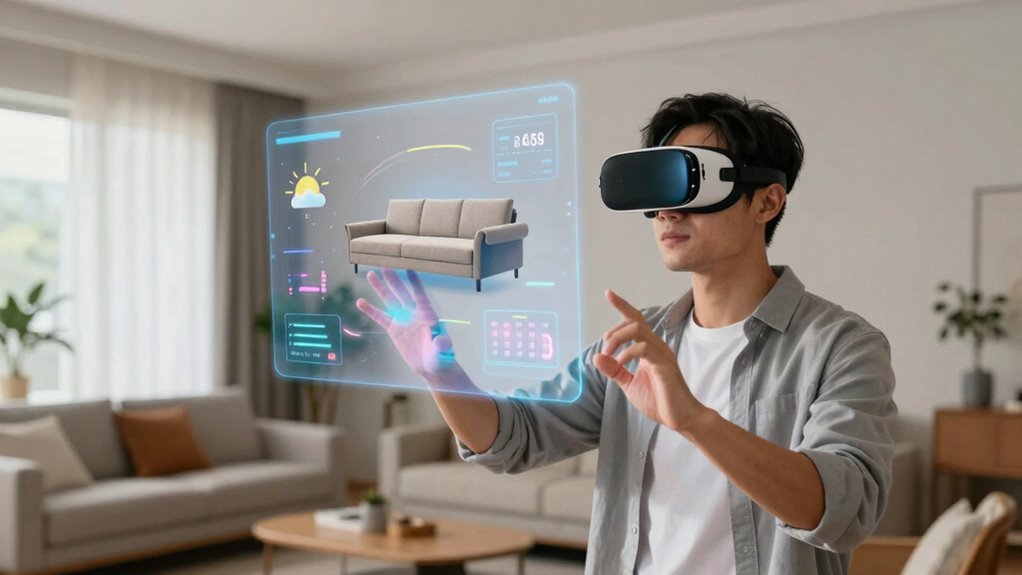

Spatial computing changes how you interact with your surroundings by blending digital content with the real world. You can navigate, learn, or work more naturally using gestures, voice, and immersive environments. Tasks become easier and more engaging as digital info overlays your view, guiding you seamlessly through everyday activities. As technology evolves, your daily routines will become more intuitive and personalized. Keep exploring to discover how these innovations will shape your future experiences.

Get the latest gadgets delivered free — and shop member deals
- Fast, free delivery on millions of items
- Access to Prime Big Deal Days deals on October 6–7
- Prime Video, Amazon Music and more included
Key Takeaways
- Enables seamless digital overlays on the physical environment for enhanced navigation and information access.
- Allows immersive virtual experiences at home, reducing the need for physical travel.
- Integrates digital content into daily tasks, making activities like cooking or repairs more intuitive.
- Uses natural gestures and voice commands for interaction, simplifying technology use.
- Blurs the line between physical and digital worlds, creating more engaging and personalized experiences.
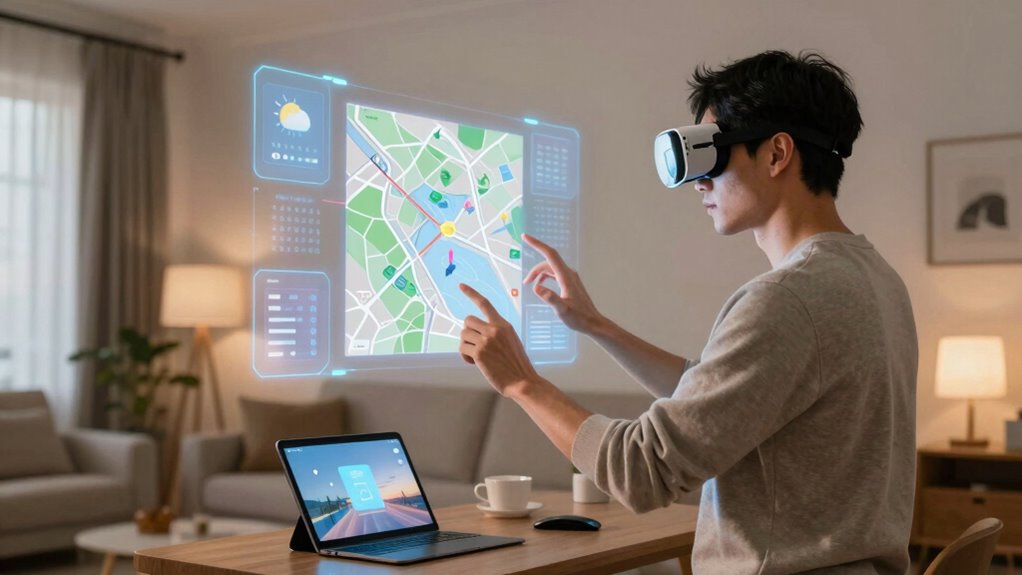
Spatial computing is transforming how you interact with digital environments, making technology more intuitive and integrated into daily life. Instead of relying solely on screens and keyboards, you now experience digital content overlaid onto the real world through augmented reality. Imagine walking down the street and seeing directions, advertisements, or information about nearby landmarks appear instantly in your view, blending seamlessly with your surroundings. This shift to augmented reality enhances how you steer your environment, providing real-time data that’s relevant and easy to access without interrupting your flow. It’s no longer just about looking at a device; it’s about experiencing a digital layer that responds to your movements and context.
Virtual environments are also becoming more accessible, allowing you to immerse yourself in entirely digital worlds without leaving your home. Whether you’re exploring a virtual museum, attending a remote meeting in a simulated conference room, or playing a game that feels entirely real, these virtual environments expand what’s possible in entertainment, education, and work. The boundary between physical and digital blurs, giving you the ability to switch contexts effortlessly. As these virtual spaces become more sophisticated, they adapt to your gestures and voice commands, making interactions more natural. You can manipulate objects, collaborate with others, or explore new ideas as if you were physically present, all through intuitive spatial interfaces.
For everyday users, this means a future where digital content isn’t confined to small screens but surrounds you in meaningful ways. Augmented reality applications can help you cook by overlaying recipes on your kitchen counter or assist with repairs by guiding your hands step-by-step. Virtual environments can provide training or therapy sessions in a safe, simulated space tailored to your needs. The convenience lies in how these spatial computing tools integrate into your routines, making tasks easier, more engaging, and more personalized. As these technologies evolve, they are increasingly driven by user-centered design, ensuring that interfaces remain intuitive and accessible. The integration of digital environments further exemplifies how these technologies are reshaping daily interactions, blurring the line between physical and digital worlds. By leveraging spatial awareness technologies, users can navigate and interact more seamlessly within these mixed realities. Instead of learning complex controls or navigating complicated menus, you’ll use natural gestures, voice commands, and spatial awareness to interact with digital content.
As an affiliate, we earn on qualifying purchases.
Frequently Asked Questions
How Secure Is My Data in Spatial Computing Environments?
Your data in spatial computing environments is generally secure, thanks to data encryption and user authentication. Encryption protects your information from unauthorized access, while authentication ensures only you can access your account. However, always stay vigilant—use strong passwords and update your software regularly. Developers continually improve security measures, but no system is completely foolproof. Being cautious helps keep your data safer in these innovative digital spaces.
Can Spatial Computing Be Used on All Smartphones?
Spatial computing isn’t available on all smartphones yet, but many modern devices support augmented reality and virtual interfaces. You need a phone with advanced sensors, cameras, and processing power to experience spatial computing fully. As technology advances, more smartphones will incorporate these features, making augmented reality and virtual interfaces accessible to a wider audience. Keep an eye out for updates and new models that expand spatial computing capabilities.
What Skills Are Needed to Navigate Spatial Computing Tools?
To navigate spatial computing tools, you’ll need basic skills like understanding augmented reality and using gesture controls. You should be comfortable interacting with digital content integrated into your physical environment and able to perform simple gestures to control devices. Familiarity with touchscreens or motion sensors helps, but most tools are designed to be user-friendly, so with some practice, you’ll quickly learn how to manipulate virtual objects and move seamlessly through augmented spaces.
How Does Spatial Computing Impact Privacy?
Spatial computing impacts your privacy by increasing contextual awareness, which means devices gather more data about your surroundings and activities. This can lead to concerns over how your information is used or shared. However, you still have user control over your privacy settings. You can adjust permissions, manage data sharing, and decide what information to keep private, ensuring you stay in control while benefiting from the technology’s immersive experience.
Will Spatial Computing Replace Traditional Computers?
You might wonder if spatial computing will replace traditional computers. The truth is, it’s more likely to transform how you interact with digital worlds through augmented reality and immersive virtual environments. Instead of outright replacing, it’ll enhance your experience, blending physical and digital seamlessly. The suspense lies in how quickly these technologies evolve—soon, your daily tasks could be done in ways you’ve only imagined, blurring the lines between reality and virtuality.
Conclusion
As an everyday user, embracing spatial computing can truly transform how you interact with technology—making tasks more intuitive and immersive. Did you know that by 2025, over 75% of people will use some form of spatial computing daily? This rapid growth means you’ll soon experience smarter homes, more engaging entertainment, and seamless work environments. So, get ready to explore a future where digital and physical worlds blend effortlessly, enhancing your daily life in ways you never imagined.
Fall Picks
fall essentials
As an affiliate, we earn on qualifying purchases.