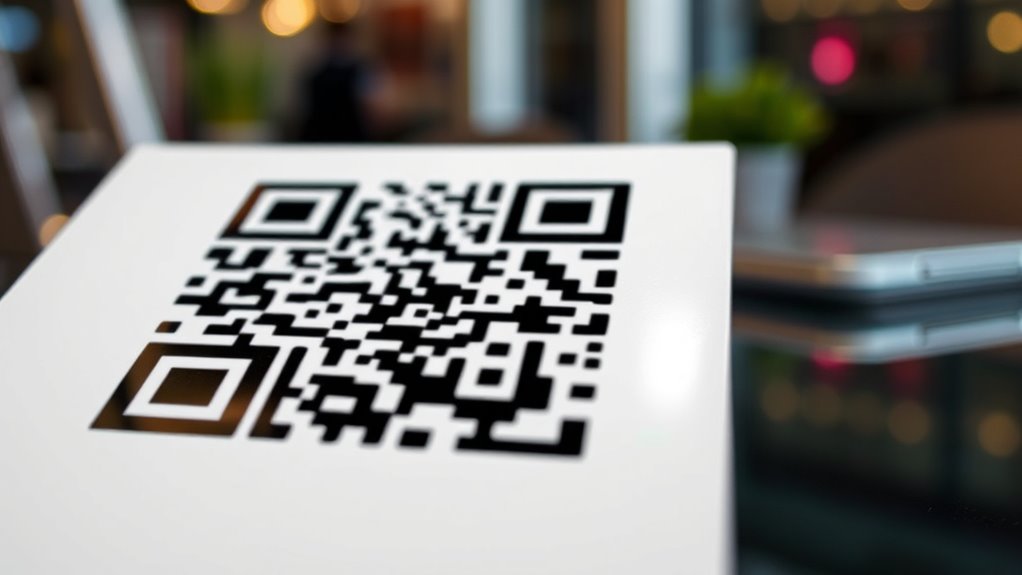

QR codes are square symbols that you can scan with your smartphone to instantly access digital content like websites, videos, or apps. Businesses place these codes on products, posters, or packaging to connect the offline world with online experiences effortlessly. They’re used to provide product info, facilitate payments, and gather customer insights, making your interactions smoother. Keep exploring to discover how these tiny codes are transforming marketing and retail in everyday life.
Key Takeaways
- QR codes are square symbols that encode information like URLs or data, which can be scanned using smartphones or devices.
- They serve as a bridge between offline and online content, enabling quick access to websites, apps, or digital content.
- Created using various tools, QR codes are strategically placed on products, ads, or packaging for easy customer scanning.
- Once scanned, the embedded data is decoded instantly, allowing users to access information or perform actions such as payments or loyalty rewards.
- Widely used in marketing and retail for enhancing customer engagement, tracking interactions, and providing contactless services.
Have you ever wondered how QR codes have become so ubiquitous in everyday life? These square-shaped symbols are now everywhere—from product packaging to event tickets—and their popularity keeps growing. The reason is simple: QR codes are incredibly versatile and easy to use, making them a powerful tool in digital marketing and retail applications. When you scan a QR code with your smartphone, it instantly directs you to a website, app, or specific content, streamlining the way businesses connect with customers.
QR codes are everywhere, connecting physical products to digital content effortlessly.
In digital marketing, QR codes serve as a bridge between offline and online experiences. Companies embed these codes in print ads, posters, or product packaging, giving consumers quick access to digital content without typing URLs. For example, a restaurant might place a QR code on tables so you can view menus or place orders directly from your phone. Marketers appreciate how QR codes enable immediate engagement, track user interactions, and gather valuable data about consumer behavior—all without complicated setups. They’re an affordable, efficient way to enhance campaigns, increase conversions, and provide seamless customer journeys.
Retail applications take this concept further by integrating QR codes directly into the shopping experience. When you visit a store, you might scan a QR code next to a product to see detailed information, reviews, or even videos demonstrating its use. Retailers also use QR codes for inventory management, making stock updates quick and accurate. During checkout, some stores offer QR codes for contactless payments, reducing physical contact and speeding up the process. Additionally, QR codes are used for loyalty programs, allowing you to scan and earn rewards instantly or redeem discounts without needing physical cards. This integration simplifies your shopping experience and encourages brand loyalty.
The process of creating and using QR codes is straightforward. A business generates a code with a free or paid tool, then places it strategically where customers can easily scan it. Your smartphone camera or a dedicated app reads the code, deciphering its embedded information instantly. This simplicity is part of why QR codes have gained such widespread adoption—they require minimal effort but deliver maximum engagement. As digital marketing continues to evolve, QR codes remain a essential link between brands and consumers, especially in retail where instant access and convenience are key. Their ability to connect physical and digital worlds makes them an indispensable tool for modern businesses looking to innovate and foster stronger relationships with their audiences.

QR Code Reader – Fast QR Code Scanner
View a history list of all of your past scans
As an affiliate, we earn on qualifying purchases.
As an affiliate, we earn on qualifying purchases.
Frequently Asked Questions
Can QR Codes Be Hacked or Manipulated?
Yes, QR codes can be hacked or manipulated. You should be aware of encryption vulnerabilities that might let hackers intercept data or modify the code. Counterfeit QR codes also pose risks, leading you to malicious websites or scams. Always verify the source before scanning, and use security features like app scanners that detect suspicious codes. Staying cautious helps protect your personal information from potential threats.
Are There Size Limitations for QR Code Scanning?
You’ll find that size constraints can affect your QR code scanning, especially if the code is too small or too large for your device’s camera. Typically, a QR code should be at least 2 x 2 cm for close-up scanning, but larger sizes help improve scanning distance. If the code is too tiny or too big, your scanner might struggle, so it’s best to keep the size appropriate for the intended scanning distance.
How Secure Is Data Stored in QR Codes?
You should know that data stored in QR codes isn’t inherently secure, so data encryption is essential if you’re handling sensitive info. While QR codes themselves don’t offer encryption, encrypting your data before generating the code adds a layer of protection. Be aware of privacy concerns, especially if QR codes link to personal or confidential data, as anyone with access could potentially scan and view it without your permission.
Can QR Codes Be Used for Authentication Purposes?
Like a secret handshake, QR codes can be used for authentication by embedding encrypted data or digital signatures that verify identity. You scan the code, and if it contains valid digital signatures, it confirms authenticity. This process guarantees secure access, much like a lock opening only with the right key. While not foolproof, combining QR codes with encryption makes them a handy tool for authentication purposes.
Are There Different Types of QR Codes for Various Applications?
Yes, there are different types of QR codes for various applications. You’ll find various formats like static and dynamic codes, each serving unique needs. Design variations also exist, allowing customization with logos or colors to match branding. Depending on your goal—whether for marketing, authentication, or payments—you can choose the appropriate format and design to optimize functionality and user experience, making your QR code more effective and engaging.

QR Code Generator Pro
Generate QR Codes instantly at the press of a button
As an affiliate, we earn on qualifying purchases.
As an affiliate, we earn on qualifying purchases.
Conclusion
Think of QR codes as tiny bridges connecting your world to endless information. Just like a bridge lets you cross from one side to another effortlessly, scanning a QR code quickly takes you to websites, menus, or videos. Imagine you’re at a restaurant and scan a code to see the menu—it’s like opening a secret door with a simple tap. With their ease and versatility, QR codes truly make your digital journey seamless and accessible.

Smart Vending Machine – Supports contactless Payment via QR Code scanning and Facial Recognition; Commercial refrigerated Vending Machine for Beverages and Snacks; Suitable for airports/Universities.
[Please note] This product has various models and supports customization. The price is not the final price. For…
As an affiliate, we earn on qualifying purchases.
As an affiliate, we earn on qualifying purchases.

Maikrt Embedded QR Code Scanning Module USB and UART Serial Port Barcode Scanner Identification Module Bar Code Reader for Access Control, Locker Scan Code Payment etc
A small 1D/2D codes reader,Can be embedded in any device for scanning code to identify other items, by…
As an affiliate, we earn on qualifying purchases.
As an affiliate, we earn on qualifying purchases.