TL;DR

Get the latest gadgets delivered free with Prime
- Fast, free delivery on millions of items
- Prime Video, Amazon Music and more included
- Member-only deals all year
Google DeepMind presented Genie 4 on October 27, describing a real-time model that generates interactive scenes with synchronized audio and text-directed changes. The demonstrations are company-selected, the system is limited to trusted testers, and DeepMind says scenes can drift after a few minutes; independent benchmarks and a public release date have not been provided.
Google DeepMind demonstrated Genie 4 on October 27, presenting a real-time AI model that creates scenes users can explore and change through controls and text prompts. The company says it can generate accompanying audio and more realistic motion, but the system is not yet publicly available, and its scenes may drift during longer interactions.
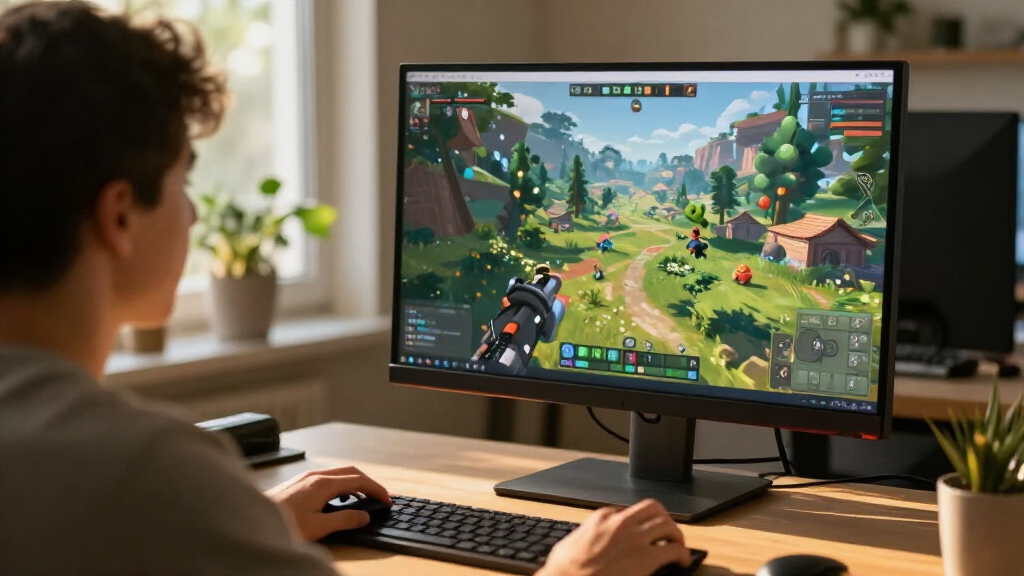
In DeepMind’s examples, users move through generated environments with keyboard or mouse controls and type instructions to change what happens, such as making a scene rainy. The company describes Genie 4 as a world model: it predicts the next frame in response to the current scene and user input rather than rendering a world from a stored 3D map like a conventional game engine. DeepMind’s demonstrations are selected by the company, so they do not establish how consistently the system performs across different prompts or tasks.
DeepMind says the model generates audio alongside visuals, including ambient sounds, music and character speech, and supports changes to scenes while they are running. It also says Gemini 3.8 Flash can interpret instructions, break goals into steps and help guide the generated scene. These are vendor descriptions; the announcement material cited in the source provides no benchmark figures for image quality, reliability or latency.
Access is limited to trusted testers. DeepMind said access is planned for Google AI Ultra subscribers through Project Genie and for early Gemini API partners, but it gave no launch date or API price. The source identifies Google AI Ultra as a $200-a-month subscription tier. DeepMind also says Genie 4 outputs will carry an invisible SynthID watermark; details about how that watermark can be detected were not provided in the material.
Interactive Worlds Move Beyond Video
Genie 4 points toward AI systems that respond continuously to user actions, rather than producing a finished clip from a prompt. If the approach becomes reliable, it could support rapid game prototyping, interactive media and simulated environments for research. Those possibilities are not the same as established commercial uses: the current evidence consists mainly of company demonstrations and early tester feedback.
DeepMind says testers have explored uses such as film previsualization and game prototypes. It also showed a robotics-related simulation, but that was not a physical robot performing the task. The distinction matters for businesses weighing adoption: a convincing generated scene does not by itself establish dependable physics, repeatable behavior or suitability for training real-world systems.
The model’s real-time audio and visuals also make provenance relevant. DeepMind says SynthID will mark generated audio and video, but the source does not explain whether the watermark remains detectable after editing, re-encoding or other changes. For now, the announcement signals a direction for generative AI, not proof that synthetic environments are ready to replace production tools or validated simulators.
Products Worth Considering

Logitech MX Master 4 for Mac, Ergonomic Bluetooth Mouse with Haptic Feedback, Ultra-Fast Scrolling, USB-C Charging, for MacOS, iPadOS, Windo

Samsung 27-inch Odyssey OLED G6 QD-OLED QHD Gaming Monitor

DJI Osmo Pocket 3 Creator Combo Vlogging Camera with Mic 2, 1 CMOS, 4K/120fps, 3-Axis Stabilization, 128GB Card
As an affiliate, we earn on qualifying purchases.
From Genie Research to Real Time
Google’s Genie work has developed through several stages. The first Genie, announced in February 2024, generated simple 2D interactive worlds; the research paper described an 11-billion-parameter model trained on unlabeled internet videos. Genie 2 followed in December 2024, generating 3D worlds from a single image and maintaining consistency for up to a minute, according to the source material.
In August 2025, DeepMind presented Genie 3 as its first real-time world model, with company-stated output of 720p at 24 frames per second and consistency lasting a few minutes. Genie 4’s announcement builds on that line with claims of improved realism, sound and live text-directed changes. DeepMind’s description of drifting objects is a reminder that visual continuity remains a limitation, even as the demonstrations become more detailed.
The source also notes that Waymo uses the predecessor, Genie 3, in work on its driving simulator. That provides context for interest in simulated environments, but it does not establish that Genie 4 is being used by Waymo or that it is ready for autonomous-driving validation.
“Details and objects “can shift or drift over time.””
— Google DeepMind, describing Genie 4’s limitations
Testing, Benchmarks and Access
Several practical questions remain unanswered. DeepMind has not published benchmark numbers in the source material, and the public has no access to test the system independently. The company’s selected clips therefore show what it chose to demonstrate, not how often Genie 4 maintains scene continuity or follows instructions across varied conditions.
There is also a difference between DeepMind’s stated interaction window of a few minutes and reports cited by the source of scenes lasting up to about two minutes. The latter figure is attributed to TechCrunch and to Bloomberg as cited by heise, not to DeepMind’s own announcement. The precise duration depends on the reporting, and no standardized test or measurement method is supplied.
Pricing, release timing, API availability and the criteria for trusted testers remain unspecified. The source describes robotics as a research demonstration involving simulated activity, with no real robot participating. How well the model handles physical cause and effect outside selected demonstrations—and how useful its outputs are for real-world training—has not been established.
Project Genie Testing Plans
DeepMind’s next stated step is to give trusted testers access, followed by planned availability for Google AI Ultra subscribers through Project Genie and early Gemini API partners. The company has not announced dates, API pricing or a broader public rollout. Those details will determine when independent users can evaluate the system and whether businesses can test it directly.
Readers should watch for access announcements and for evidence beyond curated clips: independent evaluations, published performance measures and clear information about session limits and watermark detection. Until that material appears, Genie 4 is best understood as a demonstrated research and product direction with potential uses—not as a generally available tool with independently verified performance.
Key Questions
What is Google Genie 4?
Genie 4 is a world model that DeepMind says generates interactive scenes in real time. Users can move through those scenes and issue text instructions while the scene is running.
Can the public use Genie 4 now?
No. Access is currently limited to trusted testers. DeepMind has said it plans access through Project Genie for Google AI Ultra subscribers and for early Gemini API partners, but has not announced a date.
What can users do in a Genie 4 scene?
In DeepMind’s demonstrations, users navigate with keyboard or mouse controls, request changes through text, and hear generated audio such as environmental sounds or music. These capabilities are described by the company and have not been independently benchmarked in the source material.
What are Genie 4’s known limitations?
DeepMind says details and objects may shift or drift over time and describes continuous interaction as lasting a few minutes. The model’s consistency and performance across broader tasks remain unclear.
Does Genie 4 involve a real robot?
No real robot was involved in the robotics demonstration described in the source. The task was shown in a simulation, so it does not establish that Genie 4 can train or control physical robots reliably.
Source: Thorsten Meyer AI