
📊 Full opportunity report: DDR5 Now, DDR6 Soon: A Buyer’s Field Guide on ThorstenMeyerAI.com — validation score, market gap, and execution plan.

Get the latest gadgets delivered free — and shop member deals
- Fast, free delivery on millions of items
- Access to Prime Big Deal Days deals on October 6–7
- Prime Video, Amazon Music and more included
TL;DR
DDR5 remains the recommended memory standard for 2026, with DDR6 still years away and costly at launch. Buyers should focus on DDR5-6000 CL30 for value and avoid DDR4 or early DDR6 investments.
Confirmed: DDR5 memory is the current standard for mainstream builds in 2026, with widespread availability and proven performance. DDR6 is still in development and will not be commercially available for mainstream desktops until 2027, at the earliest. This matters because many consumers are debating whether to wait for DDR6 or buy DDR5 now, and experts advise against delaying purchases for unready technology.
Industry sources and memory manufacturers confirm that DDR5-6000 with CL30 timings remains the optimal choice for most users, offering the best balance of performance and cost. Faster kits like DDR5-8000 are unnecessary for typical gaming and work tasks, given diminishing returns and higher prices. Capacity decisions should be based on actual workload needs: 32GB for general use, 64GB for content creation, and avoiding overbuying like 128GB kits unless specifically required for large AI models.
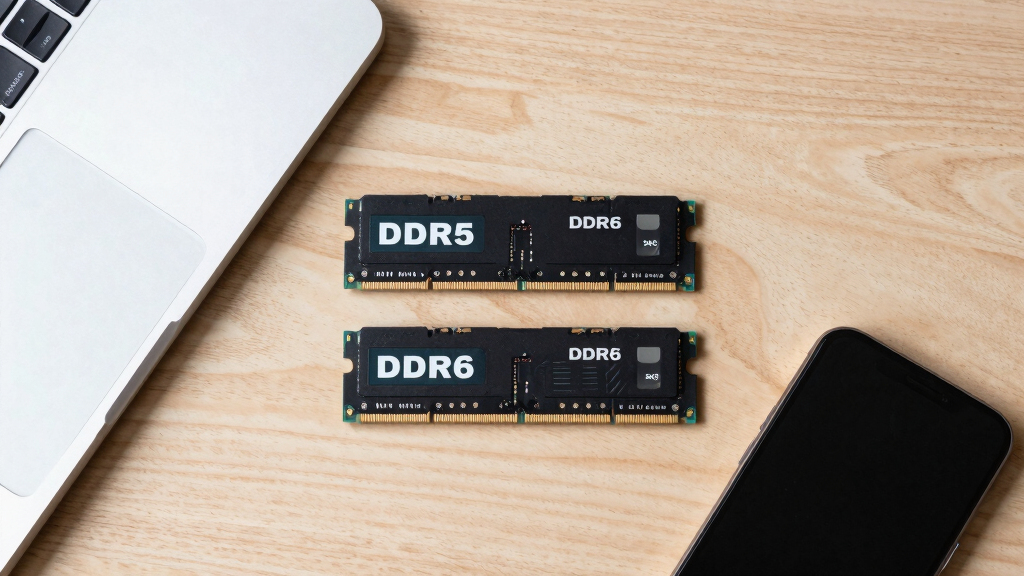
Regarding DDR4, market conditions have shifted: DDR4 now costs roughly the same or more per gigabyte than DDR5, and new builds should avoid DDR4 entirely, as it is nearing end-of-life and incompatible with future platforms. DDR6, on the other hand, promises significant architecture improvements—wider channels, higher speeds (up to 17,600 MT/s), and a new form factor (CAMM2)—but remains in the roadmap stage, requiring new CPUs, chipsets, and modules. Its broad adoption is projected for 2027 or later, with initial enterprise and AI applications arriving first.
DDR5 now, DDR6 soon
A buyer’s field guide. The 20-year instinct — wait for prices to drop, or wait for the next generation — is broken this cycle. Buy the DDR5 you actually need now; don’t wait for DDR6. Here’s the reasoning.
Driven to end-of-life, production slashed. Same money, dead-end socket. Leave a working DDR4 box alone — but never start a new build on DDR4 to “save.”
A framework, not a gamble. Buy the DDR5 you need now, at the sweet spot, in the capacity you’ll actually use — don’t buy DDR4, don’t wait for DDR6. The two costliest mistakes in this market are the ones that feel prudent: waiting for a price drop that isn’t coming, and waiting for a next-gen part that launches dearer than what’s on the shelf. Next: The SSD Squeeze.
Why DDR5 Is the Best Choice for 2026 Builds
For most consumers and professionals, investing in DDR5 now offers better value and performance than waiting for DDR6, which is still years from mass adoption. Early DDR6 modules will be expensive, limited in capacity, and may require unstable profiles or frequent updates. Building on DDR5 ensures compatibility, future-proofing for several years, and avoids the cost and delay of transitioning to an entirely new platform when DDR6 finally arrives.
As an affiliate, we earn on qualifying purchases.
The 2026 Memory Market and Future Outlook
The memory industry has experienced price volatility and supply constraints in recent years, driving up costs for DDR5 and making DDR4 less viable for new builds. Historically, new DDR standards take several years to reach mainstream adoption, with DDR4 taking from 2014 to 2018. DDR6 is currently in draft form, with the first compatible products expected in 2027. Manufacturers emphasize that DDR6 will require new platforms, and early adopters should expect higher prices, limited capacities, and potential stability issues.
“DDR6’s architecture offers significant performance gains, but it will take several years before it becomes widely available and affordable for general use.”
— Memory manufacturer representative
Uncertainties About DDR6 Adoption and Pricing
It is still unclear exactly when DDR6 modules will become widely available for mainstream desktops, with estimates ranging from 2027 to 2030. The initial pricing, capacity limitations, and platform compatibility are also uncertain, as early modules are expected to be costly and potentially unstable. Additionally, the impact of DDR6’s adoption on overall system costs and performance remains to be seen as manufacturers finalize standards and release products.
Next Steps for Buyers and Industry Watchers
Consumers should focus on selecting high-quality DDR5-6000 CL30 kits suitable for their workloads and avoid DDR4 or early DDR6 options. Industry sources will continue to monitor JEDEC standard developments and motherboard compatibility lists for DDR6, which will signal readiness for early adopters. In the coming months, expect to see more detailed specifications, first compatible modules, and early benchmarks for DDR6, but mainstream adoption remains several years away.
Key Questions
Should I wait for DDR6 to build my PC in 2026?
No. DDR6 is not yet available for mainstream use and will likely be more expensive and less mature when it arrives. Building now with DDR5-6000 CL30 offers better value and performance.
Is DDR4 still a good choice in 2026?
No. DDR4 is nearing end-of-life, and new builds should avoid it to ensure future compatibility and performance. DDR5 is the recommended standard.
What are the main advantages of DDR6 over DDR5?
DDR6 promises higher speeds (up to 17,600 MT/s), wider channels, and a new form factor (CAMM2), but these benefits are not yet available in consumer products and will take years to become mainstream.
When will DDR6 be affordable and widely available?
Industry estimates suggest DDR6 will become mainstream around 2027 or later, with initial enterprise and AI applications arriving first.
What should I consider when choosing memory for my build?
Prioritize DDR5-6000 CL30 modules that match your workload needs, avoid overbuying capacity, and steer clear of DDR4 for new builds. Keep an eye on JEDEC standards and motherboard compatibility for DDR6 developments.
Source: ThorstenMeyerAI.com
Fall Picks
fall essentials
As an affiliate, we earn on qualifying purchases.