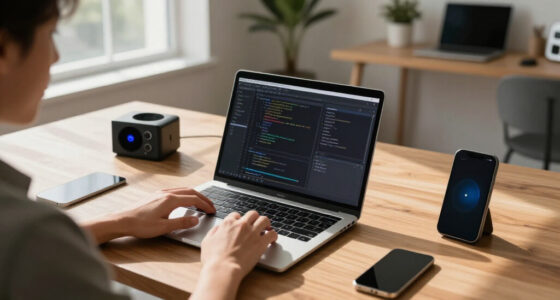
You’ll notice compact workstations gaining popularity because they’re perfect for small spaces, whether at home or in shared offices. These setups maximize functionality while saving room and keeping everything organized. Designed with ergonomic principles, they keep you comfortable during long tasks and reduce physical strain. Their versatility suits various environments, from remote work to bustling workplaces. If you want to discover how these clever solutions can transform your workspace, there’s more to explore ahead.

Get the latest gadgets delivered free with Prime
- Fast, free delivery on millions of items
- Prime Video, Amazon Music and more included
- Member-only deals all year
Key Takeaways
- Increasing urbanization and limited space make compact workstations ideal for small environments.
- Modern designs prioritize ergonomic comfort, supporting productivity in confined areas.
- Space-saving features help organize clutter and maximize functionality in tight spaces.
- Growing remote work trends boost demand for versatile, efficient home office solutions.
- Digital publishing trends highlight innovative, visually appealing compact setups, encouraging adoption.

In today’s fast-paced world, compact workstations are gaining popularity as practical solutions for maximizing space without sacrificing functionality. You’re likely noticing how small offices, apartments, and shared workspaces are transforming with these setups. You can also incorporate space-saving features into your design to further enhance efficiency. The key reason? They’re designed with ergonomic principles that prioritize your comfort and productivity, all while making the most of limited space. Whether you’re working from home or in a bustling office, a well-designed compact workstation can help you stay organized and efficient without cluttering your environment. Additionally, understanding emerging trends in digital publishing can inspire innovative ways to showcase these compact setups in digital formats.
Products Worth Considering

Apple iPad Air (2025) 13‑inch Wi‑Fi 256 GB – Space Gray (M3 chip)

Logitech MX Master 4 for Mac, Ergonomic Bluetooth Mouse with Haptic Feedback, Ultra-Fast Scrolling, USB-C Charging, for MacOS, iPadOS, Windo

Sonos Era 100 SL Compact Microphone-Free Speaker, Black
As an affiliate, we earn on qualifying purchases.
Frequently Asked Questions
What Are the Main Benefits of Compact Workstations?
The main benefits of compact workstations include improved space efficiency, allowing you to maximize limited areas without compromising functionality. Their ergonomic design guarantees comfort, reducing strain during long work hours. You’ll find these workstations boost productivity by keeping everything within easy reach and promoting better posture. Plus, their sleek, modern look enhances your workspace’s aesthetic, making it a practical and stylish choice for any setting.
How Do Compact Workstations Compare to Traditional Desks?
You’ll find compact workstations are more space-efficient and often feature ergonomic design, making them ideal for smaller areas. They promote better posture and comfort, unlike traditional desks that can be bulky and less adaptable. Plus, their sleek, modern aesthetic appeal can enhance your workspace’s look. Overall, compact workstations offer a practical, stylish alternative to traditional desks, helping you maximize your space while maintaining comfort and visual appeal.
Are Compact Workstations Suitable for Large Teams?
Yes, compact workstations are suitable for large teams because they optimize space and promote ergonomic design. By fitting more work areas into smaller spaces, you can maximize your office layout without sacrificing comfort or productivity. These setups encourage better movement and posture, reducing fatigue. If you’re looking to create an efficient environment for a large team, compact workstations are a smart choice that balances space optimization with ergonomic benefits.
What Features Should I Look for in a Compact Workstation?
You should look for features like ergonomic design to guarantee comfort during long work hours and prioritize space efficiency to maximize your limited area. Did you know that 70% of employees report improved productivity with ergonomic setups? Choose a compact workstation with adjustable features, quality materials, and smart storage options. These elements help you work efficiently, comfortably, and make the most of your space.
How Do Compact Workstations Impact Productivity?
Compact workstations boost your productivity by offering ergonomic design that keeps you comfortable during long work sessions. Their space optimization allows you to organize your tools and materials efficiently, reducing clutter and distractions. Because they fit well into small spaces, you can set up a functional, inspiring workspace anywhere. This streamlined environment helps you focus better, work more efficiently, and ultimately accomplish more in less time.
Conclusion
So, if you’re seeking a sleek, space-saving solution, compact workstations are clearly capturing your curiosity. They’re convenient, customizable, and perfect for productivity on a tight terrain. Don’t delay—delve into these dynamic designs and discover a dedicated workspace that doesn’t demand a lot of room but definitely delivers a lot of results. Get ready to embrace the compact craze and create a clever, clutter-free corner that works just for you!