
🔍 Read the full analysis: A Look At 10 Best AI Mini PCs For Local Workloads In 2026 on ThorstenMeyerAI.com
TL;DR
A new comparison from ThorstenMeyerAI.com ranks ten AI mini PCs for local workloads, naming the GEEKOM A9 Max (Ryzen AI 9 HX 470, 32GB DDR5, 2TB SSD) as best overall. The GMKtec EVO-X3 stands out with 128GB of LPDDR5X for large-model work, and the GMKtec K15 with Oculink targets buyers planning external graphics.
A new comparison from ThorstenMeyerAI.com ranks ten AI mini PCs for local workloads and names the GEEKOM A9 Max — with a Ryzen AI 9 HX 470, 32GB of DDR5 memory, and a 2TB SSD — as the best overall pick. The roundup compares systems on memory capacity, memory type, storage, and expansion rather than processor branding alone, because, as the review notes, memory capacity often sets a harder limit on local AI work than chip speed. The ranking matters to buyers choosing compact hardware for local model inference, development, and AI-assisted tasks, where a mismatch between workload and configuration can mean an immediate upgrade or a system that runs out of room.
The review evaluated each mini PC on processor class, installed memory, memory type, storage capacity, and expansion options. The author states that product names and specifications alone do not establish benchmark performance, cooling behavior, or software compatibility, and that performance claims without independent workload results are treated as reasons to investigate rather than guarantees of speed.
Three systems anchor the top of the ranking. The GEEKOM A9 Max leads as the most balanced listed package. The GMKtec EVO-X3 holds a specialist position for memory-heavy tasks with 128GB of LPDDR5X, the largest memory configuration in the lineup. The GMKtec K15 with Oculink targets buyers who want a path to external graphics, though it lists a smaller 512GB SSD compared with the 1TB drive on the NucBox K15 configuration — a direct tradeoff between expansion and included storage.
Several premium-processor options, including the GEEKOM GT15 Max, GEEKOM IT15, and MINISFORUM AI X1 Pro, ship with 32GB of RAM. The review advises buyers to match memory capacity to their expected workload rather than assuming the highest-tier processor is always the best fit. Two Intel Core Ultra 5 125U-based K15 configurations illustrate how similarly named systems can differ in storage and connectivity.
The 10 picks
- 1
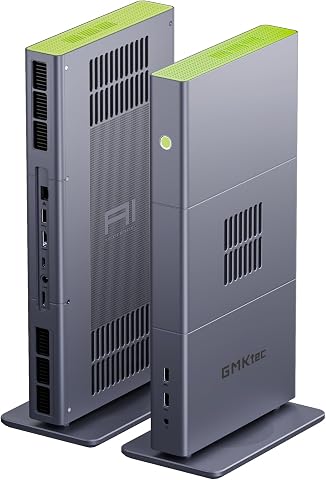 GMKtec EVO-X3 Mini PC with AMD Ryzen AI Max+ 395, 128GB LPDDR5X, and 2TB PCIe…View on Amazon →
 - 2
 GMKtec EVO-X2 AI Mini PC AMD Ryzen AI Max+ 395, Up to 5.1GHz, 16C/32TView on Amazon →
 - 3
 GEEKOM A9 Max Top AI Mini PC, AMD Ryzen AI9 HX470, 32GB DDR5, 2TB SSDView on Amazon →
 - 4
 GEEKOM IT15 Mini PC with Intel Ultra 9 285H, 32GB DDR5, 1TB SSD, Arc 140T GPU…View on Amazon →
 - 5
 MINISFORUM AI X1 Pro-370 Mini PC with AMD Ryzen AI 9 HX370, 32GB DDR5, 1TB SS…View on Amazon →
 - 6
 GEEKOM GT15 Max Business & Professional Mini PC with Intel Core Ultra 9, 32GB…View on Amazon →
 - 7
 GEEKOM IT13 MAX AI Mini PC with Intel Ultra 9 185H, 24GB LPDDR5, 500GB SSDView on Amazon →
 - 8
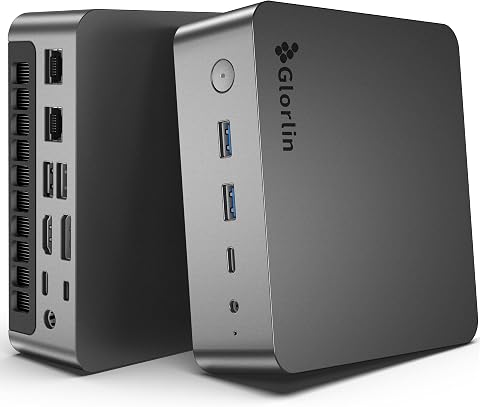 Glorlin Mini PC with AMD Ryzen 7 Pro 8845HS, 16GB DDR5 RAM, and 1TB SSDView on Amazon →
 - 9
 GMKtec K15 AI Mini PC Oculink Intel Ultra 5 125U 32GB DDR5 512GB SSD, Desktop…View on Amazon →
 - 10
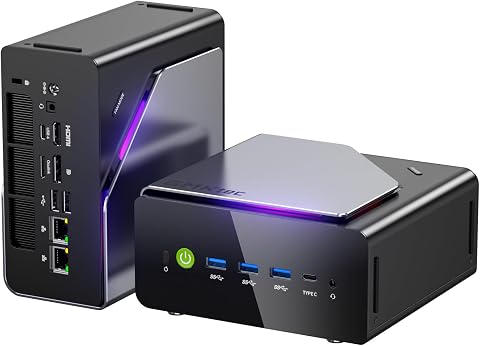 GMKtec K15 Mini PC AI Ultra 5 125U, 12-Core, 32GB DDR5, 1TB PCIe 4.0 SSDView on Amazon →
Why Memory Now Outranks Processor Labels
For local AI work, the comparison argues that system memory often decides whether a model or dataset fits before processor speed becomes the main constraint. That reverses the usual buying instinct to chase chip tiers such as Ultra 9 or Ryzen AI branding. A 32GB configuration may be better suited to lighter or more constrained tasks, while 128GB systems like the EVO-X3 serve workloads that keep large models or datasets in memory.
The roundup also flags practical constraints that spec sheets obscure: whether memory is soldered or replaceable, whether the SSD can be swapped or supplemented, and whether Oculink support actually matches the graphics enclosure and card a buyer intends to use. These details determine whether a compact PC can adapt later or hits a dead end. For readers budgeting between roughly 500GB and 2TB of storage, the review notes that local models, datasets, and OS updates consume space quickly, so buyers should estimate room for every model they expect to keep available, not just the first one.
How the Ten Picks Were Ranked
The author compared listed configurations across the ten systems, prioritizing balanced capability and practical fit for AI-related work, then recognizing models that serve a clear specialist need such as unusually high memory or Oculink expansion. Less powerful or less fully equipped configurations ranked lower for demanding local AI use.
The full slate of ten picks comprises: GEEKOM A9 Max (best overall; Ryzen AI 9 HX 470, 32GB DDR5, 2TB SSD); GMKtec EVO-X3 (memory leader; 128GB LPDDR5X); GMKtec K15 with Oculink (external graphics path; 512GB SSD); GMKtec NucBox K15 (Intel Core Ultra 5 125U, 1TB SSD); GEEKOM GT15 Max (32GB RAM); GEEKOM IT15 (32GB RAM); MINISFORUM AI X1 Pro (32GB RAM); and additional configurations drawn from the same vendor lineups, spanning Core Ultra and Ryzen AI platforms at varied memory and storage tiers. Buyers comparing the two K15 variants face the clearest tradeoff in the group: identical processor class, but 1TB of storage versus 512GB plus Oculink.
Oculink receives specific attention as an expansion decision rather than a blanket advantage. The review notes that an external graphics setup involves extra hardware, desk space, and setup, and advises confirming enclosure, card, connection, and power support before buying.
“Product names and specifications alone do not establish benchmark performance, cooling behavior, or software compatibility.”
— ThorstenMeyerAI.com review
What the Spec Sheets Cannot Confirm
The comparison is built on listed vendor specifications, not independent benchmarks. The review itself acknowledges this limit: cooling behavior under sustained AI loads, real-world inference speed, and software compatibility with specific AI accelerators are not verified. The author states that a processor with a newer name may not help if a buyer’s chosen tools do not support its acceleration features.
Specific untested areas include: whether each chassis sustains performance under long-running local inference; whether soldered memory on any given model blocks future upgrades; and whether Oculink implementations work with particular graphics enclosures and cards. Pricing and regional availability for each configuration are also not addressed in the source material. Buyers should verify current listings and independent reviews before purchasing.
What Buyers Should Verify Before Ordering
Readers planning a purchase should take several steps the review recommends: match memory capacity to the specific models and datasets they expect to run, including headroom for the operating system and context; confirm whether RAM and SSD are replaceable in the chosen chassis; and, for Oculink models, verify enclosure, card, connection, and power compatibility before committing.
For the broader market, expect continued differentiation among AI mini PCs on memory capacity and expansion, with 128GB configurations like the EVO-X3 occupying a niche for large-model local work. Independent benchmark results for the Ryzen AI 9 HX 470 and Core Ultra platforms under sustained AI workloads would give buyers firmer ground than spec-sheet comparisons; none are cited in this roundup.
Key Questions
Which AI mini PC is the best overall pick in the 2026 comparison?
The GEEKOM A9 Max, with a Ryzen AI 9 HX 470, 32GB of DDR5, and a 2TB SSD. The review calls it the most balanced out-of-box configuration among the ten options.
Which mini PC has the most memory for large local AI models?
The GMKtec EVO-X3, with 128GB of LPDDR5X. The review positions it as a specialist pick for workloads that need large models or datasets in memory, while cautioning that a large memory figure alone does not guarantee good performance.
Is 32GB of RAM enough for local AI work?
According to the review, 32GB configurations — including the GT15 Max, IT15, and AI X1 Pro — are better suited to lighter or more constrained AI tasks. Buyers should check their workload’s memory needs, including the operating system and applications, rather than comparing RAM figures in isolation.
What does Oculink add, and is it worth it?
Oculink provides a connection path to an external graphics setup on supported systems, such as the GMKtec K15 with Oculink. The review treats it as a specific tradeoff: it adds expansion potential but requires extra hardware, desk space, and setup, and that model ships with a smaller 512GB SSD versus the NucBox K15’s 1TB.
Are the performance claims in this comparison independently tested?
No. The comparison is based on listed specifications, and the author explicitly states that product names and specifications do not establish benchmark performance, cooling behavior, or software compatibility.
Source: ThorstenMeyerAI.com