

A better travel tech workflow seamlessly integrates your data across platforms like booking engines, CRM, and backend systems, reducing errors and manual input. It automates tasks such as bookings, updates, and cancellations while optimizing mobile booking for faster, easier experiences on smartphones. This setup improves customer service, builds trust, and boosts efficiency. By focusing on continuous process refinement and data consistency, you’ll create a resilient system. Keep exploring to see how these elements come together for your success.
Key Takeaways
- Seamless integration of booking, CRM, and backend systems for real-time data sharing and accuracy.
- Mobile-optimized interfaces enabling quick, easy booking and management on smartphones.
- Automated workflows for updates, cancellations, and notifications to reduce manual tasks.
- Unified platforms that streamline operations and support continuous process improvements.
- Data-driven insights and analytics to enhance customer service and operational resilience.
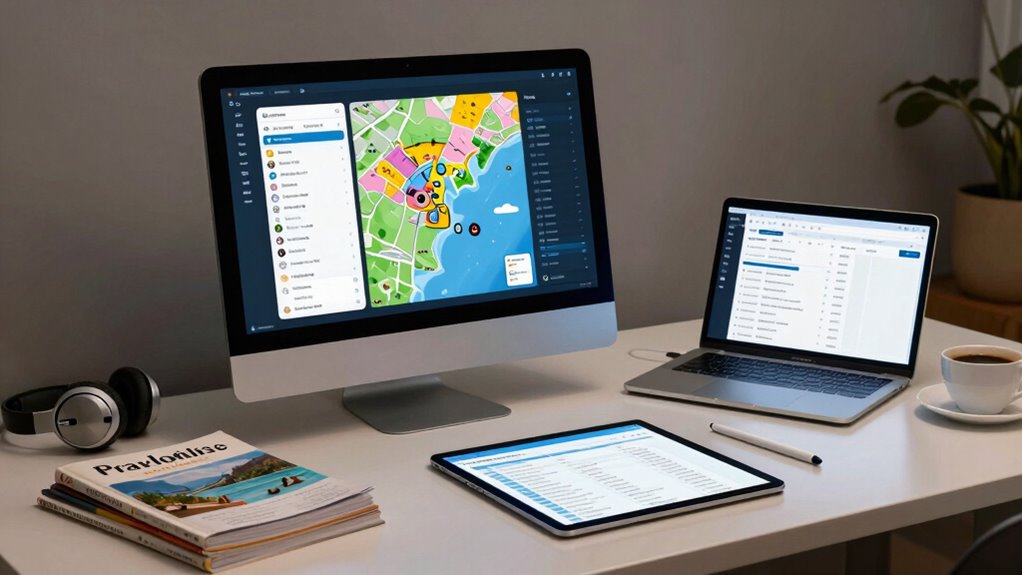
In today’s fast-paced travel industry, a well-organized tech workflow is essential for delivering seamless experiences. You need a system that effortlessly connects various platforms and data sources, ensuring all your information flows smoothly. Travel data integration is at the core of this process. When your systems communicate effectively, it minimizes errors, reduces manual input, and accelerates decision-making. Imagine your booking engine, customer relationship management (CRM), and backend systems all sharing real-time data seamlessly. This integration allows you to offer personalized itineraries and quick responses, which enhances customer satisfaction and builds loyalty. Without solid travel data integration, you risk delays, miscommunications, and lost opportunities, all of which can hurt your reputation. Incorporating Travel data integration into your workflow ensures a cohesive and efficient operation from start to finish. Ensuring consistent data accuracy across platforms is also critical for maintaining trust and operational efficiency.
Seamless travel data integration boosts efficiency, personalization, and customer satisfaction, while minimizing errors and delays.
Mobile booking efficiency also plays a critical role in this workflow. Travelers expect to book and manage their trips from their smartphones with ease. If your mobile booking process is clunky or slow, you lose potential clients at a pivotal moment. Improving mobile booking efficiency means optimizing your app or website so that users can browse options, select seats, or reserve accommodations with just a few taps. Fast-loading pages, clear navigation, and straightforward checkout processes aren’t optional anymore—they’re essential. When your mobile booking system is streamlined, it reduces cart abandonment and increases conversion rates. Plus, it enables you to capture data directly from users in real time, feeding back into your broader travel data integration system.
A better travel tech workflow also involves automating routine tasks. For example, automatic synchronization of bookings, updates, and cancellations means fewer manual interventions, freeing up your team to focus on personalized service. Automation also ensures that all platforms are up to date, avoiding discrepancies that frustrate travelers. Additionally, leveraging analytics tools helps you monitor performance, identify bottlenecks, and refine your processes continually. By centralizing your data and automating workflows, you create a resilient system that adapts quickly to changing demands and reduces operational delays. Embracing integrated platform solutions can further enhance the efficiency of your workflow by unifying disparate systems into a single interface.
Ultimately, a better travel tech workflow combines robust travel data integration with optimized mobile booking efficiency. It’s about creating a unified, responsive system that enhances every touchpoint in the customer journey. When these elements work in harmony, you deliver faster, more reliable service, foster customer trust, and gain a competitive edge. You’ll find that investing in seamless integrations and mobile optimization isn’t just technical upgrades—it’s strategic moves that position your business for growth in an increasingly digital travel landscape.
As an affiliate, we earn on qualifying purchases.
Frequently Asked Questions
How Do Travel Tech Workflows Differ Across Various Travel Sectors?
Travel tech workflows differ across sectors because each focuses on unique personalization strategies and customer engagement methods. In airlines, automation streamlines booking and check-in, while hotels emphasize seamless reservation systems. Tour operators prioritize real-time updates, and cruise lines use integrated platforms for onboard experiences. You’ll find that understanding specific sector needs helps tailor workflows, boosting customer satisfaction and loyalty through targeted personalization and effective engagement strategies.
What Are Common Challenges in Implementing a New Travel Tech Workflow?
You often face challenges like ensuring a smooth user interface that staff can easily navigate, which is vital for adoption. Staff training becomes essential but can be time-consuming and costly. Resistance to change and technical glitches also pose hurdles. To overcome these, you need clear communication, thorough training, and a user-friendly interface. Addressing these issues proactively helps streamline implementation, ensuring your new travel tech workflow becomes integrated efficiently and effectively.
How Can Data Security Be Maintained in Travel Tech Workflows?
Did you know that 60% of data breaches involve compromised credentials? To maintain data security in your travel tech workflows, you should implement strong data encryption to protect sensitive information and establish strict access control measures. Regularly update security protocols and monitor user activity to identify suspicious behavior. By doing so, you reduce risks and guarantee traveler data remains confidential and secure throughout your operations.
What Tools Integrate Best for Seamless Travel Tech Operations?
You should look for tools that integrate AI automation with your existing systems to streamline operations and boost customer engagement. Platforms like Salesforce, HubSpot, or Amadeus seamlessly connect with chatbots, booking engines, and data analytics, creating a unified workflow. These integrations automate repetitive tasks, enhance personalized interactions, and provide real-time insights, ensuring smooth travel tech operations that improve efficiency and customer satisfaction.
How to Measure the Success of a New Travel Tech Workflow?
You measure success by monitoring user experience and gathering customer feedback regularly. Track key metrics like task completion time, error rates, and satisfaction scores to see if your workflow improves. If users find the system intuitive and feedback is positive, you’re on the right track. Continually analyze this data to identify areas for refinement, ensuring your travel tech workflow becomes more efficient and user-friendly over time.
Conclusion
A better travel tech workflow simplifies your planning, making it smooth and stress-free. Instead of juggling multiple tools and chasing updates, you’ll find everything seamlessly integrated—saving time and reducing errors. Imagine the difference between chaos and clarity, frustration and flow. With the right workflow, you’re not just booking trips; you’re crafting experiences. Embrace technology that works for you, transforming travel from a hassle into a journey you truly enjoy.