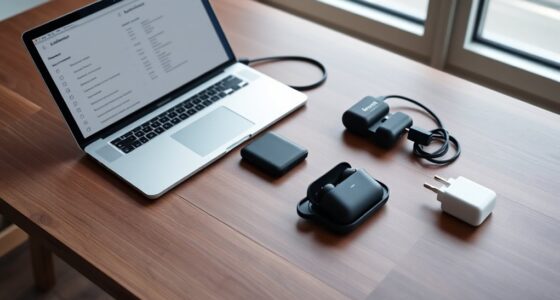
For a low-noise under-desk treadmill in a home office, my best overall pick is the DIEEPEIY V290-XWJ, which pairs a portable walking-pad format with incline options. The OLIXIS Under-Desk Walking Pad is a simpler choice for buyers who prioritize straightforward desk walking, while the WELLFIT Folding Treadmill suits people who want a handrail and more support. The central tradeoff is between a slim, easy-to-store design and features such as incline or handlebars that can add bulk and change how the treadmill fits beneath a desk. Noise also depends on your pace, floor, footwear, and building—not just the motor. Read on for how these 15 options differ and which style fits your workspace.
Complete the kit

Key Takeaways
- The DIEEPEIY V290-XWJ leads this roundup because it combines a portable walking-pad format with incline; buyers who want the least complicated desk setup may prefer the OLIXIS instead.
- Incline is a recurring feature, but it does not automatically make a treadmill quieter or better for desk work; it can add bulk and may suit focused walking sessions more than typing.
- Handlebars distinguish support-oriented models such as WELLFIT and Elseluck from slim under-desk designs, but they require more room and can limit desk clearance.
- Compact options such as Buztrio and NEWBULIG fit buyers who value a simple footprint, while models with folding or adjustable rails make more sense when walking support matters.
- Product names and feature lists do not establish actual sound levels; motor noise, belt maintenance, flooring, and walking pace all affect how suitable a treadmill is for shared home-office use.
| DIEEPEIY V290-XWJ Portable Walking Pad Treadmill with Incline |  | Best for Quiet Versatility | Speed range: 0.6–7.6 mph | Motor: 3.0 HP | Maximum weight capacity: 350 lb | VIEW ON AMAZON | See Our Full Breakdown |
| OLIXIS Under-Desk Walking Pad Treadmill |  | Best for Desk-Only Walking | Speed range: 0.6–3.1 mph | Maximum horsepower: 1.75 hp | Maximum weight recommendation: 200 lb | VIEW ON AMAZON | See Our Full Breakdown |
| Gkyet Walking Treadmill Pad with Incline |  | Best for Compact Incline Walking | Motor: 2.5 HP | Maximum speed: 5 mph | Incline: Manual | VIEW ON AMAZON | See Our Full Breakdown |
| CHAOKE Walking Pad Treadmill with 9% Incline |  | Best for Incline and Program Variety | Speed range: 1–6.2 mph | Motor: 2.75 HP | Maximum incline: 9% manual | VIEW ON AMAZON | See Our Full Breakdown |
| WELLFIT Folding Treadmill with Incline and Handlebars | 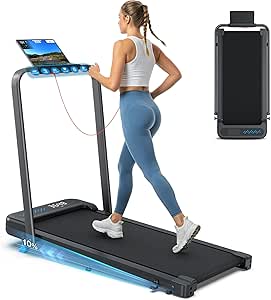 | Best for Control Options and Cushioning | Speed range: 0.6–6.2 mph | Maximum horsepower: 3 hp | Maximum incline: 10% | VIEW ON AMAZON | See Our Full Breakdown |
| Walking Pad Treadmill with Incline and Handle Bar |  | Best for Straightforward Desk Walking | Speed range: 0.6–3.8 mph | Weight capacity: 220 pounds | Dimensions: 47.2 × 19.6 × 4.6 inches | VIEW ON AMAZON | See Our Full Breakdown |
| Elseluck Walking Pad Treadmill with Manual Incline and Handlebar |  | Best for Incline Variety in a Compact Setup | Motor power: 2.5 HP | Speed range: 0.6–3.8 mph | Weight recommendation: Inconsistent listing: 220 lbs and 265 lbs | VIEW ON AMAZON | See Our Full Breakdown |
| Wilpkracy Walking Pad Treadmill with 5% Incline |  | Best for Lightweight, No-Assembly Setup | Maximum incline: 5% | Speed range: 1–6 km/h | Maximum weight recommendation: 120 kg | VIEW ON AMAZON | See Our Full Breakdown |
| Buztrio Compact Walking Pad Treadmill with Remote |  | Best for Small Spaces and Easy Stowage | Model: LF-X2D | Speed range: 0.6–4.0 mph | Maximum horsepower: 2.5 hp | VIEW ON AMAZON | See Our Full Breakdown |
| Walking Pad Treadmill with Incline and Adjustable Handrail |  | Best for Quiet-Focused, Higher-Capacity Use | Motor: 3.0 HP brushless | Noise level: 45 dB or less | Speed range: 0.6–3.8 mph | VIEW ON AMAZON | See Our Full Breakdown |
| Viamotion Walking Pad Treadmill with Adjustable Incline and Folding Handle |  | Best for Quiet, Supported Walking | Speed range: 0.6–3.8 mph | Maximum incline: 4% | Noise level: 45 dB | VIEW ON AMAZON | See Our Full Breakdown |
| KMFurnila 3-in-1 Walking Pad Under-Desk Treadmill |  | Best for Compact Storage | Maximum speed: 5 km/h | Maximum weight capacity: 198 lbs | Maximum horsepower: 1.75 hp | VIEW ON AMAZON | See Our Full Breakdown |
| Cybergoing T10 Walking Pad Treadmill with Fixed 7% Manual Incline |  | Best for Higher-Capacity Incline Walking | Motor: Bosch | Speed range: 0.6–4 MPH | Incline: Fixed 7% manual | VIEW ON AMAZON | See Our Full Breakdown |
| NEWBULIG Under-Desk Walking Pad Treadmill |  | Best for Quiet Dual-Use Setup | Maximum speed: 5 km/h | Maximum horsepower: 1.75 hp | Maximum weight recommendation: 200 lb | VIEW ON AMAZON | See Our Full Breakdown |
| Compact Walking Pad Treadmill for Home and Office |  | Best for Slim, Higher-Capacity Storage | Motor: 2.5 HP (500+ W) | Speed range: 1–6 km/h | Maximum user weight: 264 lbs (120 kg) | VIEW ON AMAZON | See Our Full Breakdown |
| low noise under desk treadmill home office | Dimensions | Speed range |
|---|---|---|
| DIEEPEIY V290-XWJ Portable Wal | 41.37 × 18.53 × 3.94 in | 0.6–7.6 mph |
| OLIXIS Under-Desk Walking Pad | 42.2 × 19.21 × 3.58 in | 0.6–3.1 mph |
| Gkyet Walking Treadmill Pad wi | 43.1 × 16.6 × 4.6 in | — |
| CHAOKE Walking Pad Treadmill w | — | 1–6.2 mph |
| WELLFIT Folding Treadmill with | 43.3 × 21.3 × 5 in | 0.6–6.2 mph |
| Walking Pad Treadmill with Inc | 47.2 × 19.6 × 4.6 inches | 0.6–3.8 mph |
| Elseluck Walking Pad Treadmill | 47.6 × 20.1 × 4.6 inches | 0.6–3.8 mph |
| Wilpkracy Walking Pad Treadmil | 111 × 56 × 12 cm | 1–6 km/h |
| Buztrio Compact Walking Pad Tr | 40 × 19.2 × 4.1 inches | 0.6–4.0 mph |
| Walking Pad Treadmill with Inc | 47.2 × 22.4 × 5.5 inches | 0.6–3.8 mph |
| Viamotion Walking Pad Treadmil | 45.53 × 21.17 × 37.4 in | 0.6–3.8 mph |
| KMFurnila 3-in-1 Walking Pad U | 42.2 × 19.2 × 3.6 in | — |
| Cybergoing T10 Walking Pad Tre | — | 0.6–4 MPH |
| NEWBULIG Under-Desk Walking Pa | 42.2 × 19.2 × 3.6 in | — |
| Compact Walking Pad Treadmill | 109 × 50 × 11 cm | 1–6 km/h |
More Details on Our Top Picks
DIEEPEIY V290-XWJ Portable Walking Pad Treadmill with Incline
The DIEEPEIY is a flexible choice for a home office where you want quiet walking but may also want a faster workout away from your desk. Its stated noise level under 45 dB and multi-layer shock absorption are aimed at keeping footfalls and vibration more manageable, though actual sound will also depend on flooring and pace. The speed range reaches 7.6 mph, a much broader workout range than the OLIXIS, which tops out at 3.1 mph. It also supports up to 350 pounds and arrives ready to use. The tradeoff is its compact 41.35-inch deck, which may feel short at higher speeds, and the product data gives no incline range despite the name. I’d choose it for mixed walking and faster sessions, not for buyers who need a roomy running surface.
Pros:- Stated operating noise under 45 dB with multi-layer shock absorption.
- Speed range from 0.6 to 7.6 mph offers more flexibility than walking-only pads.
- 350-pound maximum weight capacity.
- No assembly required and weighs 29 pounds.
Cons:- The 41.35-inch deck may constrain longer strides, especially at higher speeds.
- No incline range is provided, so the incline feature cannot be compared precisely.
- Auxiliary connectivity is listed, but no wireless connection is specified.
Best for: Home-office users who want low-noise walking during work and the option to exercise at faster speeds afterward.
Not ideal for: Taller users or anyone planning regular running who needs a longer deck or a clearly specified incline.
- Speed range:0.6–7.6 mph
- Motor:3.0 HP
- Maximum weight capacity:350 lb
- Noise level:Under 45 dB
- Dimensions:41.37 × 18.53 × 3.94 in
- Deck:41.35 × 18.51 in
- Weight:29 lb
- Display and metrics:LED; calories, distance, speed, and time
Our verdict“Choose the DIEEPEIY if you want a quiet-oriented walking pad with a wider speed range than the OLIXIS and can accept a compact deck.”
OLIXIS Under-Desk Walking Pad Treadmill
The OLIXIS keeps its purpose simple: steady walking while you work, rather than jogging or running. Its 0.6–3.1 mph range is narrower than the DIEEPEIY’s, but that limitation can suit desk use, where slower pace and straightforward controls matter more than workout speed. The listed low-noise motor, remote control, and LED readout support quick adjustments without reaching down, while the non-slip belt adds a practical safety feature. At 42.2 inches long and 3.58 inches high, it is designed to fit beneath many desks. The tradeoffs are a 200-pound recommended weight limit and a requirement for the safety key to operate. I’d favor it over the Gkyet for a walking-only work setup; the Gkyet makes more sense if manual incline or light jogging matters.
Pros:- Walking-focused speed range is suited to working at a standing desk.
- Remote control allows speed adjustments without bending to the display.
- LED display tracks time, speed, distance, and calories.
- Compact dimensions and non-slip belt suit a basic home-office setup.
Cons:- Maximum speed of 3.1 mph rules out jogging and running.
- 200-pound maximum weight recommendation is lower than the other listed models.
- The safety key must be in place for operation.
Best for: Desk workers who want a compact, remote-controlled pad for low-speed walking and do not need jogging capability.
Not ideal for: Users above the 200-pound recommended limit or buyers seeking incline training or speeds beyond a brisk walk.
- Speed range:0.6–3.1 mph
- Maximum horsepower:1.75 hp
- Maximum weight recommendation:200 lb
- Dimensions:42.2 × 19.21 × 3.58 in
- Display:LED
- Display metrics:Time, speed, distance, and calories
- Controls and safety:Remote control and safety key
- Material:Alloy steel
Our verdict“Pick the OLIXIS for uncomplicated, low-speed desk walking, but choose the Gkyet or DIEEPEIY if you want more workout range.”
Gkyet Walking Treadmill Pad with Incline
The Gkyet is the pick for buyers who want to add some effort to walking without moving up to the CHAOKE’s heavier, more fully featured build. Its manual incline gives workouts another intensity option, while the 2.5 HP motor is described as quiet for home or office use. The 43.1-inch length is slightly longer than the DIEEPEIY’s listed deck, but the Gkyet is narrower at 16.6 inches, a tradeoff that can help with storage while leaving less room side to side. It reaches 5 mph, enough for walking and light jogging but below the DIEEPEIY’s 7.6 mph ceiling. Remote controls and transport wheels make adjustments and storage easier. The incline is manual, though, so changing it is not an on-the-fly desk-friendly adjustment.
Pros:- Manual incline adds a way to raise workout intensity.
- Quiet 2.5 HP motor is described for home and office use.
- Remote control and LED display simplify workout adjustments and tracking.
- Slim profile and transport wheels support storage between sessions.
Cons:- Manual incline requires adjustment outside normal belt-speed controls.
- Maximum speed of 5 mph is below the DIEEPEIY and CHAOKE.
- The 16.6-inch width offers less side-to-side room than wider options.
Best for: Home-office walkers who want a slim pad with manual incline for focused walking sessions and occasional light jogging.
Not ideal for: People who want electronic incline changes, a broad belt, or running speeds above 5 mph.
- Motor:2.5 HP
- Maximum speed:5 mph
- Incline:Manual
- Maximum user weight:265 lb
- Dimensions:43.1 × 16.6 × 4.6 in
- Display:LED; speed, distance, time, and calories
- Controls:Remote control
- Warranty:1 year
Our verdict“Choose the Gkyet if incline walking and a slim storage profile matter more than the faster speeds offered by the DIEEPEIY.”
CHAOKE Walking Pad Treadmill with 9% Incline
The CHAOKE is a stronger fit for users who want an under-desk pad that can also support more varied workouts. Its 12 preset programs, manual 9% incline, and speeds up to 6.2 mph give it more built-in workout variety than the Gkyet, which has a manual incline but no listed programs. For a home office, the standout claim is noise under 40 dB, the lowest stated noise figure among these five products; this is a manufacturer specification, not a guarantee of silence in every room. The shock-absorbing belt and remote add practical comfort and control. At 35 pounds, it is heavier than the DIEEPEIY, and its incline still needs manual adjustment. I’d pick it for walking-to-jogging flexibility, but not if frequent incline changes during desk work are a priority.
Pros:- Stated noise level under 40 dB is the lowest specified in this group.
- 12 preset programs offer more workout structure than the Gkyet.
- Manual incline reaches 9%, with speeds up to 6.2 mph.
- Shock-absorbing belt, remote control, transport wheels, and no assembly required.
Cons:- Incline adjustment is manual rather than controlled during a session.
- At 35 lb, it weighs more than the DIEEPEIY and may be less convenient to move.
- Its maximum speed is lower than the DIEEPEIY’s 7.6 mph.
Best for: Home users who want quiet-oriented operation, preset workouts, and incline walking alongside everyday desk use.
Not ideal for: Workers who need to change incline from the remote or want a lighter pad to move frequently.
- Speed range:1–6.2 mph
- Motor:2.75 HP
- Maximum incline:9% manual
- Weight capacity:330 lb
- Noise level:Under 40 dB
- Workout programs:12
- Belt dimensions:95 × 38 cm
- Weight and assembly:35 lb; fully assembled
Our verdict“Choose the CHAOKE for the strongest stated noise specification and extra workout programming, provided manual incline adjustment suits your routine.”
WELLFIT Folding Treadmill with Incline and Handlebars
The WELLFIT stands apart from the flatter walking pads by combining handlebars, a 10% incline, and a five-layer cushioned deck. That setup suits users who want a more supported workout and frequent control access, rather than the minimal under-desk profile of the OLIXIS. It offers handlebar, remote, app, and voice controls, plus Bluetooth connectivity, giving it the broadest listed adjustment options here. The automatic belt alignment may also reduce the need for manual centering. But the 41.7-pound weight and 49.21-inch folded length make it less convenient to shift and store than the 29-pound DIEEPEIY. Its deck is only 36 inches long, notably shorter than the DIEEPEIY’s listed deck, and the 6.2 mph maximum is for brisker workouts rather than serious running. The product data does not specify a noise level, so I would not rank it above models with measured noise claims for a quiet office.
Pros:- Four listed control options: handlebar, remote, app, and voice.
- Five-layer cushion deck is designed to reduce impact on joints.
- 10% incline and handlebars support a more involved workout than basic flat pads.
- Automatic belt alignment and folding design address upkeep and storage.
Cons:- No specific noise level is provided, making quietness harder to compare with the CHAOKE.
- At 41.7 lb, it is heavier than the DIEEPEIY and less convenient to move often.
- The 36-inch deck is shorter than the listed DIEEPEIY deck, and maximum speed is 6.2 mph.
Best for: Home-office users who value multiple speed-control methods, cushioning, handlebars, and incline more than easy frequent relocation.
Not ideal for: Buyers prioritizing a verified low-noise specification, a long walking deck, or a lightweight pad to store daily.
- Speed range:0.6–6.2 mph
- Maximum horsepower:3 hp
- Maximum incline:10%
- Maximum weight recommendation:350 lb
- Deck:36 × 16 in
- Dimensions:43.3 × 21.3 × 5 in
- Folded size:49.21 × 21.25 × 6.1 in
- Weight and connectivity:41.7 lb; Bluetooth
Our verdict“Choose the WELLFIT for cushioning, incline, and flexible controls, but favor the CHAOKE if a stated low-noise figure is your main priority.”
Walking Pad Treadmill with Incline and Handle Bar
For a home office routine focused on walking rather than running, this model keeps the controls simple: its 0.6–3.8 mph range and remote let you make small speed changes without reaching down. The silicone shock absorbers and five-layer non-slip belt add cushioning, which may help limit footfall impact, though the listed specs do not provide a noise measurement. Compared with the Buztrio Compact Walking Pad, it has a slightly lower speed ceiling and a shorter listed weight capacity, so it is less suited to heavier users or anyone wanting a brisker pace. Its transport wheels make moving it out of the way more practical, but the 220-pound limit narrows its audience. Choose it for basic walking; skip it if you want faster workouts or a higher capacity.
Pros:- Remote control supports speed adjustments while walking
- LED display shows speed, distance, time, and calories
- Five-layer non-slip belt and silicone shock absorbers provide cushioning
- Transportation wheels help with storage and repositioning
Cons:- 220-pound weight capacity is lower than the Buztrio’s listed 265 pounds
- 3.8 mph maximum is aimed at walking and light jogging, not running
- No measured noise level is provided, making quietness hard to compare
Best for: Home-office users who want remote-controlled walking at a steady desk-friendly pace and weigh within the 220-pound limit.
Not ideal for: Heavier users or people who want jogging speeds above 3.8 mph; its capacity and speed ceiling are limiting.
- Speed range:0.6–3.8 mph
- Weight capacity:220 pounds
- Dimensions:47.2 × 19.6 × 4.6 inches
- Display:LED: speed, distance, time, and calories
- Controls:Remote control
- Running belt:Five-layer, non-slip
- Shock absorption:Silicone shock absorbers
- Portability:Transportation wheels
Our verdict“Pick this for uncomplicated, cushioned desk walking if its 220-pound capacity and 3.8 mph ceiling fit your needs.”
Elseluck Walking Pad Treadmill with Manual Incline and Handlebar
The Elseluck is a fit for desk walkers who want to add uphill effort without moving to a larger treadmill. Its manual incline changes the workout intensity, while foldable handles, transport wheels, and a remote give it more setup flexibility than the handle-free Buztrio Compact Walking Pad. The tradeoff is that its 3.8 mph top speed stays in walking and light-jogging territory, and the incline is not an on-the-fly adjustment. Noise performance is not quantified in the supplied details, so the 2.5 HP motor alone cannot establish how quiet it will sound beside calls. Capacity data is also inconsistent: one spec lists 220 pounds, while another mentions 265. I would only choose it if the manual incline and foldable handles matter more than a clearly stated capacity or a faster pace.
Pros:- Manual incline adds uphill walking variety
- Foldable handles offer more support and storage flexibility than a handle-free pad
- Remote and LED display support workout adjustments and tracking
- Transport wheels and compact folded dimensions help with storage
Cons:- Weight recommendation is inconsistent, listed as both 220 and 265 pounds
- 3.8 mph maximum does not suit faster running
- Manual incline cannot be adjusted conveniently during a walking session
Best for: Desk walkers who want manual incline and foldable handles in a compact treadmill, and can confirm the capacity suits them.
Not ideal for: Buyers who need a dependable published weight limit, quick incline changes, or speeds beyond light jogging.
- Motor power:2.5 HP
- Speed range:0.6–3.8 mph
- Weight recommendation:Inconsistent listing: 220 lbs and 265 lbs
- Dimensions:47.6 × 20.1 × 4.6 inches
- Folded size:43.91 × 21.81 × 4.28 inches
- Item weight:39.2 lbs
- Controls and display:Remote control; LED display
- Warranty:1 year
Our verdict“Choose the Elseluck for compact storage and manual incline, but verify its weight limit before buying.”
Wilpkracy Walking Pad Treadmill with 5% Incline
At 17 kg with no assembly required, the Wilpkracy is the easiest choice here to place under furniture and move between rooms. Its 5% manual incline adds walking effort, and the 1–6 km/h range reaches a brisk walking pace, matching the general desk-walking focus of the Walking Pad Treadmill with Incline and Handle Bar. Unlike that model, its listing gives a maximum weight recommendation of 120 kg, but it does not provide a remote, display, or noise figure in the supplied specs. The steel frame is described as designed for stable, quiet operation; that is not a measured decibel rating, so I would not treat it as proof of quieter performance than the Walking Pad with Adjustable Handrail, which specifies 45 dB or less. Pick this for portability, not documented noise control or richer controls.
Pros:- 17 kg listed weight and no-assembly setup simplify moving and initial use
- Manual 5% incline adds intensity to walking
- Speed range reaches 6 km/h for brisk walking
- Cushioned non-slip belt and widened side rails support a steadier walking setup
Cons:- No measured noise level is supplied, unlike the 45 dB specification on the Walking Pad with Adjustable Handrail
- Incline is manual rather than adjustable during a session
- Maximum speed is not intended for fast running
Best for: People who need a lightweight, no-assembly walking pad they can move and store easily, with occasional manual incline use.
Not ideal for: Home-office buyers who need a published decibel level, remote speed control, or an onboard metric display.
- Maximum incline:5%
- Speed range:1–6 km/h
- Maximum weight recommendation:120 kg
- Running deck:38 × 90 cm
- Dimensions:111 × 56 × 12 cm
- Item weight:17 kg
- Assembly:No assembly required
- Frame:Steel frame; described as designed for stable, quiet operation
Our verdict“Choose the Wilpkracy if light weight and a ready-to-use setup matter more than confirmed noise levels or detailed controls.”
Buztrio Compact Walking Pad Treadmill with Remote
The Buztrio earns its place for offices where the treadmill needs to disappear under furniture after work. At 40 × 19.2 × 4.1 inches, it is shorter and lower than the Walking Pad Treadmill with Incline and Handle Bar, while the no-assembly design and transport wheels make setup and storage less of a project. Its 0.6–4.0 mph range also edges past that model’s 3.8 mph ceiling, and the listed 265-pound recommendation exceeds its 220-pound capacity. The remote can pause or adjust speed, and cushioning plus an anti-slip belt support ordinary walking. But the specs give no noise measurement, so a compact profile should not be mistaken for verified quiet operation. The corded power requirement also limits placement to a suitable outlet.
Pros:- Short, low-profile dimensions make it easier to store under furniture
- No assembly and transport wheels simplify setup and moving
- Remote adjusts speed and pauses the treadmill
- Listed 265-pound weight recommendation exceeds several compact alternatives in this group
Cons:- 4.0 mph maximum still limits use to walking and light jogging
- Corded electric power restricts placement near an outlet
- No measured noise level is provided for comparison
Best for: Apartment and home-office users who need a short, low-profile walking pad with remote controls and easy storage.
Not ideal for: Buyers who need incline training, cordless placement, or a documented noise level for a sound-sensitive shared workspace.
- Model:LF-X2D
- Speed range:0.6–4.0 mph
- Maximum horsepower:2.5 hp
- Maximum weight recommendation:265 pounds
- Dimensions:40 × 19.2 × 4.1 inches
- Frame material:Carbon steel
- Assembly:No assembly required
- Display metrics:Time, speed, distance, and calories
Our verdict“Pick the Buztrio when compact storage and a higher listed capacity matter more than incline or verified noise data.”
Walking Pad Treadmill with Incline and Adjustable Handrail
This is the strongest fit in this batch for buyers who put documented noise performance first: the listed level is 45 dB or less, a more useful comparison point than the unmeasured claims or absent noise data for the Wilpkracy Walking Pad and Buztrio Compact Walking Pad. Its 3.0 HP brushless motor, six silicone shock absorbers, and seven-layer belt add a more substantial cushioning setup, while the 300-pound capacity is the highest clearly specified among these five. A manual 10% incline and 12 automatic programs broaden workouts, but the 3.8 mph ceiling still rules out fast running and the incline requires adjustment by hand. The 47.2-inch length and 22.4-inch width also make it less compact than Buztrio. This is the feature-rich choice, not the easiest one to tuck away.
Pros:- Specified noise level of 45 dB or less offers a clearer quietness reference than models without a rating
- 300-pound maximum user weight exceeds the listed capacities of the other products in this batch
- Seven-layer belt and six silicone shock absorbers provide a substantial cushioning setup
- Adjustable handrail, tablet holder, remote, and 12 automatic programs support varied routines
Cons:- 3.8 mph maximum limits it to walking and light jogging
- 10% incline is manual and cannot be changed on the fly
- Wider and taller than the Buztrio, so it may be harder to store in tight spaces
Best for: Home-office walkers who need a stated noise level, a higher weight capacity, and handrail support for varied walking routines.
Not ideal for: People who want the smallest under-desk footprint, fast running, or incline changes without stopping to adjust the machine.
- Motor:3.0 HP brushless
- Noise level:45 dB or less
- Speed range:0.6–3.8 mph
- Maximum user weight:300 lbs
- Incline:10% manual
- Dimensions:47.2 × 22.4 × 5.5 inches
- Running belt:35.43 × 15.75 inches; seven-layer
- Programs and display:12 automatic programs; LED shows time, speed, distance, and calories
- Warranty:24 months, with lifetime technical support
Our verdict“Choose this model for the clearest stated noise specification and higher capacity, provided its size and manual incline suit your office.”
Viamotion Walking Pad Treadmill with Adjustable Incline and Folding Handle
At a stated 45 dB noise level, the Viamotion is a sensible pick for home-office walking where motor sound matters. Its folding support handles add a steadier feel than the handle-free Cybergoing T10, while the 0.6–3.8 mph range keeps the focus on walking rather than running. The manual 4% incline offers a way to add effort, though it cannot be adjusted on the fly. An LED display shows time, speed, distance, and calories, and the compact frame is designed for smaller spaces. The tradeoff is a plastic frame and a lower speed ceiling than the T10’s 4 mph. I’d choose this for measured, supported walking, not for a more durable-feeling frame or faster workouts.
Pros:- Stated 45 dB noise level suits noise-conscious home-office use.
- Folding support handles provide an option for added stability.
- Manual 4% incline adds walking effort without a larger treadmill.
- LED display tracks time, distance, speed, and calories.
Cons:- 3.8 mph maximum speed is intended for walking, not running.
- Plastic frame may feel less substantial than the Cybergoing T10’s carbon structural steel.
- Manual incline cannot be changed while walking.
Best for: Home-office users who want folding support handles, a modest manual incline, and a stated noise level of 45 dB for walking during work.
Not ideal for: People who want to run, change incline during a session, or prefer a metal frame; its speed tops out at 3.8 mph and the frame is plastic.
- Speed range:0.6–3.8 mph
- Maximum incline:4%
- Noise level:45 dB
- Maximum horsepower:2.5 hp
- Maximum weight recommendation:265 lbs
- Dimensions:45.53 × 21.17 × 37.4 in
- Display:LED: time, distance, speed, and calories
- Warranty:One-year motor warranty
Our verdict“Choose the Viamotion if you want quiet, supported office walking with a simple incline, and skip it if speed or a more substantial frame matters more.”
KMFurnila 3-in-1 Walking Pad Under-Desk Treadmill
The KMFurnila’s strongest home-office argument is its 42.2 × 19.2-inch footprint and built-in rollers, which make it easier to tuck under furniture between work sessions. Its cushioned, anti-slip surface and remote support straightforward walking, while the magnetic safety key cuts power if detached. That safety feature gives it a practical distinction from the similarly compact NEWBULIG, whose supplied details list a safety key but do not specify its magnetic cutoff. Noise is the bigger uncertainty: the product data gives no decibel figure, so I would not rank it ahead of the Viamotion or NEWBULIG for a quiet shared room. Its 5 km/h ceiling is for walking, and the 198 lb capacity is the lowest in this group.
Pros:- Built-in rollers help with storage under furniture.
- Cushioned, anti-slip walking surface supports steady indoor use.
- Magnetic safety key cuts power when detached.
- Remote control and LED display provide convenient session control and tracking.
Cons:- No noise rating is supplied, making quiet-room comparison difficult.
- 198 lb maximum capacity is lower than the Viamotion and Cybergoing T10.
- 5 km/h maximum speed is limited to walking.
Best for: Apartment or home-office users under 198 lb who need a compact walking pad that rolls under furniture and has a magnetic safety cutoff.
Not ideal for: Buyers who need a documented noise rating, a higher user-weight limit, or speeds for running; the listed cap is 5 km/h and capacity is 198 lb.
- Maximum speed:5 km/h
- Maximum weight capacity:198 lbs
- Maximum horsepower:1.75 hp
- Dimensions:42.2 × 19.2 × 3.6 in
- Weight:30 lbs
- Frame material:Alloy steel
- Display metrics:Distance, speed, time, and calories
- Warranty:1 year
Our verdict“Pick the KMFurnila for compact, safety-conscious walking storage if its 198 lb limit fits and a specified decibel rating is not essential.”
Cybergoing T10 Walking Pad Treadmill with Fixed 7% Manual Incline
The Cybergoing T10 stands apart from the Viamotion by pairing a 300 lb capacity with a fixed 7% incline, giving walking sessions more resistance without requiring a larger handle-equipped unit. Its Bosch motor, app and remote controls, and carbon structural steel frame make it a feature-rich choice for users who prefer a handle-free setup. The 15 × 36-inch belt keeps the footprint compact, but it may feel restrictive for longer strides; the Viamotion offers folding support handles for users who value a handhold. The incline is fixed rather than adjustable during use, and the listing provides no noise rating, so the motor cannot be compared directly with the Viamotion’s stated 45 dB. At 1 hp and 4 mph maximum, this is for brisk walking, not running.
Pros:- 300 lb maximum capacity exceeds the listed limits of the other products in this batch.
- Fixed 7% incline adds consistent walking resistance.
- App and remote control offer two ways to manage sessions.
- Carbon structural steel frame and Bosch motor are specified in the product data.
Cons:- No handrails are included, unlike the Viamotion’s folding handles.
- Fixed incline cannot be changed during a workout.
- No decibel rating is listed, and the 15 × 36-inch belt may feel narrow or short.
Best for: Home-office walkers who want a fixed incline, app or remote controls, and a higher 300 lb capacity in a handle-free design.
Not ideal for: People who need handrails, adjustable incline, a wider walking belt, or a stated noise level for a shared workspace.
- Motor:Bosch
- Speed range:0.6–4 MPH
- Incline:Fixed 7% manual
- Maximum weight capacity:300 lb
- Belt dimensions:15 × 36 in
- Maximum horsepower:1 hp
- Controls:App and remote
- Warranty:12 months
Our verdict“Choose the Cybergoing T10 for incline walking and a higher stated capacity if you are comfortable with a narrow, handle-free belt and an unspecified noise level.”
NEWBULIG Under-Desk Walking Pad Treadmill
For a shared home office, the NEWBULIG is one of the clearest fits on paper: its motor is rated under 45 dB, and its dual-use handle design supports either under-desk walking or a more supported light workout. The KMFurnila shares a similar 42.2 × 19.2-inch footprint and 5 km/h limit, but NEWBULIG adds the more relevant documented noise claim for a quiet-work roundup. A foldable design and transport wheels also help when the floor space needs to return to desk duty. The limits are equally clear: it tops out at 5 km/h, its recommended user weight is 200 lb, and the listing does not specify a warranty. Buyers seeking incline or faster walking should look elsewhere; neither is listed here.
Pros:- Motor is rated under 45 dB, the lowest stated noise threshold in this batch.
- Dual-use handle design supports both under-desk walking and light workouts.
- Foldable frame and transport wheels help with moving and storage.
- LED display tracks time, speed, distance, and calories.
Cons:- 5 km/h maximum speed limits it to walking.
- Maximum recommended user weight is 200 lb.
- No incline or warranty details are supplied.
Best for: Home-office users who want a stated under-45 dB motor, a choice of handle-supported or under-desk use, and easy storage.
Not ideal for: Heavier users above 200 lb, runners, or anyone seeking incline adjustment or a stated warranty.
- Maximum speed:5 km/h
- Maximum horsepower:1.75 hp
- Maximum weight recommendation:200 lb
- Noise level:Under 45 dB
- Dimensions:42.2 × 19.2 × 3.6 in
- Item weight:30 lb
- Material:Alloy steel
- Display:LED
Our verdict“Choose NEWBULIG for a noise-conscious office setup with flexible handle use and easy storage, provided its 200 lb limit and walking-only speed suit you.”
Compact Walking Pad Treadmill for Home and Office
This walking pad is the storage-focused alternative to NEWBULIG: its 11 cm height and built-in wheels make it practical to slide under a bed, sofa, or desk, while the stated 264 lb capacity is higher than NEWBULIG’s 200 lb recommendation. Its five-layer anti-slip belt and cushioning are aimed at comfortable indoor walking, and it arrives ready to use without assembly. The tradeoff for its slim format is a 38.5 × 94 cm walking area, which may feel short for users with longer strides. Its top speed of 6 km/h is higher than the 5 km/h KMFurnila and NEWBULIG, but still walking-focused. No decibel figure is supplied, so I would not pick it over NEWBULIG when documented quiet operation is the priority.
Pros:- Slim 11 cm profile and built-in wheels support under-furniture storage.
- 264 lb maximum user weight is higher than the NEWBULIG’s 200 lb recommendation.
- Five-layer anti-slip belt and cushioning support indoor walking.
- Ready to use without assembly, with remote control and LED tracking.
Cons:- No noise rating is provided for comparison with the quiet-rated NEWBULIG and Viamotion.
- 38.5 × 94 cm walking area may feel limited for longer strides.
- 6 km/h top speed remains unsuitable for running.
Best for: Home-office users who want a low-profile pad that can slide under furniture, need a stated capacity up to 264 lb, and prefer no assembly.
Not ideal for: People who need a documented noise rating, a longer walking deck, or running speeds; the product data lists no decibel level and a 6 km/h maximum.
- Motor:2.5 HP (500+ W)
- Speed range:1–6 km/h
- Maximum user weight:264 lbs (120 kg)
- Dimensions:109 × 50 × 11 cm
- Weight:Approximately 16 kg
- Walking area:38.5 × 94 cm
- Running belt:5-layer anti-slip belt with diamond texture
- Controls and display:Remote control; LED display for speed, distance, time, and calories
Our verdict“Choose this model for slim, no-assembly storage and a higher stated weight limit, but pick NEWBULIG instead if a documented low-noise rating matters most.”

How We Picked
I ranked these treadmills around the needs behind the search: walking while working at home without creating an intrusive office sound or an awkward desk setup. I gave greater weight to usable under-desk form, practical controls, portability, and the balance between walking features and workspace fit. Incline and handrails counted as benefits only when they offered a clear use case; extra features can bring added size and make a model less convenient for typing or storage.
The supplied product information does not establish comparable measured noise levels, so I do not claim that any model is objectively silent or quieter than another. The order reflects feature fit and likely use, not laboratory sound testing. I also considered the tradeoffs in each design, including manual versus adjustable incline, compactness versus support, and how much a product appears oriented toward desk walking rather than broader treadmill use. Buyers should confirm dimensions, desk clearance, and operating details before choosing.
Factors to Consider When Choosing Low Noise Under Desk Treadmill Home Office
A good home-office treadmill is not simply the one with the most features. I would start with the room, desk, and work you need it to fit, then decide how much walking support you want and how sensitive your household is to sound.
Treat Noise as a Whole-Setup Question
A treadmill’s sound comes from more than its motor: belt movement, footsteps, floor vibration, and nearby walls all contribute. A compact model can still transmit thuds through a hard floor, while a larger unit is not automatically louder at a slow walking pace. Before buying, check the return terms and whether the seller provides useful operating-noise information rather than relying on a vague “quiet” label. A treadmill mat may reduce vibration reaching the floor, but it cannot remove every sound or compensate for a poorly maintained belt. If you share walls or take calls, plan to walk slowly during meetings and reserve faster sessions for quieter periods.
Measure Desk Clearance and Walking Space
Measure the underside of your desk, not just the open space between its legs. Account for the treadmill’s full height, any handrail, the room needed to step on and off, and the distance between your feet and desk supports. A rail can help with balance but may keep the walking pad from sliding fully under a desk; a slim deck is easier to stow but offers less built-in support. Also check the deck’s usable walking area against your natural stride, especially if you are taller or tend to walk briskly. Leaving clear space behind the belt is a safer plan than squeezing the treadmill into the last available gap.
Decide Whether Incline Helps Your Workday
Incline can add a more demanding walking option, but it changes the experience of working at a desk. Even a modest grade may make it harder to type steadily, read small text, or take calls without movement becoming distracting. Manual incline is best for people comfortable setting a fixed walking mode, while adjustable incline can offer more flexibility if you plan separate work and exercise sessions. Do not choose a steeper setting simply because it sounds more capable; the useful setting is one you can sustain without compromising balance or concentration. For long typing blocks, a level walking surface may be the more practical choice.
Match Controls and Support to Your Routine
Think about whether you will start and stop the treadmill often, change speed while walking, or use it only during scheduled blocks. A remote can make basic adjustments easier without reaching toward a console, but it is not a substitute for controls you can operate reliably. Handrails can offer reassurance for beginners or people who want a supported walking session, yet they add structure that may conflict with desk placement. If you expect to type for much of the session, prioritize a stable stance and uncomplicated speed changes over workout-oriented extras. Keep the remote or controls within reach so you do not need to step off the moving belt to make routine adjustments.
Plan for Storage, Maintenance, and Shared Use
Storage needs often decide whether a walking pad becomes part of a routine or stays in the way. Check the machine’s dimensions and how it moves when not in use; “portable” does not mean effortless to lift or store. Regular belt care, cleaning around the motor area, and following the maker’s alignment instructions can help prevent avoidable friction and noise. In a shared home, consider where the treadmill will sit during work calls and whether another person needs the same room for quiet tasks. A model that is easy to put away may be more useful than one with extra features that occupies permanent floor space.
Choose Features by Use Case, Not Feature Count
More modes, incline settings, or rails do not necessarily improve the experience of walking while working. Each added feature should solve a real problem: support, exercise variety, compact storage, or easier control. Buyers focused on steady movement during email and calls may be better served by a simple deck, while people who want a separate walking workout may welcome incline and handrails. Compare the full footprint and setup requirements, not just the feature list in the product name. If two models seem similar, favor the one whose stated dimensions, controls, and storage approach fit your office routine more clearly.
Frequently Asked Questions
Can I use an under-desk treadmill during video calls?
Often, but walking speed and the call setup matter more than the product label. A slow pace is less likely to affect your voice, camera framing, or typing than a brisk walk, and footsteps can still reach a microphone through the desk or floor. Test your headset and camera in a short private call before relying on the setup for meetings. If clients or coworkers need a quiet conversation, pause the belt rather than assuming a “quiet” listing means inaudible operation. A mat and careful placement may reduce vibration, but neither guarantees silence.
Is an incline treadmill a good choice for walking while typing?
It can be, but incline is not automatically an advantage during desk work. A grade may increase effort and make balance or precise typing harder, especially for someone new to walking while working. Many buyers will get more use from a level setting for calls and writing, then use incline during dedicated walking breaks. Manual incline is less flexible if you want frequent changes, while adjustable incline still adds a feature you may not need. Choose incline for a clear exercise purpose, not as a proxy for better office performance.
Will a treadmill mat make an under-desk treadmill quiet enough for an apartment?
A mat can help reduce vibration transferred into the floor, which may make a difference in an apartment with hard flooring or a room below a neighbor. It will not eliminate motor sound, belt noise, or footsteps, and results depend on the floor and building. Pair a suitable mat with a slow walking pace, sound maintenance, and placement away from shared walls where possible. If noise is a sensitive issue, look for published sound measurements and a clear return policy before ordering. Do not assume a mat alone will make every treadmill appropriate for late-night use.
Should I choose a handrail model if I am new to walking at a desk?
A handrail can provide a point of support when stepping on, starting, or walking, so it may help beginners feel more secure. The tradeoff is that rails take up space and can stop the treadmill from fitting beneath a desk or storing as compactly as a slim pad. Consider whether you will hold the rail while walking; doing so may limit keyboard use and change your posture. A clear floor area and careful low-speed practice matter whichever design you choose. Buyers who value support more than a minimal footprint may find a rail worth the extra bulk.
How can I tell whether a walking pad will fit under my desk before ordering?
Compare the treadmill’s listed height and width with the actual clearance beneath your desk, including crossbars, drawers, and leg supports. Check whether a folding rail changes the stored or operating height, and leave room to step onto the deck safely. Measure the usable walking area too; the overall footprint does not tell you how much belt space you will have. If the listing does not give dimensions or the details are unclear, ask the seller rather than guessing from product photos. A return policy is useful when a few inches could decide whether the machine fits.
Conclusion
For most home-office buyers, I would start with the DIEEPEIY V290-XWJ as best overall because its portable walking-pad format and incline offer a useful balance of desk walking and exercise variety. The OLIXIS is my best-value-style pick for someone who wants a more straightforward under-desk option, while the WELLFIT is better for beginners who prefer the support of handlebars and are willing to give up some compactness. Buyers who want a more feature-oriented setup can compare the incline and folding-rail models, including Viamotion and CHAOKE, but should verify clearance before choosing. For a compact, simpler office footprint, look first at Buztrio or NEWBULIG. No listed feature proves a treadmill is quiet, so buyers in shared homes should prioritize measured sound information, fit, and return terms before making a final choice.