📊 Full opportunity report: Make Catalog Items The Stars Of Reels And TikToks on IdeaNavigator AI — validation score, market gap, and execution plan.

Get the latest gadgets delivered free — and shop member deals
- Fast, free delivery on millions of items
- Access to Prime Big Deal Days deals on October 6–7
- Prime Video, Amazon Music and more included
TL;DR
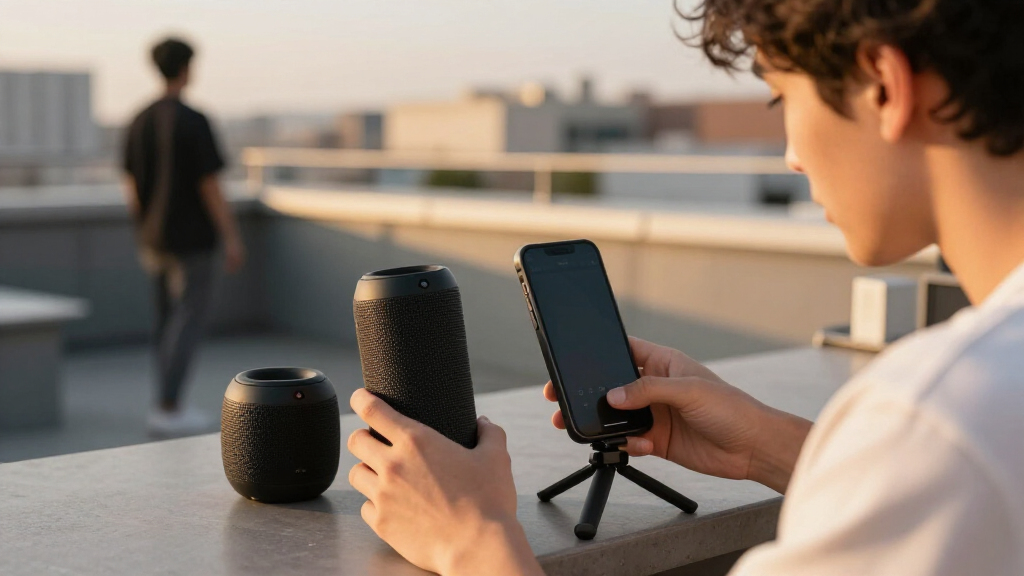
IdeaNavigator AI has outlined a product concept for turning ecommerce catalog photos and specifications into faceless videos for TikTok and Instagram Reels. The proposal targets sellers without on-camera talent or video budgets, but it reports no completed tests or measured sales results.
IdeaNavigator AI has proposed a tool that would turn ecommerce product catalogs into faceless videos for TikTok and Instagram Reels, targeting sellers that lack on-camera talent or the budget to hire video creators. The concept describes a potential workflow, not a launched product: no test results, customer commitments or release date are provided.
The proposed tool would connect to a seller’s product catalog and generate multiple short-form video versions for each item. Suggested formats include unboxing-style clips, lifestyle scenes and feature callouts, produced without requiring a person to appear on camera. The concept also calls for templates using trending audio and direct scheduling to TikTok and Reels.
IdeaNavigator AI frames the target customer as an ecommerce seller without video resources. Its proposal argues that such sellers may miss opportunities to show products in social feeds where consumers discover items. That is the proposal’s rationale; it does not provide independent evidence that catalog-based videos reliably lead to more discovery or purchases.
The suggested business model is a subscription tiered by monthly video output. To test demand and performance, IdeaNavigator AI recommends generating videos for 20 stores, running paid and organic tests against each store’s existing creative, and comparing engagement and conversion results. No such trial is reported as completed.
A Lower-Cost Route to Product Video
If it works as proposed, catalog-to-video automation could give smaller sellers a way to produce more short-form creative without filming staff, hiring creators or organizing individual shoots. That could lower the practical barrier to testing product presentations across social video platforms, where static catalog images may not show how an item looks in use.
The business value, however, depends on more than producing clips quickly. Sellers would need videos that accurately represent their products, fit platform formats and hold viewers’ attention. The proposal identifies engagement and conversion as measures for testing, but supplies no findings on either. The idea is therefore a product opportunity to validate, not evidence of a proven sales channel.
product video creation tool for ecommerce
As an affiliate, we earn on qualifying purchases.
As an affiliate, we earn on qualifying purchases.
The concept sits within ecommerce creative automation: using product information and assets to produce marketing material with less manual work. Here, the proposed input is a seller’s existing catalog, while the intended output is a set of short videos tailored to Reels and TikTok. The idea is aimed at a narrow use case—merchants who want product video but cannot readily appear on camera or pay for production.
Its timing rationale is that video-generation models can create moving scenes from still images and product specifications. IdeaNavigator AI describes this as making faceless footage, including hands and lifestyle environments, much less costly to produce. That is a claim behind the proposal, not a quantified comparison: it provides no pricing, model evaluation or benchmark showing how generated clips compare with filmed content.
Product Quality and Results Remain Untested
No working product, launch date, pricing, participating merchants or completed pilot results are identified. It is not clear which catalog platforms would be supported, how product details would be checked, or how sellers would approve clips before they are published. The proposal also does not specify how trending audio would be selected or whether scheduling would cover all intended platform features.
Performance is also unknown. The suggested test would compare generated videos with existing creative, but no baseline, sample design, test duration or results are supplied. Until those details and findings are available, claims about lower production costs or improved engagement and sales should be treated as potential benefits, not demonstrated outcomes.
A 20-Store Trial Would Test Demand
The next step described in the proposal is a trial involving 20 ecommerce stores. Researchers or product builders would generate catalog-based video variants, publish or promote them through both organic and paid activity, and compare their performance with the stores’ existing creative. The stated measures are engagement and conversion, though specific metrics and evaluation periods have not been outlined.
No timetable for that trial or for building the tool has been announced. Readers should look for evidence that the videos accurately depict products, for clear comparisons with existing content, and for disclosed costs and results before judging whether the concept offers sellers a practical alternative to conventional video production.
Source: IdeaNavigator AI
Key Questions
Is the catalog-to-video tool available now?
No launch is reported. IdeaNavigator AI presents it as a product concept and does not provide a release date or details of an available service.
Who is the proposed tool for?
It is aimed at ecommerce sellers without on-camera talent or a video budget who want short-form product content for TikTok and Instagram Reels.
What kinds of videos would it generate?
The proposed formats include unboxing-style videos, lifestyle scenes and product feature callouts, with templates for trending audio and direct scheduling also included in the concept.
Has it been shown to increase sales or engagement?
No results are provided. The proposal recommends testing videos with 20 stores and comparing engagement and conversion against existing creative, but does not say that testing has happened.
Source: IdeaNavigator AI
Halloween Picks
halloween
As an affiliate, we earn on qualifying purchases.