

🔍 Read the full analysis: What Happens When Claude Helps Prove A Riemann Result And Lean Checks The Work? on ThorstenMeyerAI.com

Get the latest gadgets delivered free with Prime
- Fast, free delivery on millions of items
- Prime Video, Amazon Music and more included
- Member-only deals all year
TL;DR
The Lean FRO and Mathlib Initiative said on November 21 that an AI-assisted Lean proof of the Riemann hypothesis passed their checks. The verification supports the proof’s formal correctness, but the proof remains unexplained by humans, some end-to-end checks were still running as of November 22, and the result does not yet meet the Clay Mathematics Institute’s prize rules.
The Lean FRO and Mathlib Initiative said on November 21 that a formal proof of the Riemann hypothesis, submitted by mathematician Levent Alpöge after working with Anthropic’s Claude, passed their verification checks. The finding is significant because the proof has been checked by formal proof software, but no human has yet explained its argument, and some additional end-to-end checks were still in progress as of November 22.
In a joint statement, the groups said they had “full confidence” that the proof is correct and that it met four criteria set out by mathematician Kevin Buzzard for AI-generated Lean proofs. The statement says both the theorem and its proof are correct. Scott Aaronson, updating a blog post, called the result “a much higher degree of verification than a typical human paper accepted to a math journal.” These are assessments by the Lean community and Aaronson, not a published explanation of the proof’s mathematical reasoning.
MIT mathematician Andrew Sutherland’s public verification log records several checks. It reports that all 175,187 modules compile and that the code was rebuilt in a sealed environment, with the exported proof file matching byte for byte. An audit found that the five main theorems rely on three standard Lean axioms: propext, Classical.choice and Quot.sound. Separate tools compared the theorem in Alpöge’s submission with Mathlib’s formal statement of the Riemann hypothesis.
The groups also describe checks of the proof using independent tools, including checkers written in different programming languages. Sutherland reported that two independent checkers accepted the full proof in under eight minutes each. As of November 22, however, the end-to-end “lake comparator” run and a replay through Lean’s single-threaded kernel were still in progress. Lean’s kernel had accepted every module separately, according to the log, but those unfinished runs mean the status should not be described as every planned check being complete.
Formal Verification, Human Understanding
The result highlights a distinction between checking a proof and understanding it. Lean can verify that a formal argument follows from its rules and definitions. That offers strong evidence that the encoded theorem is established within the system, but it does not by itself give mathematicians a readable account of why the result is true or what ideas make the proof work.
That gap matters to researchers who need to inspect a result, explain it, connect it with existing mathematics or build on it. Canadian mathematician Daniel Litt, quoted in The Conversation, put the tension this way: “The Lean-formalized proof of the Riemann hypothesis is exceedingly likely to be correct. No human understands it yet.” The verification is a concrete achievement; the absence of a human-readable argument remains a separate issue.
The work also illustrates how AI-assisted mathematics may be evaluated: not solely by a model’s output or an author’s account, but by formal code, shared libraries and independent checking tools. Still, a machine-checked result does not automatically settle questions about communication, authorship, or how a mathematical community should assess a proof it cannot presently explain.
Products Worth Considering

Samsung Odyssey G55C 32-Inch QHD 1000R Curved Gaming Monitor
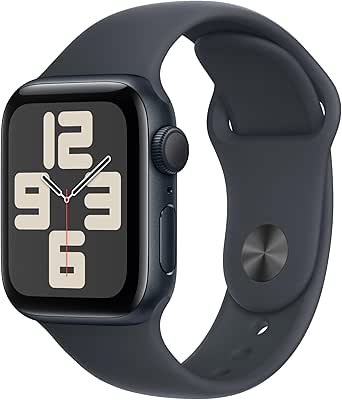
Apple Watch SE (2nd Generation) GPS 40mm Smartwatch with Midnight Aluminum Case and Midnight Sport Band (S/M)

DJI Mic 2 Wireless Microphone System with 2 Transmitters, 1 Receiver, and Charging Case
As an affiliate, we earn on qualifying purchases.
The Claim and Its Verification
Alpöge posted a note and Lean code on November 20, saying he had proved the Riemann hypothesis while working with Claude. The claim followed earlier public discussion of what would need to be checked. On November 21, the Lean FRO and Mathlib Initiative issued their joint statement; on November 22, Sutherland updated a public page with check results and logs. The Lean FRO supports development of the Lean proof assistant, while Mathlib is its widely used mathematics library.
Formal proof software represents mathematical statements and arguments in a precise language. Lean’s kernel checks whether a proof follows from the permitted rules and assumptions. In this case, reviewers also checked whether the formal theorem matched Mathlib’s definition of the Riemann hypothesis, rather than relying only on a successful compilation. The joint statement says the codebase contains 17 million lines and notes that multiple people reproduced the compilation and proof export.
The claim concerns the Riemann hypothesis and a generalized version for Dirichlet L-functions. Sutherland cautioned that broader families of functions were not among the statements checked. The Association for Human Mathematics has criticized the release, saying “no human being can reasonably claim to be responsible for, or even to understand, such a document.” Clay’s problem page changed its label from “Unsolved” to “Active,” but the institute’s prize conditions still require journal publication, a two-year period and general acceptance.
“We hereby certify that both the statement and the proof of the Riemann Hypothesis are correct.”
— Lean FRO and Mathlib Initiative, joint statement
Checks and Explanations Still Pending
As of November 22, Sutherland’s log still listed the end-to-end lake comparator run and a replay through Lean’s single-threaded kernel as in progress. The available account says each module had already been accepted by Lean’s kernel, but does not report the final outcomes of those remaining runs. The verification claim should be understood in light of that dated status.
It is also not clear how Alpöge and other mathematicians will produce a human-readable account of the argument. The source reports that Alpöge had not posted such a version and that the submitted note remained unchanged between November 20 and November 23. The checks cover specified formal statements, not broader families beyond those named by Sutherland. Nor does the formal certificate, on its own, establish that the Clay prize requirements have been met.
Publication and Further Review
The immediate next steps are to complete and publish the outstanding verification runs, if they finish, and to make the proof and its formal scope available for continued scrutiny. Researchers may also seek an explanation that mathematicians can follow outside Lean’s formal language. The source material does not give a timetable for either development.
Clay’s prize process remains separate from the Lean checks: its stated rules call for publication in a qualifying journal, a two-year period and general acceptance. The change of the problem’s status label to “Active” is not evidence that those conditions have been satisfied. Readers should watch for updates to Sutherland’s logs, any new explanation or paper from Alpöge, and formal announcements from Clay.
Key Questions
What did Lean’s groups certify?
The Lean FRO and Mathlib Initiative said the formal statement and proof submitted by Levent Alpöge were correct under the checked Lean framework. They described the proof as meeting four criteria for AI-generated Lean proofs.
Does this mean mathematicians understand the proof?
No. The source reports that no human had yet explained the proof, and Daniel Litt said no human understands it yet. Formal verification checks the encoded argument; it is not the same as a readable mathematical explanation.
Were all verification checks finished?
Not according to the status reported on November 22. Sutherland’s log listed the end-to-end lake comparator run and a single-threaded kernel replay as still in progress, although Lean’s kernel had accepted every module separately.
Does the proof qualify for the Clay prize?
That has not been established. The source says Clay’s rules require journal publication, two years and general acceptance. A change on the problem page from “Unsolved” to “Active” does not by itself show those requirements have been met.
Source: ThorstenMeyerAI.com