
TL;DR
QuEra Computing has joined ASQC, a Harvard-led project funded with $12 million by the U.S. Department of Energy to develop AI-designed quantum error correction for scientific applications. The team plans to test tailored codes and decoders on QuEra neutral-atom systems and hardware at Harvard and MIT; the project’s technical milestones and expected results have not yet been detailed.
QuEra Computing has joined a $12 million U.S. Department of Energy-funded project led by Harvard to use artificial intelligence to design quantum error-correction systems for scientific computing. The project, called Application-Aware Error Correction Codesign for Scientific Quantum Computing (ASQC), aims to tailor codes and decoders to specific workloads and test them on quantum hardware.

Get the latest gadgets delivered free with Prime
- Fast, free delivery on millions of items
- Prime Video, Amazon Music and more included
- Member-only deals all year
ASQC will train AI models to identify which errors most affect selected scientific tasks, then use that information to develop application-specific error-correcting codes and decoders. The target areas include chemistry, materials science, quantum simulation and nuclear science, according to the project description supplied by QuEra and reported by The Quantum Insider.
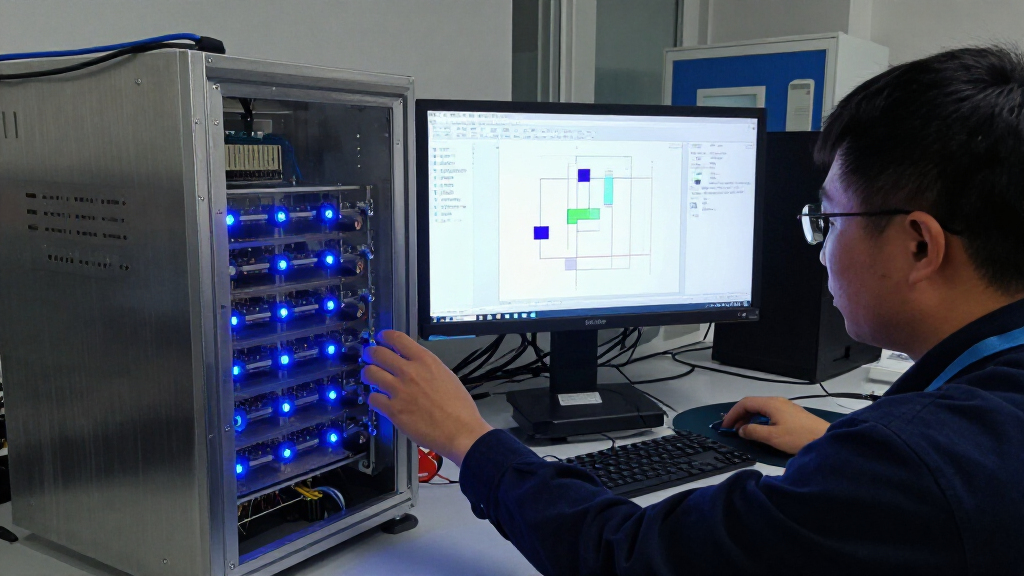
The team plans to test the resulting systems on QuEra’s neutral-atom quantum computers and laboratory systems at Harvard and MIT. The project also involves Los Alamos, Lawrence Berkeley and Sandia national laboratories, Cornell University, NVIDIA and Anthropic, alongside Harvard, MIT and QuEra. Harvard professor Mikhail Lukin is the principal investigator; he is also a QuEra co-founder and chief science officer.
DOE named ASQC among 12 Phase II awards announced October 9, 2026, under the Genesis Mission. The awards are administered by the department’s Advanced Scientific Computing Research division. QuEra said the project received $12 million, but the material provided does not specify the funding period or how the award will be divided among participants.
Reducing Error-Correction Overhead
Quantum computers are vulnerable to errors, and correcting them requires physical qubits and operations beyond those used for the computation itself. That overhead can constrain how much useful work a machine can perform. ASQC’s approach is to match error correction to particular scientific tasks, rather than assume every application is affected by errors in the same way.
If the approach works, it could help researchers make more efficient use of quantum hardware for targeted scientific workloads. That is a research goal, not a demonstrated outcome: the supplied project information describes planned development and testing, but does not report results from ASQC or give a schedule for a working system. The work is also relevant to QuEra’s plans for fault-tolerant computing, though the project’s contribution to those plans remains to be measured.
Products Worth Considering

Samsung Odyssey G55C 32-Inch QHD 1000R Curved Gaming Monitor
Apple Watch SE (2nd Generation) GPS 40mm Smartwatch with Midnight Aluminum Case and Midnight Sport Band (S/M)

DJI Mic 2 Wireless Microphone System with 2 Transmitters, 1 Receiver, and Charging Case
As an affiliate, we earn on qualifying purchases.
From Decoder Research to ASQC
ASQC builds on earlier work by members of the team in quantum error correction and AI-assisted design. The source report cites a team preprint from April 2026 describing a neural-network decoder that reduced error rates by up to 17 times compared with existing decoders and ran thousands of times faster. Those are results attributed to a preprint, not findings established by the ASQC award itself.
The report also describes prior work using large language models to find quantum circuits for tasks including chemistry and simulation. Separately, QuEra has said its Libra fault-tolerant system is planned for Amazon Braket in early 2028. That timeline is a company plan; the source material does not say ASQC will deliver Libra or determine whether its schedule will change.
The DOE’s Genesis Mission, launched in November 2025, is intended to connect national computing resources, experimental facilities and AI systems to support research. ASQC is one project within that broader effort, rather than a stand-alone demonstration that AI-designed error correction is ready for scientific use.
“This is really an attempt to establish scientific foundations for useful fault-tolerant quantum computers.”
— Mikhail Lukin, ASQC principal investigator, as quoted in Harvard’s announcement
Milestones and Results Not Yet Set
The supplied announcement does not give a detailed project schedule, intermediate milestones or a breakdown of the $12 million award. It also does not identify which specific workloads will be tested first, how the team will measure improvements, or when it expects to publish results.
It remains to be seen whether AI-designed codes and decoders will lower error-correction overhead on the named hardware and workloads. The earlier decoder findings cited in the report are separate work, including a preprint, and should not be treated as results from ASQC. The project’s eventual impact on QuEra’s planned Libra system is also not specified.
Testing Designs on Quantum Hardware
The project’s stated next steps are to train AI models to identify workload-specific errors, design corresponding codes and decoders, and test the resulting systems on QuEra, Harvard and MIT hardware. The supplied material does not provide dates for those stages or a public timetable for results.
Readers can expect further information from the participating institutions as the research progresses, including which scientific tasks are selected and whether testing shows measurable improvements. Until those results are reported, ASQC should be understood as a funded research effort, not a completed error-correction system or a confirmed acceleration of commercial quantum computing plans.
Key Questions
What is the ASQC project?
ASQC is a Harvard-led DOE-funded project developing AI-designed error-correction codes and decoders tailored to scientific quantum-computing workloads.
How much funding did the project receive?
The project received $12 million from the U.S. Department of Energy, according to the source report. The funding period and distribution among partners were not provided.
What will QuEra contribute?
QuEra is a collaborating partner and is expected to provide its neutral-atom quantum computers for testing. The supplied material does not specify a complete division of technical responsibilities among partners.
Does the project mean fault-tolerant quantum computing is ready?
No. ASQC is a research project aimed at developing and testing tailored error correction. The announcement does not report a completed system or results showing that the approach is ready for scientific deployment.
Source: thequantuminsider.com