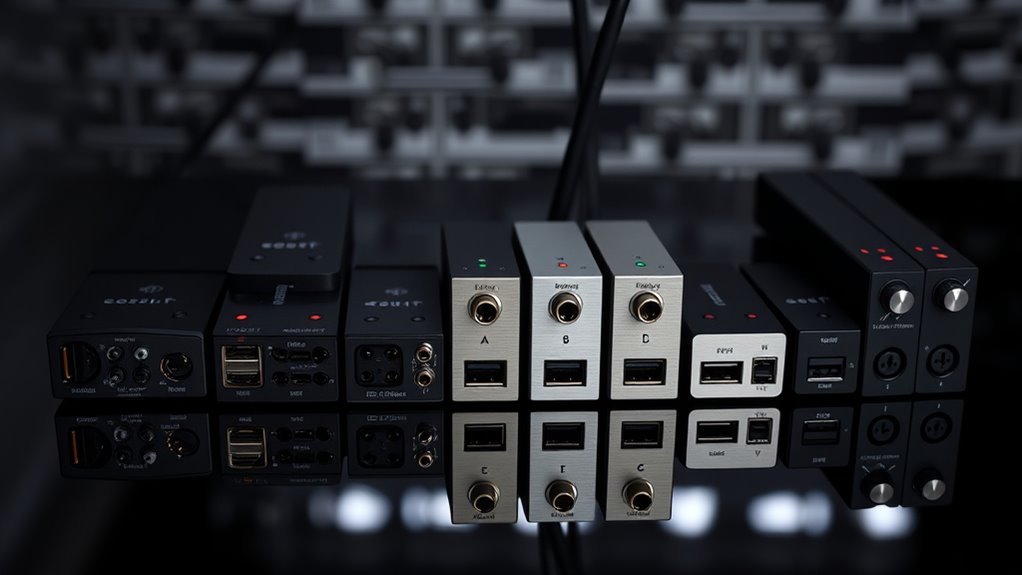

USB sound cards add headphone and microphone connections to computers and consoles, and my best overall pick is the Sound Blaster Play! 3 for its stated 24-bit/96 kHz support and plug-and-play design. The UGREEN USB to 3.5 mm adapter is a strong alternative for buyers who want a DAC-focused option, while the VENTION adapter stands out for its inline volume control. The main tradeoffs are simple: compact adapters are easy to carry, while extra controls or surround features can suit more specific setups. Compatibility also depends on whether you need USB-A or USB-C and separate or combined headset connections. Read on for the full breakdown of all 14 options and how I’d choose between them.

Get the latest gadgets delivered free with Prime
- Fast, free delivery on millions of items
- Prime Video, Amazon Music and more included
- Member-only deals all year
Complete the kit

Key Takeaways
- The Sound Blaster Play! 3 separates itself with stated 24-bit/96 kHz support, making it the feature-led overall pick in this lineup.
- UGREEN’s DAC-equipped adapter is the clearest alternative for buyers who prioritize specified audio conversion over inline controls or multi-pack convenience.
- VENTION’s volume control offers a practical on-cable adjustment, a feature the simpler plug-and-play adapters do not emphasize.
- SABRENT’s USB-C adapter addresses a different connection need from the many USB-A models, but its stereo output and mono mic input should match the headset setup.
- Cubilux’s 7.1 surround claim targets buyers seeking virtual surround features; it is a more specialized choice than basic stereo adapters.
| VizGiz 3-Pack USB Sound Card Adapter with 3.5 mm Audio and Microphone Jacks |  | Best for Multi-Device Households | Brand: VizGiz | Pack size: 3 | Connection: USB to 3.5 mm audio and microphone jacks | VIEW ON AMAZON | See Our Full Breakdown |
| VENTION USB External Stereo Sound Card with Volume Control |  | Best for On-Adapter Controls | Brand: VENTION | Connectivity: USB | Audio jack: 3.5 mm | VIEW ON AMAZON | See Our Full Breakdown |
| QAJOPFN USB Audio Adapter with 3.5 mm Headphone and Microphone Jacks |  | Best for Console and Computer Flexibility | Brand and model: QAJOPFN S1 | Connection: USB-A to 3.5 mm | Audio output: Stereo | VIEW ON AMAZON | See Our Full Breakdown |
| Biaze USB Audio Adapter with 3.5 mm Headphone and Microphone Jacks |  | Best for a Simple Single-Adapter Setup | Brand and model: Biaze Y23-UK | Connectors: USB, 3.5 mm jack | Audio support: Up to 16-bit/48 kHz | VIEW ON AMAZON | See Our Full Breakdown |
| UGREEN USB to 3.5 mm Audio Adapter with DAC, 24-bit/96 kHz |  | Best for Higher-Resolution Headphone Playback | Brand and model: UGREEN 30757 | Connection: USB-A to 3.5 mm | Maximum sample rate: 96 kHz | VIEW ON AMAZON | See Our Full Breakdown |
| Sound Blaster Play! 3 USB Audio Adapter 24-bit 96kHz Plug & Play |  | Best for Audio Enhancements | Brand: Creative | Model: Sound Blaster Play! 3 | Model number: SB1730 | VIEW ON AMAZON | See Our Full Breakdown |
| UGREEN USB Sound Card Adapter with 3.5 mm Headphone and Microphone Ports |  | Best for Broad Compatibility | Brand: UGREEN | Model: 30724 | Connectivity: USB | VIEW ON AMAZON | See Our Full Breakdown |
| SABRENT USB-C to 3.5mm Audio Adapter with Stereo Output and Mono Mic Input |  | Best USB-C Pick | Model: AU-UCMA | Connector: USB Type-C | Audio jacks: 3.5 mm stereo output and mono microphone input | VIEW ON AMAZON | See Our Full Breakdown |
| ENVEL USB to 3.5mm Stereo Audio Adapter with Dual TRS Jacks |  | Best for Separate TRS Connections | Brand: ENVEL | Model: EN0332 | Connectivity: USB | VIEW ON AMAZON | See Our Full Breakdown |
| Sabren USB External Stereo Sound Card Adapter – Plug & Play (AU-MMSA) |  | Best Compact Desktop Fix | Model: AU-MMSA | Dimensions: 1.5 × 0.4 × 0.9 in | Maximum sample rate: 48 kHz | VIEW ON AMAZON | See Our Full Breakdown |
| CableCreation USB Audio Adapter with 3.5mm Jack, External Stereo Sound Card for PS4, PS5, Windows, Mac, Linux |  | Best for Console Compatibility | Audio port: 3.5 mm stereo jack | Sampling rates: 44.1 kHz and 48 kHz | Connection: USB 2.0 Full Speed | VIEW ON AMAZON | See Our Full Breakdown |
| MOSWAG USB to 3.5mm Audio Adapter with Microphone Support |  | Best Compact TRRS Pick | Connector: USB to 3.5 mm TRRS | Audio: Stereo output and microphone input | Resolution and sample rate: 16-bit, up to 48 kHz | VIEW ON AMAZON | See Our Full Breakdown |
| Plugable USB Audio Adapter |  | Best for a Permanent Desktop Setup | Model: USB-AUDIO | Connectivity: USB | Audio output: Stereo | VIEW ON AMAZON | See Our Full Breakdown |
| Cubilux 7.1 USB External Surround Sound Card with Aluminum Alloy Housing |  | Best for Multichannel Surround | Connectivity: USB-A | Surround formats: 5.1 and 7.1 | Maximum headphone playback: 384 kHz, up to 24-bit | VIEW ON AMAZON | See Our Full Breakdown |
| sound cards usb | Maximum sample rate | Signal-to-noise ratio |
|---|---|---|
| VizGiz 3-Pack USB Sound Card A | 48 kHz | — |
| VENTION USB External Stereo So | 48 kHz | — |
| QAJOPFN USB Audio Adapter with | 48 kHz | — |
| Biaze USB Audio Adapter with 3 | — | — |
| UGREEN USB to 3.5 mm Audio Ada | 96 kHz | 95 dB |
| Sound Blaster Play! 3 USB Audi | 96 kHz | — |
| UGREEN USB Sound Card Adapter | — | 90 dB |
| SABRENT USB-C to 3.5mm Audio A | 96 kHz | 110 dB |
| ENVEL USB to 3.5mm Stereo Audi | 48 kHz | 120 dB |
| Sabren USB External Stereo Sou | 48 kHz | 98 dB |
| CableCreation USB Audio Adapte | — | — |
| MOSWAG USB to 3.5mm Audio Adap | — | 95 dB |
| Plugable USB Audio Adapter | 48 kHz | 95 dB |
| Cubilux 7.1 USB External Surro | — | — |
More Details on Our Top Picks
VizGiz 3-Pack USB Sound Card Adapter with 3.5 mm Audio and Microphone Jacks
The three-adapter bundle suits households or small teams that need separate headphone and microphone connections on several USB-equipped devices. Each adapter is plug and play and supports Windows, Mac, Linux, and Android, so it can be moved between compatible computers without driver setup. Compared with the single-port Biaze Y23-UK, VizGiz gives you spares or adapters for multiple setups; Biaze is the more direct choice if you only need one. The tradeoff is that VizGiz offers virtual 5.1-channel audio, not a more versatile set of audio features, and its listed maximum sample rate is 48 kHz. It also needs a USB port, so check your device’s available connection before choosing it.
Pros:- Three adapters can serve multiple devices or provide spares
- Separate headphone and microphone connections
- Driver-free operation on listed compatible platforms
- Virtual 5.1-channel and 3D audio support
Cons:- Audio is limited to virtual 5.1-channel support and a 48 kHz maximum sample rate
- Requires an available USB port on each device
Best for: Households, classrooms, or small teams that want separate USB audio adapters for several compatible devices
Not ideal for: Buyers who need one durable adapter for frequent travel or higher-resolution headphone output
- Brand:VizGiz
- Pack size:3
- Connection:USB to 3.5 mm audio and microphone jacks
- Surround sound:Virtual 5.1-channel
- Maximum sample rate:48 kHz
- Driver required:No
- Compatible platforms:Windows, Mac, Linux, Android
Our verdict“Choose VizGiz when you need several simple USB audio adapters; pick a single-adapter option if one setup is all you have to equip.”
VENTION USB External Stereo Sound Card with Volume Control
The physical volume knob and dedicated microphone and sound buttons make this VENTION adapter the most control-focused pick in this group. That can be useful when a laptop’s controls are inconvenient or you want quick access to mute and audio adjustments at your desk. Unlike the VizGiz 3-Pack, it is a single compact adapter rather than a multi-device bundle; compared with the QAJOPFN S1, its standout feature is easy access to controls instead of a separately specified mono microphone input. VENTION is limited to stereo output, though, so it is not the choice for buyers seeking virtual surround sound. Its 3.5 mm jack and USB connection also make compatibility worth checking, particularly for devices without a standard USB port.
Pros:- Volume knob provides direct audio adjustment
- Dedicated microphone and sound switch buttons
- Plug-and-play operation without extra drivers on compatible devices
- Compact design for portable use
Cons:- Stereo output only, without virtual surround sound
- Requires a standard USB port
- One 3.5 mm jack may not suit setups needing separate headphone and microphone connections
Best for: Laptop and desktop users who want a compact USB audio connection with accessible volume and microphone controls
Not ideal for: Buyers seeking virtual surround sound or separate headphone and microphone jacks
- Brand:VENTION
- Connectivity:USB
- Audio jack:3.5 mm
- Audio output:Stereo
- Maximum sample rate:48 kHz
- Controls:Volume knob, microphone switch, sound switch
- Supported platforms:Windows, Mac OS, Android, Chromebook, Switch
- Drivers required:No
Our verdict“Pick VENTION if accessible volume and microphone controls matter more than surround sound or separate audio jacks.”
QAJOPFN USB Audio Adapter with 3.5 mm Headphone and Microphone Jacks
The QAJOPFN S1 is a practical fit for buyers who want one adapter listed for computers, Android devices, and PS4 or PS5. Its built-in DAC and USB power provide headphone output without an external power supply, while the separate mono TRS microphone input lets a compatible mic connect apart from the stereo headphone or speaker output. That layout differs from the single-jack VENTION adapter, which is simpler for a headset but emphasizes on-adapter controls. QAJOPFN lists 7.1-channel surround configuration, although buyers should check device support rather than assume every platform will use it. Its microphone input has a specific connector limitation: it does not support TS or TRRS microphones. It is also not designed for TVs or cars.
Pros:- Listed compatibility includes Windows, Linux, Mac, Android, PS4, and PS5
- Separate stereo headphone output and mono TRS microphone input
- Built-in DAC and USB power need no external power supply
- Portable dimensions for home, office, or travel
Cons:- Microphone input supports mono TRS only, not TS or TRRS
- Not designed for TVs or cars
- Requires the device to recognize a USB audio device
Best for: PC and PS4 or PS5 users who need separate stereo headphone output and a mono TRS microphone input
Not ideal for: People using TRRS or TS microphones, or shoppers looking for an adapter for TVs and cars
- Brand and model:QAJOPFN S1
- Connection:USB-A to 3.5 mm
- Audio output:Stereo
- Microphone input:Mono TRS
- Maximum sample rate:48 kHz
- Surround sound configuration:7.1
- Compatible platforms:Windows 10/11, Windows 7/8/XP, Linux, Mac OS X, Android, PS4, PS5
- Dimensions:6.1 × 1.06 × 0.24 in
- Power:USB
Our verdict“Choose the QAJOPFN S1 for a compatible PC or console setup that needs separate headphone and mono TRS microphone connections.”
Biaze USB Audio Adapter with 3.5 mm Headphone and Microphone Jacks
The Biaze Y23-UK keeps its job straightforward: add headphone output and microphone input to a compatible computer or console, with 16-bit/48 kHz audio and no driver or external power requirement. Its compact ABS body weighs 30 g, making it an uncomplicated option to keep in a laptop bag. Compared with the VizGiz 3-Pack, Biaze is a single-adapter purchase for one setup, while VizGiz offers multiple units and virtual surround support. The UGREEN 24-bit/96 kHz adapter is a better match for buyers prioritizing higher-resolution headphone playback. Biaze’s listed headset support is CTIA-standard, so check the wiring standard of your headset before buying. Its single adapter also offers less flexibility for equipping multiple devices.
Pros:- Adds headphone output and microphone input
- Driver-free and does not need external power
- Compact 30 g ABS construction
- Listed compatibility includes computers, Raspberry Pi, PS4, and PS5
Cons:- One adapter is included
- 3.5 mm headset support is specified for CTIA-standard headsets
- Audio support is limited to 16-bit/48 kHz
Best for: Laptop or console owners who need one lightweight adapter for a CTIA-standard headset and basic headphone and microphone connections
Not ideal for: People with OMTP headsets, multiple devices to equip, or a priority for higher-resolution audio
- Brand and model:Biaze Y23-UK
- Connectors:USB, 3.5 mm jack
- Audio support:Up to 16-bit/48 kHz
- Compatibility:Windows, Mac OS X, Linux, Chromebook, Raspberry Pi, PS4, PS5
- Material:ABS
- Dimensions:3.94 × 1.57 × 0.79 in
- Weight:30 g
- Package quantity:1
- Warranty:18 months
Our verdict“Choose Biaze for a lightweight, basic headset connection when one adapter and CTIA compatibility meet your needs.”
UGREEN USB to 3.5 mm Audio Adapter with DAC, 24-bit/96 kHz
Among these five, the UGREEN 24-bit/96 kHz adapter has the strongest listed headphone playback specification. Its aluminum-alloy shell and braided 9.8-inch cable also make it a more robust-feeling design than the compact plastic Biaze Y23-UK. It supports listening and microphone use with compatible CTIA or OMTP TRRS headsets, so it can serve as a one-cable headset connection rather than requiring separate headphone and mic plugs. The resolution claim applies to headphone audio; the microphone does not support 24-bit/96 kHz. This adapter is also limited to headphones below 50 ohms, which rules out many high-impedance models. Buyers who only need simple stereo output may find the VENTION’s physical controls more useful than UGREEN’s higher playback specification.
Pros:- Headphone audio supports up to 24-bit/96 kHz
- Supports compatible CTIA and OMTP TRRS headsets for listening and microphone use
- Aluminum-alloy shell and braided cable
- USB bus-powered plug-and-play operation
Cons:- Microphone audio does not support 24-bit/96 kHz
- Does not support headphones with impedance of 50 ohms or higher
- Does not support Apple headphone line controls
Best for: Listeners with compatible low-impedance headphones or TRRS headsets who want higher-resolution headphone output over USB
Not ideal for: Owners of high-impedance headphones, Apple headphone line controls, or buyers seeking high-resolution microphone recording
- Brand and model:UGREEN 30757
- Connection:USB-A to 3.5 mm
- Maximum sample rate:96 kHz
- Audio resolution:24-bit
- Signal-to-noise ratio:95 dB
- Audio output:Stereo
- Microphone support:Single TRRS microphone; CTIA and OMTP headsets supported
- Supported headphone impedance:Less than 50 ohms
- Materials and cable:Aluminum-alloy shell, nylon-braided cable, 9.8 in length
Our verdict“Choose UGREEN for higher-resolution playback with compatible low-impedance headphones, and skip it if your headphones need more power.”
Sound Blaster Play! 3 USB Audio Adapter 24-bit 96kHz Plug & Play
The Sound Blaster Play! 3 suits PC and Mac users who want a small USB sound card with more audio detail and optional software tuning. Its 24-bit/96 kHz support exceeds the 16-bit/48 kHz ceiling of the UGREEN USB Sound Card Adapter, which may appeal to listeners working with higher-resolution audio. It also accepts analog headsets without a Y-splitter and works without a driver installation, keeping setup simple. The tradeoff is that its listed output mode is stereo; the 5.1 configuration spec does not make it a multichannel output solution. It also needs a USB port for power, and its downloadable enhancements may matter less to buyers who only need basic headphone and mic connections.
Pros:- Supports audio up to 24-bit/96 kHz.
- Works with analog headsets without a Y-splitter.
- Plug-and-play operation without driver installation.
- Downloadable software offers audio enhancements and profiles.
Cons:- Listed audio output is stereo, despite the 5.1 channel configuration spec.
- Requires USB power, limiting use with devices that lack a USB port.
Best for: PC and Mac users who want a plug-and-play USB DAC with software audio enhancements and support for higher-resolution stereo playback.
Not ideal for: Buyers who need true multichannel surround output or want to connect to a device without a USB port.
- Brand:Creative
- Model:Sound Blaster Play! 3
- Model number:SB1730
- Connectivity:USB
- Maximum sample rate:96 kHz
- Audio output mode:Stereo
- Compatible devices:Mac, Windows PC
- Dimensions:5.43 × 0.87 × 0.37 in
Our verdict“Choose the Sound Blaster Play! 3 for enhanced stereo listening on a PC or Mac; skip it if you need surround output.”
UGREEN USB Sound Card Adapter with 3.5 mm Headphone and Microphone Ports
The UGREEN USB Sound Card Adapter is a straightforward pick for buyers who need separate headphone and microphone ports across several computer and console platforms. It supports Windows, Mac, Linux, PS4, and PS5, and its driverless, externally unpowered setup keeps it easy to carry and connect. Compared with the Sound Blaster Play! 3, its 16-bit/48 kHz resolution is more modest, but that is a practical fit for everyday voice chat and stereo listening. The stated 90 dB signal-to-noise ratio gives a useful reference for its noise performance. Its platform list has limits: PS3 is unsupported, and this basic adapter lacks the software enhancement features offered by Creative. Choose it for uncomplicated connections, not audio customization.
Pros:- Separate 3.5 mm headphone and microphone ports.
- Works without driver installation or external power.
- Compatibility includes Windows, Linux, Mac, PS4, and PS5.
- Compact ABS construction weighs 18.14 g.
Cons:- Does not work with PS3.
- Audio resolution is limited to 16-bit/48 kHz.
- No included software enhancement features are specified.
Best for: People who move a basic headset between Windows, Mac, Linux, PS4, and PS5 devices and want separate 3.5 mm ports.
Not ideal for: PS3 owners or listeners seeking 24-bit/96 kHz support and downloadable audio processing.
- Brand:UGREEN
- Model:30724
- Connectivity:USB
- Audio connection:3.5 mm
- Output mode:Stereo
- Audio resolution:16-bit/48 kHz
- Signal-to-noise ratio:90 dB
- Compatibility:Windows, Linux, Mac OS X, PS5, PS4, Chromebook, Surface Pro 3, Raspberry Pi
Our verdict“Pick the UGREEN adapter for simple headset connections across supported platforms, provided PS3 and higher-resolution audio are not requirements.”
SABRENT USB-C to 3.5mm Audio Adapter with Stereo Output and Mono Mic Input
For a laptop, tablet, or phone with USB-C, the SABRENT AU-UCMA pairs a stereo headphone output with a separate mono microphone input in one compact adapter. Its 24-bit/96 kHz support matches the Sound Blaster Play! 3 on sample rate and bit depth, while the listed 110 dB signal-to-noise ratio adds a useful specification for buyers comparing audio interfaces. The aluminum body and integrated cable make it a tidy portable option, and it draws power from the host. That USB-C connector is also its main limitation: it will not plug directly into USB-A ports, and mobile support depends on the device. The microphone input is mono, so buyers seeking multichannel mic capture should look elsewhere.
Pros:- Separate stereo headphone output and mono microphone input.
- Supports audio up to 24-bit/96 kHz.
- USB-C plug-and-play operation needs no external power.
- Lightweight aluminum body with integrated cable.
Cons:- Requires a USB-C port and does not fit USB-A ports.
- Microphone input is mono.
- Mobile compatibility depends on host-device support.
Best for: USB-C laptop and mobile device owners who want separate headphone and microphone connections in a compact, bus-powered adapter.
Not ideal for: USB-A-only computer owners or users who need stereo microphone input or guaranteed compatibility with every mobile device.
- Model:AU-UCMA
- Connector:USB Type-C
- Audio jacks:3.5 mm stereo output and mono microphone input
- Maximum sample rate:96 kHz
- Bit depth:Up to 24-bit
- Signal-to-noise ratio:110 dB
- Power:Bus-powered
- Body material:Aluminum alloy
Our verdict“Choose the SABRENT AU-UCMA if your device has USB-C and you want high-resolution stereo output with a separate mic input.”
ENVEL USB to 3.5mm Stereo Audio Adapter with Dual TRS Jacks
The ENVEL EN0332 is aimed at buyers whose headphones and microphone use separate 3.5 mm TRS plugs. Its dual jacks and 3-pole microphone support make the connection type explicit, while bus power and plug-and-play operation keep setup uncomplicated. Compared with the UGREEN USB Sound Card Adapter, ENVEL lists a higher 120 dB signal-to-noise ratio, though its maximum sample rate is still 48 kHz. Its long, slim body may suit a desktop connection better than a tiny dongle, but it takes up more room than the compact SABRENT USB-C adapter. Compatibility includes Windows, Mac, Linux, Android, Chromebook, PS4, and PS5; it does not support TVs, cars, or PS3, so check the host before buying.
Pros:- Provides separate 3.5 mm headphone and microphone jacks.
- Supports 3-pole microphones.
- Plug-and-play operation with USB bus power.
- Compatibility includes Windows, Mac, Linux, Android, Chromebook, PS4, and PS5.
Cons:- Does not work with TVs, cars, or PS3.
- Maximum sample rate is 48 kHz.
- Long body is less compact than small adapter designs.
Best for: Desktop and console users with separate 3-pole TRS headphones and microphones who want a simple USB connection.
Not ideal for: PS3, TV, and car users, or anyone whose microphone is not a supported 3-pole type.
- Brand:ENVEL
- Model:EN0332
- Connectivity:USB
- Jacks:Dual 3.5 mm TRS headphone and microphone
- Microphone support:3-pole microphones
- Maximum sample rate:48 kHz
- Signal-to-noise ratio:120 dB
- Compatible platforms:Windows, Mac OS X, Linux, Android, Chromebook, PS4, PS5
Our verdict“Pick the ENVEL if your setup uses separate 3-pole TRS plugs and a supported host; skip it for PS3, TV, or car connections.”
Sabren USB External Stereo Sound Card Adapter – Plug & Play (AU-MMSA)
The Sabren AU-MMSA is a small, practical fix for a computer with broken or missing audio jacks: it adds a 3.5 mm headphone output and a separate mono microphone input through USB. At 1.5 × 0.4 × 0.9 inches, it takes little desk or bag space, and its driverless operation across Windows, macOS, and Linux makes setup simple. Unlike the USB-C SABRENT adapter, this model is described as a USB sound card without a USB-C-only constraint. Its 98 dB signal-to-noise ratio and 48 kHz sample rate place it in the everyday stereo tier rather than alongside 96 kHz options such as the Sound Blaster Play! 3. The limitations matter: it does not support combined 4-pole headsets or passive speakers, and managed computers may block USB audio devices.
Pros:- Adds separate headphone output and mono microphone input.
- Driverless operation on Windows, macOS, and Linux.
- Compact dimensions suit travel and crowded desks.
- USB-powered with no external supply required.
Cons:- Does not support combined 4-pole headsets.
- Cannot power passive speakers.
- Limited to stereo output and mono microphone input.
Best for: Laptop and desktop users who need separate headphone and mono mic jacks for basic stereo audio on Windows, macOS, or Linux.
Not ideal for: People using combined 4-pole headsets, passive speakers, or managed computers where IT restricts USB devices.
- Model:AU-MMSA
- Dimensions:1.5 × 0.4 × 0.9 in
- Maximum sample rate:48 kHz
- Signal-to-noise ratio:98 dB
- Channel configuration:2-channel stereo output, mono microphone input
- Audio connections:3.5 mm headphone output and separate microphone input
- Power:USB bus-powered
- Compatible operating systems:Windows, macOS, Linux
Our verdict“Choose the Sabren AU-MMSA to restore separate audio jacks on a compatible computer, but avoid it for combined headsets or passive speakers.”
CableCreation USB Audio Adapter with 3.5mm Jack, External Stereo Sound Card for PS4, PS5, Windows, Mac, Linux
The CableCreation adapter is a practical choice for buyers who want a simple stereo headset connection across a computer and a PS4 or PS5. Its plug-and-play setup and bus-powered design avoid driver installation and an extra power supply, while the 3.5 mm jack supports both headphones and a microphone. Compared with the Plugable USB Audio Adapter, it names Raspberry Pi and Surface Pro among its compatible devices, but both are stereo-focused rather than surround sound options. The tradeoff is a narrower connection profile: it uses USB 2.0 Full Speed, and the supplied data says it is not compatible with USB 3.0 ports. Buyers should also check their headset, since EarPods may not pass microphone input through this adapter. It makes sense for straightforward console and computer audio, not specialized formats.
Pros:- Plug-and-play operation requires no external drivers.
- Provides stereo audio and microphone input through a 3.5 mm jack.
- Lists compatibility with PS4, PS5, Windows, Mac, Linux, and Raspberry Pi.
- Bus-powered design needs no separate power supply.
Cons:- The supplied information says it is not compatible with USB 3.0 ports.
- Does not support PS3 or most car systems and smart TVs.
- EarPods may not support microphone input through the adapter.
Best for: PS4 or PS5 players who also use a Windows, Mac, or Linux computer and need a basic headset audio and microphone connection.
Not ideal for: Buyers with only USB 3.0 ports, PS3 users, or people seeking surround sound or guaranteed EarPods microphone support.
- Audio port:3.5 mm stereo jack
- Sampling rates:44.1 kHz and 48 kHz
- Connection:USB 2.0 Full Speed
- Power:USB bus-powered
- Compatibility:PS4, PS5, Windows, Mac, Linux, Raspberry Pi, Surface Pro
- Warranty:24 months
Our verdict“Choose CableCreation for a simple headset adapter spanning PS4 or PS5 and common computers, provided its USB connection and headset limitations fit your setup.”
MOSWAG USB to 3.5mm Audio Adapter with Microphone Support
For a single headset cable that carries both listening and microphone audio, the MOSWAG adapter offers a compact TRRS connection with support for CTIA and OMTP headphone standards. That compatibility can spare headset owners from needing separate headphone and mic plugs, and its 7.84-inch braided cable gives the connector some reach from a nearby USB port. Compared with the CableCreation adapter, MOSWAG specifies a 16-bit/48 kHz DAC and a 95 dB signal-to-noise ratio, making its audio details clearer on paper. The aluminum housing and plug-and-play operation add convenience, though the short cable may constrain placement. Its microphone connection does not support TS or TRS connectors, so this is a headset-focused option rather than a flexible adapter for standalone microphones.
Pros:- TRRS connection carries stereo output and microphone input.
- Supports CTIA and OMTP headphone standards.
- Plug-and-play operation requires no driver installation.
- Aluminum housing and braided cable are designed for durability.
Cons:- Microphone connection does not support TS or TRS connectors.
- The 7.84-inch cable may limit where the adapter can sit.
- Maximum sample rate is 48 kHz.
Best for: Laptop and console users with a CTIA or OMTP TRRS headset who want microphone and stereo audio over one connection.
Not ideal for: Buyers connecting standalone TS or TRS microphones, or those who need a longer cable or more than 48 kHz audio.
- Connector:USB to 3.5 mm TRRS
- Audio:Stereo output and microphone input
- Resolution and sample rate:16-bit, up to 48 kHz
- Signal-to-noise ratio:95 dB
- Headphone standards:CTIA and OMTP
- Cable length:7.84 inches
- Materials:Aluminum housing, nylon-braided cable
- Compatibility:Windows, Linux, Mac OS X, Chromebook, Raspberry Pi, PS4, PS5, Windows Surface 3
Our verdict“Pick MOSWAG if your headset uses a supported TRRS standard and you want a short, durable adapter with specified 16-bit/48 kHz audio.”
Plugable USB Audio Adapter
The Plugable USB Audio Adapter suits a desktop, hub, or dock that needs a dependable way to add separate speaker and microphone ports. Its aluminum construction and 15 g weight make it a compact fit for a connection that can stay plugged in, while driver-free support covers Windows, macOS, Linux, Chrome OS, Raspberry Pi OS, Android, PS5, and Nintendo Switch. Compared with the MOSWAG adapter, Plugable lists broader device support and separate ports rather than a single TRRS headset connection; MOSWAG, in turn, specifies CTIA and OMTP headset compatibility. Plugable is limited to stereo and a 48 kHz maximum sample rate, so it is less suited to buyers seeking surround sound or high-resolution playback. Its two-year limited parts and labor warranty is a useful practical detail.
Pros:- Separate speaker and microphone ports add connections to devices lacking audio jacks.
- Lists compatibility across major computer platforms, Android, PS5, and Nintendo Switch.
- Compact 15 g aluminum construction suits a hub or dock setup.
- Two-year limited parts and labor warranty.
Cons:- Stereo output only, with no surround sound support.
- Maximum sample rate is 48 kHz.
- Separate ports may not suit headsets with a single combined TRRS plug.
Best for: Desktop and dock users who need separate speaker and microphone ports across computers or supported consoles.
Not ideal for: Listeners seeking surround sound, higher-resolution playback, or a single TRRS headset connection.
- Model:USB-AUDIO
- Connectivity:USB
- Audio output:Stereo
- Maximum sample rate:48 kHz
- Signal-to-noise ratio:95 dB
- Weight:15 g
- Compatible devices:Windows, macOS, Chrome OS, Linux, Raspberry Pi OS, Android, PlayStation 5, Nintendo Switch
- Warranty:2-year limited parts and labor
Our verdict“Choose Plugable for a compact, lasting desktop or dock connection with separate mic and speaker ports, if stereo audio is sufficient.”
Cubilux 7.1 USB External Surround Sound Card with Aluminum Alloy Housing
The Cubilux 7.1 USB sound card is the clear specialist in this group: it adds multiple audio interfaces and supports 5.1 and 7.1 surround, while also offering line-in, a microphone input, and headphone playback up to 384 kHz/24-bit. That makes it more suitable for a multichannel PC audio setup than the Plugable USB Audio Adapter, which is limited to stereo. The distinction matters: Cubilux lists surround audio only up to 48 kHz, so its higher headphone playback ceiling does not carry over to surround use. It is USB-powered and housed in aluminum alloy, but compatibility is more restricted than the simpler adapters: it is for PC and MacBook and does not support Windows XP, Windows 7, or Windows 8. Pick it for its extra channels, not broad legacy compatibility.
Pros:- Supports 5.1 and 7.1 surround audio.
- Headphone playback supports up to 384 kHz/24-bit.
- Provides line-in, TRS microphone input, and multiple 3.5 mm interfaces.
- Compact USB-powered design with aluminum alloy housing.
Cons:- Surround audio is limited to a maximum sample rate of 48 kHz.
- Does not support Windows XP, Windows 7, or Windows 8.
- Its multiple interfaces may be unnecessary for buyers who only need a basic stereo headset adapter.
Best for: PC or MacBook users building a multichannel 5.1 or 7.1 setup who also want separate line-in and microphone connections.
Not ideal for: Users on Windows XP, Windows 7, or Windows 8, or buyers who need a simple adapter with broad device compatibility.
- Connectivity:USB-A
- Surround formats:5.1 and 7.1
- Maximum headphone playback:384 kHz, up to 24-bit
- Maximum surround sample rate:48 kHz
- Inputs:Line-in and TRS microphone input
- Outputs:TRRS headphone output and four 3.5 mm audio interfaces
- Power and housing:USB-powered; aluminum alloy housing
- Compatibility:PC and MacBook; excludes Windows XP, Windows 7, and Windows 8
Our verdict“Choose Cubilux when you need multichannel surround and additional audio connections on a compatible PC or MacBook.”
How We Picked
I compared these 14 adapters by the details that shape everyday fit: connection type, headphone and microphone support, stated audio capabilities, controls, portability, and any specialized features. A clear product description matters because a headset with separate plugs may need a different arrangement from one with a combined plug, and USB-C users need a compatible host port.
The ranking favors products with useful, clearly stated capabilities for a broad range of buyers. That puts the Sound Blaster Play! 3 first for its specified audio support and plug-and-play design, with the UGREEN DAC adapter and VENTION model close behind for distinct use cases. Simpler adapters remain sensible for basic connectivity, while the Cubilux surround model ranks as a niche pick because its headline feature serves a narrower need. Product details supplied for this comparison do not establish independent audio measurements, so I judge stated features and fit rather than claiming sound-quality test results.
Factors to Consider When Choosing Sound Cards Usb
Before choosing a USB sound card, I’d start with the devices it must connect and the problem it needs to solve. A small adapter can restore a missing headset jack, while a model with extra controls or surround processing may suit a more specific listening setup.
Match the USB port to your device
Check whether your computer or console offers USB-A, USB-C, or both before choosing an adapter. Most options in this roundup use USB-A, while the SABRENT USB-C model is aimed at newer devices with that port. A USB-C adapter cannot plug directly into a USB-A port without an additional adapter, which adds another connection and something else to carry. Also check whether your device supports USB audio through that port; connector shape alone does not guarantee compatibility. If you move between devices, favor the port type shared by the systems you actually use. This simple check can matter more than a headline audio specification.
Check your headset plug arrangement
Headsets may use one combined 3.5 mm plug or separate headphone and microphone plugs. An adapter with distinct headphone and mic jacks can suit a headset with two plugs, but a single-plug headset may need a compatible combined jack or splitter. Product names sometimes describe two ports without making the supported wiring arrangement obvious, so confirm the connector layout before buying. A mismatch can leave the microphone silent even when headphone audio works. Console controllers and laptops may also handle headset wiring differently from desktop PCs. Match the adapter to the headset’s actual plug, not just the phrase “headset support.”
Treat audio specifications as clues, not guarantees
Specifications such as 24-bit/96 kHz indicate supported digital audio formats, but they do not by themselves prove that an adapter will sound better in your setup. The source recording, headphones, software settings, and output level all affect what you hear. For routine calls or basic headset use, reliable microphone routing may matter more than a higher format ceiling. If music listening is your priority, compare the adapter’s stated DAC and format details with your device’s existing audio output. Avoid paying extra for a specification your headphones or listening material cannot use. Prioritize the feature tied to a problem you can identify.
Decide whether inline controls earn a place
An inline volume control can save time when your computer’s volume controls are inconvenient, especially during calls or gaming. It also adds a physical component to the cable that may catch on a desk edge or be awkward when the adapter sits behind a computer. Basic plug-and-play models keep the setup simpler and may suit a fixed desktop connection. Think about where the adapter will sit and whether you adjust volume often during use. A hardware control is most useful when it is within reach; otherwise, it may add little. Compare the VENTION’s control feature with the more minimal adapters based on your desk layout.
Choose stereo or surround for the content you use
Most simple USB audio adapters in this selection focus on stereo headphone output and microphone input. A 7.1 surround label, as on the Cubilux model, points to a more specialized feature set that may depend on software and compatible content. Virtual surround processing can change positional cues, but some listeners prefer straightforward stereo for music, calls, or unprocessed sound. Check how the surround function is enabled and whether your operating system supports the required software before choosing on that basis. For general headset connectivity, stereo is often the less complicated path. Reserve a specialized surround model for a setup where spatial audio is a real priority.
Think about portability and spare adapters
A compact adapter is easy to leave plugged into a laptop or carry in a small bag, but tiny bodies can be harder to handle and easier to misplace. Multi-pack options, such as the VizGiz three-pack, make sense when you need adapters in several rooms or want spares for different devices. They are less compelling if you need only one dependable connection and would rather avoid storing extras. Cable length, housing material, and whether the adapter can remain attached during travel also affect day-to-day convenience. Consider where it will live between uses, not only how it looks in a product listing. For a permanent setup, portability may matter less than accessible ports and controls.
Frequently Asked Questions
Will a USB sound card fix a headset microphone that is not detected?
It can help when the computer’s built-in audio jack or audio hardware is the source of the problem, since the adapter provides a separate USB audio connection. First check that the headset plug arrangement matches the adapter’s headphone and microphone ports. Then confirm that the operating system selects the USB device as the microphone input. An adapter cannot repair a damaged headset microphone or guarantee compatibility with every console and application. If you need mic support, choose a model whose listed ports explicitly cover it.
Should I choose USB-C or USB-A for a laptop?
Choose the connector that matches the port you expect to use most often. USB-C is convenient on devices with USB-C ports, while USB-A remains common across the models in this roundup and many desktop systems. If your laptop has only USB-C, a USB-A adapter requires another dongle, which can be inconvenient for travel. Check that the laptop supports audio devices through the chosen port and operating system. For a mixed-device setup, consider which port is available on all the systems you plan to connect.
Does 24-bit/96 kHz support make an adapter sound better?
That specification describes supported audio formats, not a guaranteed audible improvement over every other adapter. The headphones, source material, software settings, and listening level all play a part in the result. For calls or basic headset use, working microphone support and dependable connections may have a bigger practical impact. If you listen to high-resolution material, the format support on the Sound Blaster Play! 3 or UGREEN DAC model may be relevant to your setup. I would use the specification as one selection factor rather than a standalone sound-quality verdict.
Can I use a USB audio adapter with a headset that has one 3.5 mm plug?
That depends on whether the adapter supports a combined headset connection or requires separate headphone and microphone plugs. Models with distinct headphone and mic ports may need a splitter for a single-plug headset. Check the product’s connector diagram and the headset wiring standard before ordering. If you only need headphone audio, the microphone arrangement may not matter. For calls or gaming, confirm both audio directions work with the same connection.
When is a 7.1 USB sound card worth choosing over a basic stereo adapter?
A surround model makes sense when you specifically want spatial cues for compatible games or media and are prepared to check any software requirements. The Cubilux 7.1 model is the specialized choice in this group, while most other options focus on ordinary stereo output and microphone support. Surround processing does not automatically improve music or voice calls, and some listeners prefer the more direct stereo presentation. Verify that your computer and content support the feature before making it a deciding factor. If your main goal is restoring a headset jack, a basic adapter is likely a simpler fit.
Conclusion
I’d choose the Sound Blaster Play! 3 as the best overall for its stated 24-bit/96 kHz support and plug-and-play approach. For best value in basic connectivity, compare the straightforward UGREEN, Biaze, QAJOPFN, and MOSWAG options against the ports your headset needs; the supplied details do not establish a price winner. The UGREEN DAC adapter is my premium-leaning pick for buyers who want its stated DAC and format support, while the VENTION suits beginners who would appreciate an inline volume control. Choose the SABRENT USB-C model for a USB-C setup, or the Cubilux 7.1 when surround is the specific goal. The right choice comes down to your device port, headset plug, and whether you need a particular feature beyond basic stereo audio.