📊 Full opportunity report: Spatial Focus Room: Make Distraction Impossible on ThorstenMeyerAI.com — validation score, market gap, and execution plan.
TL;DR
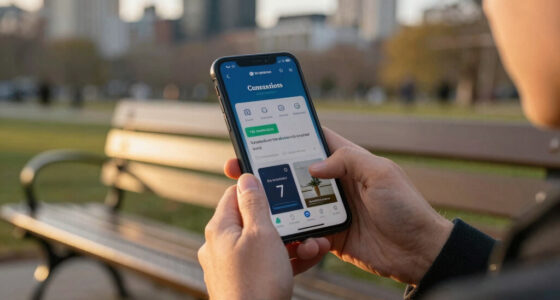
Spatial Focus Room is a new app for Apple Vision Pro that creates immersive environments to eliminate distractions during deep work sessions. It replaces traditional timers by physically removing distractions, aiming to improve focus and productivity. The app logs sessions, tracks progress, and offers customizable environments to foster concentration.
Apple has introduced Spatial Focus Room, a deep-work application designed exclusively for the Apple Vision Pro headset. The app aims to eliminate distractions by immersing users in virtual environments that remove all external interruptions, marking a shift from traditional focus tools that rely on willpower and digital restrictions. This development highlights a new approach to attention management, leveraging immersive technology to create distraction-free zones for deep work.
Spatial Focus Room offers three distinct environments—CalmBeach, Rainforest, and DeepSpace—each designed to foster concentration through visual and auditory cues. When a user starts a session, the physical world is replaced or overlaid with these environments, making external distractions physically unavailable or less perceptible. The app supports two modes: fully immersive, where the environment replaces the real world entirely, and passthrough, where the real desk remains visible with ambient audio and a floating timer. This design aims to shift focus from resisting distractions to removing them entirely, addressing a core flaw in phone-based focus tools.
The app logs session data, including duration, location, and task, and tracks progress over time with streaks and cumulative focus hours. Users can attach specific tasks to sessions, enhancing accountability and turning deep work into a habit. The environments are procedurally generated, ensuring consistency and cost-effectiveness, with audio cues that become Pavlovian triggers for focus. The developers emphasize that this approach transforms focus from an effortful attempt into a default state within the virtual environment.
Make Distraction Impossible
We protect deep work with a timer that lives on the same glowing rectangle holding every feed and notification engineered to pull us out. Spatial Focus Room’s premise: the most reliable way to remove a distraction is to make it physically unavailable — and a headset is the first device that can.
A phone can tell you that you got distracted. A headset can make distraction impossible.
Each is a seamless 360° skybox + a 60-second ambient loop that masks your real room and becomes a cue: “focus starts now.” None of it is licensed stock — every skybox and soundscape is generated procedurally, so the catalog is cheap to expand.
Intent, attached to every session: name one concrete task and it floats in view inside the immersive space. Twenty-five minutes against one named thing — checked off and logged when the session ends. A calm environment becomes accountable deep work.
and becomes a place you go.
Independent commentary, produced with AI assistance under human editorial oversight. The views are the author’s own and may change. This describes a product’s design, features, and business rationale — not business, financial, legal, technical, or medical advice; cost and retention figures are the product’s own framing, not independently verified. Spatial Focus Room is a forthcoming app for Apple Vision Pro (visionOS 26); described features, pricing, and availability are stated by the product and may change. Names are trademarks of their respective owners; mention does not imply endorsement.
Why Removing Distractions with Virtual Environments Matters
This development could significantly impact productivity practices by shifting focus protection from digital restrictions to environmental design. By physically removing distractions, Spatial Focus Room may reduce the mental effort required to maintain concentration, potentially increasing deep work sessions and overall output. The use of immersive environments also introduces a new paradigm where focus becomes a default state, not a contested effort, which could influence how future workspaces and digital tools are designed. However, it remains to be seen how well this technology integrates into daily routines and whether users find it sustainable over time.
As an affiliate, we earn on qualifying purchases.
The Evolution of Focus Tools and Immersive Tech
Traditional focus tools, such as timers and app blockers, ask users to resist distractions from their devices, often failing because they do not address the environment around them. Recent advances in virtual and augmented reality have opened new possibilities for creating controlled environments. Apple Vision Pro, announced in 2023, represents a significant step in consumer immersive technology, with applications extending beyond entertainment to productivity. Spatial Focus Room builds on this trend, offering a dedicated solution for deep work that leverages the headset’s immersive capabilities. Prior efforts in digital focus management have struggled with limited effectiveness, making this new approach noteworthy as it physically isolates the user from external interruptions.
“The most reliable way to remove a distraction is to make it physically unavailable, and a headset is the first consumer device capable of doing that.”
— Thorsten Meyer, creator of the concept
Unanswered Questions About Practical Use and Adoption
It remains unclear how users will adopt and integrate Spatial Focus Room into daily routines over the long term. Questions persist about the cost, accessibility, and whether the immersive environments will be effective for all types of work or only specific tasks. Additionally, the impact on mental fatigue and potential for overuse of immersive environments are still unexamined, and real-world testing will be required to assess sustained effectiveness and user acceptance.
Next Steps for Deployment and User Feedback
Following the announcement, the developers plan to release the app to select users for beta testing, gathering feedback on usability, effectiveness, and integration into daily workflows. Broader rollout is expected later in 2024, with ongoing updates to environment customization and session tracking features. Monitoring user experiences will be critical to understanding the real-world impact of this immersive focus approach and refining the product accordingly.
Key Questions
How does Spatial Focus Room differ from traditional focus apps?
Unlike apps that rely on timers or digital restrictions, Spatial Focus Room physically immerses users in distraction-free environments, removing external interruptions by design within the headset.
Can users still see their real environment while using the app?
Yes, in passthrough mode, users can keep their real desk visible with ambient audio, allowing a balance between immersion and situational awareness.
Is this technology suitable for all types of work?
It is designed primarily for deep, focused tasks that benefit from distraction-free environments. Its effectiveness for collaborative or dynamic work remains to be tested.
When will the app be available to the public?
A broader release is expected later in 2024 after beta testing and refinement based on initial user feedback.
Are there concerns about overuse or mental fatigue?
These issues are still under investigation, and long-term effects of immersive focus environments are not yet fully understood.
Source: ThorstenMeyerAI.com