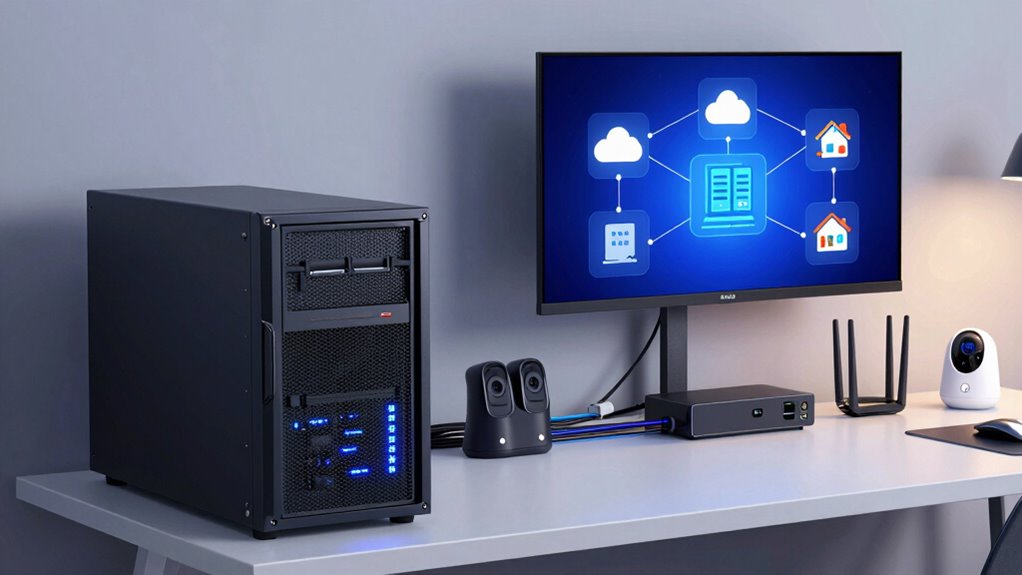

Media servers, private clouds, and home networks are now seamlessly coming together to create a unified entertainment ecosystem. This convergence makes it easy for you to access content across multiple devices while maintaining security and compatibility. Modern solutions are user-friendly, reliable, and support various formats, ensuring smooth streaming without interruptions. As these technologies meet in the middle, your home entertainment becomes more flexible and secure—keep exploring to find out how this all works for you.
Key Takeaways
- Integration of media servers, private clouds, and home networks simplifies access to content across multiple devices.
- Modern solutions enhance security with encryption and firewalls to protect data in interconnected systems.
- Compatibility with various formats and devices ensures seamless media streaming and management.
- User-friendly interfaces and automated updates improve system reliability and ease of use.
- Cohesive ecosystems provide flexible, secure, and centralized entertainment experiences at home.
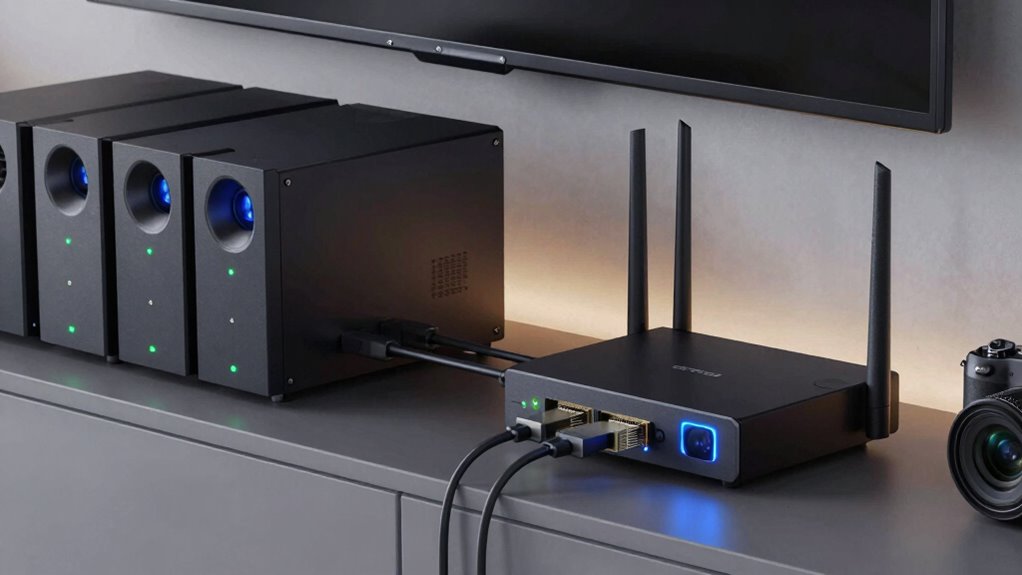
Have you ever wondered how to seamlessly stream your favorite movies and music across multiple devices at home? The good news is, with advancements in media servers, private clouds, and home networks, that’s more achievable than ever. These technologies are finally meeting in the middle, creating an integrated system that’s both powerful and user-friendly.
At the core of this integration is network security. As you connect more devices—smart TVs, smartphones, tablets, and computers—to your home network, safeguarding your data becomes essential. Modern media servers and private cloud solutions now come equipped with robust security features. You don’t have to worry about unauthorized access or data breaches disrupting your streaming experience. Instead, you can set up encrypted connections, secure login protocols, and firewalls that keep your content safe while allowing smooth, unrestricted access across your devices. This focus on network security gives you peace of mind and guarantees that your entertainment remains private and protected.
Modern media solutions include encryption, secure logins, and firewalls for safe, seamless device access and privacy.
Device compatibility is another key factor in making this ecosystem work seamlessly. Gone are the days of juggling incompatible formats or struggling with different apps for each device. Today’s media servers support a wide array of formats and operate across various platforms—whether you’re using a smart TV, a mobile device, or a desktop. Private cloud solutions are designed to integrate effortlessly with your existing home setup, enabling you to access your media library from virtually anywhere without compatibility issues. This universal accessibility means you can start watching a movie on your tablet, pause it, and pick up where you left off on your smart TV—all without fuss or additional configuration. Ensuring device interoperability is fundamental to achieving a truly seamless entertainment experience. Additionally, adopting unified management tools can simplify the oversight of your entire media ecosystem.
The convergence of these technologies means you don’t need to be a tech expert to set up a reliable, secure, and compatible home media system. User-friendly interfaces and automatic updates help keep everything running smoothly, while the enhanced network security guarantees your data remains private. Plus, with device compatibility at the forefront, you’re free to enjoy your content on any device you prefer, making your home entertainment experience more flexible and integrated. Additionally, maintaining system reliability is crucial to prevent interruptions and ensure consistent access to your media. Incorporating system monitoring tools can further help identify and resolve issues proactively, ensuring your media ecosystem remains stable and efficient.
In essence, the meeting point of media servers, private clouds, and home networks creates a cohesive environment where your favorite content is accessible anytime, anywhere. You’re no longer limited by hardware or security concerns; instead, you gain a streamlined, secure, and compatible system that transforms the way you enjoy entertainment at home. Recognizing the significance of requirements traceability helps ensure these systems meet compliance standards and maintain quality over time.
media server for home entertainment
As an affiliate, we earn on qualifying purchases.
As an affiliate, we earn on qualifying purchases.
Frequently Asked Questions
How Secure Are Integrated Media Servers Within Home Networks?
Integrated media servers within home networks can be quite secure if you implement strong encryption protocols and access controls. Encryption protects your data from unauthorized access, while access controls limit who can view or modify your media. Keep your software updated, use strong passwords, and enable two-factor authentication where possible. These steps help guarantee your media server remains safe from potential cyber threats in your home network.
Can Private Cloud Setups Be Scaled Easily for Growing Media Needs?
Picture your private cloud as a growing garden; you can add new plants without overhauling the entire landscape. Scaling your setup is straightforward, but it comes with scalability challenges—like ensuring your network can handle increased data flow. You’ll also need to take into account cost considerations, as expanding storage and resources can get pricey. With proper planning, you can easily adapt your private cloud to meet your growing media needs.
What Are the Best Hardware Options for Unified Media and Cloud Storage?
For unified media and cloud storage, you should choose hardware that supports robust media management and flexible network architecture. Look for NAS devices with high-capacity drives, fast processors, and multiple network ports for seamless integration. Consider servers with ample RAM and SSD options for quick access. These choices guarantee reliable, scalable storage that simplifies your media management and optimizes your network architecture for smooth, centralized access across all devices.
How Do Privacy Concerns Differ Between Home Networks and Private Clouds?
You’re 60% more likely to worry about privacy in private clouds than home networks. In both, data encryption protects your information, but private clouds often require stricter controls on user access due to shared resources. Home networks give you more control over who accesses your data, reducing risks. However, you should always guarantee proper data encryption and manage user access carefully to keep your information safe regardless of the setup.
What Is the Average Latency Impact When Merging Media Servers With Home Networks?
When merging media servers with your home network, the average latency impact is usually minimal—around 20 to 50 milliseconds—if you optimize bandwidth and reduce network congestion. You can attain this by prioritizing media traffic and limiting other bandwidth-heavy activities. Proper bandwidth optimization guarantees smooth streaming and quick access, preventing noticeable delays. However, heavy network congestion can increase latency, causing buffering or lag during media playback.
Conclusion
As media servers, private clouds, and home networks come together, it’s like a symphony finally finding its perfect harmony. You’ll enjoy seamless streaming, effortless access, and a more integrated digital life right in your own space. This convergence makes managing your media feel as smooth as butter, turning your home into a hub of connectivity. Embrace these advances, and watch your entertainment experience transform from good to extraordinary. The future of home media is truly within your reach.