
If you’re seeking the best 100GbE network cards for 2026, I recommend considering options with Intel E810-CAM2 and Mellanox ConnectX controllers, like the ConnectX-6 Dx and Ex models. These are known for high speeds, reliability, and advanced features like RDMA and overlay protocol support. Look for cards with PCIe 4.0 interfaces and QSFP28 ports to future-proof your setup. Staying informed about the latest models will help you pick the right choice for your needs.
Key Takeaways
- Prioritize cards supporting PCIe 4.0 or higher for maximum bandwidth and future scalability.
- Ensure compatibility with high-speed optics, DACs, or AOCs for reliable 100GbE connections.
- Select models with advanced offloading features like RDMA, Jumbo Frames, and protocol support for optimal performance.
- Consider reputable brands like Intel and Mellanox for proven reliability and comprehensive enterprise support.
- Focus on modular, upgradeable cards with multi-port options to accommodate growing data center and cloud demands.
| 100GbE Network Card with Intel E810-CAM2 Controller | 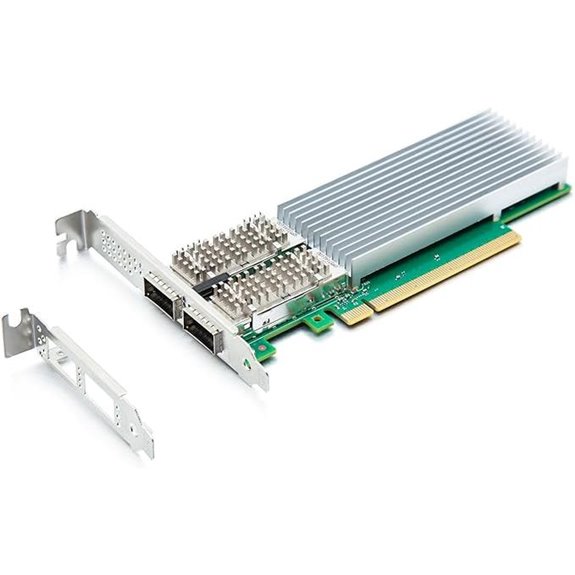 | High-Performance Converged | Interface Type: PCIe 4.0 x16 | Data Rate Support: Up to 100GbE | Protocol Support: RDMA, iSCSI, Jumbo Frames | VIEW LATEST PRICE | See Our Full Breakdown |
| Vogzone 100Gb PCIe NIC Ethernet Adapter |  | Enterprise Ready | Interface Type: PCIe v4.0 x16 | Data Rate Support: Up to 100GbE | Protocol Support: RDMA, iSCSI, NVMe-oF | VIEW LATEST PRICE | See Our Full Breakdown |
| GLOTRENDS 2-Port 100Gb QSFP56 Ethernet Network Card | 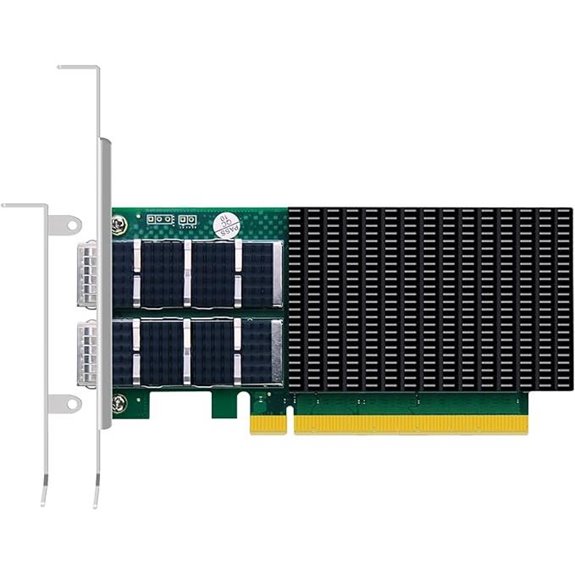 | Data Center Powerhouse | Interface Type: PCIe 4.0 x16 | Data Rate Support: Up to 100GbE | Protocol Support: RoCE, NVMe, VXLAN, GENEVE | VIEW LATEST PRICE | See Our Full Breakdown |
| OCP3.0 100GbE Ethernet Network Card for Intel | 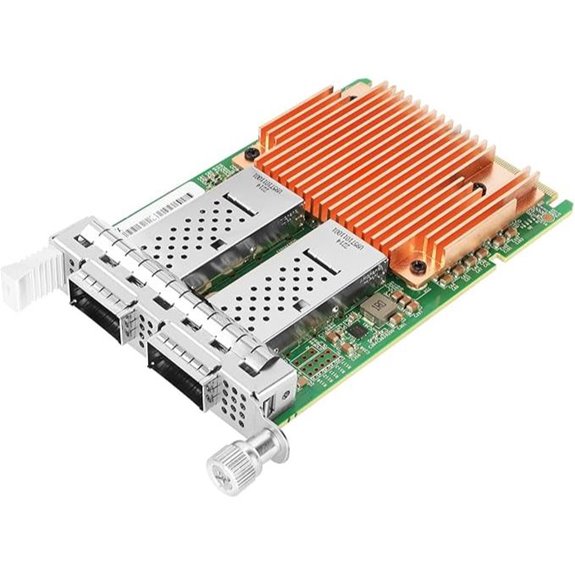 | Cloud-Optimized | Interface Type: PCIe 4.0 x16 | Data Rate Support: 10GbE to 100GbE | Protocol Support: RDMA, VXLAN, GENEVE, iSCSI | VIEW LATEST PRICE | See Our Full Breakdown |
| 100GbE PCIe Ethernet Adapter with Mellanox ConnectX4 | 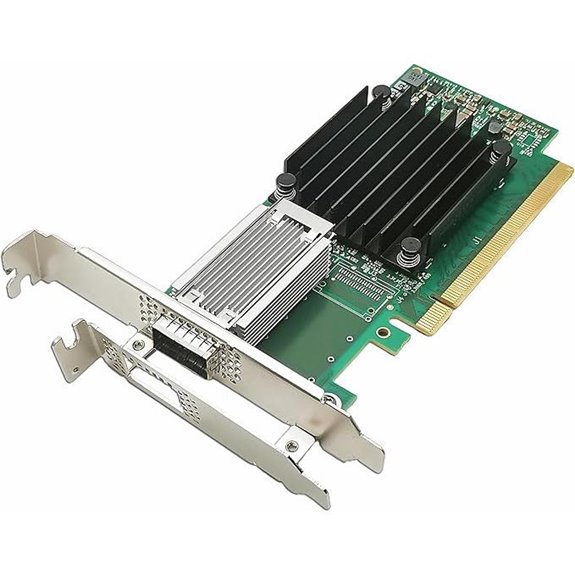 | Versatile Connectivity | Interface Type: PCIe 3.0/4.0 x16 | Data Rate Support: Up to 100GbE | Protocol Support: RDMA, iSCSI, NVMe-oF | VIEW LATEST PRICE | See Our Full Breakdown |
| Vogzone 100GbE NIC Card for Mellanox MCX556A-EDAT | 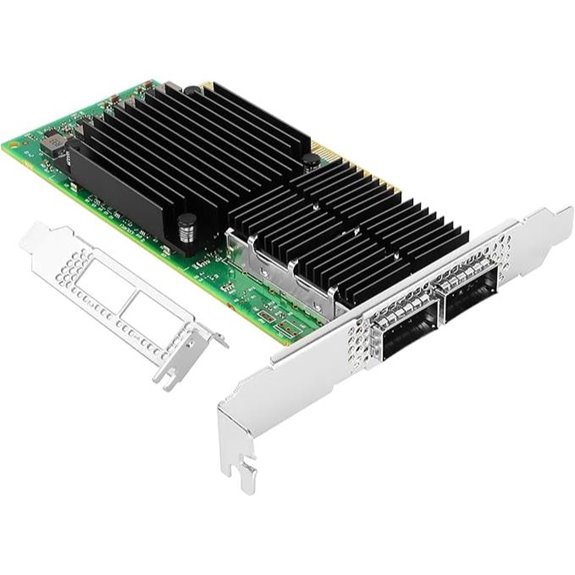 | Advanced Virtualization | Interface Type: PCIe 4.0 x16 | Data Rate Support: Up to 100GbE | Protocol Support: RDMA, iSCSI, NVMe-oF | VIEW LATEST PRICE | See Our Full Breakdown |
| Vogzone 100GbE PCIe Network Card with QSFP28 Port | 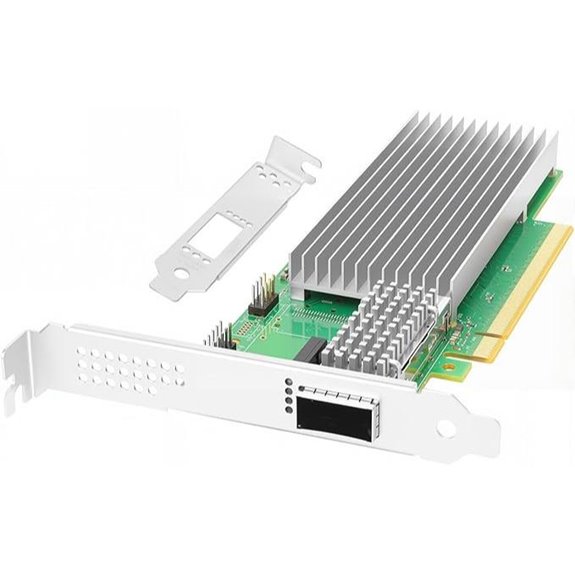 | Scalable Efficiency | Interface Type: PCIe 4.0 x16 | Data Rate Support: Up to 100GbE | Protocol Support: RDMA, iSCSI, PXE | VIEW LATEST PRICE | See Our Full Breakdown |
| 100GbE QSFP28 Network Card with ConnectX-4 Controller | 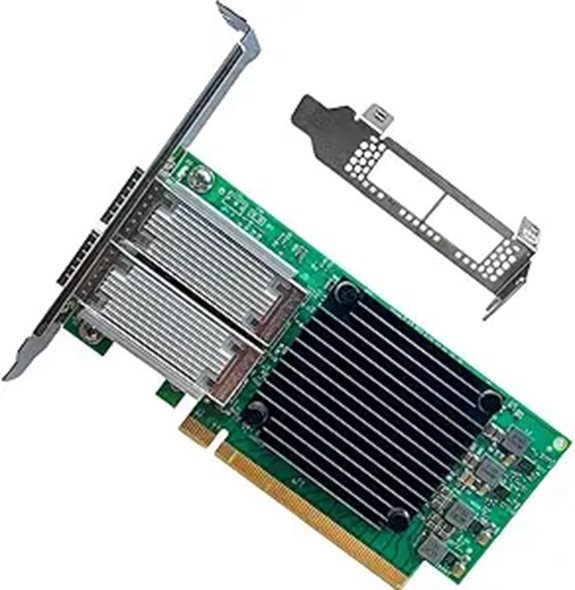 | Low-Latency Leader | Interface Type: PCIe 3.0/4.0 x16 | Data Rate Support: 100GbE/EDR | Protocol Support: RDMA, RoCE, NVMe-oF | VIEW LATEST PRICE | See Our Full Breakdown |
| 100GbE Network Card with Mellanox ConnectX-5 Ex | 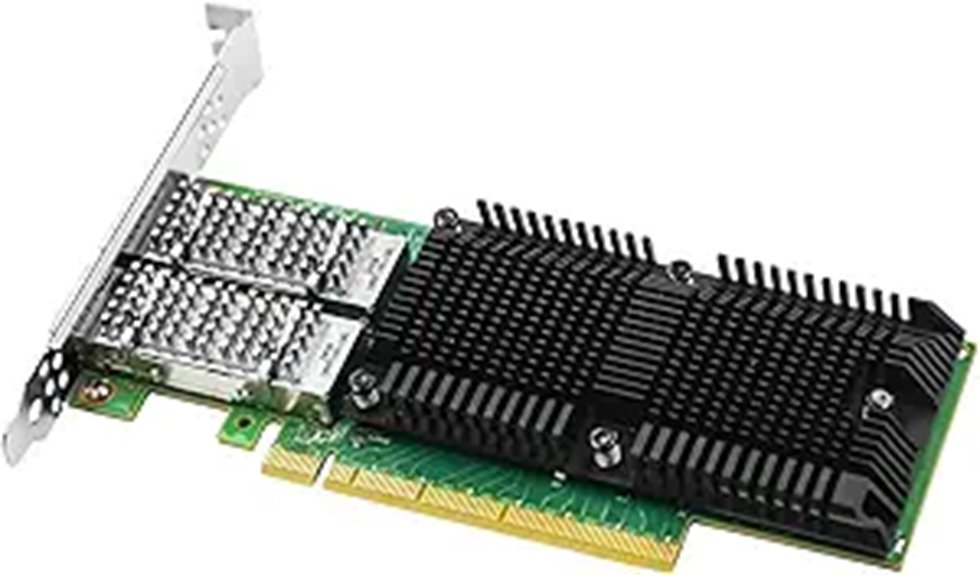 | Premium Speed | Interface Type: PCIe 4.0 x16 | Data Rate Support: Up to 100GbE | Protocol Support: RDMA, iSCSI, NVMe | VIEW LATEST PRICE | See Our Full Breakdown |
More Details on Our Top Picks
100GbE Network Card with Intel E810-CAM2 Controller
If you’re looking for a high-performance network card that can handle demanding data center workloads, the GbE Network Card with Intel E810-CAM2 Controller is an excellent choice. It offers dual QSFP28 ports supporting speeds up to 100GbE, making it perfect for high-speed data transfer. With a PCIe 4.0 x16 interface, it provides ideal bandwidth for intensive applications. This card supports advanced features like RDMA, Jumbo Frames, iSCSI, and SR-IOV, ensuring low latency and high throughput. Compatibility with major operating systems, including Windows, Linux, and VMware, makes it versatile for various enterprise environments. This network card truly elevates data center networking performance.
- Interface Type:PCIe 4.0 x16
- Data Rate Support:Up to 100GbE
- Protocol Support:RDMA, iSCSI, Jumbo Frames
- Virtualization Support:SR-IOV, DPDK
- Supported Operating Systems:Windows Server 2016/2019/2022, Linux, VMware
- Form Factor Compatibility:PCIe x16
- Additional Feature:Supports PXE boot
- Additional Feature:Jumbo Frames support
- Additional Feature:WOL not supported
Vogzone 100Gb PCIe NIC Ethernet Adapter
Looking for a high-performance network card that can handle demanding data center workloads? The Vogzone 100Gb PCIe NIC Ethernet Adapter delivers with dual QSFP28 ports supporting up to 100GbE speeds, ideal for scalable, high-bandwidth environments. Equipped with the Intel E810-CAM2 controller, it boosts server stability and supports virtualization features like SR-IOV and VMDq. Its PCIe v4.0 x16 interface ensures fast data transfer, while compatibility spans Windows, Linux, VMware, and more. With advanced traffic management, QoS, and RDMA support, this card is built for reliable, efficient network operations in enterprise settings. It’s a smart choice for future-proof data center upgrades.
- Interface Type:PCIe v4.0 x16
- Data Rate Support:Up to 100GbE
- Protocol Support:RDMA, iSCSI, NVMe-oF
- Virtualization Support:PCI-SIG SR-IOV, VMDq
- Supported Operating Systems:Windows, Linux, VMware, FreeBSD
- Form Factor Compatibility:PCIe x16
- Additional Feature:Supports Traffic Management
- Additional Feature:On-chip QoS features
- Additional Feature:Supports Auto-MDIX
GLOTRENDS 2-Port 100Gb QSFP56 Ethernet Network Card
The GLOTRENDS 2-Port 100Gb QSFP56 Ethernet Network Card is an ideal choice for data centers and high-performance computing environments that demand maximum bandwidth and low latency. Equipped with the Mellanox ConnectX-6 Dx Controller, it supports data rates up to 100 GbE and features a PCIe 4.0 x16 interface for high-speed connectivity. It offers dual 100Gb Ethernet ports with RDMA over Converged Ethernet (RoCE) and hardware offloads for overlay protocols like VXLAN, NVGRE, and GENEVE, enabling fast, efficient networking. Additionally, it supports virtualization with up to 1,000 virtual functions per port, making it perfect for cloud-native and storage-intensive applications.
- Interface Type:PCIe 4.0 x16
- Data Rate Support:Up to 100GbE
- Protocol Support:RoCE, NVMe, VXLAN, GENEVE
- Virtualization Support:Virtual functions, SR-IOV
- Supported Operating Systems:Windows, Linux, VMware, FreeBSD
- Form Factor Compatibility:PCIe 4.0 x16
- Additional Feature:Overlay Network Support
- Additional Feature:Virtual Functions per Port
- Additional Feature:Storage Offloads Supported
OCP3.0 100GbE Ethernet Network Card for Intel
For demanding cloud workloads like edge services, web servers, and large-scale storage, the OCP3.0 100GbE Ethernet Network Card for Intel stands out as an ideal choice due to its high data rate and broad compatibility. It features the Intel E810 chip with dual QSFP28 ports supporting 100GbE, along with support for Windows, Linux, VMware, and FreeBSD. Its PCIe 4.0 x16 interface ensures fast data transfer, and its hot-swappable design simplifies maintenance. With advanced features like RDMA, SR-IOV, VxLAN, and extensive management options, this card boosts network performance and reliability, making it perfect for high-demand cloud environments.
- Interface Type:PCIe 4.0 x16
- Data Rate Support:10GbE to 100GbE
- Protocol Support:RDMA, VXLAN, GENEVE, iSCSI
- Virtualization Support:SR-IOV, VxLAN, GENEVE
- Supported Operating Systems:Windows, Linux, VMware, FreeBSD
- Form Factor Compatibility:PCIe 4.0 x16 (OCP 3.0 form factor)
- Additional Feature:Hot-swappable design
- Additional Feature:Supports VxLAN/GRE
- Additional Feature:LED Activity Indicators
100GbE PCIe Ethernet Adapter with Mellanox ConnectX4
If you’re seeking a high-performance network solution capable of handling demanding data center or HPC workloads, the Mellanox ConnectX4 MCX455A-ECAT is an excellent choice. This 100GbE PCIe x16 adapter supports Ethernet and InfiniBand protocols, offering low-latency, high throughput, and advanced technologies like RDMA and RoCE. With a single QSFP28 port, it connects via DACs, AOCs, or transceivers for speeds up to 100GbE. Compatible with PCIe 3.0 and various operating systems, it’s ideal for data centers, servers, and HPC environments. Its flexibility and robust feature set make it a reliable, future-proof option for demanding network infrastructures.
- Interface Type:PCIe 3.0/4.0 x16
- Data Rate Support:Up to 100GbE
- Protocol Support:RDMA, iSCSI, NVMe-oF
- Virtualization Support:SR-IOV, Virtual functions
- Supported Operating Systems:Windows, Linux, VMware, FreeBSD
- Form Factor Compatibility:PCIe 3.0/4.0 x16
- Additional Feature:Supports InfiniBand protocols
- Additional Feature:GPU Direct Support
- Additional Feature:Supports Jumbo Frames
Vogzone 100GbE NIC Card for Mellanox MCX556A-EDAT
Designed for data centers demanding maximum throughput, the Vogzone 100GbE NIC Card for Mellanox MCX556A-EDAT offers high-performance networking with dual QSFP28 ports supporting up to 100GbE speeds. It features a PCIe 4.0 x16 interface and Mellanox ConnectX-5 Ex chipset, delivering low latency (750ns) and impressive throughput with up to 200 million messages per second. Supporting a range of Ethernet speeds from 10GbE to 100GbE, along with Infiniband technologies, it’s compatible with various operating systems like Linux, Windows, VMware, and more. Its advanced features include RDMA, SR-IOV virtualization, and offloading via ASAP², making it ideal for demanding data centers.
- Interface Type:PCIe 4.0 x16
- Data Rate Support:Up to 100GbE
- Protocol Support:RDMA, iSCSI, NVMe-oF
- Virtualization Support:SR-IOV, Virtualization
- Supported Operating Systems:Windows, Linux, VMware, FreeBSD
- Form Factor Compatibility:PCIe 4.0 x16
- Additional Feature:Supports ASAP² Offloading
- Additional Feature:Supports iPXE Boot
- Additional Feature:750ns Latency
Vogzone 100GbE PCIe Network Card with QSFP28 Port
The Vogzone 100GbE PCIe Network Card with QSFP28 port is an ideal choice for data centers that require ultra-high-speed connectivity and flexible networking options. It features the Intel E810-CAM1 controller, supporting data rates from 10GbE up to 100GbE via a single QSFP28 port. Compatible with PCIe v4.0 x16 and 3.0, it ensures fast, reliable performance. Designed for demanding environments, it supports RDMA, RoCEv2, and advanced offloading features like TCP checksum offloading and jumbo frames. Its broad compatibility with Windows, Linux, FreeBSD, and VMware makes it adaptable for various server setups, delivering efficient data handling and virtualization.
- Interface Type:PCIe 4.0 x16
- Data Rate Support:Up to 100GbE
- Protocol Support:RDMA, iSCSI, PXE
- Virtualization Support:SR-IOV, Virtual functions
- Supported Operating Systems:Windows, Linux, VMware, UEFI
- Form Factor Compatibility:PCIe x16
- Additional Feature:Supports PCIe 4.0
- Additional Feature:Supports Multiple Protocols
- Additional Feature:Includes Low-Profile Bracket
100GbE QSFP28 Network Card with ConnectX-4 Controller
For high-performance data centers and enterprise environments demanding ultra-low latency and massive bandwidth, the GbE QSFP28 Network Card with ConnectX-4 Controller stands out as an ideal solution. It offers dual QSFP28 ports supporting 100GbE and EDR, suitable for AI, HPC clusters, NVMe-oF storage, and low-latency leaf-spine networks. Compatible with PCIe 3.0 x16, it includes features like RDMA, RoCEv2, SR-IOV, and GPU Direct, optimizing data transfer and virtualization. Designed for scalability and reliability, this card supports various optics and modules, making it a versatile choice for demanding, high-speed networking environments.
- Interface Type:PCIe 3.0/4.0 x16
- Data Rate Support:100GbE/EDR
- Protocol Support:RDMA, RoCE, NVMe-oF
- Virtualization Support:SR-IOV, GPU Direct
- Supported Operating Systems:Windows, Linux, VMware, FreeBSD
- Form Factor Compatibility:PCIe 3.0 x16
- Additional Feature:Supports GPU Direct
- Additional Feature:Supports SR-IOV
- Additional Feature:For HPC Clusters
100GbE Network Card with Mellanox ConnectX-5 Ex
If you’re seeking ultra-fast data transfer capabilities, the 100GbE Network Card with Mellanox ConnectX-5 Ex is an ideal choice. It features dual 100G SFP+ ports and leverages the powerful Mellanox ConnectX-5 Ex chipset, delivering high performance and low latency for demanding workloads. Its PCIe 4.0 x16 interface ensures maximum bandwidth, while support for technologies like RDMA, SR-IOV, Jumbo Frames, and NVMe-oF makes it versatile for data centers and enterprise environments. Compatible with various operating systems, it’s designed for easy deployment in standard or low-profile servers. Plus, with extensive customer support and warranty options, it offers both speed and peace of mind.
- Interface Type:PCIe 4.0 x16
- Data Rate Support:Up to 100GbE
- Protocol Support:RDMA, iSCSI, NVMe
- Virtualization Support:SR-IOV, DPDK
- Supported Operating Systems:Windows, Linux, VMware, FreeBSD
- Form Factor Compatibility:PCIe 4.0 x16
- Additional Feature:Supports IEEE 1588
- Additional Feature:Supports Multiple OS
- Additional Feature:Dual 100G SFP+ Ports
Factors to Consider When Choosing a Network Card 100GBE
When choosing a 100GbE network card, I focus on ensuring it’s compatible with my system and supports the necessary protocols and features. I also consider data transfer speeds, physical interface types, and whether it fits the specific needs of my network environment. Picking the right card means balancing these factors for *best* performance and integration.
Compatibility With Systems
Choosing a compatible network card 100GbE requires careful attention to your system’s specific hardware and software environment. First, make certain the card supports your operating system, whether it’s Windows, Linux, or VMware. Next, verify that the PCIe interface version (like PCIe 4.0) matches your motherboard’s slot capabilities for maximum performance. It’s also essential to confirm the card’s physical form factor—full-height or low-profile—to ensure it fits your chassis. Additionally, check compatibility with your existing network infrastructure, including transceivers, DACs, or optics if you’re using QSFP28 ports. Finally, make sure the card’s protocol support, such as RDMA, RoCE, or iSCSI, aligns with your system’s networking and storage needs. Proper compatibility guarantees optimal performance and seamless integration.
Supported Protocols and Features
Are you ensuring your 100GbE network card supports essential protocols and features to meet your performance and flexibility needs? It’s crucial to verify support for key protocols like iSCSI, FCoE, RDMA, and NVMe over Fabrics, which enable versatile storage and data transfer options. Additionally, check if the card supports virtualization technologies such as SR-IOV and VMDq, allowing efficient resource sharing and network segmentation. Advanced features like Jumbo Frames, DPDK, and Traffic Management optimize throughput and reduce latency. Compatibility with overlay network protocols like VXLAN, NVGRE, and GENEVE is vital for scalable cloud and multi-tenant environments. Lastly, ensure the card can offload tasks such as TCP checksum, segmentation, and protocol processing to lower CPU load and boost overall efficiency.
Data Transfer Speeds
Achieving maximum data transfer speeds with a 100GbE network card depends on several key factors beyond just its rated speed. While these cards can theoretically transfer data at 100 gigabits per second, real-world performance often falls short due to system bottlenecks, protocol overhead, and hardware compatibility issues. Using dual-port cards can boost throughput through bandwidth aggregation, depending on network setup. Supporting advanced offloading features like RDMA and TCP checksum offload helps optimize speed by reducing CPU load and processing delays. Additionally, the choice of cabling and transceivers—such as QSFP28 optics or direct attach cables—directly impacts the effective transfer rate. Paying attention to these factors ensures you get the highest possible speeds from your 100GbE network card in practical applications.
Physical Interface Types
The physical interface type plays a crucial role in how a 100GbE network card connects to your server or device, affecting compatibility, performance, and expandability. PCIe interfaces are common for internal connections, with PCIe 3.0 and 4.0 offering different bandwidths to support high-speed data transfer. QSFP28 ports enable high-speed connections through optical modules, DACs, or AOCs, ideal for 100GbE and beyond. OCP form factors are designed for modular, hot-swappable cards, primarily used in data centers for easy maintenance and scalability. The choice of interface impacts what kind of cabling or transceivers you’ll need and how well the card integrates with your existing infrastructure. Selecting the right physical interface ensures essential performance and future-proofing for your network setup.
Network Environment Needs
When selecting a 100GbE network card, understanding your specific network environment is key. First, I assess whether my current infrastructure supports 100GbE speeds and compatible cabling or optics. It’s crucial to match the card’s capabilities with application bandwidth needs, especially during peak data transfers. If I require low latency for real-time processing or virtualization, I prioritize features that minimize delays. I also consider the number of ports needed—single or dual—based on redundancy and future growth plans. Additionally, I verify that the card’s protocol support and offloading features align with my existing network protocols and management tools. By thoroughly evaluating these factors, I guarantee the chosen network card integrates seamlessly and meets the demands of my environment.
Future Scalability Options
To guarantee my network remains future-proof, I need to select a 100GbE network card that supports higher data rates and evolving standards. I look for cards with modular or upgradeable components, like replaceable transceivers or firmware, so I can adapt as technology advances. Compatibility with upcoming network protocols and hardware is essential to avoid obsolescence. I also consider scalability features such as multiple ports or link aggregation, which allow me to expand my network as demands grow. Additionally, choosing hardware that complies with future-proof standards like PCIe 4.0 or higher ensures maximum bandwidth and transfer speeds over time. This approach helps me future-proof my investment and ensures my network can evolve seamlessly with technology developments.
Frequently Asked Questions
How Does 100GBE Impact Data Center Energy Consumption?
I believe 100GbE impacts data center energy consumption substantially, mainly because higher speeds require more power for processing and data transfer. However, modern 100GbE cards are designed to be energy-efficient, reducing overall power use. While they do consume more than lower-speed cards, advancements in hardware and cooling help mitigate the impact. Overall, I think smart infrastructure planning can balance performance benefits with energy efficiency effectively.
Are There Compatibility Issues With Existing Server Hardware?
I’ve found that compatibility can be a concern, but it’s often manageable. I always double-check the server’s motherboard and PCIe slot specs before upgrading. Many newer 100GbE cards are designed to fit standard slots and support common protocols, reducing issues. Still, I recommend consulting the manufacturer’s documentation or a professional to guarantee seamless integration, avoiding costly surprises and ensuring peak performance.
What Is the Typical Lifespan of a High-Speed 100GBE Network Card?
A high-speed 100GbE network card typically lasts around 3 to 5 years, depending on usage and environment. I’ve found that frequent data transfers and operating in demanding conditions can shorten its lifespan. Regular firmware updates and proper cooling help extend its longevity. When it starts showing signs of performance decline or frequent errors, it’s probably time to contemplate a replacement to maintain reliable network speeds.
How Do Different Cooling Solutions Affect 100GBE Card Performance?
Cooling solutions greatly influence a 100GbE card’s performance. Effective cooling prevents overheating, maintaining ideal speeds and reducing thermal throttling. I’ve found that air cooling is usually sufficient, but liquid cooling offers better temperature management for intense workloads. Proper cooling also extends the card’s lifespan and guarantees reliable operation. So, investing in the right cooling method is essential for maximizing performance and longevity of high-speed network cards.
Can 100GBE Cards Support Future Network Upgrades Seamlessly?
Think of a 100GbE card like a versatile vehicle ready for future highways—it’s built with modular components and adaptable firmware. I believe these cards can support future network upgrades seamlessly because manufacturers are designing them with scalability in mind. As technology evolves, these cards can often be upgraded or configured to handle new standards, ensuring they stay relevant and reliable on the road ahead.
Conclusion
Choosing the right 100GbE network card is like assembling a finely tuned orchestra — each component must harmonize for peak performance. Whether you prioritize speed, reliability, or compatibility, there’s a stellar option out there that fits your needs. Don’t settle for a mediocre tune; aim for a symphony of seamless connectivity. With the right card, you’ll turn your network into a powerful, unstoppable force that drives your success forward.