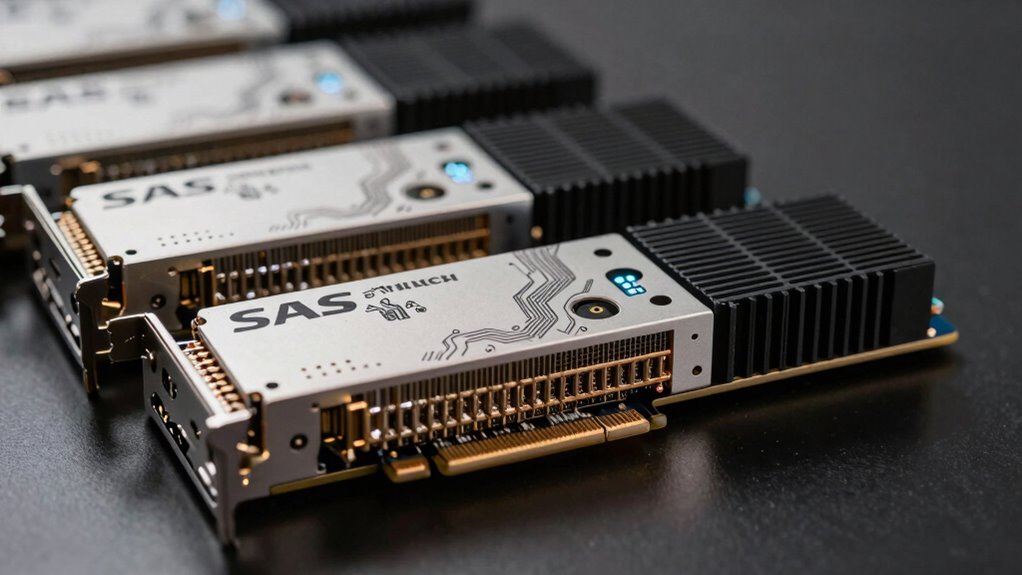
If you’re exploring SAS HBA cards, you’re likely looking for reliable, high-performance options for managing large data storage. The LSI 9300-8i Controller HBA Card stands out as the best overall choice, offering excellent balance between speed and compatibility. The 10Gtek 12G Internal PCIe SAS/SATA HBA Controller is a strong pick for those prioritizing newer technology and higher bandwidth. Meanwhile, for budget-conscious buyers, some models sacrifice advanced features for affordability. The main tradeoffs in this category revolve around performance versus cost, compatibility with existing hardware, and ease of setup. Keep reading for a detailed breakdown of each option to find the best fit for your needs.
Complete the kit



Key Takeaways
- High-performance models like the LSI 9300-8i excel in enterprise environments demanding reliability and speed.
- Compatibility with popular LSI chipsets is common among top picks, simplifying integration with existing servers.
- Bandwidth support varies; newer models like the 12Gtek offer higher transfer speeds, but may come at a premium.
- Ease of setup and firmware support are often overlooked but critical for long-term maintenance.
- Budget options tend to have fewer ports or lower transfer rates, making them suitable for smaller or less demanding setups.
| LSI 9300-8i Controller HBA Card, LSI 3008 SATA SAS Host Bus Adapter |  | Best Overall for High-Speed Enterprise Storage | Chipset: LSI SAS3008 | Firmware Version: P16 (16.00.14.00) | Interface: 2 * SFF-8643 Internal 12Gbps, PCI-e 3.0 x8 | VIEW ON AMAZON | See Our Full Breakdown |
| SAS HBA Card Compatible with LSI 9207 9300-8i IT Mode with SAS Cables |  | Best Value for Budget-Conscious Home Labs | Compatibility: LSI 9207 & 9300-8i | Controller: SAS3008 | Mode: IT Mode (Non-RAID) | VIEW ON AMAZON | See Our Full Breakdown |
| SAS HBA Card Compatible with LSI 9211-8i & 9300-8i IT Mode with SATA Cables |  | Best for NAS and Home Storage Solutions | Controller: SAS3008 | Firmware: HBA IT Mode (Non-RAID) | Data Transfer Rate: up to 12Gbps SAS | VIEW ON AMAZON | See Our Full Breakdown |
| 10Gtek 12G Internal PCIe SAS/SATA HBA Controller Card with Broadcom SAS3008 Chipset |  | Best for RAID-Enabled High-Performance Storage | Interface: PCIe 3.0 x8 | Data Transfer Rate: 12Gbps | Ports: 2 MiniSAS SFF-8643 | VIEW ON AMAZON | See Our Full Breakdown |
| SAS HBA Card Compatible with LSI 9300-8i & D3307 IT Mode HBA Controller |  | Best for Direct-Attach NAS and ZFS Storage | Controller: LSI SAS3008 | Firmware: HBA IT Mode | Data Transfer Rate: SAS 12Gbps | VIEW ON AMAZON | See Our Full Breakdown |
| SAS HBA Card Compatible with LSI 9207 & 9300-8i IT Mode with SAS Cables |  | Best Value for High-Speed, Non-RAID Storage Builds | Controller: LSI/Broadcom SAS3008 | Firmware: HBA IT Mode (Non-RAID) | Data Transfer Rate: up to 12Gbps SAS and SATA 6Gbps | VIEW ON AMAZON | See Our Full Breakdown |
| SAS HBA Card Compatible with LSI 9400-16i IT Mode PCIe SATA Expansion Card |  | Best for High-Density NAS with Flexible Drive Support | Controller: Broadcom SAS3416 12Gb/s Tri-Mode | Data Transfer Rate: up to 12Gbps SAS, 6Gbps SATA | Host Interface: PCIe 3.1 x8 | VIEW ON AMAZON | See Our Full Breakdown |
| LSI 9207-8i Controller HBA Card, LSI 2308 SATA SAS Host Bus Adapter |  | Best for Versatile Non-RAID Storage in Standard Servers | Chipset: LSI SAS2308 | Firmware Version: P20 (20.00.07.00) | Interface: 2 * SFF-8087 internal, PCIe 3.0 x8 | VIEW ON AMAZON | See Our Full Breakdown |
| SAS HBA Card Compatible with LSI 9300-8i IT Mode 8-Port with SATA Cables |  | Best for Home-Lab and NAS Users Needing Easy Drive Connections | Controller: LSI/Broadcom SAS3008 | Firmware: HBA IT Mode (Non-RAID) | Data Transfer Rate: up to 12Gbps SAS and SATA 6Gbps | VIEW ON AMAZON | See Our Full Breakdown |
| sas hba card | Controller | Data Transfer Rate | Host Interface |
|---|---|---|---|
| LSI 9300-8i Controller HBA Car | — | — | — |
| SAS HBA Card Compatible with L | SAS3008 | — | — |
| SAS HBA Card Compatible with L | SAS3008 | up to 12Gbps SAS | PCIe 3.0 x8 |
| 10Gtek 12G Internal PCIe SAS/S | — | 12Gbps | — |
| SAS HBA Card Compatible with L | LSI SAS3008 | SAS 12Gbps | PCIe 3.0 x8 |
| SAS HBA Card Compatible with L | LSI/Broadcom SAS3008 | up to 12Gbps SAS and SATA 6Gbps | PCIe 3.0 x8 |
| SAS HBA Card Compatible with L | Broadcom SAS3416 12Gb/s Tri-Mode | up to 12Gbps SAS, 6Gbps SATA | PCIe 3.1 x8 |
| LSI 9207-8i Controller HBA Car | — | — | — |
| SAS HBA Card Compatible with L | LSI/Broadcom SAS3008 | up to 12Gbps SAS and SATA 6Gbps | PCIe 3.0 x8 |
More Details on Our Top Picks
LSI 9300-8i Controller HBA Card, LSI 3008 SATA SAS Host Bus Adapter
This LSI 9300-8i stands out as the most versatile and high-performing option for enterprise environments, thanks to its support for 12Gbps speeds and compatibility with both full-height and low-profile setups. Unlike the SAS HBA Card Compatible with LSI 9207 9300-8i IT Mode, it offers broader form factor flexibility, which is vital for rack-mounted servers. However, it lacks RAID support, which may limit its use in some configurations. Its support for PCI-e 3.0 x8 ensures compatibility with modern systems, but those with older PCIe slots might face difficulties. This card is ideal for data centers or professional storage setups that prioritize throughput over RAID features.
Pros:- Supports high-speed 12Gbps data transfer
- Compatible with various server configurations
- Includes both full-height and low-profile brackets
Cons:- No RAID support, only IT mode
- Requires PCI-e 3.0 x8 slot, limiting compatibility with older systems
- Limited information on warranty and support
Best for: Enterprise users and data center operators needing high-speed SAS connectivity with flexible form factors
Not ideal for: Home labs or users needing RAID functionality or advanced data management features
- Chipset:LSI SAS3008
- Firmware Version:P16 (16.00.14.00)
- Interface:2 * SFF-8643 Internal 12Gbps, PCI-e 3.0 x8
- Form Factor:Full-height and low-profile brackets
- Connection Type:SATA SAS
Our verdict“This card is best suited for enterprise environments where maximum speed and flexibility are required, and RAID is not necessary.”
SAS HBA Card Compatible with LSI 9207 9300-8i IT Mode with SAS Cables
This SAS HBA card, featuring the SAS3008 controller, is an excellent choice for users setting up home labs or small server environments, especially because it includes two SAS cables for straightforward installation. While the LSI 9300-8i Controller HBA Card offers a more flexible form factor, this model emphasizes affordability and ease of use, making it ideal for those who don’t need enterprise-grade features. Its transfer speeds up to 12Gbps and support for SAS and SATA drives make it versatile, though SATA drives require separate breakout cables, which can add to overall cost. It’s a solid pick for budget-minded users who value straightforward, direct drive passthrough.
Pros:- Supports high-speed SAS and SATA transfer rates
- Includes necessary SAS cables for quick setup
- Compatible with popular storage platforms
Cons:- SATA drives require separate breakout cables
- Limited to SAS drives with included cables
- No RAID support, only IT mode
Best for: Home lab enthusiasts and small business owners needing reliable SAS/SATA connectivity without enterprise features
Not ideal for: Large data centers or users requiring RAID support or hot-swapping capabilities
- Compatibility:LSI 9207 & 9300-8i
- Controller:SAS3008
- Mode:IT Mode (Non-RAID)
- Transfer Speeds:12Gb/s SAS, 6Gb/s SATA
- Interface:PCIe 3.0 x8
- Internal Ports:2 SFF-8643
Our verdict“This pick makes the most sense for budget-conscious users building or expanding small storage systems who need ready-to-go SAS/SATA connectivity.”
SAS HBA Card Compatible with LSI 9211-8i & 9300-8i IT Mode with SATA Cables
This HBA, compatible with both LSI 9300-8i and 9211-8i controllers, offers a flexible solution for NAS and home storage setups, supporting up to 12Gbps SAS and 6Gbps SATA. Compared with the LSI 9300-8i Controller HBA Card, it provides a more affordable option with included SATA cables, making it easier for DIY builders to deploy. Its limitation to 8 drives and additional cables for SAS drives means it’s less suitable for large or high-availability environments. The focus on NAS and ZFS-friendly features makes it ideal for enthusiasts or small-scale deployments, though users should be prepared for some extra cabling and setup work.
Pros:- Supports high-speed SAS and SATA data transfer
- Includes SATA cables for quick installation
- Compatible with popular NAS platforms like FreeNAS
Cons:- SAS cables sold separately
- Limited to 8 drives directly attached
- Requires additional cables for SAS drives
Best for: Home NAS builders, ZFS users, and hobbyists creating small-scale storage arrays
Not ideal for: Enterprise applications or configurations needing RAID or hot-swap support
- Controller:SAS3008
- Firmware:HBA IT Mode (Non-RAID)
- Data Transfer Rate:up to 12Gbps SAS
- Host Interface:PCIe 3.0 x8
- Internal Connectors:2× Mini-SAS HD SFF-8643
Our verdict“This card offers great value for DIY NAS and home storage projects, especially with its included cables and compatibility with common NAS software.”
10Gtek 12G Internal PCIe SAS/SATA HBA Controller Card with Broadcom SAS3008 Chipset
This 10Gtek controller, equipped with Broadcom SAS3008, supports RAID modes 0, 1, 1E, and 10, making it a strong choice for users needing redundancy and performance. Compared to the SAS HBA Card Compatible with LSI 9207 9300-8i IT Mode, it adds RAID capabilities, which are essential for safeguarding data in critical systems. However, the absence of hot-swapping limits its use in dynamic environments. Its driver support and multiple RAID modes make it well-suited for small to mid-sized servers that require both speed and data protection, but users should be aware of its non-hot-swap limitation and missing advanced features like cache or battery backup.
Pros:- Supports high-speed 12Gbps data transfer
- Includes multiple RAID modes for data protection
- Driver CD included for straightforward setup
Cons:- Hot-swapping not supported
- Requires PCIe 3.0 x8 slot
- Lacks advanced features like cache or BBU
Best for: Small to medium-sized business servers requiring RAID configurations for data redundancy
Not ideal for: Home users or environments that need hot-swapping or enterprise-class features
- Interface:PCIe 3.0 x8
- Data Transfer Rate:12Gbps
- Ports:2 MiniSAS SFF-8643
- Supported RAID Modes:0, 1, 1E, 10
- Hot-swapping:Not supported
Our verdict“This card is geared toward users who need RAID support without sacrificing speed, especially in small business or server environments.”
SAS HBA Card Compatible with LSI 9300-8i & D3307 IT Mode HBA Controller
This LSI 9300-8i compatible HBA offers a straightforward, high-speed SAS 12Gbps connection for direct attach storage solutions like ZFS or FreeNAS. Compared with the LSI 9300-8i Controller HBA Card, it is tailored more towards DIY NAS builders needing a simple, reliable connection for up to 8 drives. Its compatibility with D3307 and other similar controllers expands its usability, but setup can be complex for those unfamiliar with SAS configurations. The lack of RAID and hot-swap support means it’s best for direct-attached, non-redundant setups, making it ideal for advanced home users or enthusiasts focused on data integrity and speed.
Pros:- Supports high-speed SAS 12Gbps transfer
- Compatible with popular NAS controllers
- Supports direct attach with up to 8 drives
Cons:- Requires technical setup for SAS configurations
- Limited to specific controller models
- No RAID or hot-swap features
Best for: DIY NAS builders, ZFS users, and enthusiasts focused on direct-attached storage
Not ideal for: Enterprise environments or users needing hot-swap or RAID features
- Controller:LSI SAS3008
- Firmware:HBA IT Mode
- Data Transfer Rate:SAS 12Gbps
- Host Interface:PCIe 3.0 x8
- Drive Support:Up to 8 drives
Our verdict“This card suits experienced users building direct-attached NAS systems with a focus on speed and data integrity, not redundancy.”
SAS HBA Card Compatible with LSI 9207 & 9300-8i IT Mode with SAS Cables
This SAS HBA card stands out for its support of data transfer speeds up to 12Gbps, making it ideal for those building high-performance storage solutions with ZFS or FreeNAS. Compared to the LSI 9300-8i, it offers direct disk passthrough in IT Mode, providing flexibility for non-RAID setups. However, its cables are only compatible with SAS drives, requiring additional accessories for SATA connections, which adds complexity for less experienced users. Its included SAS cables streamline installation for SAS drives but limit versatility without extra cables. This card is perfect for technical users seeking reliable high-speed connectivity without RAID, but not suited for those needing easy SATA drive integration or plug-and-play simplicity.Pros:- Supports high data transfer rates up to 12Gbps
- Compatible with popular storage solutions like ZFS and FreeNAS
- Includes SAS cables for straightforward SAS drive installation
Cons:- Cables are only compatible with SAS drives, not SATA
- Requires additional cables for SATA drive connections
- Designed primarily for users familiar with server hardware
Best for: Tech-savvy server or NAS builders focused on high-speed SAS drives and non-RAID setups.
Not ideal for: Beginners or home users who prefer plug-and-play solutions with SATA-only support.
- Controller:LSI/Broadcom SAS3008
- Firmware:HBA IT Mode (Non-RAID)
- Data Transfer Rate:up to 12Gbps SAS and SATA 6Gbps
- Host Interface:PCIe 3.0 x8
- Internal Connectors:2× Mini-SAS HD SFF-8643
- Supports:up to 8 drives, expandable via SAS Expander
Our verdict“This card is best suited for experienced users needing high-speed SAS connectivity in server or NAS environments.”
SAS HBA Card Compatible with LSI 9400-16i IT Mode PCIe SATA Expansion Card
This HBA card excels for expanding large storage arrays, supporting up to 16 drives with a Broadcom SAS3416 controller offering tri-mode support for SAS, SATA, and NVMe. It supports speeds up to 12Gbps for SAS and 6Gbps for SATA per lane, making it more versatile than the 9207-8i, which is limited to SAS/SATA without NVMe support. Its four internal ports provide extensive connectivity, but the need for specific cables and its technical complexity make it less suitable for beginners. Unlike the 9207-8i, it supports NVMe drives, appealing to high-performance setups but requiring more advanced installation. This card fits well for large-scale NAS projects or data centers where drive flexibility and density are priorities, but it might overwhelm users seeking simple, straightforward hardware.Pros:- Supports up to 16 drives with high-speed connectivity
- Tri-mode controller supporting SAS, SATA, and NVMe
- Excellent for high-density storage solutions
Cons:- Cables and drives are not included, increasing setup complexity
- Requires technical expertise for proper installation
- Limited compatibility with older systems lacking PCIe 3.1 x8 slots
Best for: Storage professionals or enthusiasts building large NAS systems with mixed drive types and high throughput needs.
Not ideal for: Home users or hobbyists who prioritize simplicity and plug-and-play setup over maximum drive density.
- Controller:Broadcom SAS3416 12Gb/s Tri-Mode
- Data Transfer Rate:up to 12Gbps SAS, 6Gbps SATA
- Host Interface:PCIe 3.1 x8
- Internal Connectors:4× Mini-SAS HD SFF-8643
- Supported Drives:up to 16 SAS/SATA drives
Our verdict“This card is best for high-capacity, high-performance storage environments managed by experienced users.”
LSI 9207-8i Controller HBA Card, LSI 2308 SATA SAS Host Bus Adapter
The LSI 9207-8i offers reliable support for SATA and SAS drives with its LSI SAS2308 chipset, making it a solid choice for standard servers needing flexible drive options. Its dual SFF-8087 connectors and PCIe 3.0 x8 interface provide robust high-speed connectivity. Compared with other cards like the 9300-8i, the 9207-8i is more widely compatible due to its mature chipset and simpler setup. Its firmware in IT Mode allows non-RAID configurations, but it limits RAID functionality, which might be a drawback for those wanting RAID support. Its compatibility with various server form factors makes it versatile, although it demands a PCIe 3.0 x8 slot, limiting use in older systems. This card fits best for users needing straightforward, non-RAID SAS/SATA support with broad compatibility.Pros:- Supports both SATA and SAS drives with high-speed connectivity
- Compatible with multiple server form factors
- IT Mode firmware enables non-RAID, direct drive access
Cons:- No RAID support, limiting flexibility for certain users
- Requires PCIe 3.0 x8 slot, not backward compatible with older systems
Best for: System builders requiring reliable SATA/SAS support in standard servers or workstations with non-RAID configurations.
Not ideal for: Users seeking RAID capabilities or those with older systems lacking PCIe 3.0 slots.
- Chipset:LSI SAS2308
- Firmware Version:P20 (20.00.07.00)
- Interface:2 * SFF-8087 internal, PCIe 3.0 x8
- Package Includes:controller card, full-height and low-profile brackets
Our verdict“This HBA is well-suited for users needing dependable, non-RAID SAS/SATA support in modern servers.”
SAS HBA Card Compatible with LSI 9300-8i IT Mode 8-Port with SATA Cables
This SAS HBA card is tailored for home-lab and NAS enthusiasts, supporting up to 8 drives with speeds up to 12Gbps for SAS and 6Gbps for SATA. It features the same LSI 9300-8i controller as the first pick but adds SATA cables, simplifying drive connections for home or small-scale setups. Compared to the 9207-8i, it offers more straightforward drive setup but is limited to 8 drives directly attached, making it less suitable for larger arrays. Its included cables make it more accessible for less technical users, but the restriction to SATA cables only means SAS drives require separate cables. This card suits users prioritizing ease of use and affordability for small to medium storage tasks, but not those managing extensive or high-density storage arrays.Pros:- Supports high data transfer speeds up to 12Gbps for SAS and SATA
- Includes SATA cables for quick drive setup
- Compatible with popular storage management systems like ZFS and FreeNAS
Cons:- Cables are only for SATA drives, not SAS, requiring additional cables for SAS drives
- Limited to 8 drives maximum
- Requires separate cables for SAS drives, adding to setup cost
Best for: Home-lab or small NAS builders looking for an affordable, easy-to-connect SAS/SATA solution.
Not ideal for: Power users or data centers needing large drive support or NVMe compatibility.
- Controller:LSI/Broadcom SAS3008
- Firmware:HBA IT Mode (Non-RAID)
- Data Transfer Rate:up to 12Gbps SAS and SATA 6Gbps
- Host Interface:PCIe 3.0 x8
- Internal Connectors:2× Mini-SAS HD SFF-8643
- Number of Ports:8
Our verdict“This card is ideal for home or small NAS setups where simplicity and affordability matter most.”
How We Picked
These products were evaluated based on performance benchmarks, build quality, compatibility with standard server hardware, and user-friendly features. We prioritized models that support the latest SAS standards and offered good scalability to future-proof storage needs. Cost was also a factor, but more emphasis was placed on durability and ease of installation, which are vital for both enterprise and prosumer users. Products were ranked to reflect a mix of high-end performance and value, ensuring options suitable for various budgets and technical expertise levels.| sas hba card | Controller | Host Interface |
|---|---|---|
| LSI 9300-8i Controller HBA Car | — | — |
| SAS HBA Card Compatible with L | SAS3008 | — |
| SAS HBA Card Compatible with L | SAS3008 | PCIe 3.0 x8 |
| 10Gtek 12G Internal PCIe SAS/S | — | — |
| SAS HBA Card Compatible with L | LSI SAS3008 | PCIe 3.0 x8 |
| SAS HBA Card Compatible with L | LSI/Broadcom SAS3008 | PCIe 3.0 x8 |
| SAS HBA Card Compatible with L | Broadcom SAS3416 12Gb/s Tri-Mode | PCIe 3.1 x8 |
| LSI 9207-8i Controller HBA Car | — | — |
| SAS HBA Card Compatible with L | LSI/Broadcom SAS3008 | PCIe 3.0 x8 |
Factors to Consider When Choosing Sas Hba Card
Choosing the right SAS HBA card involves understanding several key factors beyond mere specifications. First, consider your current storage needs and future plans; higher bandwidth cards support faster data transfers but tend to cost more. Compatibility with your existing hardware, including server motherboard slots and drive types, can prevent costly mismatches. Ease of installation and firmware support are often overlooked but crucial for long-term reliability. Finally, think about the number of ports and expandability options, especially if you plan to grow your storage capacity over time.Performance and Bandwidth
The primary reason for selecting a SAS HBA card is performance. Look for cards that support the latest SAS standards, such as SAS 12G or even 24G, if available. Higher bandwidth support reduces bottlenecks during data transfers, which is essential for demanding workloads like virtualization or large-scale backups. However, keep in mind that your drives and motherboard must support these speeds to realize the benefits, so verify compatibility beforehand.
Compatibility and Connectivity
Not all SAS HBA cards are universally compatible. Some are specifically designed for certain chipsets like LSI 9300 or 9207, which are common in enterprise environments. Ensure the card fits your motherboard’s PCIe slots and matches your drive types—whether SAS or SATA. Also, check if the card supports the number of drives you plan to connect, as models vary from 8 ports to 16 or more. Compatibility issues can lead to wasted time or performance bottlenecks.
Ease of Setup and Firmware Support
Many users overlook the importance of straightforward setup and ongoing firmware updates. A card with clear documentation and good manufacturer support can save hours during installation. Firmware updates improve stability and security, especially in enterprise settings. If you’re new to SAS cards, look for options that offer community support or pre-flashed configurations, reducing the risk of misconfiguration.
Cost and Expandability
While budget options are tempting, they often come with fewer ports or lower speeds, which could limit your expansion. Consider your long-term storage plans: investing in a more capable card now can save money and hassle later. Some models offer additional features like cache memory or RAID support, which can enhance performance but add to the price. Balance your current needs with future growth to choose wisely.
Reliability and Brand Reputation
Finally, prioritize brands with proven track records for reliability and customer support. Enterprise-grade cards from manufacturers like LSI or Broadcom tend to have longer firmware support cycles and better durability. Cheaper, lesser-known brands might save money upfront but could lead to compatibility issues or hardware failures over time. Reading user reviews and checking warranty policies can guide you toward a more dependable purchase.
Frequently Asked Questions
Can I use a SAS HBA card with SATA drives?
Yes, most SAS HBA cards are backward compatible with SATA drives, enabling you to connect SATA disks without issue. However, performance may be limited by the SATA drives’ capabilities, and some cards might have specific requirements or limitations—so it’s always wise to verify compatibility with your particular drives. Using SAS drives with a SAS HBA typically provides better reliability and speed, especially for enterprise storage needs.
Do I need special cables or connectors for a SAS HBA card?
Most SAS HBA cards come with or require specific SAS or SATA cables depending on the number of ports and drive types. It’s essential to use the correct cables to ensure reliable data transfer and avoid physical connection issues. Some cards support standard SATA cables for SATA drives, while others need SAS-specific cables, which can be more expensive. Planning your cable setup in advance helps prevent compatibility problems and simplifies installation.
Is it worth paying more for a higher port count or faster SAS standard?
Investing in a higher port count or faster SAS standard makes sense if you plan to scale your storage or require high data throughput. For small-scale or home use, a lower port count and older SAS standards may suffice, saving money. However, for enterprise or virtualization environments, higher bandwidth and more ports can significantly improve performance and future-proof your setup. Always match your hardware choices with your actual data needs to avoid unnecessary expenses.
Can I upgrade my SAS HBA card later?
Upgrading your SAS HBA card is feasible if your motherboard supports newer PCIe standards and has available slots. However, compatibility with existing drives and controllers should be checked carefully, as a new card may require different cables or firmware updates. Planning for future upgrades by choosing a card with additional features or higher bandwidth support can make this process smoother, reducing the need for a full system overhaul later.
What are common issues to watch out for when installing a SAS HBA card?
Common problems include driver compatibility issues, BIOS conflicts, and physical connection errors. Ensuring your motherboard’s BIOS is up to date can prevent many issues. Properly configuring the card in BIOS and installing the correct drivers is vital for stability. Also, take care during installation to avoid damaging connectors or ports, and verify that your power supply can support the added hardware load. Reading the manufacturer’s instructions thoroughly can save time and frustration.
Conclusion
For those seeking a reliable, high-performance solution, the LSI 9300-8i Controller HBA Card makes the best overall choice, especially for enterprise users. Budget-conscious buyers will find good value in models like the SAS HBA Card Compatible with LSI 9207 & 9300-8i, which balances cost and capability. Beginners or those upgrading existing systems should consider cards with straightforward setup and strong community support, such as the SAS HBA Card Compatible with LSI 9211-8i. For users with demanding data throughput needs, the 10Gtek 12G Internal PCIe SAS/SATA HBA Controller provides higher bandwidth and expandability. Ultimately, your choice depends on your current hardware, future plans, and budget constraints, but understanding these differences helps ensure a satisfying purchase.