
For buyers comparing a service equipment surge protector, the main choice here is between protection installed at the service entrance and a Type 2 device connected to a panel’s load side. I rank the ABB THOMESURGEP first for service-entrance applications: it is a Type 1 SPD, offers 36kA per phase, and is specified for installations that do not use breaker spaces. The Eaton CHSPT2SURGE is my pick for a flexible Type 2 panel installation, with a NEMA 4 enclosure, status LEDs, and compatibility with load centers from different manufacturers.

Get the latest gadgets delivered free with Prime
- Fast, free delivery on millions of items
- Prime Video, Amazon Music and more included
- Member-only deals all year
These products are not interchangeable choices based on one surge-current number. Their SPD types and connection points differ, so the right fit depends on the project, panel configuration, and electrician’s plan. The ABB calls for professional installation and a compatibility check; the Eaton needs a dedicated circuit breaker and hardwired connection. I focus this guide on those practical differences, rather than treating either unit as a plug-in solution.
Complete the kit



Key Takeaways
- Choose the ABB THOMESURGEP when the project calls for a Type 1 device at service equipment and the installation needs to avoid occupying breaker spaces.
- Choose the Eaton CHSPT2SURGE for a Type 2 load-side installation when a compatible dedicated breaker position is available.
- The ABB lists 36kA per phase; Eaton also lists 36kA per phase, but its other capacity figures differ, so those values do not make the devices equivalent.
- Both products require electrical installation: ABB is intended for service-entrance or sub-panel placement, while Eaton connects through a dedicated circuit breaker.
- Before buying either, I would have an electrician confirm the panel arrangement, connection location, applicable code, and product compatibility.
| ABB THOMESURGEP Whole Home Surge Protection Device (Type 1 SPD, NEMA 3R) |  | Best Overall for Service-Entrance Applications | Type: Type 1 SPD | Voltage: 120/240V and 120/208V AC | Surge protection: 36kA per phase | VIEW ON AMAZON | See Our Full Breakdown |
| Eaton CHSPT2SURGE Type 2 Whole-Home Surge Protector | 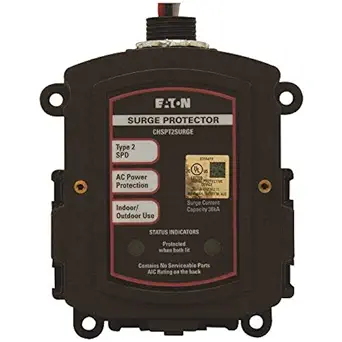 | Best Type 2 Choice for Flexible Panel Placement | Type: Type 2 surge protector | Voltage: 120/240 VAC | Phase: Single | VIEW ON AMAZON | See Our Full Breakdown |
| service equipment surge protector guide | Type | Voltage | Enclosure | Surge protection |
|---|---|---|---|---|
| ABB THOMESURGEP Whole Home Sur | Type 1 SPD | 120/240V and 120/208V AC | NEMA 3R | 36kA per phase |
| Eaton CHSPT2SURGE Type 2 Whole | Type 2 surge protector | 120/240 VAC | NEMA 4 | — |
More Details on Our Top Picks
ABB THOMESURGEP Whole Home Surge Protection Device (Type 1 SPD, NEMA 3R)
The ABB is my lead pick when the job specifically calls for a Type 1 SPD at service equipment. It is described for service-entrance or sub-panel locations, and its installation does not occupy breaker spaces. That can make the layout easier to plan when panel positions are limited, though it does not remove the need to confirm that the device suits the existing equipment. The listed 36kA per phase rating gives buyers a concrete specification to review with an electrician.
Compared with the Eaton, the ABB is the more direct match for a service-entrance brief; Eaton is a Type 2 device connected on the load side through a dedicated breaker. ABB also lists compliance with NEC 2023 Article 230.67, a useful reference for new construction and renovations. Buyers still need to check local code adoption and the installation requirements for their specific panel. The supplied product information names PowerMark PRO and other-brand compatibility, but also flags that configuration details may matter.
The tradeoff is that the ABB’s placement puts this firmly in professional-installation territory. I would not choose it as a casual add-on or assume its stated compatibility covers every panel arrangement. Its NEMA 3R enclosure rating is part of the listed product description, but a qualified installer should decide whether the location and setup are appropriate. For a project where a Type 2 load-side device is the intended solution, the Eaton is the more relevant comparison, not an inferior version of the same product.
Pros:- Type 1 design intended for service-entrance applications
- 36kA per phase rating is specified
- Installation does not occupy breaker spaces
- Lists NEC 2023 Article 230.67 compliance
Cons:- Professional installation is appropriate for service-entrance placement
- Panel and configuration compatibility should be confirmed before purchase
Best for: Homeowners, builders, or renovators planning a service-entrance or sub-panel installation with an electrician and seeking a Type 1 SPD that does not take up breaker spaces.
Not ideal for: DIY buyers, projects that specifically call for a Type 2 load-side SPD, or anyone unable to verify fit with the existing panel and service configuration.
- Type:Type 1 SPD
- Voltage:120/240V and 120/208V AC
- Surge protection:36kA per phase
- Nominal discharge current:10kA
- SCCR:200kA
- Enclosure:NEMA 3R
- Operating frequency:50–60Hz
- Compliance listed:NEC 2023 Article 230.67
Our verdict“I would choose the ABB for a planned Type 1 service-equipment installation, provided an electrician confirms the panel fit and applicable code.”
Eaton CHSPT2SURGE Type 2 Whole-Home Surge Protector
I place the Eaton second because it is a Type 2, load-side device, not a Type 1 service-entrance unit. That distinction makes it a strong alternative when the electrician’s design calls for panel-connected protection and there is a suitable dedicated breaker position. Its stated ability to connect to load centers from any manufacturer broadens the possible panel fit, while the NEMA 4 enclosure supports external mounting outside a load center. The LED status indicators also give the owner a visible way to check the device’s indicated condition.
Against the ABB, Eaton’s advantage is flexibility of enclosure placement and clear status indication; ABB has the closer match for a service-equipment brief and does not use breaker spaces. Eaton lists a 36kA per-phase figure as well as a 22kA surge-current capacity, so I would not reduce the comparison to a single headline number. The products have different types and connection methods, and buyers should review the full installation documentation with an electrician rather than treating the ratings as a like-for-like contest.
The main limitation is practical: Eaton must be hardwired to the load side through a dedicated circuit breaker. If the panel has no appropriate space, or the project calls for Type 1 protection at the service entrance, its strengths may not answer the job’s requirements. The product description calls for installation consistent with NEC guidelines. I see it as the better match for a planned Type 2 installation, not a shortcut around panel assessment or code-compliant work.
Pros:- Compatible with load centers from any manufacturer, according to the product description
- NEMA 4 enclosure supports external mounting
- LED indicators show device status
- Quick-connect design
Cons:- Requires hardwiring to the load side through a dedicated circuit breaker
- Does not serve as a direct Type 1 substitute for a service-entrance design
Best for: Buyers whose electrician specifies a Type 2 load-side SPD and can provide a suitable dedicated breaker, including installations that benefit from external mounting and visible status LEDs.
Not ideal for: Anyone needing a Type 1 service-entrance device, lacking an appropriate breaker position, or expecting a plug-in or do-it-yourself installation.
- Type:Type 2 surge protector
- Voltage:120/240 VAC
- Phase:Single
- Frequency:60Hz
- Enclosure:NEMA 4
- Surge current capacity:22kA
- Surge current capacity per phase:36kA
- Connection:Hardwired to load side through a dedicated circuit breaker
Our verdict“I would pick the Eaton when the installation plan calls for Type 2 load-side protection and the panel can accommodate its dedicated breaker.”

How We Picked
I ranked these two products by how well their design matches common service-equipment decisions: SPD type and connection location, installation demands, stated electrical ratings, enclosure or panel fit, and the amount of compatibility checking a buyer may need. Since one is Type 1 and the other Type 2, I do not treat them as direct substitutes or rank them by a single kA figure. Those classifications describe different installation roles, and the supplied specifications do not provide every rating a designer might use for a full engineering comparison.
The ABB earns the lead because its stated role is service-entrance protection, it lists 36kA per phase, and its installation does not occupy breaker spaces. That combination gives it the clearer fit for projects centered on service equipment. I give Eaton a distinct second role: a Type 2 option for load-side panel installation, with a NEMA 4 enclosure, LED status indicators, and stated compatibility with load centers from any manufacturer. Those are meaningful advantages when the intended configuration suits a Type 2 device.
I also weighed what each product asks of the buyer. The ABB’s service-entrance placement and panel-specific compatibility notes call for an electrician’s review. Eaton’s hardwired connection requires a dedicated breaker, so panel space and the planned circuit matter. I used only the listed specifications and descriptions; I did not infer unlisted protection ratings or claim either device is suitable for every installation. Local code, panel instructions, and the electrician’s design should settle the final choice.
| service equipment surge protector guide | Type | Enclosure |
|---|---|---|
| ABB THOMESURGEP Whole Home Sur | Type 1 SPD | NEMA 3R |
| Eaton CHSPT2SURGE Type 2 Whole | Type 2 surge protector | NEMA 4 |
Factors to Consider When Choosing Service Equipment Surge Protector Guide
Before I compare individual ratings, I would pin down the installation point. A service-equipment project can call for a device with a different SPD type and connection from a panel’s load-side installation. The following checks help separate the ABB and Eaton by fit rather than by marketing shorthand.
Start with Type 1 versus Type 2
The ABB is a Type 1 SPD described for service-entrance or sub-panel locations. The Eaton is a Type 2 SPD that connects on the load side through a dedicated breaker. This is the most important distinction in this comparison: the products are built around different connection roles. I would ask the electrician which SPD type and location the project calls for before choosing between them. A buyer should not select one solely because a kA figure appears larger or because a device name includes “whole home.”
Check the panel and connection plan
Panel compatibility is more than matching a brand name. The Eaton description states compatibility with load centers from any manufacturer, but the unit still needs a suitable dedicated breaker and a correctly planned hardwired connection. ABB installation does not occupy breaker spaces, though its description specifically warns that compatibility notes may require a check against the existing panel configuration. I would have an electrician identify the panel model, available connection points, and mounting location before ordering either product.
Read ratings as separate specifications
Both products list 36kA per phase, but that does not make their full performance or application identical. Eaton also lists 22kA surge-current capacity and 5kA nominal discharge current; ABB lists 10kA nominal discharge current and a 200kA SCCR. These figures describe separate aspects of the devices and should be read alongside their installation instructions. The provided details do not supply every possible rating, so I would avoid filling gaps with assumptions or using one number as a complete measure of protection.
Account for location and enclosure
Eaton’s NEMA 4 enclosure supports external mounting outside a load center, which may suit a layout where a panel-mounted position is not the chosen arrangement. ABB is listed with a NEMA 3R enclosure and is intended for service-entrance or sub-panel placement. Enclosure ratings alone do not determine whether a particular outdoor or indoor location is suitable. I would use the installation instructions and the electrician’s site assessment to confirm environmental fit, wire routing, and mounting requirements.
Treat installation and code as selection criteria
Neither product is a plug-in accessory. The ABB is intended for high-voltage service-equipment locations, and the product description calls for professional installation. Eaton must be hardwired through a dedicated circuit breaker and installed in line with NEC guidelines. ABB lists NEC 2023 Article 230.67 compliance, but buyers should check local code adoption and project requirements instead of assuming a product listing resolves every code question. I would leave installation and final suitability to a licensed electrician familiar with the service equipment.
Frequently Asked Questions
Which of these is the better choice for service equipment?
I would start with the ABB if the project calls for a Type 1 SPD at the service entrance or a sub-panel, because that is the role described for it. The Eaton is a Type 2 load-side device, so it makes more sense when the electrician’s plan specifies that type and connection. The right choice depends on the installation design and panel configuration, not only the product label.
Can the Eaton replace the ABB as a Type 1 protector?
No. The Eaton is identified as a Type 2 surge protector, while the ABB is identified as a Type 1 SPD. They use different installation roles and connection arrangements. I would not treat one as a direct replacement for the other; have an electrician determine which type suits the service equipment and the applicable project requirements.
Does the Eaton fit every brand of load center?
The product description says the Eaton connects to load centers from any manufacturer, but its installation still requires a dedicated circuit breaker and a hardwired load-side connection. That broad compatibility statement does not confirm that every panel has a suitable position or configuration. I would check the panel documentation and installation instructions with an electrician before buying.
Do the matching 36kA-per-phase figures mean these products perform the same?
No. Both listings give a 36kA-per-phase figure, but the products differ in SPD type, connection point, and other specifications. Eaton also lists surge-current capacity and nominal discharge current; ABB lists nominal discharge current and SCCR. I would compare the ratings in their full specification context and have the installer decide whether each device suits the intended application.
Can I install either surge protector myself?
I would not treat either as a do-it-yourself installation. ABB is designed for service-entrance or sub-panel placement, and Eaton requires hardwiring through a dedicated circuit breaker. Work at service equipment carries electrical hazards and must follow product instructions and applicable code. A qualified electrician can verify the panel arrangement, location, and installation method.
Conclusion
My recommendation depends on the planned connection point. For service-entrance or sub-panel work, I would start with the ABB THOMESURGEP because its Type 1 design, 36kA-per-phase rating, and breaker-space-free installation align most directly with that brief. For a Type 2 load-side installation, I would choose the Eaton CHSPT2SURGE if a dedicated breaker and suitable mounting arrangement are available. If the project requirements or panel fit are uncertain, I would pause the purchase and ask an electrician to identify the required SPD type and verify compatibility before selecting either model.
Fall Picks
fall essentials
As an affiliate, we earn on qualifying purchases.