A higher refresh rate isn’t just for gaming; it also improves video editing precision, making fast-moving footage clearer and more natural. It reduces eye strain and flickering, helping you stay comfortable during long sessions. Plus, a faster refresh rate makes everyday tasks like browsing, streaming, or virtual meetings feel more responsive and smooth. If you want to understand how this impacts your overall display experience, keep exploring how higher refresh rates can benefit you beyond gaming.
Key Takeaways
- Higher refresh rates improve video playback smoothness and detail clarity, benefiting professional editing and content creation.
- Increased refresh rates reduce eye strain and discomfort during extended screen use, promoting better eye health.
- They enable more natural and fluid motion perception, enhancing accuracy in motion analysis and visual transitions.
- Higher refresh rates improve responsiveness and responsiveness in everyday tasks like browsing, streaming, and virtual meetings.
- Recognizing refresh rate differences helps select displays optimized for various activities beyond gaming, ensuring better performance and comfort.
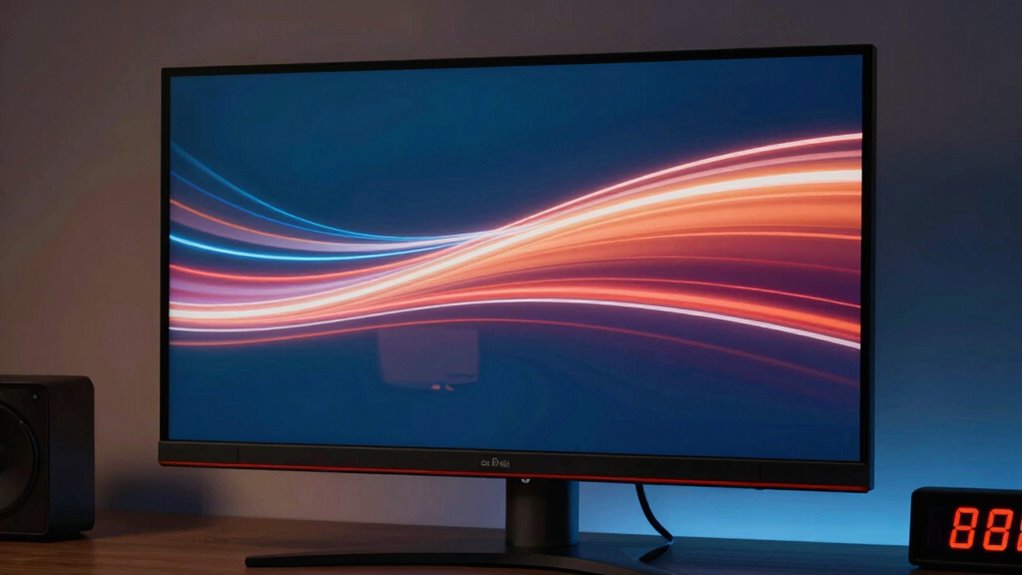
While many associate refresh rates primarily with gaming performance, their significance extends far beyond that domain. You might not realize it, but the refresh rate of your monitor plays a vital role in everyday activities like video editing, reducing motion sickness, and even enhancing your overall visual experience. When you’re working on video projects, a higher refresh rate can make a noticeable difference. It results in smoother playback, allowing you to see motion more clearly and accurately. This clarity helps you catch subtle details and make precise edits, especially when dealing with fast-moving scenes or rapid changes. Without a high refresh rate, footage can appear choppy or blurry, making editing more difficult and time-consuming. Additionally, motion clarity is improved with higher refresh rates, which can be particularly beneficial when working with high-frame-rate footage. Increasing the refresh rate can also help with visual coherence, ensuring that what you see on screen aligns more closely with real-time motion.
Beyond professional tasks, refresh rates impact your comfort during extended screen use. If your display’s refresh rate is too low, you might experience motion sickness or eye strain, especially when scrolling through scroll-heavy content or watching videos. The flickering or lagging images caused by lower refresh rates can lead to discomfort or dizziness over time. By increasing the refresh rate, you reduce these symptoms, providing a smoother, more stable visual experience that’s easier on your eyes. This becomes particularly important if you spend hours in front of your screen, whether working or relaxing. Additionally, visual comfort can be significantly improved by higher refresh rates, making long sessions more sustainable.
In addition, refresh rates influence how natural and fluid on-screen motion appears. For activities like video editing, where timing and motion are essential, a higher refresh rate helps you see transitions in real time without lag or stuttering. This makes it easier to judge motion blur, analyze footage, and ensure your edits look seamless. Moreover, for general browsing, streaming, or virtual meetings, higher refresh rates contribute to a crisper, more responsive display, making interactions feel more natural. You’ll notice less lag, smoother scrolling, and a more immersive experience overall. A higher refresh rate can also help reduce eye fatigue, especially during prolonged use. Recognizing the broader implications of refresh rate can aid in selecting a display optimized for your specific needs, whether for work or leisure.
high refresh rate monitor for video editing
As an affiliate, we earn on qualifying purchases.
As an affiliate, we earn on qualifying purchases.
Frequently Asked Questions
How Does Refresh Rate Affect Everyday Computer Tasks?
A higher refresh rate improves your everyday computer tasks by providing smoother visuals and reducing screen flickering, which can cause eye strain. When you work on tasks like browsing, editing documents, or watching videos, a faster refresh rate makes animations and shifts appear more fluid. This enhances your overall experience, minimizes eye fatigue, and guarantees that your screen stays clear and stable during prolonged use.
Can Higher Refresh Rates Improve Video Editing Accuracy?
Higher refresh rates can improve your video editing accuracy by reducing motion smoothing artifacts and providing smoother playback. With a faster refresh rate, you get more precise motion representation, which helps you see shifts and edits more clearly. Plus, it enhances color accuracy during playback, ensuring your work looks consistent across displays. Ultimately, a higher refresh rate helps you edit more confidently, catching details and nuances that might otherwise go unnoticed.
Do Smartphones Benefit From Higher Refresh Rates?
Yes, smartphones benefit from higher refresh rates. You notice smoother screen responsiveness, making scrolling, swiping, and animations feel more fluid. However, higher refresh rates can also impact battery efficiency, causing your device to drain faster if not optimized. You’ll enjoy a more responsive experience, especially for gaming or quick interactions, but keep in mind that it might reduce your battery life slightly. Balancing refresh rate and battery life depends on your usage.
What Is the Impact of Refresh Rate on Virtual Reality Experiences?
Higher refresh rates considerably improve your virtual reality experiences by reducing motion sickness and enhancing immersive realism. When the display updates more frequently, movements feel smoother and more natural, making virtual environments more convincing. This minimizes lag and disorientation, allowing you to stay immersed longer without discomfort. Ultimately, a higher refresh rate creates a more comfortable, realistic VR experience, making virtual worlds feel truly alive and responsive to your actions.
How Does Refresh Rate Influence Eye Strain During Prolonged Use?
A higher refresh rate improves eye comfort and reduces visual fatigue during extended use. It creates smoother motion, making your viewing experience more natural and less straining on your eyes. When the refresh rate is low, you may notice flickering or lag, which can cause discomfort over time. To minimize eye strain during prolonged periods, choose a monitor with a high refresh rate, especially if you work long hours or enjoy long gaming sessions.
eye strain reducing computer monitor
As an affiliate, we earn on qualifying purchases.
As an affiliate, we earn on qualifying purchases.
Conclusion
So, next time you’re choosing a monitor, remember that higher refresh rates aren’t just for gamers. They can make everyday tasks smoother and reduce eye strain, too. While some believe ultra-high refresh rates are just a trend, studies suggest they truly improve visual comfort and clarity. It’s worth considering your needs beyond gaming—because better refresh rates could enhance your overall viewing experience, whether you’re working, watching, or scrolling through your favorite content.
smooth display monitor for virtual meetings
As an affiliate, we earn on qualifying purchases.
As an affiliate, we earn on qualifying purchases.
professional high refresh rate monitor
As an affiliate, we earn on qualifying purchases.
As an affiliate, we earn on qualifying purchases.