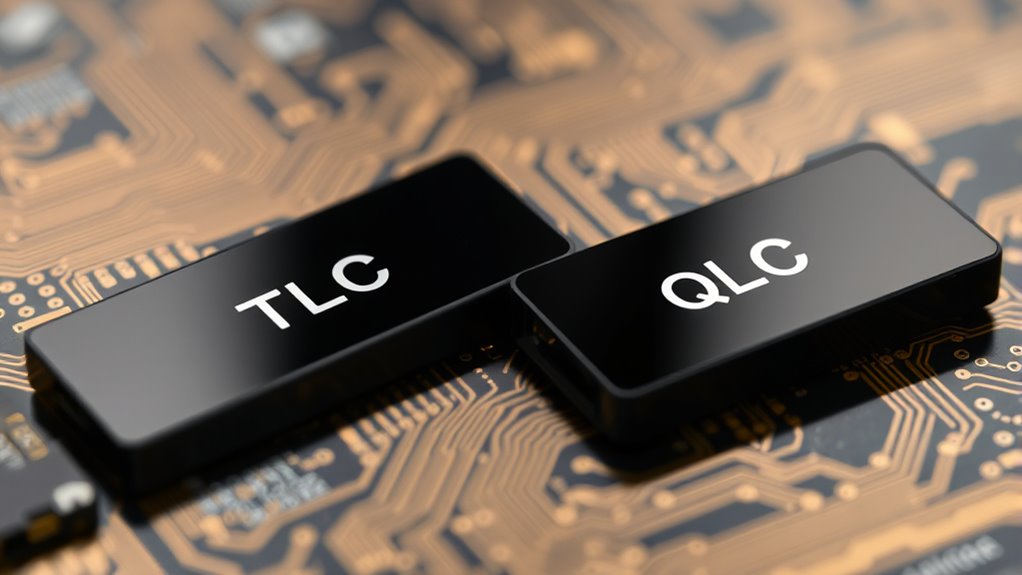

Understanding solid-state storage, you’ll find that TLC offers a good balance of speed, endurance, and reliability, storing 3 bits per cell with manageable complexity. QLC packs 4 bits per cell, increasing capacity but reducing durability and speed, making it better for infrequent use. Proper wear leveling, TRIM, and garbage collection maintain SSD health and performance over time. To discover how these factors affect your storage choices, explore further insights below.
Key Takeaways
- TLC stores 3 bits per cell with 8 voltage levels, while QLC stores 4 bits with 16 levels, increasing capacity but adding complexity.
- QLC offers higher storage density and lower cost per GB, but generally has lower endurance and performance than TLC.
- Wear leveling evenly distributes write cycles to prolong SSD lifespan, crucial for managing limited program/erase cycles.
- TRIM helps maintain SSD performance by informing the drive which data blocks are no longer in use, aiding in space reclamation.
- Proper data management, including wear leveling, TRIM, and garbage collection, is essential for ensuring SSD reliability and longevity.
Bestoss SSD 1TB 2.5 Inch Internal Hard Drive for Pc or Laptop, SATA III 6Gb/s Internal State Drive, Up to 550MB/s, Computer Storage Upgrade for Office, Students, Home Entertainment
Launch as Fast as Sirius: Replace slow HDDs with this internal SSD. 550MB/s read speeds boot systems at…
As an affiliate, we earn on qualifying purchases.
As an affiliate, we earn on qualifying purchases.
Comparing Storage Architectures: TLC and QLC
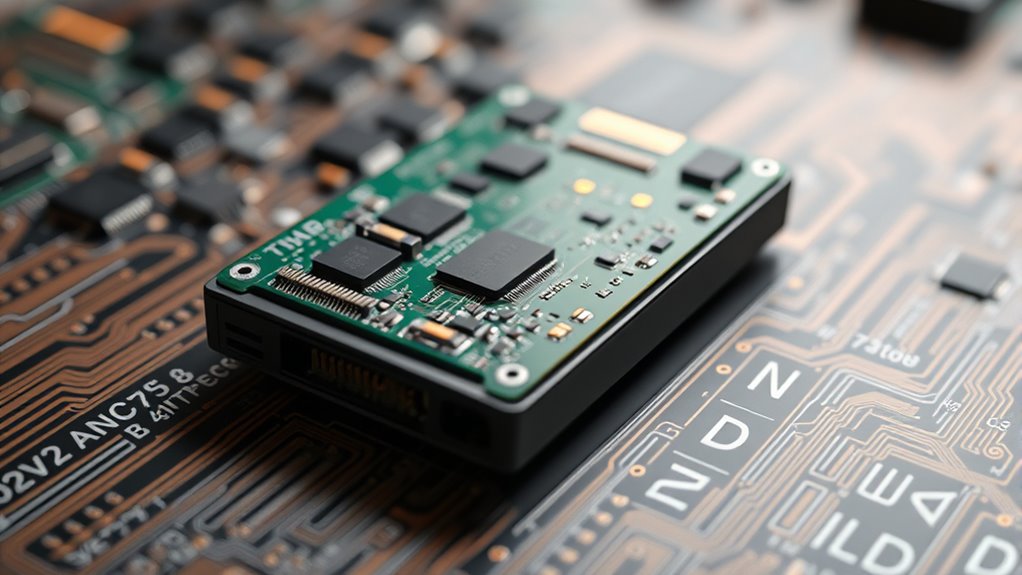
When comparing TLC and QLC storage architectures, it’s important to understand how each design balances capacity, performance, and complexity. TLC stores 3 bits per cell, using 8 voltage states, which simplifies read and write processes. QLC, on the other hand, stores 4 bits per cell with 16 voltage levels, increasing storage density but adding complexity. This higher density allows QLC drives to offer larger capacities at a lower cost per gigabyte. However, managing more voltage states makes reading and writing data more challenging, often leading to slower write speeds and reduced endurance. TLC provides a good balance for everyday use, especially when durability and speed matter. QLC is better suited for bulk storage where capacity and cost are priorities over performance and longevity. Additionally, implementing wear leveling techniques is essential to distribute write and erase cycles evenly across the memory cells, thereby prolonging the lifespan of both TLC and QLC drives. The effectiveness of wear leveling directly impacts the longevity and reliability of the storage devices. Proper error correction mechanisms are also crucial to maintain data integrity, especially in QLC where the increased voltage states can raise error rates.

Lexar 1TB NM1090 PRO PCIe Gen5 NVMe M.2 2280 Internal SSD, Up to 14,000 MB/s Read, Advance Thermal Control, DirectStorage Enabled, Ideal for AI Computing, Gaming, Content Creation (LNM109P001T-RNNNU)
PCIe 5.0 technology delivers blistering read/write speeds up to 14,000/10,000 MB/s and accelerates load times by 200% –…
As an affiliate, we earn on qualifying purchases.
As an affiliate, we earn on qualifying purchases.
Performance and Endurance: What Matters for Your SSD

Choosing the right SSD depends on balancing performance and endurance to meet your specific needs. If you prioritize fast write speeds, especially for gaming or content creation, TLC drives are your best choice—they handle frequent data changes better. For read-heavy tasks like media storage or backups, QLC drives can deliver adequate performance at a lower cost. Endurance matters if you plan to write large amounts of data regularly; TLC SSDs typically sustain more program/erase cycles, making them more durable for demanding workloads. QLC drives, with lower endurance, are better suited for infrequent writes and long-term storage. Keep in mind that factors like wear leveling, TRIM, and garbage collection help extend the lifespan of both types, but your specific use case ultimately determines which drive offers the best balance of performance and endurance. Additionally, understanding wear leveling techniques can significantly impact the longevity of your SSD over time, and adopting mindful maintenance practices can further prolong its life. Moreover, ongoing research into AI-powered diagnostics is improving how we monitor and optimize SSD health and performance. Ensuring proper firmware updates can also help maintain optimal operation and prevent unexpected failures.
SSD with wear leveling and TRIM support
As an affiliate, we earn on qualifying purchases.
As an affiliate, we earn on qualifying purchases.
Maintenance and Data Management: Wear Leveling, TRIM, and Garbage Collection
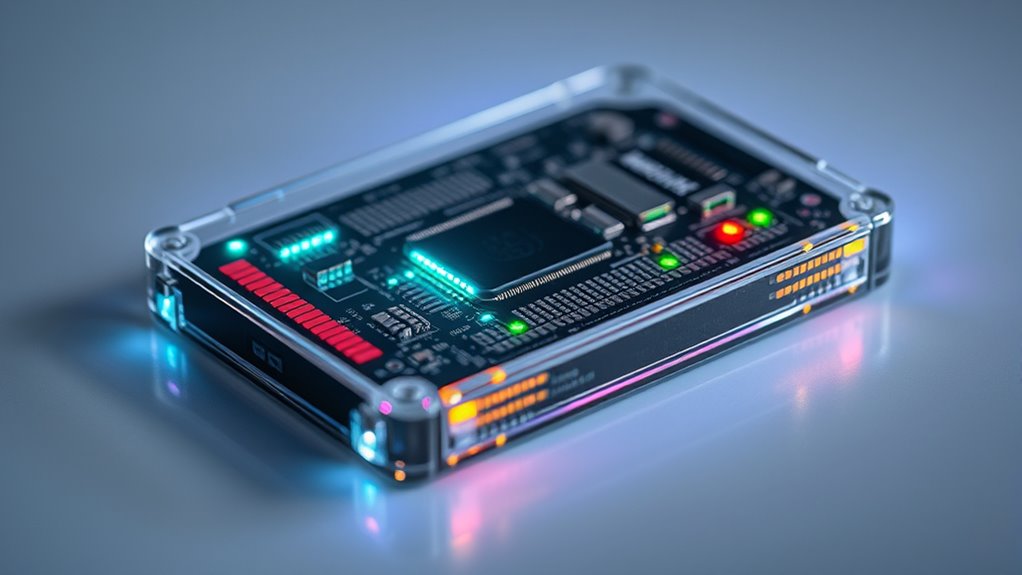
Effective maintenance of SSDs relies on mechanisms like wear leveling, TRIM, and garbage collection to guarantee longevity and peak performance. Wear leveling spreads out write and erase cycles evenly across all memory cells, preventing early failure of heavily used areas. The Flash Translation Layer (FTL) manages this process, along with error correction and bad block management. TRIM informs the SSD which data blocks are no longer needed, allowing the drive to efficiently reclaim space and reduce write amplification. Garbage collection reorganizes data, consolidating free blocks for faster write speeds. Together, TRIM and garbage collection help maintain consistent performance over time. Properly functioning wear leveling, TRIM, and garbage collection are especially crucial for TLC and QLC drives, which have limited program/erase cycles.

High Capacity 24 Slots M.2 2280 2260 2242 2240 2230 Case, Sturdy M.2 NVMe SSD Card Case with Label & Notepaper, Water-Resistant & Shockproof M.2 2280 SSD Holder Vertical Style M.2 Drive Organizer Box
【High Capacity】This M.2 SSD Case can store 24 PCS M.2 2280 2260 2242 2240 2230 SSD, meet your…
As an affiliate, we earn on qualifying purchases.
As an affiliate, we earn on qualifying purchases.
Frequently Asked Questions
How Does NAND Type Impact SSD Lifespan in Real-World Use?
Your SSD lifespan depends heavily on the NAND type. With TLC, you get more P/E cycles, so it lasts longer under frequent writes, making it ideal for demanding tasks. QLC has fewer P/E cycles, so it wears out faster if you write a lot daily. However, QLC’s larger capacity and lower cost make it suitable for read-heavy, infrequent write workloads. Proper wear leveling and TRIM help extend your drive’s life.
Can QLC Drives Be Reliable for Enterprise Applications?
Yes, QLC drives can be reliable for enterprise applications if they are properly managed. You need to guarantee they use advanced controllers with effective wear leveling and TRIM support to extend lifespan. They work best for read-heavy, archival, or backup workloads where write endurance isn’t critical. For high-write environments, consider TLC or enterprise-grade SSDs, but QLC can deliver cost-effective, large-capacity storage in suitable scenarios.
What Are the Best Practices for Optimizing SSD Performance?
Imagine your SSD as a busy highway; smooth traffic relies on good management. To optimize performance, keep your firmware updated, enabling the drive’s algorithms to work efficiently. Regularly run TRIM, like clearing debris, to maintain speed. Avoid filling the drive to capacity, as it clogs the lanes. Use enterprise-grade drives for demanding tasks and enable wear leveling features to distribute data evenly, ensuring your SSD stays fast and reliable over time.
How Does Temperature Affect TLC and QLC SSDS?
Temperature impacts TLC and QLC SSDs by affecting their performance and lifespan. When temperatures rise too high, you risk increasing wear, causing faster degradation of memory cells. Cooler conditions help maintain ideal operation, preventing thermal throttling and reducing errors. To protect your SSD, keep it in a well-ventilated environment, avoid excessive heat, and monitor temperatures regularly. Proper cooling extends your drive’s durability and ensures consistent performance over time.
Are There Future Advancements Expected in NAND Storage Technologies?
You might think NAND storage is maxed out, but the future holds exciting innovations. Expect 3D stacking to grow even taller, increasing capacity without expanding size. Researchers are exploring new materials like phase-change memory and MRAM, promising faster, more durable drives. Quantum-dot tech could revolutionize data storage, making current limits laughable. So, yes, future advancements are on the horizon, pushing the boundaries of what your SSD can do—irony included.
Conclusion
Choosing between TLC and QLC depends on your needs. For everyday use, TLC offers better endurance and performance, while QLC provides larger storage at a lower cost. Imagine you’re editing videos regularly; a TLC SSD ensures your work stays smooth and reliable over time. Proper wear leveling and TRIM help maintain your drive’s health, so understanding these features signifies your data stays safe and your SSD lasts longer. Make the right choice for your storage needs.