
USB-C is a versatile port that combines power delivery and data transfer into one easy-to-use, reversible connection. It simplifies how you connect and charge your devices, eliminating the need for multiple cables. With faster data speeds, higher power output, and support for video output, USB-C adapts to your changing tech needs. As it continues to evolve, you’ll find more ways it enhances your digital experience—discover how it can work for you.
Key Takeaways
- USB-C combines power delivery and data transfer into a single, reversible port for device simplicity and efficiency.
- It supports fast data speeds up to 40 Gbps, enabling quick transfer of large files like videos and photos.
- USB-C can deliver higher wattage for rapid device charging, reducing the need for multiple cables.
- It is compatible with various devices, including smartphones, laptops, monitors, and external drives.
- Future updates will enhance multimedia support, enabling connection of multiple high-resolution displays and advanced video outputs.
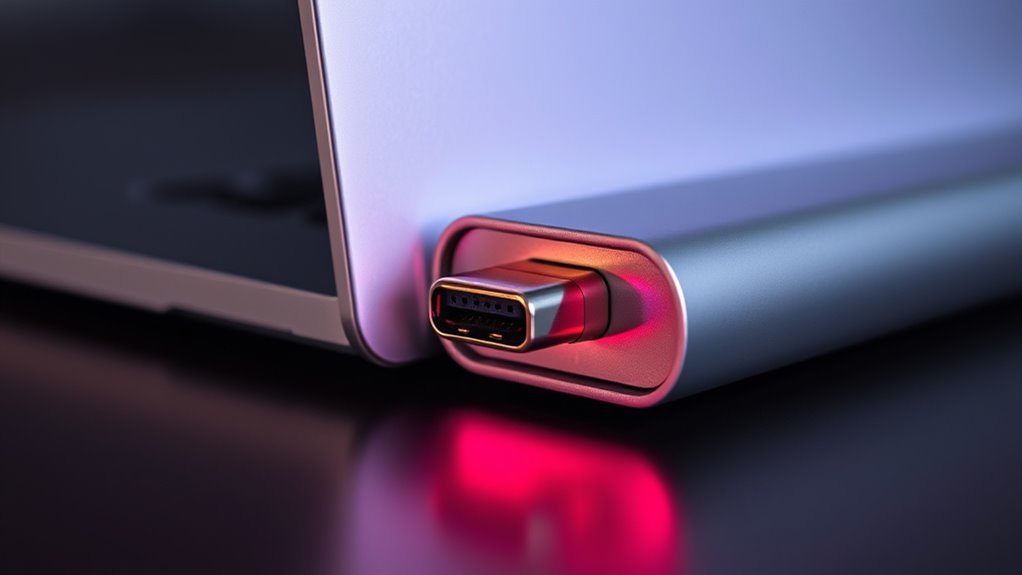
Ever wondered what makes USB-C the universal connector of the future? It’s not just about its sleek, reversible design but also its impressive versatility. USB-C is designed to handle both power and data transfer through a single port, simplifying your devices’ connectivity. One of the key reasons for its widespread adoption is cable compatibility. Unlike older USB standards that required different cables for charging, data, or video output, USB-C consolidates all these functions into one standard. This means you no longer need multiple cables cluttering your workspace or bag. Instead, a single USB-C cable can connect your smartphone, laptop, monitor, or external drives seamlessly. The universality of USB-C ensures that most modern devices support it, making it easier for you to switch between gadgets without worrying about incompatible cables or ports.
As technology evolves, future developments in USB-C promise even greater capabilities. You can expect faster data transfer speeds, potentially reaching up to 40 Gbps with upcoming updates. This means transferring large files, like 4K videos or extensive photo libraries, will become quicker and more efficient. Power delivery is also set to improve, allowing devices to charge faster and handle higher wattages. This could mean your laptop or tablet might fully charge in a fraction of the time it currently takes. Additionally, USB-C’s role in supporting video output is only set to expand, with more devices adopting standards like DisplayPort or HDMI over USB-C. This will streamline connecting multiple monitors or high-resolution displays, reducing the need for bulky adapters.
Furthermore, future developments might introduce enhanced durability and security features. As USB-C becomes more ingrained in everyday tech, manufacturers are likely to focus on making cables and ports more resistant to wear and tear. There’s also the potential for more advanced authentication protocols, making your data transfers safer. Moreover, advancements in color accuracy and contrast ratios are expected to further enhance the visual quality of displays and projectors, aligning with the trend toward richer, more immersive viewing experiences. Overall, the evolution of USB-C is geared towards making your digital life more integrated, efficient, and hassle-free. Its inherent flexibility means it will adapt to future technological advancements, keeping pace with innovations in power delivery, data transfer, and multimedia support. So, as you look forward to new devices and upgrades, rest assured that USB-C is set to remain at the forefront, evolving alongside your needs and the tech landscape.

acer USB C to HDMI Cable for Home Office 6.6FT (4K@60Hz), Thunderbolt 4/3 Compatible, High-Speed Type C to HDMI 2.0 Braided Cord for MacBook, iPhone 17/16 Pro/Max, iMac, iPad Pro, Galaxy S25, Surface
【4K UHD Visual Feast】This USB-C to HDMI cable supports up to 4K@60Hz resolution and is backward compatible with…
As an affiliate, we earn on qualifying purchases.
As an affiliate, we earn on qualifying purchases.
Frequently Asked Questions
Can USB-C Ports Support Multiple Devices Simultaneously?
Yes, USB-C ports can support multiple devices simultaneously, thanks to their port versatility. With the right hub or docking station, you can connect several peripherals like monitors, external drives, and chargers all at once. This makes USB-C ideal for streamlining your workspace. Just confirm your device and accessories support multi-device connections, and you’ll enjoy seamless, efficient multitasking without needing multiple ports.
How Does USB-C Compare to Thunderbolt in Speed?
Think USB-C is speedy? Well, compare it to Thunderbolt, and you’ll see a difference. Thunderbolt’s speed benchmarks hit up to 40 Gbps, far outpacing USB-C’s 10-20 Gbps data transfer rates. So, if you’re craving blazing-fast transfers for large files or professional work, Thunderbolt’s your hero. USB-C is versatile, but when it comes to raw speed, Thunderbolt takes the crown—no contest, no excuses.
Are All USB-C Cables Compatible With Every Device?
Not all USB-C cables are compatible with every device. Cable quality and compatibility standards matter, so check if the cable supports the device’s specifications. Some cables are designed for charging only, while others transfer data or support video. Always verify the cable’s ratings and make sure it meets the device’s requirements to avoid damage or performance issues. Using certified cables guarantees better compatibility and safety.
What Are the Safety Considerations When Using USB-C Chargers?
Be mindful of your mobile’s makeup when managing your charging methods. Always opt for official or certified USB-C chargers to guarantee electrical safety and device compatibility. Avoid overloading outlets or using damaged cables, which can cause overheating or short circuits. Keep your chargers and cables clean and dry, and never force incompatible connectors. Following these simple safety steps helps protect your device, prevent power problems, and promote a safe, secure charging experience.
How Can I Identify Genuine USB-C Accessories From Counterfeit Ones?
To identify genuine USB-C accessories, look for brand authenticity by checking for official logos and packaging. Use counterfeit detection methods like inspecting build quality, verifying certifications, and comparing model numbers with official listings. Genuine accessories often have consistent branding, properly labeled specifications, and reliable connections. Avoid cheap prices or suspicious sellers, and always buy from authorized retailers to guarantee you get authentic, safe, and high-quality USB-C products.
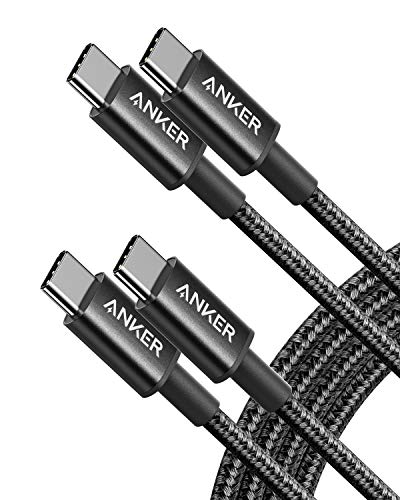
Anker USB C to USB C Cable, Type-C 60W Fast Charging Cable (6 FT, 2Pack) for iPhone 17 Series, iPad mini 6 and More (Black)
Durable Design: Reinforced nylon exterior and a robust core ensure this cable withstands up to 5,000 bends, outlasting…
As an affiliate, we earn on qualifying purchases.
As an affiliate, we earn on qualifying purchases.
Conclusion
Imagine plugging into USB‑C like opening a Swiss Army knife—one port that handles power, data, and more. It’s like having a secret weapon in your pocket, simplifying your tech life. With over 1.8 billion USB‑C devices shipped in 2022 alone, it’s clear this port is here to stay. So next time you connect your phone or laptop, remember—you’re using a versatile tool that’s transforming how we power and share data every day.
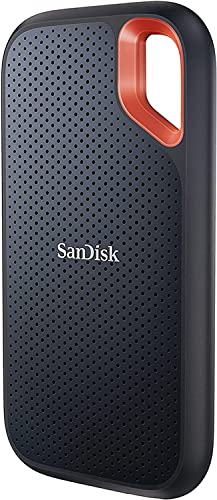
SanDisk 1TB Extreme Portable SSD – Up to 1050MB/s, USB-C, USB 3.2 Gen 2, IP65 Water and Dust Resistance, Updated Firmware – External Solid State Drive – SDSSDE61-1T00-G25
Get NVMe solid state performance with up to 1050MB/s read and 1000MB/s write speeds in a portable, high-capacity…
As an affiliate, we earn on qualifying purchases.
As an affiliate, we earn on qualifying purchases.

Anker USB C Hub, 5-in-1 USBC to HDMI Splitter with 4K Display, 1 x Powered USB-C 5Gbps & 2×Powered USB-A 3.0 5Gbps Data Ports for MacBook Pro, MacBook Air, Dell and More
5-in-1 Connectivity: Equipped with a 4K HDMI port, a 5 Gbps USB-C data port, two 5 Gbps USB-A…
As an affiliate, we earn on qualifying purchases.
As an affiliate, we earn on qualifying purchases.