
By 2025, passkeys have become mainstream, with over 15 billion accounts supporting them and major platforms like Google, Amazon, and Microsoft fully integrating the technology. User success rates often exceed 93%, offering faster, smoother logins across devices. Businesses benefit from reduced costs and enhanced security. Industry adoption is accelerating, especially in finance and government sectors. If you want to discover how this shift impacts your digital experience, keep exploring how passkeys are changing online security.
Key Takeaways
- Over 15 billion passkey-supported accounts are expected worldwide by 2025, with rapid adoption across industries.
- User success rates for passkey login often exceed 93%, ensuring smoother and faster access experiences.
- Major platforms like Google support over 800 million passkey-enabled accounts, driving mainstream acceptance.
- Passkeys offer login speeds 6 to 17 times faster than passwords, significantly enhancing user convenience.
- Consumer awareness of passkeys rose from 39% in 2022 to 57% in 2025, indicating growing acceptance and familiarity.
Global Adoption and Market Penetration of Passkeys in 2025
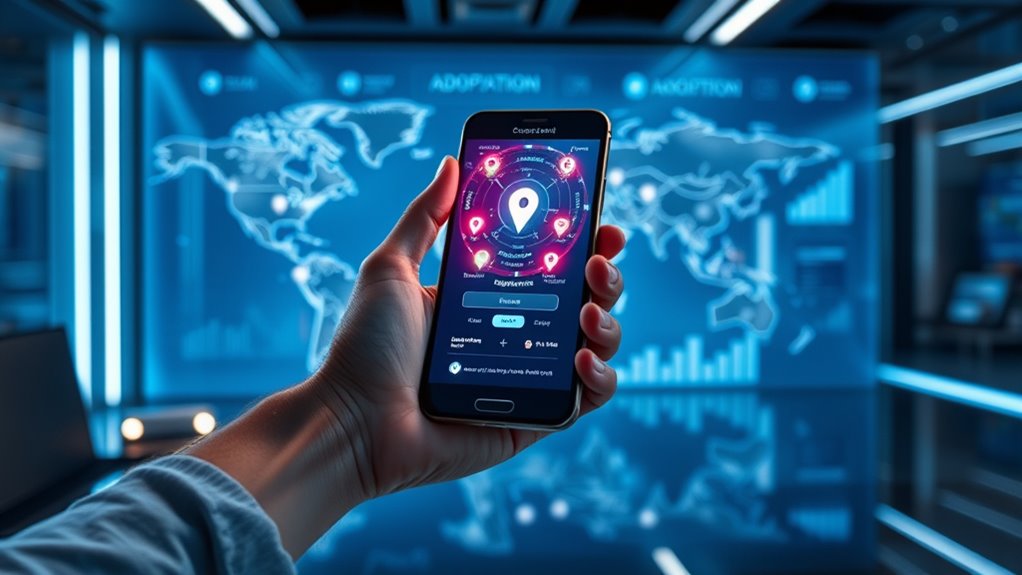
By 2025, passkeys have achieved widespread global adoption, supporting over 15 billion online accounts worldwide. You’ll notice that about 40% of Dashlane users now store at least one passkey, doubling last year’s rate. Businesses are quick to adopt, with over 85% of enterprises integrating passkeys into their authentication systems. Major platforms like Google support over 800 million passkey-enabled accounts, while Amazon saw 175 million users creating passkeys in just the first year. Nearly half of organizations report adoption rates above 75%, exceeding expectations. This rapid growth reflects a shift toward more secure, user-friendly login methods. The integration of passkeys with digital security demonstrates their versatility across different digital tools. The use of passkey names by users further enhances trust and personalization in authentication processes. Overall, passkeys are transforming digital security on a global scale, becoming a standard feature across diverse sectors and user bases.
User Engagement and Sign-in Success Rates

Passkeys have greatly improved user engagement by delivering higher sign-in success rates compared to traditional methods. With success rates often exceeding 93%, you experience fewer failed attempts and smoother access. This reliability fosters more frequent usage and reduces frustration. To deepen your understanding, consider these factors:
Passkeys boost user engagement with over 93% success, reducing frustration and encouraging frequent, seamless sign-ins.
- Ease of Use: Passkeys simplify login processes, making sign-ins quicker and more intuitive.
- Compatibility: Support across devices and browsers ensures consistent success regardless of platform.
- Security Confidence: Users trust passkeys more, leading to increased willingness to adopt the technology.
- Environmental Impact: Using passkeys reduces reliance on physical tokens and paper-based credentials, contributing to sustainability efforts. Additionally, advancements in secure authentication have further strengthened user confidence in passkey technology.
Furthermore, the increasing adoption rates highlight the growing importance of user experience in driving technology acceptance.
Finally, the improved success rates are supported by advancements in compatibility, ensuring seamless performance across diverse environments.
These elements combine to create a more seamless, reliable user experience, boosting engagement and reinforcing passkeys as the preferred authentication method in 2025.
Performance Benefits and Speed Improvements

One of the most significant advantages of passkeys is their ability to dramatically enhance login speed and performance. With passkeys, you experience login times that are often six to seventeen times faster than traditional passwords. For example, Amazon users report login speeds twice as fast, while TikTok users see speeds up to seventeen times quicker. This acceleration reduces waiting times and improves your overall online experience. Passkeys eliminate the need for manual password entry, often completing authentication in just a second or two. This efficiency not only saves you time but also minimizes frustration during sign-in processes. Additionally, the high pressure used in airless paint sprayers ensures thicker paints are applied effectively, reducing the number of coats needed. As a result, you spend less time waiting and more time engaging with content or services, making your online interactions smoother and more seamless. Implementing secure authentication methods like passkeys can also encourage broader adoption of sustainable cybersecurity practices, contributing to a safer digital environment for everyone.
Business Impact and Cost Savings From Passkey Deployment

Implementing passkeys can substantially cut costs and boost efficiency for your organization. They reduce expenses related to password resets, support tickets, and fraud management. As a result, you experience lower operational costs and improved user satisfaction. Consider these key impacts:
- Decreased support costs by diminishing password reset requests and reducing IT workload. Password management is simplified, leading to fewer interruptions and better resource allocation. Additionally, the use of user-friendly authentication methods can decrease the need for support interventions further.
- Lowered fraud and security breach risks, saving potential financial liabilities and reputational damage. Incorporating security protocols can further safeguard sensitive information.
- Faster login times, which increase productivity and enhance user experience, reducing downtime and frustration. Leveraging personality insights can help tailor user onboarding and support strategies, further optimizing the deployment process.
- Enhanced privacy protections contribute to building user trust and complying with data regulations, ensuring a more secure and trustworthy environment.
These benefits lead to faster onboarding, streamlined authentication processes, and a stronger security posture. Overall, deploying passkeys offers significant cost savings while strengthening your organization’s security and operational agility.
Technological Readiness and Challenges in Implementation

Despite widespread device compatibility, integrating passkeys into existing systems remains a complex task that requires careful planning and technical expertise. You’ll need to navigate diverse platforms, security protocols, and developer tools, which can slow deployment. Supporting passkeys demands additional development time compared to traditional passwords, often requiring specialized knowledge in security and identity management. Enterprise infrastructure may need updates to handle passkey authentication smoothly, with 86% of organizations already preparing for this shift. Mobile platforms lead the way, leveraging biometric authentication to enhance user experience. However, the overall implementation process can be resource-intensive and technically challenging, especially for legacy systems. Overcoming these hurdles requires strategic planning, skilled teams, and ongoing support to guarantee seamless integration and widespread adoption. Additionally, understanding the security protocols involved is crucial to ensure user data remains protected during adoption. Incorporating user education about new authentication methods can further facilitate smoother transitions and foster user trust. Moreover, the increasing focus on cybersecurity vulnerabilities underscores the importance of rigorous security measures in passkey deployment to prevent potential threats. Recognizing the importance of AI Security in safeguarding these systems is also vital to defend against emerging cyber threats. Furthermore, addressing compatibility issues across various devices and platforms is essential to achieve widespread adoption effectively.
Sectoral Trends and Mainstream Growth Patterns

You’ll notice that industry adoption of passkeys is accelerating rapidly, especially in high-stakes sectors like finance and government. Mainstream platforms such as Microsoft, Google, and Amazon are integrating passkeys deeply into their ecosystems, making them standard for users worldwide. This widespread adoption signals a shift toward the norm, with passkeys becoming a foundational element across diverse digital services. Additionally, Remote Hackathons are fostering innovative solutions that promote secure authentication methods, further supporting the transition to passkeys. The integration of AI-driven security features is also playing a crucial role in enhancing the robustness of passkey systems against emerging cyber threats, with ongoing developments improving their security resilience. As research in sound healing science advances, new methods for secure, biomimetic authentication are emerging, potentially influencing future security paradigms.
Industry Adoption Accelerates
Industry adoption of passkeys is gaining momentum as mainstream platforms and high-stakes sectors increasingly embrace this secure, passwordless authentication method. Major companies like Google, Amazon, and Microsoft are driving widespread acceptance, fueling rapid growth. This shift is supported by several key factors:
- High adoption in sectors such as finance and government, where security is critical, now mandates passkey use.
- Support from industry giants has expanded passkey integration across platforms like Xbox, Microsoft 365, and AI tools, normalizing their use.
- Enterprise adoption exceeds 85%, with many organizations prioritizing passkeys for operational efficiency and risk reduction.
- The momentum is further reinforced by innovations in AI-driven security solutions, which enhance passkey robustness and user protection.
This acceleration reflects a broader industry consensus that passkeys are essential for future-proof, secure digital identity management, setting the stage for mainstream ubiquity.
Mainstream Platform Integration
Mainstream platform integration of passkeys is accelerating as major technology companies and service providers embed passwordless authentication into their offerings. You’ll notice widespread support across operating systems, browsers, and apps, making passkeys easier to use than ever. Leading platforms like Microsoft, Google, and Amazon are making passkey login standard, expanding beyond early adopters to mainstream users. High-stakes sectors such as finance and government increasingly mandate passkeys, pushing broader adoption. Devices supporting biometric authentication further accelerate integration, providing seamless user experiences. As support expands across platforms like Xbox, Microsoft 365, and TikTok, you’ll find passkeys becoming the default method for login. This evolving ecosystem fosters greater convenience, security, and trust, gradually replacing traditional passwords across the digital landscape.
Consumer Awareness and Acceptance Levels

Consumer awareness of passkeys has grown considerably over the past few years, reflecting a broader shift toward passwordless authentication. As more people encounter passkeys in daily activities, familiarity increases, making adoption smoother. However, many users still need education to fully trust and understand this technology.
Consumer awareness of passkeys is rising, paving the way for broader passwordless authentication adoption.
To deepen your understanding:
- Awareness has risen from 39% in 2022 to 57% in 2025, showing growing familiarity.
- Over a billion passkeys have been generated, with tools like 1Password housing millions.
- After being prompted, 89% of users are likely to adopt passkeys, indicating high acceptance potential.
Despite this progress, full replacement of passwords remains gradual, requiring ongoing user education and ecosystem improvements. Acceptance varies across contexts, with mobile biometric logins leading the way.
Leading Platforms and Industry Contributions

Major tech companies like Google, Microsoft, and Amazon are driving passkey adoption and shaping industry standards through their investments and integrations. Their collaboration helps guarantee interoperability and widespread support across platforms. As a result, industry-wide efforts are accelerating the shift toward a more secure, passwordless future.
Major Tech Companies Leading
Leading technology companies have played a pivotal role in driving passkey adoption, leveraging their platforms and resources to promote passwordless authentication. They’ve integrated passkeys into their ecosystems, making them accessible across billions of devices and users. Google, for instance, supports over 800 million passkey-enabled accounts, pushing industry standards forward. Amazon has recorded 175 million users creating passkeys within its first year, signaling strong user acceptance. Microsoft has achieved a 98% sign-in success rate with passkeys, markedly improving user experience. These companies also innovate through:
- Embedding passkeys into popular apps and services for seamless user adoption.
- Developing developer tools to simplify passkey integration and deployment.
- Promoting industry-wide standards and collaboration to accelerate global adoption.
Industry Standards and Collaboration
Industry standards and collaboration are shaping the future of passkeys by fostering interoperability and widespread adoption across platforms. Leading tech companies like Google, Microsoft, and Apple actively contribute to establishing common protocols, ensuring seamless user experiences regardless of device or service. Initiatives such as FIDO2 and WebAuthn provide open standards that underpin secure, passwordless authentication worldwide. Industry consortia coordinate efforts to align security practices, making it easier for developers to implement passkeys without compatibility concerns. This collaboration accelerates adoption in both consumer and enterprise sectors, promoting a unified ecosystem. As standards evolve, organizations can deploy passkeys confidently, knowing they’ll work across platforms. Your user experience benefits from this coordination, experiencing faster, more secure logins with minimal friction.
User Experience Across Devices and Environments
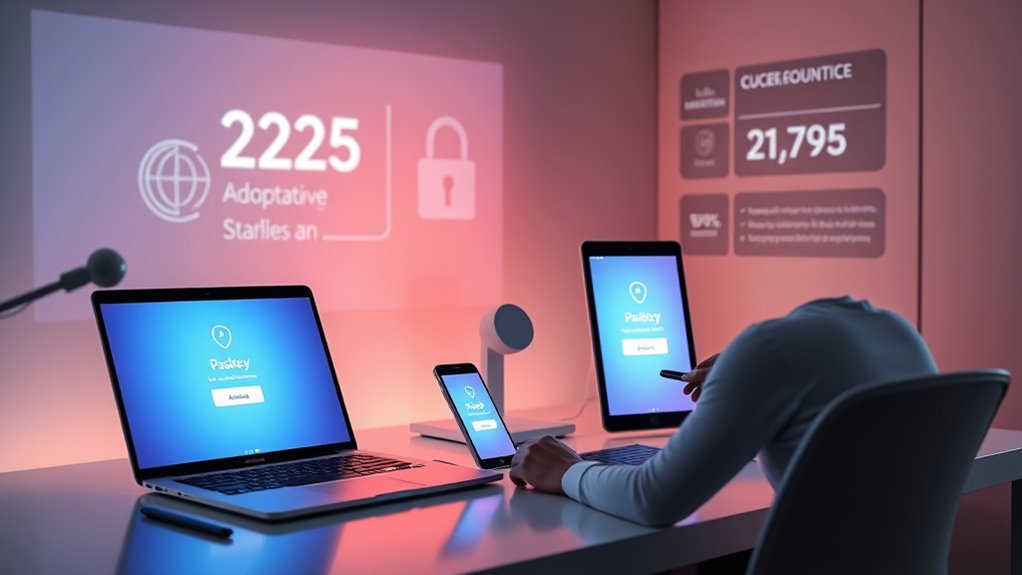
As passkeys become more widespread, their user experience across various devices and environments has markedly improved, making login processes faster and more seamless. You’ll notice fewer failed attempts and quicker access, whether on your phone, tablet, or desktop. The technology adapts smoothly across platforms, supporting biometric methods like fingerprint or facial recognition, and works effortlessly on mobile and desktop environments. To deepen your understanding:
- Seamless transition between devices enables continuous login sessions without re-authentication.
- Passkeys leverage biometric authentication, providing a consistent experience across smartphones, tablets, and computers.
- Compatibility with major browsers and operating systems ensures you can use passkeys almost anywhere, reducing friction and enhancing security.
This cross-platform consistency considerably boosts user satisfaction and trust.
Future Outlook and Strategic Priorities for Passkeys

With widespread device readiness and growing consumer acceptance, organizations are increasingly prioritizing passkeys as a core component of their security strategies. Your focus should be on streamlining implementation, addressing integration challenges, and expanding support across platforms. Investing in developer expertise and simplifying deployment will accelerate adoption and reduce complexity. Prioritizing user education is essential to boost familiarity and trust, especially as more consumers generate and store passkeys. You should also explore expanding passkey use in high-stakes sectors like finance and government, ensuring compliance and security standards are met. Monitoring market trends and collaborating with industry leaders will help you stay ahead of evolving standards. Ultimately, your strategic goal should be to make passkeys seamless, secure, and accessible across all devices and environments, driving widespread adoption.
Frequently Asked Questions
What Are the Main Security Concerns With Passkey Adoption?
Your main security concern with passkey adoption is the potential for implementation flaws or vulnerabilities during setup or integration, which could be exploited by attackers. You also worry about device loss or theft, risking unauthorized access if mechanisms aren’t robust. Additionally, there’s concern over user awareness, as untrained users might inadvertently compromise security through poor practices or misunderstandings about passkey security features.
How Do Passkeys Compare to Biometric Authentication in Security?
You’ll find passkeys generally offer comparable or better security than biometric authentication. Unlike biometric data, passkeys aren’t tied to your physical traits, making them less vulnerable to spoofing or theft. They rely on cryptographic keys stored securely, reducing risks of hacking. Plus, passkeys eliminate the need to share or transmit sensitive biometric data, providing an extra layer of protection. Overall, they deliver strong security with fewer vulnerabilities than biometric methods.
What Privacy Implications Are Associated With Passkey Storage?
You might think passkey storage is a privacy paradise, but it’s not without pitfalls. While your passkeys stay on your device, some concerns linger about data breaches or malicious apps accessing them. You could accidentally share your device, exposing your passkeys. Plus, if a manufacturer’s security isn’t airtight, your digital keys might be compromised. Always stay informed and use trusted devices to keep your passkeys as private as possible.
How Accessible Are Passkeys for Users With Disabilities?
Passkeys are becoming more accessible for users with disabilities by supporting built-in device features like biometric authentication, voice commands, and screen readers. You can use facial recognition, fingerprint scanners, or alternative methods designed for ease of use. Developers are increasingly integrating accessibility options, making passkeys a practical, inclusive option. This helps you log in more securely and comfortably, regardless of your specific needs or impairments, promoting broader digital inclusion.
What Are the Key Steps for Organizations to Implement Passkeys Effectively?
Have you considered how seamless your shift to passkeys can be? To implement them effectively, you should start by evaluating your current infrastructure, ensuring device and platform compatibility, and training your team on integration best practices. Collaborate with developers to simplify deployment, prioritize user education, and test thoroughly before full rollout. Are you ready to embrace a more secure, faster, and user-friendly authentication method that aligns with future tech trends?
Conclusion
By 2025, passkeys are practically everywhere—except maybe in your grandma’s brain. As adoption skyrockets and sign-in speeds up, it’s clear we’re all just waiting for the inevitable “password-free” utopia. Until then, enjoy the seamless, instant access, and maybe keep a backup plan—just in case. After all, who needs security when you can have convenience, right? Welcome to the future, where even your toaster might soon ask for a passkey.