
To protect your identity effectively, start by placing a credit freeze to block unauthorized account openings. Continuously monitor your credit reports, dark web data, and personal info for suspicious activity. Use passkeys for login security, replacing vulnerable passwords with cryptographic keys that are phishing-resistant and easier to manage. Combining these measures creates a layered defense against cyber threats, and staying proactive can greatly reduce your risk—more tips to strengthen your digital security await you.
Key Takeaways
- Implement credit freezes to block unauthorized lenders from accessing your credit report and prevent new account fraud.
- Use continuous identity monitoring tools like dark web scans and credit alerts for early detection of suspicious activity.
- Adopt passkeys and cryptographic authentication to replace passwords, reducing phishing risks and simplifying secure login.
- Combine credit freezes, monitoring, and passkeys for a layered defense against diverse identity theft threats.
- Practice proactive behaviors like enabling two-factor authentication, updating passwords, and avoiding sharing personal info online.

Credit Freeze
As an affiliate, we earn on qualifying purchases.
As an affiliate, we earn on qualifying purchases.
Understanding the Growing Threat of Identity Theft in 2025
The threat of identity theft is more pressing than ever in 2025, with cybercriminals leveraging advanced technology to exploit vulnerabilities. They automate attacks using stolen credentials and synthetic identities, making breaches more frequent and sophisticated. Every 22 seconds, someone in the U.S. falls victim, and total losses hit $10.2 billion this year. Fraud schemes like imposter scams and online shopping scams are widespread, often delivered via email or text. Many consumers still neglect basic security measures, like updating passwords or enabling two-factor authentication. Additionally, cybercriminals are increasingly using biometric data theft techniques to bypass traditional security measures, heightening the need for robust protection strategies. New security technologies are emerging to help combat these evolving tactics, but staying informed remains crucial. Meanwhile, AI-driven tools make scams harder to detect, increasing the risk for everyone. As technology evolves, so do criminal tactics, forcing organizations and individuals to stay vigilant and adopt stronger security practices to protect their identities effectively. Implementing identity monitoring services can be a crucial step in detecting suspicious activity early. Additionally, understanding Self Watering Plant Pots can help consumers learn about better home security and maintenance practices for safer living environments. Staying informed about cybersecurity best practices is essential to counteract these evolving threats and protect personal information.

Tripp Lite SNMPWEBCARD UPS Remote Monitoring and Control via SNMP, Web, or Telnet – TAA
Internal SNMP/Web management accessory card with simple installation and setup
As an affiliate, we earn on qualifying purchases.
As an affiliate, we earn on qualifying purchases.
The Role of Credit Freezes in Preventing Unauthorized Access
Credit freezes serve as a powerful tool to prevent unauthorized access to your credit report, effectively blocking potential fraudsters from opening new accounts in your name. When you freeze your credit, lenders can’t view your report without your permission, making it difficult for criminals to use stolen identities for fraud. This simple step adds a layer of protection, especially during periods of high risk or if you suspect suspicious activity. To lift the freeze, you’ll need a PIN or password, which you can temporarily or permanently remove as needed. While credit freezes don’t prevent existing accounts from being targeted, they substantially reduce the chance of new account fraud, giving you greater peace of mind in safeguarding your financial identity. Additionally, understanding relationships and how they influence your security can help you stay vigilant against potential threats. Incorporating sound vibrations into your security practices can further enhance your awareness and protection measures. Regular monitoring and staying informed about industry trends can also help you adapt your security strategies effectively. Recognizing the importance of contrast ratio in visual security measures can assist in creating more effective fraud detection environments. Being aware of filtration systems, such as advanced filters, can improve your ability to detect anomalies and unauthorized access attempts.

AUTHENTREND ATKey.Pro (Bio-Touch to login) – FIDO2 CTAP2.1 Certified USB-A Fingerprint MFA Security Key and Passkey for Passwordless Login, Supports WebAuthn, U2F, Windows, Mac, Linux, Chromebook
Bio-Touch to Login: Truly passwordless and PIN-less security key. Your fingerprint is always with you—never forgotten and difficult…
As an affiliate, we earn on qualifying purchases.
As an affiliate, we earn on qualifying purchases.
How Continuous Identity Monitoring Enhances Security
Continuous identity monitoring plays a essential role in safeguarding your personal information by providing real-time alerts to suspicious activity. You get immediate notifications if your data shows signs of compromise, preventing further damage. This ongoing vigilance helps you detect unauthorized access early, reducing the risk of identity theft.
| Monitoring Feature | Benefit |
|---|---|
| Dark Web Scanning | Finds your info on illicit marketplaces |
| Credit Report Alerts | Notifies of unexpected changes |
| PII Monitoring | Tracks unusual use of personal data |
| Session Monitoring | Detects suspicious login activity |
| Fraud Detection | Flags potential scams or imposters |

Guard Your ID Advanced 2.0 Roller 3-Pack for Identity Theft Protection, Confidential Security Stamp Mixed Color Kit (Turquoise, Green, White)
Robust Identity Theft Protection: Shields personal information; effectively masks sensitive data to prevent identity theft
As an affiliate, we earn on qualifying purchases.
As an affiliate, we earn on qualifying purchases.
The Advantages of Passkeys Over Traditional Passwords
Passkeys offer stronger protection against phishing attacks because they use cryptographic keys that can’t be easily stolen or replicated. They’re also simpler to use, eliminating the need to remember complex passwords or deal with frequent resets. By reducing credential theft, passkeys make it harder for hackers to gain unauthorized access to your accounts. Additionally, because they rely on trustworthy information, passkeys help maintain the integrity and security of your digital identity. Incorporating automated security protocols further enhances overall account protection by reducing human error. This approach aligns with the increasing use of AI in Business to improve security measures. Moreover, passkeys foster a safer online environment by minimizing vulnerabilities related to traditional password management. Recognizing the importance of fathers’ guidance in maintaining security habits can also inspire better personal cybersecurity practices.
Phishing Resistance Enhancement
Traditional passwords are increasingly vulnerable to phishing attacks, which trick you into revealing your credentials to malicious actors. Passkeys considerably enhance phishing resistance by eliminating the need to share secrets that can be stolen. Instead of typing passwords, you use cryptographic keys stored securely on your device, making it impossible for attackers to intercept or reuse credentials. This method also aligns with the importance of security protocols to protect personal information effectively. Here’s how passkeys improve security: 1. They are bound to your device, preventing impersonation even if someone tricks you into clicking a malicious link. 2. They don’t transmit sensitive data during login, reducing the chance of interception. 3. They require biometric or PIN verification, adding an extra layer of user authentication that’s hard for attackers to bypass. By incorporating cryptographic security, passkeys bolster defenses against emerging threats. This approach makes phishing attacks ineffective and keeps your identity safer. Additionally, the use of secure hardware elements enhances the overall resilience of authentication mechanisms, further safeguarding your personal information. Incorporating hardware security modules further strengthens the protection of cryptographic keys against physical tampering and theft.
Ease of Use
Because they simplify the login process, passkeys offer a much more user-friendly alternative to passwords. Instead of remembering complex strings or clicking through multiple steps, you use a biometric scan or device-based confirmation to authenticate. This makes logging in faster and more convenient, especially across different devices and platforms. Passkeys eliminate the need to create, store, or manage passwords, reducing frustration and errors. They also prevent common issues like forgotten passwords or account lockouts. With a simple touch or glance, you gain secure access without sacrificing usability. This seamless experience encourages more consistent security practices, making it easier for you to protect your identity daily. Additionally, passkeys help prevent phishing attacks by using cryptographic methods that verify your identity securely. Because they are based on cryptographic authentication, passkeys provide a higher level of security than traditional passwords. Furthermore, cryptographic protocols ensure that your credentials are not transmitted or stored in a way that could be compromised. The adoption of AI security measures enhances overall protection by continuously monitoring for vulnerabilities and adapting to emerging threats. As technology advances, biometric authentication is becoming more accurate and accessible, further strengthening security. Ultimately, passkeys deliver a smoother, more intuitive way to verify your identity online.
Reduced Credential Theft
Using passkeys substantially reduces the risk of credential theft by eliminating the vulnerabilities associated with passwords. Unlike traditional passwords, passkeys use cryptographic keys stored securely on your device, making them nearly impossible for hackers to steal. Here’s how they enhance security: 1. They are phishing-resistant, preventing attackers from tricking you into revealing sensitive info. 2. They eliminate password reuse, reducing the risk of credential stuffing attacks. 3. They simplify login processes, decreasing the likelihood of user errors that can compromise security. Additionally, passkeys align with privacy policies by minimizing data collection and storage risks.
Combining Freeze and Monitoring for Maximum Protection
Combining credit freezes with active monitoring creates a powerful defense against identity theft. A freeze prevents new credit accounts from being opened without your permission, blocking fraudsters from exploiting stolen data. Monitoring services, on the other hand, scan your credit reports, dark web data, and personal info for suspicious activity, alerting you early to potential breaches. Together, they cover different attack points, maximizing your protection.
| Freeze Benefits | Monitoring Benefits |
|---|---|
| Stops unauthorized credit | Detects unusual activity |
| Prevents new account fraud | Provides early breach alerts |
| Easy to activate and manage | Continuous real-time scans |
Implementing Passkeys to Strengthen Authentication Processes
Implementing passkeys is a crucial step toward strengthening your authentication processes and reducing reliance on vulnerable passwords. Passkeys use cryptographic keys that are resistant to phishing and hacking, making your accounts much safer. To implement them effectively:
- Choose platforms and devices that support passkeys, ensuring broad compatibility.
- Use biometric authentication, like fingerprint or facial recognition, to simplify access.
- Educate yourself on the process, so you’re comfortable generating and managing passkeys securely.
Consumer Behaviors That Increase Vulnerability to Identity Fraud
Many consumers unknowingly increase their risk of falling victim to identity fraud through everyday behaviors. You might reuse weak passwords across multiple accounts, making it easier for hackers to access your personal information. Failing to update passwords regularly leaves vulnerabilities open, especially if your data has been compromised in a breach. Not enabling two-factor authentication (2FA) adds another layer of risk, since passwords alone are no longer enough. Additionally, neglecting antivirus software leaves your devices exposed to malware that can steal sensitive data. You may also underestimate the danger of sharing personal details on social media, which fraudsters use to craft targeted scams. These habits collectively heighten your chances of identity theft, emphasizing the importance of adopting proactive security behaviors.
Key Practices for Staying Ahead of Emerging Identity Threats
Staying ahead of emerging identity threats requires more than just good intentions; it demands proactive and strategic actions. To do this effectively, you should:
- Regularly update security tools like passkeys and password managers to stay current with new standards.
- Monitor your accounts and credit reports continuously to catch suspicious activity early.
- Limit personal data sharing online and enable features like credit freezes to block unauthorized access.
Industry Strategies for Evolving Identity Security Infrastructure
To stay ahead of evolving threats, organizations are modernizing authentication methods by adopting passkeys and multi-factor authentication, making access more secure and user-friendly. They’re also integrating identity management systems to create a unified, real-time view of credentials across personal and work domains. These strategies are essential for building a resilient security infrastructure that can adapt to rapid technological changes.
Modernizing Authentication Methods
As cybercriminals develop increasingly sophisticated attack methods, organizations must modernize their authentication processes to stay ahead. You can do this by adopting advanced techniques that strengthen security and reduce reliance on traditional passwords. Consider these strategies:
- Implement passkeys—cryptographic keys that replace passwords, making phishing and credential theft nearly impossible.
- Use multi-factor authentication (MFA) to add extra layers of verification, such as biometrics or hardware tokens.
- Shift to biometric authentication options like fingerprint or facial recognition for faster, more secure access.
These methods enhance security by making it harder for attackers to compromise accounts. They also improve user experience, reducing friction while maintaining strong protections against evolving threats. Modernized authentication is essential for safeguarding identities in today’s digital landscape.
Integrating Identity Management
Integrating effective identity management is essential for organizations aiming to defend against today’s complex cyber threats. You need a unified approach that connects identity data across personal and professional domains, reducing gaps attackers exploit. This involves consolidating tools and processes to streamline detection and response, minimizing tool sprawl. Implementing real-time analytics helps you detect suspicious activity quickly and respond proactively. Modern infrastructure should incorporate adaptive authentication methods, like passkeys, that replace passwords with cryptographic keys, enhancing security. Continuous monitoring of credentials and personal information, combined with automated alerts, allows you to identify breaches early. By integrating these strategies, you create a resilient identity security ecosystem that not only prevents unauthorized access but also fosters consumer trust and meets evolving compliance standards.
Building a Comprehensive Approach to Digital Identity Defense
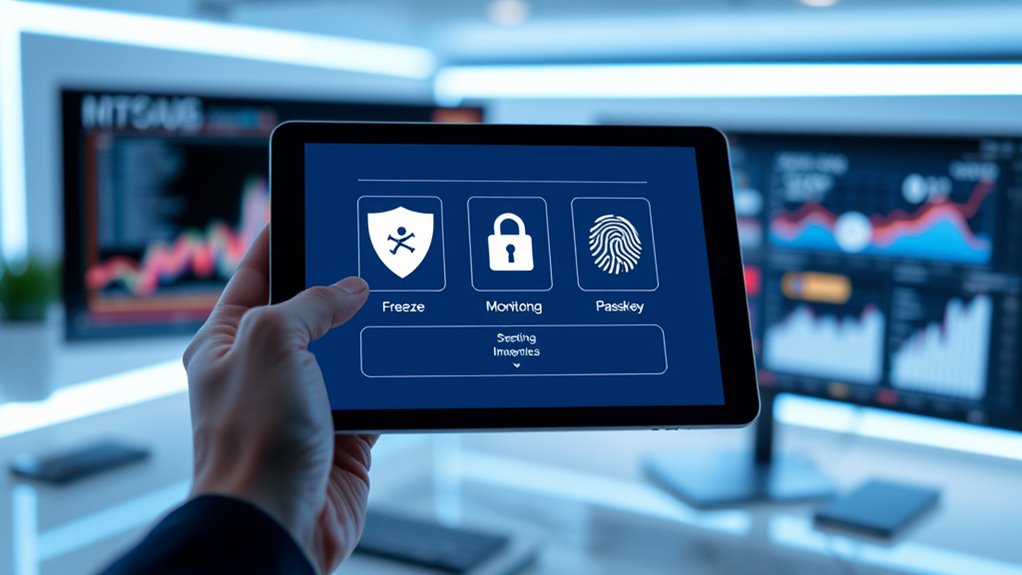
Building a holistic approach to digital identity defense requires understanding the evolving threat landscape and adopting multiple layered security measures. To effectively protect yourself, focus on these key strategies:
- Implement credit freezes to block unauthorized credit activity.
- Use continuous identity monitoring services to detect suspicious or unusual activity early.
- Adopt passkeys to replace passwords, leveraging cryptographic keys for phishing-resistant authentication.
Combining these measures ensures you not only prevent new account fraud but also stay alert to breaches and unauthorized access. This layered approach minimizes vulnerabilities, especially as cyber threats like synthetic identity fraud and automated attacks grow more sophisticated. Staying proactive and integrating these tools helps you reduce risk, maintain control over your digital identity, and adapt to the rapidly changing security landscape.
Frequently Asked Questions
How Do Passkeys Prevent Phishing and Credential Theft Effectively?
Passkeys prevent phishing and credential theft by replacing traditional passwords with cryptographic keys that are stored securely on your device. When you log in, the website verifies your identity through these keys, making it impossible for hackers to steal or reuse credentials. This process is phishing-resistant because attackers can’t trick you into revealing the keys, and it eliminates vulnerabilities associated with password reuse or interception during login.
What Are the Best Practices for Combining Credit Freezes With Monitoring?
Think of combining credit freezes and monitoring as a fortress guarding your financial castle. You should activate the freeze to block unauthorized credit access instantly, then pair it with continuous monitoring to detect suspicious activity early. Regularly review alerts and unfreeze only when necessary. This dynamic duo guarantees you’re not only sealing entry points but also vigilantly watching for any signs of intrusion, keeping your credit safe like a well-guarded treasure.
How Often Should Consumers Update Their Security Measures to Stay Protected?
You should update your security measures regularly, ideally every three to six months, to stay protected. This includes changing passwords, enabling two-factor authentication, and reviewing account activity. Stay informed about new scams and security tools like passkeys and monitoring services. By keeping your defenses current, you reduce the risk of falling victim to identity theft, especially as cyber threats evolve rapidly and fraud techniques become more sophisticated.
Can Identity Monitoring Detect Synthetic Identity Fraud Early?
Yes, identity monitoring can help detect synthetic identity fraud early. When you’re proactive, monitoring services scan credit reports, dark web data, and personal info for suspicious activity. They often spot inconsistencies or unusual patterns that may indicate synthetic identities forming. Catching these signs early gives you a vital advantage, allowing you to take swift action before fraudsters fully exploit your identity, saving you from potential financial and credit damage.
What Emerging Technologies Are Most Promising for Future Identity Security?
Emerging technologies like biometric verification, blockchain, and AI-driven anomaly detection show great promise for future identity security. Biometric methods, such as facial recognition and fingerprint scans, offer strong, phishing-resistant authentication. Blockchain can provide decentralized identity verification, reducing fraud risks. AI enhances real-time threat detection by analyzing patterns and spotting suspicious activities early. These innovations work together to create a more resilient, seamless, and user-friendly identity security ecosystem, helping you stay ahead of evolving threats.
Conclusion
Think of your digital identity as a delicate garden—without the right safeguards, weeds of fraud can take over. By freezing your credit, monitoring your accounts, and using passkeys, you’re planting a strong barrier against intruders. Stay vigilant, adapt to new threats, and nurture this protection like a gardener tending to their most prized plants. With these tools, you keep your identity safe, ensuring your digital world remains a secure sanctuary.