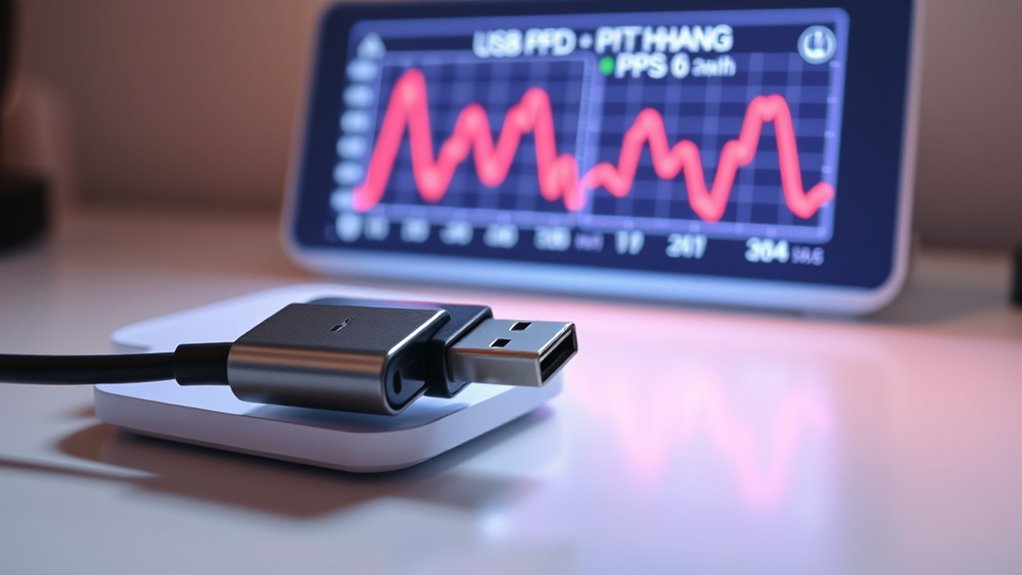

USB PD and PPS are advanced charging standards that let you charge devices faster and more safely. USB Power Delivery can deliver up to 100W, negotiating power levels to match your device’s needs while preventing overheating. PPS adjusts voltage and current in real-time, optimizing charging speed and battery health. Together, these standards guarantee efficient, reliable, and safe energy transfer, reducing waste and prolonging your device’s lifespan. Keep exploring to discover how these standards can benefit your charging experience.
Key Takeaways
- USB Power Delivery (USB PD) supports up to 100W power transfer, enabling fast charging for various devices.
- Programmable Power Supply (PPS), a subset of USB PD, allows real-time voltage and current adjustments for optimized charging.
- USB PD and PPS facilitate safe energy transfer through continuous negotiation and communication between charger and device.
- These standards improve charging efficiency, reduce heat, and help maintain battery health by fine-tuning power delivery.
- They ensure safe, reliable, high-speed charging while protecting devices from overloading and overheating risks.
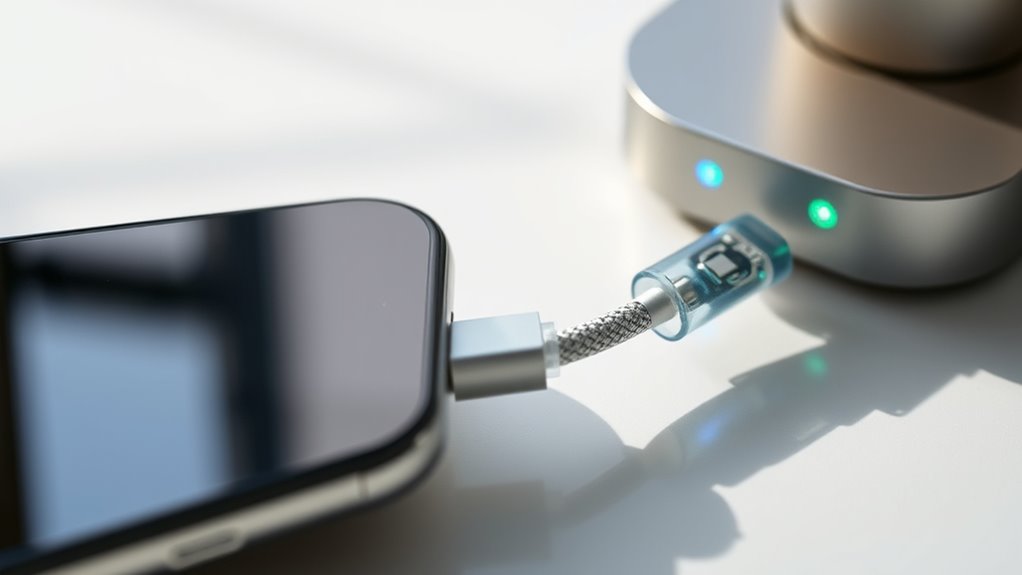
Fast charging has become a major selling point for smartphones, tablets, and even laptops. It allows you to power up your device more quickly than traditional charging methods. At the heart of fast charging is power delivery technology, which determines how much power can be transferred from the charger to your device. USB PD, for example, is a versatile standard that can deliver up to 100W, making it suitable for not just phones but also larger gadgets like laptops. It works by negotiating power levels between the charger and device, ensuring the right amount of energy is transferred safely. This negotiation process is dynamic, adjusting the power flow as needed, which means your device charges efficiently without overheating or damage. Cultural Impact also influences the development and adoption of these standards, shaping how we interact with technology daily. PPS, a subset of USB PD, takes this a step further by allowing the charger to tweak the voltage and current in real-time during charging. This adaptability helps in maintaining ideal charging speeds while reducing heat generation. With PPS, your device can draw higher power levels safely, especially when it needs a quick top-up. This is particularly useful for modern smartphones that support fast charging, as PPS can deliver tailored power levels that match the device’s internal charging circuitry. As a result, your phone can reach full capacity faster without compromising battery health. Both standards emphasize efficient power delivery, but PPS stands out for its ability to fine-tune the charging process. This means less energy waste and less stress on your device’s battery over time. When you use a charger compatible with USB PD and PPS, you’re likely to experience faster, more reliable charging sessions. These standards also ensure safety, as they communicate continuously with your device to prevent overloading or overheating. This seamless negotiation gives you peace of mind, knowing that your device is being charged at its fastest safe rate.
Frequently Asked Questions
How Does USB PD Compare to Other Fast Charging Standards?
Compared to other fast charging standards, USB PD offers higher power transfer efficiency, allowing quicker charging with less heat. You’ll find it more compatible across devices because it supports a wide range of gadgets, unlike some standards that can cause compatibility issues. USB PD also adapts power levels dynamically, ensuring your device charges safely and efficiently, making it a versatile choice for fast, reliable charging.
Can PPS Chargers Charge Non-Compatible Devices Efficiently?
Ever wonder if PPS chargers can efficiently power non-compatible devices? Generally, they don’t, because charger compatibility impacts device efficiency. PPS chargers are tailored for devices supporting Programmable Power Supply, allowing dynamic voltage adjustments. If your device doesn’t support PPS, it might charge slowly or not at all. To guarantee ideal performance, check your device’s compatibility. Using an incompatible charger can lead to subpar charging and potential device issues.
What Safety Features Are Included in USB PD and PPS?
You benefit from safety features like device compatibility checks and advanced power regulation, which protect your gadgets during charging. USB PD and PPS include built-in safeguards such as over-voltage, over-current, and temperature protection, ensuring your devices don’t get damaged. These features actively monitor and adjust power flow, providing a secure charging experience and preventing potential hazards, so you can charge confidently without worrying about safety risks.
Are There Any Limitations on Cable Types for These Standards?
You might think any cable works, but with USB PD and PPS, cable compatibility and connector types matter. Not all cables support these standards, especially older or cheaper ones. Using the wrong cable can limit charging speed or even cause safety issues. So, you’ll want to stick with certified cables and compatible connectors, like USB-C, to guarantee safe, efficient charging—because, of course, not all cables are created equal.
How Do Charging Standards Impact Battery Lifespan?
Charging standards influence your battery lifespan by managing how power flows during charging. Proper standards help reduce battery degradation by controlling voltage and current, which minimizes stress on your battery. This leads to fewer charging cycles and less wear over time. Using compatible fast-charging options responsibly guarantees you don’t push your device beyond safe limits, ultimately extending its overall battery health and delaying the effects of battery degradation.
Conclusion
Understanding USB PD and PPS charging standards helps you choose the right tech, saving you time and frustration. These standards are like the gears in a well-oiled machine, working smoothly together to power your devices efficiently. By staying informed, you prevent yourself from falling into the trap of outdated or incompatible chargers. Remember, knowledge is power—don’t put all your eggs in one basket. Keep up with the latest standards to keep your devices running seamlessly and avoid surprises down the road.