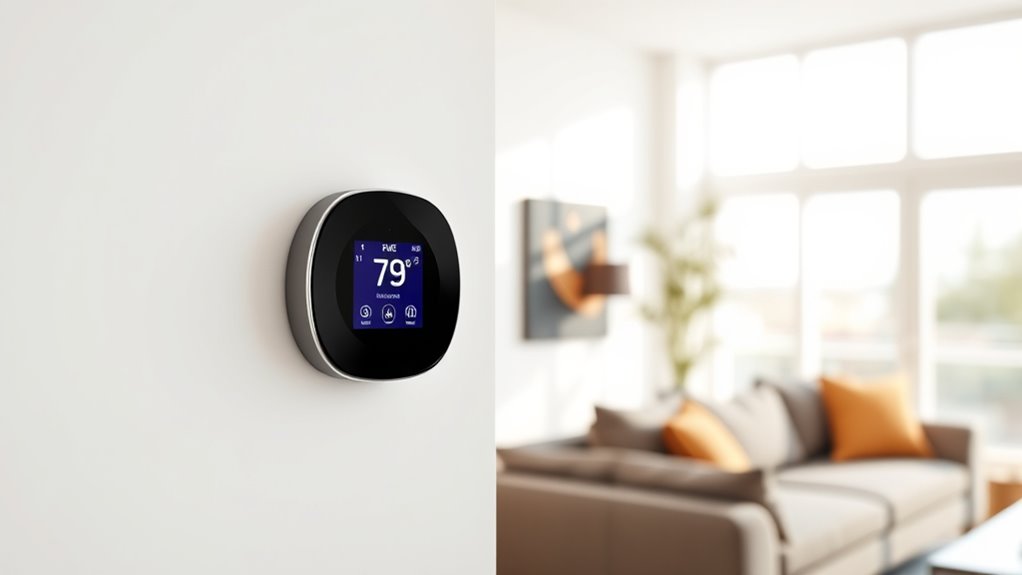

If you’re looking for the best Wi-Fi baseboard thermostats in 2025, I recommend options like Mysa, moes, and Honeywell, which offer easy installation, smart controls, and compatibility with popular voice assistants. These devices help save energy, improve comfort, and integrate seamlessly with your smart home system. Whether you prefer digital or manual models, there’s something for every setup. Keep exploring further to discover the top choices that fit your needs perfectly.
Key Takeaways
- Compatibility with various HVAC systems, including electric baseboards, radiant, and fan-forced heaters.
- Support for popular voice assistants like Alexa, Google Assistant, and Apple HomeKit for seamless smart control.
- Features such as customizable schedules, energy tracking, and remote control via dedicated smartphone apps.
- Easy DIY installation with step-by-step guides, built-in level, and compatible wiring options.
- Certification like ENERGY STAR for energy savings and smart functionality, ensuring efficiency in 2025.
Mysa Smart Thermostat LITE for Baseboard Heaters
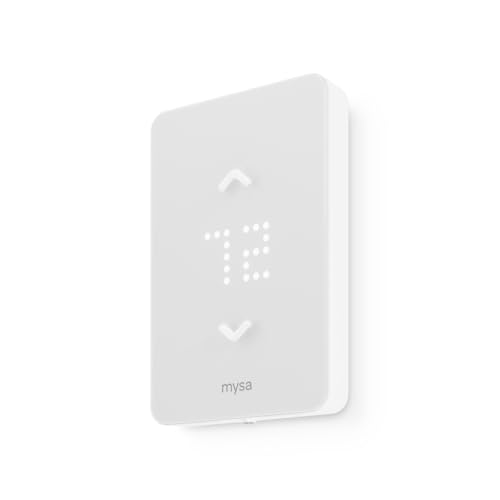

Looking for a reliable Wi-Fi thermostat that’s easy to install and perfect for controlling high-voltage baseboard heaters? The Mysa Smart Thermostat LITE is a top choice. It works with 120V-240V systems, replacing standard thermostats with just four wires, making DIY installation straightforward—about 15 minutes with the included guide. It supports remote control via smartphone app, voice commands, and home integrations like Alexa, Google, and Apple HomeKit. Designed for durability and style, it helps you create custom schedules, monitor energy use, and save up to 26% on heating costs—all without extra fees or subscriptions.
Best For: homeowners and DIY enthusiasts seeking an easy-to-install, Wi-Fi-enabled thermostat for high-voltage baseboard heating systems that supports smart home integration and energy savings.
Pros:
- Simple 4-wire installation suitable for DIY setup in about 15 minutes
- Compatible with multiple smart home platforms including Alexa, Google Assistant, and Apple HomeKit
- Helps reduce heating costs by up to 26% with customizable scheduling and energy monitoring
Cons:
- Only supports line voltage electric systems; not compatible with low-voltage systems
- Requires at least four wires, including neutral or second live wire, which may not be present in all installations
- Limited to controlling electric baseboard heaters and similar high-voltage systems, not suitable for other heating types
meross Smart Thermostat for Electric Baseboard and In-Wall Heaters

The meross Smart Thermostat is an excellent choice for homeowners with electric baseboard or in-wall heaters who want precise, programmable control. It’s easy to install in under 30 minutes and compatible with systems requiring four or more wires. Designed for high-voltage setups up to 16A, it works seamlessly with electric baseboards, convectors, and radiant systems. The thermostat supports Apple HomeKit, Alexa, Google, and SmartThings, enabling voice commands and automation. It offers 1°F accuracy, a 7×24-hour schedule, real-time energy monitoring, and open window detection. Power-off memory assures settings stay intact during outages, making it a reliable, energy-efficient addition to any smart home.
Best For: homeowners seeking precise, programmable control of electric baseboard and in-wall heaters with smart home integration and energy monitoring.
Pros:
- Easy installation in less than 30 minutes with compatible high-voltage systems
- Supports multiple voice assistants including Siri, Alexa, and Google Assistant for hands-free control
- Features real-time energy monitoring, open window detection, and customizable schedules for efficiency
Cons:
- Requires four or more wires in the electrical box, which may not be available in all setups
- Limited to high-voltage electric heating systems up to 16A, not suitable for low-voltage applications
- May need additional compatible smart devices for full automation integration in some smart home ecosystems
Mysa Smart Thermostat for Electric Baseboard Heaters

If you have high-voltage electric baseboard heaters and want a sleek, smart control option, the Mysa Smart Thermostat is an excellent choice. Designed specifically for 120–240V systems, it handles loads up to 1900W at 120V and 3800W at 240V. Its compact, modern design is 40% smaller than previous models, with features like Adaptive Display Technology that adjusts brightness automatically. You can control it remotely through a free app and integrate with platforms like Apple HomeKit, Alexa, and Google Assistant. Just verify your wiring includes a neutral or second live wire, and confirm compatibility, especially with older or two-wire systems.
Best For: homeowners with high-voltage electric baseboard heaters seeking a compact, smart thermostat compatible with modern voice assistants and automation platforms.
Pros:
- Compact, modern design that is 40% smaller than previous models for easy installation and aesthetic appeal
- Supports remote control and scheduling via a free app, integrating with Apple HomeKit, Alexa, and Google Assistant
- Features like Adaptive Display Technology and alerts for temperature and humidity enhance user comfort and convenience
Cons:
- Requires at least four wires, including a neutral or second live wire, which may not be available in older systems
- Not compatible with low-voltage or two-wire installations, limiting its use in some setups
- Maximum load capacity of 1900W at 120V and 3800W at 240V, which may be insufficient for larger or more powerful systems
MOES Programmable Smart Thermostat for Electric Baseboard Heaters

The MOES Programmable Smart Thermostat is an excellent choice for homeowners with high-voltage electric baseboard heaters who want precise control and energy savings. It supports 2.4G WiFi, allowing remote control through the Smart Life or TUYA app, and integrates seamlessly with Alexa and Google Home for voice commands. Designed for 120V/240V systems, it requires at least four wires, including a neutral or second live wire. Its frosted display minimizes glare, while the tactile knob offers easy manual adjustments. With smart scheduling, you can heat only when needed, boosting efficiency and reducing energy costs. This thermostat combines manual and smart features for improved comfort and control.
Best For: homeowners with high-voltage electric baseboard heaters seeking precise, energy-efficient temperature control with remote and voice command capabilities.
Pros:
- Supports 2.4G WiFi for seamless remote control via Smart Life/TUYA app
- Compatible with Alexa and Google Home for voice-activated management
- Manual tactile knob allows easy in-person adjustments and simplified operation
Cons:
- Requires at least four wires, including a neutral or second live wire, which may complicate installation in some setups
- Designed specifically for high-voltage systems, limiting compatibility with low-voltage applications
- Frosted display, while minimizing glare, may be less vibrant or easy to read in very bright environments
Wi-Fi Smart Thermostat for Electric Baseboard Heaters

A Wi-Fi smart thermostat designed specifically for electric baseboard heaters offers precise control over your heating system, making it an ideal choice for homeowners seeking efficient and customizable climate management. It’s compatible with 120-240V systems, ensuring quick installation with included components like a wall plate and wires. The Fahrenheit LCD display shows current and target temperatures, along with Wi-Fi status. You can set schedules, adjust temperatures remotely via an app, or control it with Alexa and Google Assistant. This thermostat helps save energy by activating heating only when needed, and its override features prevent pipes from freezing, offering both convenience and peace of mind.
Best For: homeowners with 120-240V electric baseboard heating systems seeking customizable, remote-controlled, and energy-efficient climate management.
Pros:
- Easy installation with included components like wall plate and wiring for quick setup.
- Remote management via app, Alexa, and Google Assistant for convenient control from anywhere.
- Programmable features and override options to optimize comfort and reduce energy costs.
Cons:
- Not compatible with 24V central heating or single pole systems.
- Requires a 2.4 MHz Wi-Fi network for operation, which may be limiting in some setups.
- Limited to electric baseboard heaters; not suitable for other types of heating systems.
Meross Smart WiFi Thermostat with Voice Control
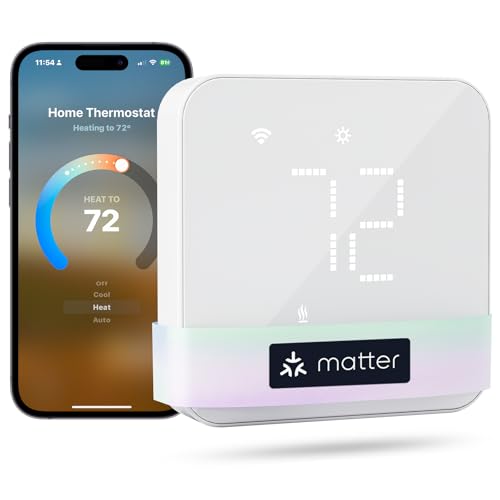
Designed for homeowners seeking smart control over their HVAC systems, the Meross Smart WiFi Thermostat with Voice Control offers seamless integration with popular voice assistants and smart home platforms. It works with Alexa, Google Assistant, Apple Home, Matter, and Samsung SmartThings, providing flexible control options. Installation is straightforward, taking less than 30 minutes using the Meross app and a C-wire or adapter. It supports 2.4GHz Wi-Fi networks and is compatible with most HVAC systems like heat pumps and boilers. The thermostat features customizable schedules, energy tracking, and smart alerts, all encased in a compact, wall-mounted design.
Best For: homeowners seeking a versatile, easy-to-install smart thermostat compatible with multiple voice assistants and HVAC systems, especially those using 2.4GHz Wi-Fi networks.
Pros:
- Seamless integration with popular voice platforms like Alexa, Google Assistant, Apple Home, and Samsung SmartThings.
- Easy DIY installation within 30 minutes using the Meross app and available adapters if needed.
- Features customizable scheduling, energy tracking, and smart alerts for enhanced comfort and efficiency.
Cons:
- Only supports 2.4GHz Wi-Fi networks, which may limit compatibility in some modern setups.
- Requires a C-wire for installation; systems without C-wires need an adapter.
- Not compatible with electric baseboard heaters.
Sensi Lite Smart Thermostat
If you want a smart thermostat that’s easy to install and offers reliable control, the Sensi Lite Smart Thermostat is an excellent choice. It’s compatible with most HVAC systems and features a straightforward DIY installation with a built-in level and step-by-step instructions. Certified by ENERGY STAR, it helps you save around 23% on energy costs through flexible scheduling, geofencing, and remote access via a user-friendly app for Android and iOS. Sensi prioritizes your privacy, not selling personal data. With remote control from anywhere, you’ll enjoy convenient, energy-efficient heating management without complicated setup or security worries.
Best For: homeowners seeking an easy-to-install, reliable smart thermostat that enhances energy efficiency and offers convenient remote control.
Pros:
- Simple DIY installation with built-in level and step-by-step instructions
- ENERGY STAR certified, saving approximately 23% on HVAC energy costs
- Privacy-focused, does not sell personal data or use data for advertising
Cons:
- C-wire required for heat pump and heat/cool only systems; may not be compatible with all HVAC setups
- Limited advanced features compared to more premium thermostats
- Requires a compatible Wi-Fi network and smartphone for remote access
KING K901-W Hoot WiFi Programmable Thermostat

The KING K901-W Hoot WiFi Programmable Thermostat stands out as an ideal choice for homeowners seeking precise control over electric baseboard and radiant heaters. Its large LCD touchscreen makes programming straightforward, with options for 4 or 6 daily time periods. I appreciate the smartphone app connectivity, allowing me to adjust settings remotely. The thermostat supports multi-volt systems (120/208/240V) and offers accurate temperature regulation within ±1ºF thanks to its electronic thermistor sensing. With a sleek backlit display and over-the-air firmware updates, it combines modern convenience with reliable performance, making it a solid addition for smart heating control.
Best For: homeowners seeking precise, customizable control of electric baseboard, radiant, and fan-forced heaters with remote access and modern features.
Pros:
- Easy-to-use large LCD touchscreen for straightforward programming
- Smartphone app connectivity for remote adjustments and monitoring
- Supports multi-volt systems (120/208/240V) with accurate temperature regulation within ±1ºF
Cons:
- Average customer rating is 3.7 out of 5 stars, indicating mixed reviews
- Dimensions of 10x10x10 inches may be bulky for some installations
- Limited to electric heating systems; not compatible with other HVAC types
Programmable Smart Thermostat for Electric Heating

A programmable smart thermostat for electric heating is an ideal choice for homeowners seeking energy savings and flexible scheduling. It’s compatible with Apple HomeKit and supports the Matter protocol, ensuring seamless integration with Alexa, Google Assistant, and other smart devices. Designed for electric systems like floor heating, radiators, and baseboards, it handles up to 16A and 95-240V. Its 7-day programmable schedule, including a 5+1+1 plan, helps reduce energy costs by 35%. You can control it remotely via app or voice commands, and its user-friendly features, like weather forecast and child lock, make managing your home heating effortless and efficient.
Best For: homeowners looking to optimize energy efficiency and enjoy flexible, remote control of their electric heating systems with smart home integration.
Pros:
- Compatible with Apple HomeKit, Alexa, Google Assistant, and supports Matter protocol for seamless device integration.
- 7-day programmable schedule with a 5+1+1 plan and energy savings of up to 35%.
- Easy DIY installation with user-friendly features like weather forecast, child lock, and dynamic lighting.
Cons:
- Limited to electric heating systems with a maximum load capacity of 16A and voltage range of 95-240V.
- May require a junction box converter if compatibility issues arise during installation.
- Some users might find advanced scheduling features complex to set up initially.
Sensi Smart Thermostat
Designed for homeowners seeking an easy-to-install, Wi-Fi-enabled thermostat, the Sensi Smart Thermostat offers seamless remote control and energy-saving features. It’s compatible with most residential HVAC systems and often doesn’t need a c-wire, simplifying installation. The thermostat supports voice commands via Alexa, Google Assistant, SmartThings, and Vera. With a 5-inch LED display and a glossy finish, it’s both functional and sleek. Certified Energy Star, it can cut HVAC costs by around 23%, thanks to flexible scheduling and detailed usage reports. Plus, it monitors system performance, alerts you to maintenance needs, and prioritizes your privacy, making it a reliable, user-friendly choice.
Best For: homeowners seeking an easy-to-install, Wi-Fi-enabled thermostat that offers remote control, energy savings, and compatibility with most residential HVAC systems.
Pros:
- Easy DIY installation often without the need for a c-wire
- Supports voice control via Alexa, Google Assistant, SmartThings, and Vera
- Helps save approximately 23% on HVAC energy costs with flexible scheduling and detailed reports
Cons:
- Limited to Wi-Fi connectivity; requires a stable internet connection for remote features
- May not be compatible with some specialized or older HVAC systems
- Lacks a touchscreen interface, relying on the LED display and physical buttons
Honeywell Home RTH6580WF Wi-Fi 7-Day Programmable Thermostat, White

If you’re looking to upgrade your home’s heating and cooling control with a user-friendly and energy-efficient option, the Honeywell Home RTH6580WF Wi-Fi 7-Day Programmable Thermostat is an excellent choice. It features a large, backlit digital display and intuitive controls, making setup simple. You can control it remotely via the Total Connect Comfort or Honeywell Home app, compatible with Alexa, Google Assistant, and Cortana. ENERGY STAR certified, it supports various systems like gas, oil, electric, and heat pumps, but needs a C-wire for power. Its smart scheduling and learning capabilities help optimize comfort and save energy effortlessly.
Best For: homeowners seeking an easy-to-use, energy-efficient Wi-Fi thermostat with smart scheduling and remote control capabilities.
Pros:
- User-friendly with large, backlit digital display and intuitive controls
- Supports remote access via smartphone apps and voice assistants like Alexa and Google Assistant
- ENERGY STAR certified, promoting energy savings and efficiency
Cons:
- Requires a C-wire for power installation, which may not be present in all homes
- Does not support electric baseboard heating (120-240V)
- Batteries are needed for backup, adding to maintenance considerations
KING K902-B Hoot WiFi Line Voltage Smart Programmable Thermostat

The KING K902-B Hoot WiFi Line Voltage Smart Programmable Thermostat is an excellent choice for those seeking precise control over electric baseboard, fan-forced, or radiant heaters, especially in multi-volt setups. It supports 120/208/240V and features a double pole, 4-wire installation, making it versatile for various systems. The large LCD touchscreen allows easy programming of up to six periods per day, with options to set temperature limits and lock settings. Plus, it supports over-the-air firmware updates via the Hoot app, ensuring your thermostat stays current. Its accurate sensing technology maintains comfort within ±1ºF, making it a reliable, future-proof smart heating control solution.
Best For: those looking for a versatile, WiFi-enabled programmable thermostat to control electric baseboard, fan-forced, or radiant heaters in multi-volt systems.
Pros:
- Supports 120/208/240V for broad compatibility with various electric heating systems
- Large LCD touchscreen simplifies programming and control functions
- Over-the-air firmware updates ensure the thermostat remains up-to-date and feature-rich
Cons:
- Installation requires a 4-wire, double pole setup, which may be complex for some users
- Limited temperature range (41º – 90ºF) may not suit all climates or preferences
- Designed primarily for line voltage systems; incompatible with low-voltage heating setups
Honeywell Home CT410B Manual Thermostat

The Honeywell Home CT410B Manual Thermostat is an ideal choice for those seeking simple, reliable control over their electric baseboard heating without the need for advanced programming or connectivity. It features a bimetal temperature sensor for straightforward operation and a double-line break switch for safe, positive OFF. Designed for line voltage applications (120-240V), it can handle up to 5280W, making it suitable for single or multiple heaters within that limit. Easy to install with a 4-wire setup, it’s perfect for residential or commercial use, providing consistent, manual temperature regulation without the complexity of smart features.
Best For: homeowners or facility managers seeking a reliable, easy-to-install manual thermostat for line voltage electric heaters without the need for programming or smart features.
Pros:
- Simple, straightforward operation with a bimetal temperature sensor
- Compatible with a wide range of line voltage heaters (120-240V, up to 5280W)
- Easy 4-wire installation with positive OFF for safety
Cons:
- No digital display or adjustable programming options
- Limited to manual control; no smart or remote connectivity
- Temperature adjustment range (40°F to 80°F) may not suit all climates or preferences
MAXKOSKO WiFi Smart Thermostat for Electric Floor Warming System

For homeowners seeking precise control over electric floor heating, the MAXKOSKO WiFi Smart Thermostat stands out with its intuitive touchscreen display and easy wiring. It supports 120V and 240V power options, making it versatile for most systems. The included 15-foot floor sensor guarantees reliable temperature readings, while the Smart Life app lets me manage settings remotely. I can also use voice commands with Alexa or Google Assistant, which is super convenient. Its sleek design and simple installation process make it a user-friendly choice. Overall, the MAXKOSKO offers customizable schedules and energy-saving features, making it a smart option for efficient, comfortable heating control.
Best For: homeowners seeking precise, remote-controlled management of electric floor heating systems with easy installation and energy efficiency.
Pros:
- User-friendly touchscreen interface and straightforward DIY installation
- Compatible with both 120V and 240V systems for versatile use
- Supports remote control via smartphone app and voice commands with Alexa and Google Assistant
Cons:
- Limited information on warranty details and customer support options
- Rated 4.3 out of 5 stars, indicating some users may experience minor issues
- Availability and pricing may vary, requiring online or retail checking
Honeywell Home Smart Thermostat with WiFi Compatibility

If you’re seeking a smart thermostat that offers precise control and seamless integration with your home automation system, the Honeywell Home Smart Thermostat with WiFi Compatibility is an excellent choice. It supports both conventional and heat pump systems, with ENERGY STAR certification promoting energy efficiency. The device connects via WiFi, allowing remote control through the First Alert app, and integrates smoothly with Alexa, Google Assistant, and Apple HomeKit thanks to Matter certification. Features include customizable scheduling, auto-away mode, humidity display, and demand response. Powered by a wired connection, it doesn’t require batteries and offers control through app, voice, or push buttons, making it versatile and user-friendly.
Best For: homeowners seeking a versatile, energy-efficient smart thermostat that integrates seamlessly with popular home automation platforms and offers remote control capabilities.
Pros:
- Compatible with conventional and heat pump systems, supporting various HVAC configurations
- Supports multiple smart home platforms including Alexa, Google Assistant, and Apple HomeKit due to Matter certification
- ENERGY STAR certified, promoting energy savings and utility rebate opportunities
Cons:
- Requires a C-wire for installation; may need additional power adapter for compatibility in some homes
- No battery backup; relies solely on wired power, so power outages could disrupt operation
- Slightly larger dimensions may require wall space considerations during installation
Factors to Consider When Choosing a Wi-Fi Baseboard Thermostat
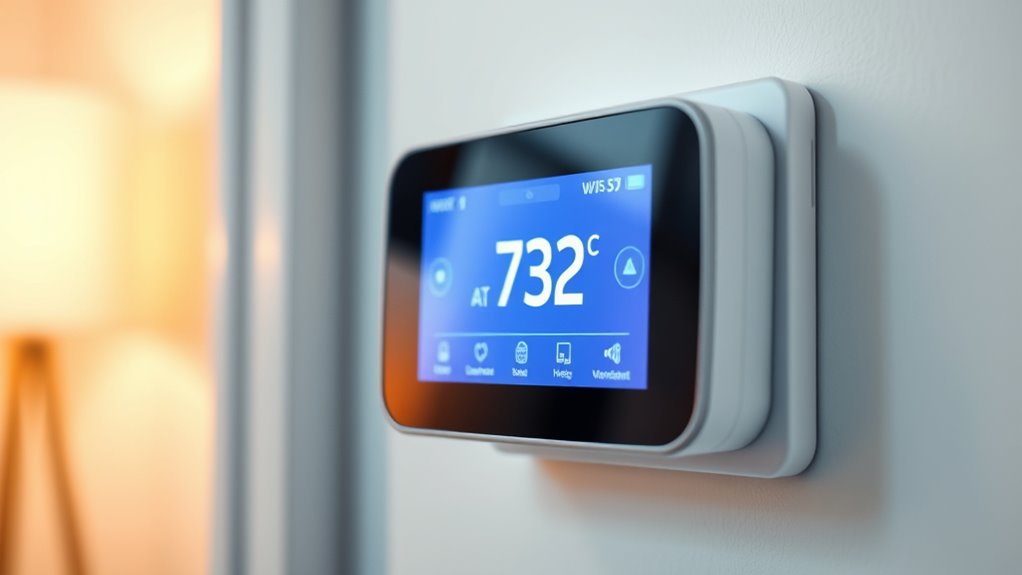
When selecting a Wi-Fi baseboard thermostat, I look at how well it works with my existing heating system and its Wi-Fi features for remote control. Ease of installation and setup matter, along with programming options that fit my schedule. Plus, I consider energy-saving functions to help reduce my utility bills.
Compatibility With Systems
Choosing a Wi-Fi baseboard thermostat requires careful attention to your existing heating system and electrical setup. First, verify the thermostat’s voltage compatibility—whether your system runs on 120V, 208V, or 240V—to avoid electrical issues. It’s also vital to confirm support for your specific heating type, such as electric baseboard, radiant, or fan-forced systems. Check if the thermostat needs a neutral wire or a second live wire and ensure your wiring matches these requirements for a smooth installation. Additionally, confirm the load capacity, measured in watts or amps, aligns with your heater’s power specifications to guarantee safe operation. Lastly, verify the thermostat’s communication protocol (Wi-Fi, Z-Wave, Zigbee, or Matter) is compatible with your existing smart home ecosystem for seamless integration.
Wi-Fi Connectivity Features
Selecting a Wi-Fi baseboard thermostat with reliable connectivity means paying close attention to its wireless standards and compatibility with your smart home setup. Look for models supporting dual-band Wi-Fi, like 2.4GHz and 5GHz, for a stable connection. Compatibility with platforms like Amazon Alexa, Google Assistant, or Apple HomeKit ensures seamless voice control and automation. It’s also important to choose thermostats that offer remote access via mobile apps, so you can control and schedule your heating from anywhere. Verify that the Wi-Fi module supports over-the-air firmware updates, which keep your device secure and up-to-date. Finally, ensure the connection uses strong encryption protocols like WPA2 or WPA3 to protect your network and personal data. These features are essential for reliable, secure, and integrated smart heating control.
Installation Ease and Setup
Installing a Wi-Fi baseboard thermostat can be straightforward if you pay attention to the setup process and wiring requirements. I recommend choosing a model with clear, step-by-step instructions to make DIY installation easier and reduce the need for professional help. Make sure the thermostat supports your wiring configuration, especially if it needs a four-wire setup with neutral or a second live wire. Opt for thermostats that include thorough installation kits, such as wall plates and wiring components, to speed up mounting and ensure secure connections. Additionally, look for models with integrated setup wizards or guided setup features within the app to simplify initial configuration. Compatibility verification tools or app prompts are also helpful, confirming your system’s wiring and voltage match the thermostat’s requirements, making setup smoother and more reliable.
Programming Flexibility Options
Once your Wi-Fi baseboard thermostat is installed and connected, the next step is to contemplate how flexible its programming options are. Look for thermostats that offer customizable weekly or daily schedules so you can tailor heating patterns to your routines. Multi-stage programming is also important, as it helps manage different heating periods within a day effectively. Auto-scheduling features that learn and adapt to your habits over time can make your system more efficient and convenient. Additionally, check if the thermostat provides override or temporary hold options, allowing immediate adjustments without disrupting your pre-set programs. Finally, verify whether you can set maximum and minimum temperature limits, preventing unwanted fluctuations and maintaining comfort during programming.
Energy Saving Capabilities
To maximize energy savings with your Wi-Fi baseboard thermostat, focus on models that offer programmable schedules and auto-scheduling features. These allow you to set heating times that match your routine, preventing unnecessary energy use. Look for thermostats with real-time energy usage monitoring and reports, so you can identify waste and make adjustments. Advanced features like open window detection automatically pause heating when ventilation is detected, saving energy without sacrificing comfort. Geofencing technology is also valuable; it adjusts heating based on your presence, ensuring rooms aren’t heated when unoccupied. Additionally, choose thermostats with high compatibility for precise temperature control. This prevents overheating and guarantees efficient operation, ultimately reducing your energy bills while keeping your home comfortable.
Smart Home Integration
When choosing a Wi-Fi baseboard thermostat, guaranteeing it supports popular smart home platforms like Alexa, Google Assistant, and Apple HomeKit is essential for seamless integration. This compatibility allows me to control my heating effortlessly through voice commands or favorite apps. I also verify that the thermostat adheres to protocols like Matter, Zigbee, or Z-Wave to ensure it works smoothly with other smart devices. It’s important that it integrates with my existing smart home hub for centralized control and automation. I look for a device with remote management and scheduling features via a dedicated app, so I can adjust settings from anywhere. Built-in voice control and automation options help me create routines based on occupancy, time, or environmental conditions, making my smart heating truly intelligent and convenient.
Frequently Asked Questions
How Secure Are Wi-Fi Baseboard Thermostats Against Hacking?
Wi-Fi baseboard thermostats can be quite secure if you follow best practices. I always make certain to update their firmware regularly and use strong, unique passwords. I also enable network encryption and avoid connecting them to unsecured networks. While no device is completely immune to hacking, these steps considerably reduce the risk. Staying vigilant and monitoring your system helps ensure your smart heating controls remain safe and secure.
Can These Thermostats Integrate With Existing Smart Home Systems?
Yes, Wi-Fi baseboard thermostats can often integrate seamlessly with existing smart home systems like Alexa, Google Home, or Apple HomeKit. I’ve found that many models are designed with compatibility in mind, making setup straightforward. Just verify your thermostat supports your preferred platform, and you might need a hub or compatible app. This integration allows me to control my heating effortlessly through voice commands or automation routines.
What Is the Typical Installation Complexity for These Thermostats?
Installation is usually straightforward, like fitting a puzzle piece into its spot. Most Wi-Fi baseboard thermostats come with clear instructions and basic wiring, so I’d say it takes about an hour for someone comfortable with DIY projects. If you’re not confident, a professional can make it smooth sailing. Overall, these thermostats are designed to be user-friendly, making setup less of a headache and more of a breeze.
How Accurate Are the Temperature Readings Compared to Traditional Thermostats?
I find that Wi-Fi baseboard thermostats are generally quite accurate, often within 1-2°F of traditional models. They use advanced sensors to monitor temperature precisely, and I’ve noticed they respond quickly to changes. While traditional thermostats can sometimes drift, these smart options provide consistent readings, making it easier to maintain a comfortable environment. Overall, I trust their accuracy for effective heating control.
Do Wi-Fi Baseboard Thermostats Support Remote Firmware Updates?
Absolutely, Wi-Fi baseboard thermostats do support remote firmware updates—it’s like having a magic wand that keeps your system at its peak. These updates are essential for security, new features, and bug fixes, all without needing to be physically present. I love how seamless and future-proof this makes my heating system, ensuring I stay ahead of the curve effortlessly.
Conclusion
If you’re worried about compatibility or complexity, rest assured these thermostats are user-friendly and work with most systems. Upgrading your heating control doesn’t have to be intimidating or expensive—these options make smart heating accessible and straightforward. So, don’t let hesitation hold you back from saving energy and boosting comfort. With the right Wi-Fi baseboard thermostat, you’ll enjoy smarter, more efficient heating with just a few simple steps.