
Private mesh networks with LoRa let you build secure, long-range wireless systems that don’t rely on traditional infrastructure like cellular or Wi-Fi. You can connect devices across vast areas, making these networks perfect for rural, industrial, or agricultural settings. They offer resilience, flexibility, and cost savings by using low-power, long-distance communication. To learn more about how to design, secure, and optimize such networks, keep exploring the key strategies and best practices.
Key Takeaways
- LoRa private mesh networks enable long-distance, infrastructure-free device connectivity suitable for rural, industrial, and agricultural applications.
- Implementing strong security protocols, including end-to-end encryption and secure key management, ensures data safety in LoRa mesh networks.
- Strategic node placement and phased deployment optimize coverage, resilience, and scalability of LoRa-based private mesh networks.
- Using LoRaWAN-compliant hardware simplifies management, enhances reliability, and supports secure firmware updates within the mesh.
- Long-range capabilities allow expansive coverage, but require careful environmental consideration and network planning for optimal performance.
Private mesh networks with LoRa technology are transforming how you connect devices over long distances without relying on traditional infrastructure. This innovative approach allows you to create a resilient, flexible network that can operate independently of cellular or Wi-Fi connections. By utilizing LoRa’s low-power, long-range capabilities, you can deploy devices across expansive areas—rural communities, industrial sites, or smart agriculture—without the need for costly infrastructure upgrades. This setup guarantees that your network remains operational even if external networks fail or become congested.
A key aspect of building a secure and reliable private mesh network with LoRa is implementing robust security protocols. Since these networks often transmit sensitive data—whether it’s environmental metrics, asset information, or control signals—you need to safeguard against potential threats. Encryption plays a central role here; end-to-end encryption ensures that data remains confidential as it travels across the network. You should also incorporate secure key management practices, regularly updating encryption keys and employing authentication mechanisms to prevent unauthorized access. Secure firmware updates are another critical element, enabling you to patch vulnerabilities promptly and maintain the integrity of your devices over time.
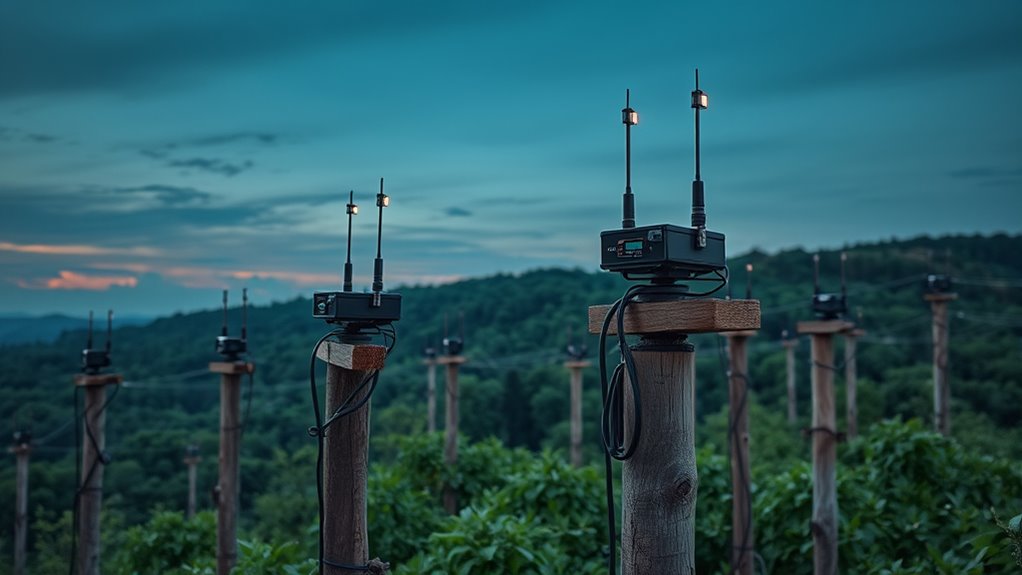
Deployment strategies are equally crucial in maximizing the effectiveness of your LoRa mesh network. You’ll want to carefully plan node placement, considering factors like terrain, obstacles, and power sources. Strategically positioning gateways and repeaters can enhance signal strength and network robustness. Furthermore, you must consider scalability—designing your network so that adding new devices doesn’t compromise performance or security. It’s wise to start with a pilot deployment, testing the system’s capacity and resilience before expanding. This phased approach helps you identify potential issues early, refine your deployment strategies, and optimize resource allocation.
Careful node placement and phased deployment optimize LoRa mesh network performance and scalability.
In practice, deploying a private LoRa mesh network involves balancing hardware choices, security measures, and network topology. Using LoRaWAN-compliant devices can simplify integration and management, but customizing security protocols to suit your specific needs offers an extra layer of protection. You’ll also want to document your deployment process thoroughly, ensuring that future expansion or troubleshooting is straightforward. With a well-planned strategy and robust security protocols, your private mesh network can deliver reliable, long-range connectivity tailored precisely to your operational requirements. This combination of strategic deployment and security ensures your LoRa network remains resilient, safe, and efficient over the long term. Additionally, understanding long-range capabilities and how they impact network design is essential for optimizing your deployment and ensuring consistent coverage.
LoRaWAN private mesh network hardware
As an affiliate, we earn on qualifying purchases.
As an affiliate, we earn on qualifying purchases.
Frequently Asked Questions
How Secure Are Private Lora Mesh Networks Against Hacking?
Your private LoRa mesh network offers good security but isn’t entirely hack-proof. It uses encryption protocols like AES to protect data, but vulnerabilities can still exist if encryption keys are weak or compromised. Physical security also matters; if someone gains access to your devices or gateways, they could potentially manipulate or intercept data. Regular updates, strong passwords, and secure physical access help strengthen your network against hacking threats.
Can Private Lora Mesh Networks Integrate With Existing Iot Systems?
You can integrate private LoRa mesh networks with your existing IoT systems, but watch out for integration challenges and compatibility issues. You’ll need to make certain that your IoT platforms support LoRa protocols and that hardware components work seamlessly together. Sometimes, you might face hurdles in syncing data formats or communication standards. Planning ahead and choosing compatible devices can help you overcome these issues and achieve smooth integration.
What Is the Typical Range of a Private Lora Mesh Network?
You’ll be amazed at how far a private LoRa mesh network can stretch—up to 15 kilometers or more in open terrain! This impressive range depends on the frequency bands you choose, like 868 MHz or 915 MHz, and the power limits you set. Keep in mind, higher power boosts range but must stay within legal limits. So, with the right setup, your network can cover vast areas effortlessly.
How Scalable Are Private Lora Mesh Networks for Large Deployments?
You can scale private LoRa mesh networks quite effectively, but scalability challenges exist as deployment size grows. To handle large deployments, you should develop robust deployment strategies, such as hierarchical network design and strategic node placement. These approaches help maintain performance and reliability. Keep in mind, increasing nodes may introduce latency and management complexity, so planning carefully guarantees your network remains efficient and scalable as it expands.
What Are the Costs Associated With Setting up a Private Lora Mesh Network?
Setting up a private LoRa mesh network can be more affordable than you think, but it’s no small feat—cost analysis reveals hardware expenses are your main focus. You’ll need gateways, nodes, and possibly software licenses, which can add up quickly. While initial investments might seem steep, the long-term savings on maintenance and scalability make it a worthwhile investment for large deployments, offering unbeatable coverage and reliability.

Waterproof 8dBi Long Range Cellular Ultra Distance LoRa Gateway Antenna Omni-Directional Glass Fiber LoRaWan 915MHz Antenna with 5M/16.4FT Cable for Helium RAK Hotspot HNT Finestra Miner Mining
Why choose 8dBi: 8dBi antenna is most suitable for Suburban Area, wide open spaces, Low/moderate Hotspots Density Area,…
As an affiliate, we earn on qualifying purchases.
As an affiliate, we earn on qualifying purchases.
Conclusion
Think of a private LoRa mesh network as your own secret garden, where each device is a sturdy tree, gently connecting and sharing resources without outside interference. With LoRa’s long-range and low-power capabilities, you can create a resilient, self-sustaining ecosystem that grows stronger with each addition. Embrace this network like tending your personal orchard—nurturing connections that blossom into reliable, independent communication channels. Your private mesh is your digital sanctuary, flourishing with connectivity and control.
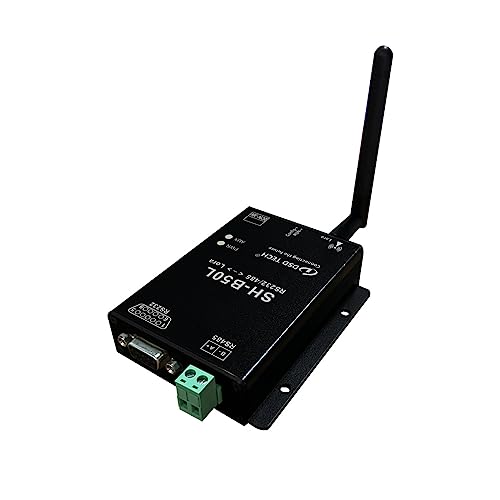
DSD TECH Lora Module SH-B50L RS485/232 to Lora Adapter Lorawan Wireless Transceiver
DSD TECH: DSD TECH focuses on the development of communication connection devices such as USB/Serial/Wireless. We have served…
As an affiliate, we earn on qualifying purchases.
As an affiliate, we earn on qualifying purchases.
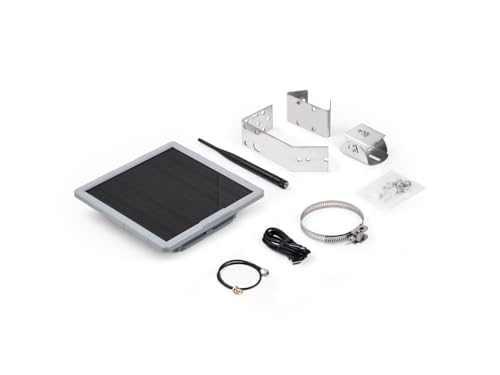
SenseCAP Solar Node P1-Pro – Solar Powered LoRa Meshtastic Node, Outdoor Long Range Wireless Communication & GPS Tracking Device
Solar Powered & Low Maintenance – Equipped with a built-in solar panel and rechargeable battery, the SenseCAP P1-Pro…
As an affiliate, we earn on qualifying purchases.
As an affiliate, we earn on qualifying purchases.