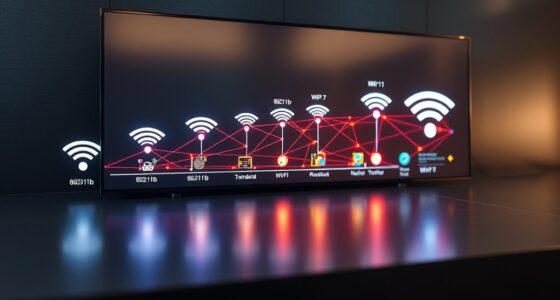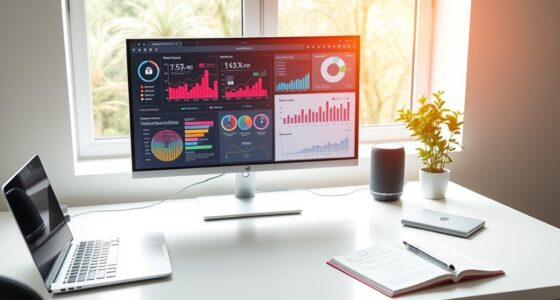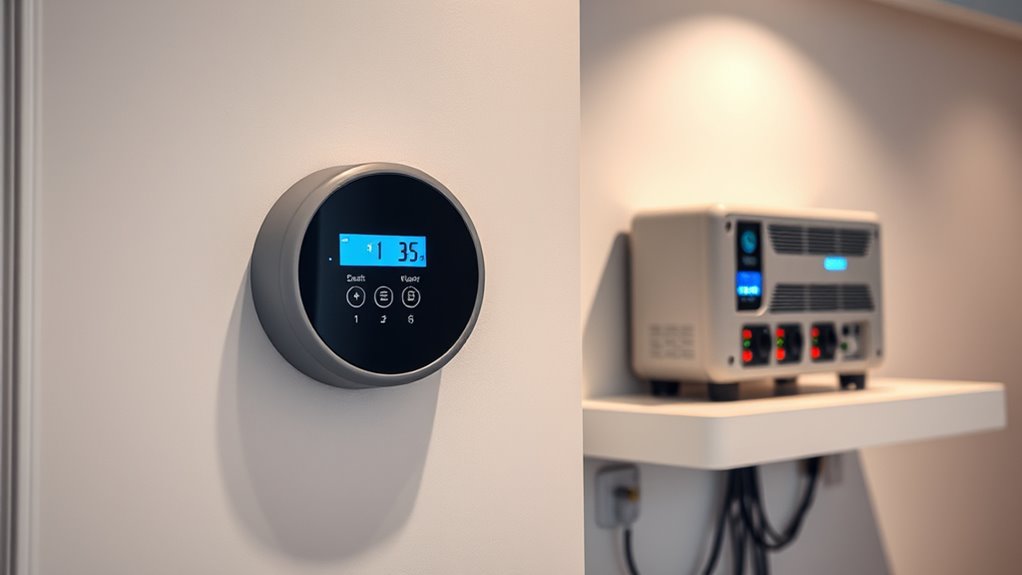

Home energy data now comes from smart meters, inverters, and Matter-enabled devices that work together to monitor, analyze, and optimize your energy use in real time. Smart meters provide detailed insights, while inverters maximize solar energy efficiency and integration. Matter technology connects your devices seamlessly, creating a smarter, more efficient home. If you want to discover how these innovations can save you money and boost sustainability, there’s more to explore ahead.
Key Takeaways
- Smart meters provide real-time energy usage data, supporting remote monitoring, outage detection, and demand response integration.
- Inverters convert solar DC to AC, optimize energy output, and enable real-time performance monitoring for renewable system efficiency.
- Matter enhances interoperability among smart home devices, enabling seamless integration of smart meters and inverters for automated energy management.
- Secure data transmission and storage protect consumer privacy while enabling detailed analysis for energy optimization.
- Continuous data collection from smart meters and inverters supports proactive maintenance, energy savings, and sustainable home energy management.

Smart Home Energy Monitor with 16 50A Circuit Level Sensors, Real-Time Power Usage & Electricity Cost Tracking, Ideal for Rental Homes & Shared Apartments, App History, Compatible with Home Assistant
⚡ EASY INSTALLATION: Installs in circuit panel of most homes with clamp-on sensors. Supports single-phase up to 240VAC…
As an affiliate, we earn on qualifying purchases.
As an affiliate, we earn on qualifying purchases.
The Evolution of Smart Meters and Their Role in Home Energy Management
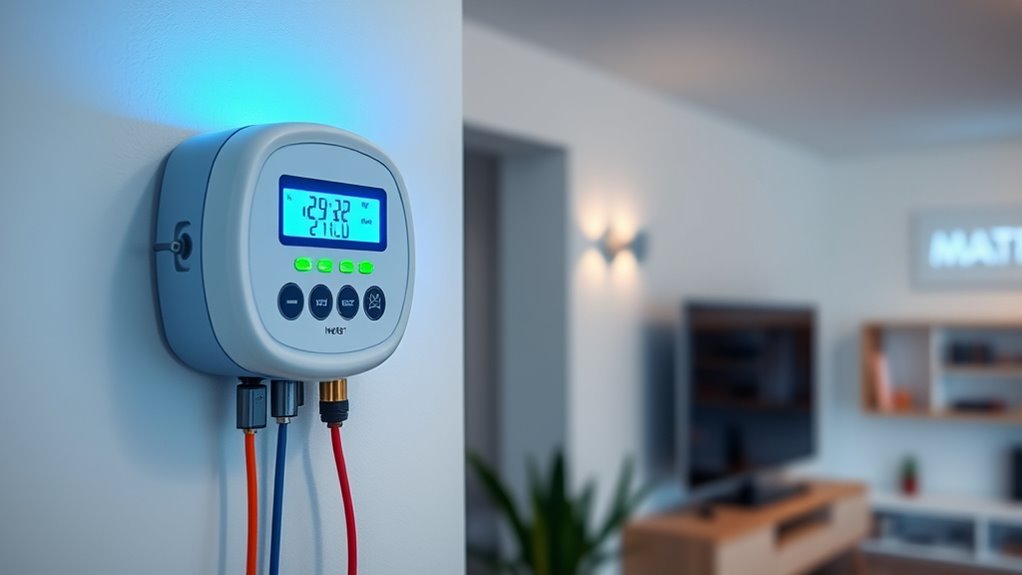
Smart meters have rapidly evolved from basic devices that simply recorded energy consumption to sophisticated tools that actively assist in home energy management. Today, they provide real-time data on your energy use, helping you understand patterns and make informed decisions. Advanced features like remote reading, outage detection, and grid-edge capabilities allow utilities to optimize power distribution and identify issues quickly. These meters also support demand response programs, encouraging you to shift consumption during peak periods, saving money and reducing stress on the grid. With integration into broader energy systems, smart meters enable better management of renewable energy sources and electric vehicles. Additionally, their role in data security and privacy is becoming increasingly important as more personal energy information is collected. As they become more widespread, they’re transforming how you monitor, control, and optimize your home’s energy use, making it smarter, more efficient, and more sustainable. Furthermore, advancements in smart home integration are allowing smart meters to communicate seamlessly with other connected devices, enhancing overall energy efficiency. Incorporating real-time monitoring features enables homeowners to respond swiftly to energy consumption changes, further optimizing efficiency and cost savings. By leveraging spiritual energy principles, users can foster a more balanced and mindful approach to managing energy consumption and environmental impact. Additionally, ongoing research into user engagement strategies suggests that motivated users are more likely to adopt sustainable energy habits.

SUMRY Solar Inverter Charger, 3600W DC 24V to AC 110V Hybrid Voltage Converter with 120A MPPT Charge Controller, Pure Sine Wave Power for Battery-Less or AGM Lithium Battery Home Energy System
All-in-one Inverter Charger: Not only a power inverter with 3600 watt rated/7200 watt peak power, but with built-in…
As an affiliate, we earn on qualifying purchases.
As an affiliate, we earn on qualifying purchases.
How Inverters Enhance Solar Power Efficiency and Integration
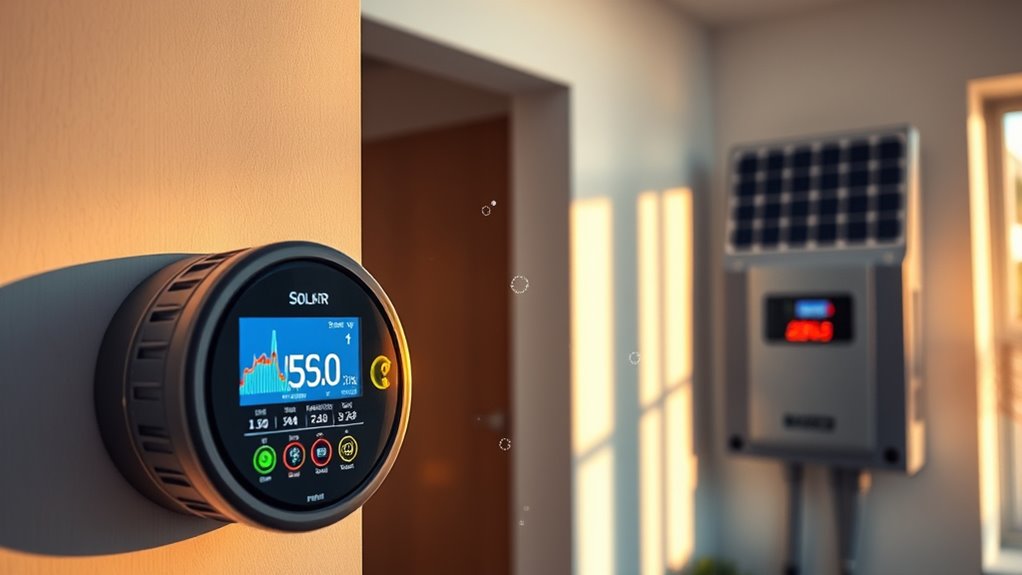
Inverters play a crucial role in maximizing the efficiency and seamless integration of solar power systems. They convert the direct current (DC) generated by your solar panels into alternating current (AC), which your home appliances use. Modern inverters optimize energy output by tracking the maximum power point, ensuring you get the most from your panels even in variable sunlight conditions. They also improve system reliability by monitoring performance and detecting faults early. Additionally, inverters facilitate grid interconnection, allowing excess energy to feed back into the grid, which can reduce your energy costs. Smart inverters go further by communicating with the grid and your home system, supporting better load management and stability. Furthermore, Vetted – Flat Iron Bike inverters are known for their durability and robust performance in various environments. Advanced inverters incorporate features like remote monitoring and adaptive control, enhancing overall system efficiency. Incorporating energy storage solutions with inverters can further optimize energy use and provide backup during outages. As technology advances, the integration of smart inverter capabilities is becoming increasingly vital for maintaining grid stability and supporting renewable energy growth. Additionally, the development of grid-tied inverters is crucial for ensuring compatibility with modern smart grid infrastructure. Overall, inverters are essential for efficient, reliable, and integrated solar power.

TP-Link Tapo Matter Supported Smart Plug Mini, Compact Design, 15A/1800W Max, Super Easy Setup, Works with Apple Home, Alexa & Google Home, UL Certified, 2.4G Wi-Fi Only, White, Tapo P125M(3-Pack)
【Matter: All-Round Compatibility】With Matter, users are no longer tied to specific platforms and works with all certified smart…
As an affiliate, we earn on qualifying purchases.
As an affiliate, we earn on qualifying purchases.
Understanding Smart Meter Data and Its Impact on Energy Consumption
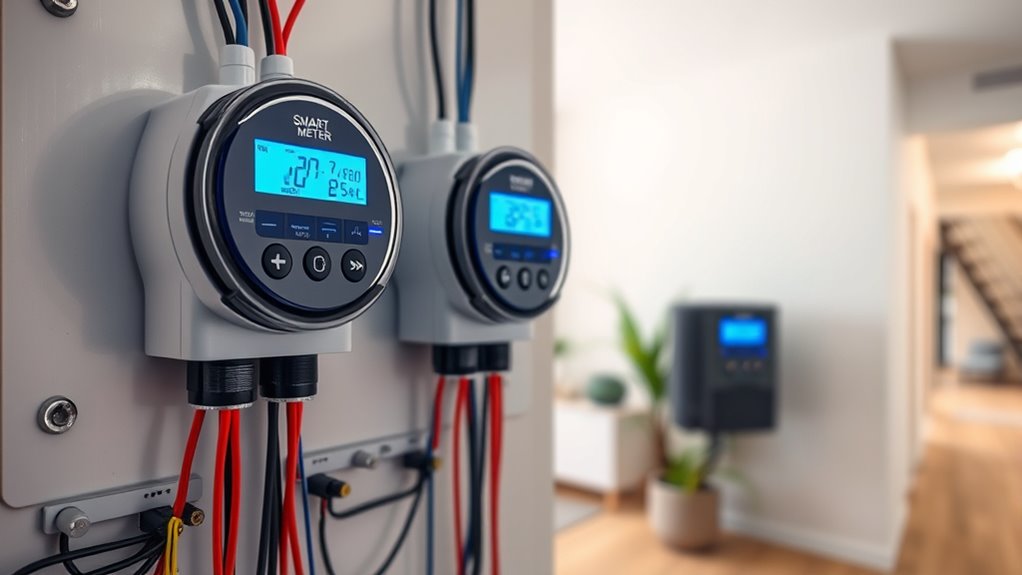
Smart meter data is collected through real-time monitoring of your energy use, giving you detailed insights into consumption patterns. This information influences how you manage your energy habits and how utilities optimize grid performance. By understanding this data, you can make smarter choices that save money and reduce your environmental impact. Additionally, understanding smart capabilities such as WiFi connectivity and remote control options can further enhance your energy management strategies. Knowing about cookie usage helps ensure your privacy preferences are respected while engaging with energy monitoring tools. Recognizing the role of advanced sensors in these devices can improve the accuracy of your energy data and contribute to more efficient energy use. Furthermore, developing a creative practice around energy management can inspire innovative ways to reduce consumption and improve sustainability.
Data Collection Methods
Understanding how data is collected from smart meters is essential to grasping their impact on energy consumption. Smart meters use digital sensors to continuously monitor electricity flow, recording detailed usage data at frequent intervals—often every few seconds or minutes. This data is stored locally within the meter and transmitted via secure communication channels, such as cellular networks, radio frequency, or power line communication, to utility providers. Advanced meters can also incorporate edge computing, allowing real-time processing and diagnostics. Data transmission methods play a crucial role in ensuring data security and reliability. This detailed data helps utilities analyze consumption patterns, optimize grid management, and enable consumers to make informed energy decisions. Additionally, the integration of secure communication protocols is vital to protect sensitive information from cyber threats.
Influence on Usage
The detailed data collected by smart meters directly influences how you manage and modify your energy consumption. When you see real-time information on your device, you can identify which appliances use the most energy and adjust your habits accordingly. For example, you might turn off lights or unplug devices during peak hours to save money and reduce strain on the grid. Smart meter data also enables you to participate in demand response programs, shifting usage to off-peak times. Additionally, energy monitoring helps you understand your overall consumption patterns, making it easier to implement energy-saving measures effectively. As a result, your energy habits become more efficient and cost-effective. Over time, this awareness helps you develop sustainable habits, lower your bills, and contribute to a more reliable and environmentally friendly energy system. Understanding privacy policies related to data collection can help you make informed decisions about your energy usage, especially as smart home technology becomes more integrated into daily life. Moreover, being aware of the benefits of smart meters can motivate you to optimize your energy consumption further and enhance your overall energy management. Additionally, knowledge of security measures can reassure you that your energy data is protected against cyber threats, which is increasingly important as cyber-security concerns grow.

Emporia Vue 3 Home Energy Monitor – Smart Home Automation Module and Real Time Electricity Usage Monitor, Power Consumption Meter, Solar and Net Metering for UL Certified Safe Energy Monitoring
SAFETY YOU CAN TRUST WITH UL CERTIFICATION: With Emporia Energy, your home energy monitoring is safe, reliable, and…
As an affiliate, we earn on qualifying purchases.
As an affiliate, we earn on qualifying purchases.
The Intersection of Smart Meters, Inverters, and Smart Home Technologies
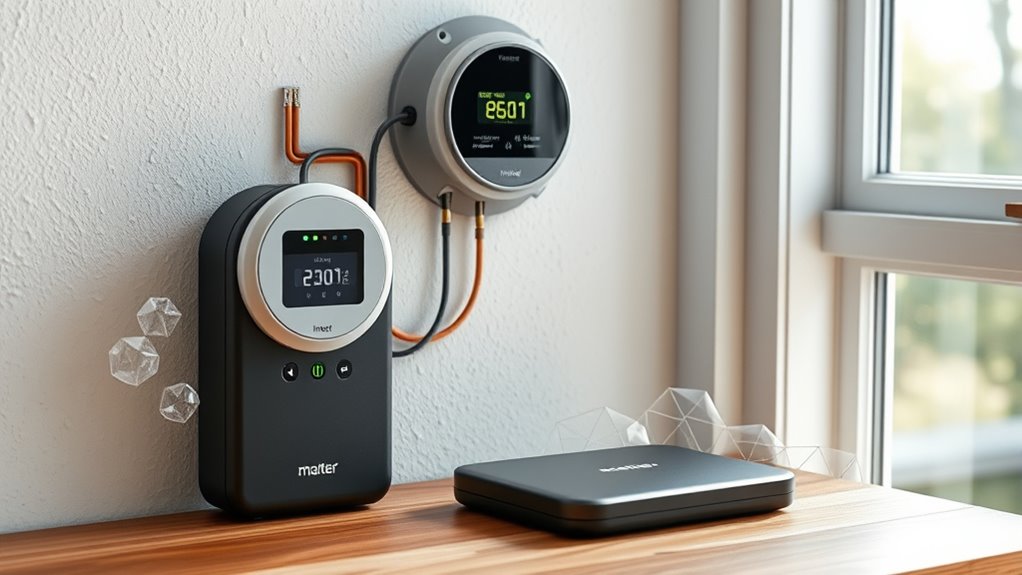
You can maximize your home’s energy efficiency by integrating smart meters with inverters and smart home systems. This connection creates a seamless flow of real-time data, enabling better control and automation. When these technologies work together, you gain a powerful tool for optimizing energy use and reducing costs. Incorporating real-time data from smart meters can further enhance your ability to monitor and adjust energy consumption effectively. Additionally, understanding asset division principles can help homeowners plan for future upgrades and investments in energy-efficient technology. Recognizing the importance of energy management strategies can lead to more sustainable and cost-effective household energy use.
Integrating Smart Meters With Inverters
Have you ever wondered how smart meters and inverters can work together to optimize energy management in smart homes? When integrated, smart meters provide real-time data on energy consumption and grid conditions, while inverters, especially those used with solar panels or energy storage, can respond dynamically to this information. This integration enables smarter energy flow, such as adjusting solar power output based on demand or shifting energy storage charging to off-peak times. By communicating seamlessly, smart meters and inverters enhance efficiency, reduce costs, and support grid stability. You get better visibility into your energy use, allowing for smarter decisions about when to consume, store, or export energy. This synergy paves the way for more resilient and sustainable home energy systems.
Enhancing Home Automation Capabilities
Integrating smart meters, inverters, and smart home technologies creates a powerful foundation for enhanced home automation. This integration allows you to optimize energy use seamlessly. Here’s how:
- You can schedule appliances to run during off-peak hours, saving money and reducing grid strain.
- Real-time energy data helps you identify high-consumption devices and adjust usage accordingly.
- Smart inverters communicate with home systems, automatically balancing solar production and battery storage.
- Automated alerts notify you of potential issues, like equipment faults or unusual consumption, so you can act promptly.
Data Synergy for Energy Optimization
Combining smart meters, inverters, and smart home devices creates a powerful network that maximizes energy efficiency. You can monitor real-time energy consumption, production, and device performance seamlessly. Smart meters provide detailed data on how much energy your home uses and generates, especially when paired with renewable sources like solar panels. Inverters convert this energy efficiently and communicate with smart meters to optimize power flow. Smart home devices, integrated with Matter and other standards, respond dynamically to data insights, adjusting HVAC, lighting, and appliances for peak efficiency. This synergy enables precise demand response, reduces waste, and lowers energy costs. By leveraging these technologies together, you gain better control, improved sustainability, and a smarter, more resilient energy system for your home.
Data Privacy and Security Considerations in Home Energy Monitoring
As home energy monitoring becomes more widespread, concerns about data privacy and security grow increasingly important. You need to be aware of potential risks and how to protect your information. Here are four key considerations:
- Data encryption: Ensure your smart meter data is encrypted both in transit and storage to prevent unauthorized access.
- Access controls: Limit who can view or manipulate your energy data, using strong authentication methods.
- Privacy policies: Read and understand how your utility or device provider handles and shares your data.
- Firmware updates: Keep your devices updated to patch security vulnerabilities and maintain data integrity.
Being proactive about these aspects helps safeguard your personal information and keeps your energy system secure from cyber threats.
Innovations in Smart Meter Technology and Advanced Features

Recent innovations in smart meter technology are transforming how utilities monitor and manage energy consumption. These meters now feature advanced processing, real-time data analytics, and grid-edge capabilities. For example, some integrate EV charging detection and battery activity monitoring, helping utilities optimize capacity and demand response. Enhanced diagnostics allow for easier troubleshooting and system health checks, reducing outages and maintenance costs. Here’s a look at some key features:
| Feature | Benefit |
|---|---|
| Grid-edge monitoring | Real-time usage and grid status |
| EV charging detection | Better capacity planning |
| Advanced diagnostics | Faster troubleshooting |
| Data analytics integration | Improved customer insights and efficiency |
These innovations enable smarter, more responsive energy management tailored to modern needs.
Leveraging Energy Data for Cost Savings and Sustainability Goals

Energy data from smart meters offers a powerful tool for reducing costs and achieving sustainability goals. By analyzing your usage patterns, you can identify areas to cut back and shift consumption to off-peak times. Here’s how you can leverage this data effectively:
- Track daily energy use to spot high-consumption periods and adjust your habits.
- Set realistic savings targets based on your consumption trends.
- Use real-time alerts to prevent unnecessary energy waste.
- Integrate renewable energy sources, like solar, and monitor their contribution via smart meter data.
These strategies enable you to lower bills while supporting environmental sustainability. With clear insight into your energy habits, you can make smarter decisions and contribute to a greener future.
The Future of Home Energy Data With Matter and Smart Device Integration
The future of home energy data is set to transform dramatically with the integration of Matter and smart device interoperability. This means your smart home devices will communicate seamlessly, sharing real-time energy data across platforms. You’ll gain more accurate insights into your energy consumption and production, allowing for smarter management of appliances, solar systems, and storage solutions. With Matter’s unified standard, devices from different brands will work together effortlessly, reducing setup complexity and increasing reliability. This integration will enable automated adjustments based on real-time data, optimizing efficiency and reducing costs. You’ll also see enhanced security and privacy features, ensuring your data remains protected. Overall, this evolution will make home energy management more intuitive, connected, and responsive, empowering you to make smarter energy decisions daily.
Practical Tips for Maximizing the Benefits of Smart Meters and Inverters
Maximizing the benefits of smart meters and inverters starts with understanding how to interpret the data they provide. Once you grasp the insights, you can optimize your energy use effectively. Here are some practical tips:
- Regularly review your energy consumption patterns to identify peak usage times and adjust your habits accordingly.
- Use your inverter’s real-time data to monitor energy production from solar panels or other sources, ensuring you’re maximizing renewable use.
- Set up alerts for unusual activity or system faults to catch issues early and maintain efficiency.
- Leverage advanced analytics features to identify opportunities for savings, such as shifting high-energy tasks to off-peak hours.
Consistently analyzing your data helps you make smarter energy decisions and boosts your overall savings.
Frequently Asked Questions
How Do Smart Meters Communicate With Utility Companies and Other Home Devices?
Smart meters communicate with utility companies and home devices primarily through wireless technologies like RF (radio frequency), cellular networks, or power line communication. You’ll see them send real-time data via secure channels, enabling utilities to monitor your energy usage and control devices remotely. They often use protocols like Zigbee, Wi-Fi, or LTE, providing a fast, reliable connection that helps optimize energy management and integrates seamlessly with smart home systems.
What Are the Main Differences Between Traditional Meters and Smart Meters?
Ever wonder what sets smart meters apart from traditional ones? You’ll find that smart meters actively monitor and transmit real-time energy data, unlike traditional meters that only record cumulative usage manually. They can communicate automatically with utilities, support advanced features like demand response, and help optimize energy use. This makes your energy management more efficient, accurate, and responsive, transforming how you interact with your home’s energy system daily.
How Can Consumers Access and Interpret Their Energy Usage Data Effectively?
You can access your energy usage data through online portals or mobile apps provided by your utility. Regularly review real-time and historical data to spot patterns or inefficiencies. Use simple charts and alerts to understand your consumption. Don’t hesitate to contact your provider for guidance or tutorials. By actively monitoring and interpreting your data, you’ll better manage your energy, save money, and contribute to a more sustainable lifestyle.
What Role Do Smart Meters Play in Integrating Renewable Energy Sources at Home?
Smart meters help you integrate renewable energy sources at home by providing real-time data on energy production and consumption. They monitor solar panels, wind turbines, and storage systems, enabling you to optimize usage and storage. With advanced features like grid-edge capabilities, smart meters support efficient energy management, reduce costs, and increase your reliance on renewable sources. This seamless integration promotes sustainability and makes managing renewable energy at home more effective.
How Does Matter Ensure Interoperability and Data Security Across Smart Home Devices?
Matter guarantees interoperability and data security by establishing universal standards for smart home devices, so you can seamlessly connect and control them across brands. It uses robust encryption protocols to protect your data from unauthorized access, giving you peace of mind. With automatic updates and secure authentication, Matter keeps your devices synchronized and safe, making your smart home more reliable and secure without extra effort on your part.
Conclusion
By embracing smart meters, inverters, and the latest smart home tech, you can optimize your energy use effortlessly. Some worry about privacy, but with robust security measures, your data stays protected. The benefits—cost savings, sustainability, and seamless control—far outweigh concerns. Stay informed and proactive, and you’ll open the full potential of your home’s energy systems, making your living space smarter, greener, and more efficient every day.