
Aliro is a universal, vendor-neutral standard designed to simplify mobile access credentials across various devices and systems. It combines Bluetooth and NFC transmission methods into a single protocol, ensuring broad compatibility and secure communication. Aliro reduces integration time, enhances security with advanced cryptography, and supports easy deployment across diverse industries like healthcare and hospitality. If you want to see how this innovative standard is shaping the future of access control, keep exploring further.
Key Takeaways
- Aliro is a vendor-neutral, standardized protocol integrating Bluetooth and NFC for secure, seamless mobile access credentials.
- It enhances interoperability across diverse devices and manufacturers, reducing deployment complexity and vendor lock-in.
- Aliro employs advanced cryptography for secure authentication and encrypted communication, ensuring user privacy.
- Supported by major industry players like Apple, Google, and Samsung, it accelerates widespread adoption of unified access solutions.
- Designed for future-proofing, Aliro promotes industry standardization, simplifying integration across sectors such as security, healthcare, and smart buildings.
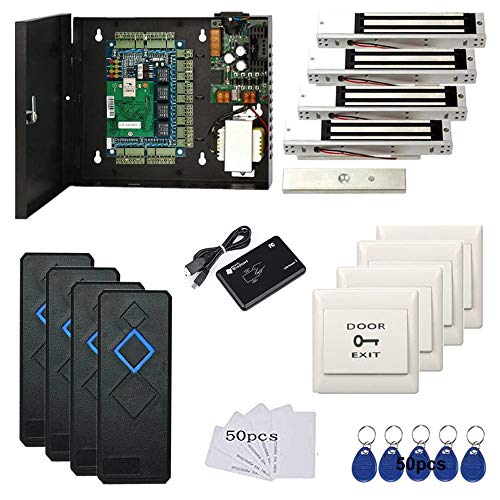
MENGQI-CONTROL 4 Door Access Control System with 600lbs Magnetic Lock Entry Access Control Panel 110V Power Supply Box RFID Reader Exit Button Enroll USB Reader RFID Card Key Fob APP Remote Open Lock
Control 4 doors, get in the door by swiping card or key fob, get out door by push…
As an affiliate, we earn on qualifying purchases.
As an affiliate, we earn on qualifying purchases.
The Need for a Universal Access Protocol

As the use of mobile devices for access control grows, the industry faces increasing fragmentation due to proprietary systems and incompatible technologies. This creates hurdles for users and providers alike, making it harder to assure seamless, secure access. Different manufacturers often develop their own protocols, leading to a patchwork of solutions that don’t communicate well with each other. This complexity raises costs, delays deployment, and undermines user experience. You may find yourself juggling multiple apps or hardware, facing troubleshooting issues, or risking security gaps. A universal access protocol becomes essential to overcome these challenges. It would enable a unified, vendor-neutral standard, simplifying integration and management, enhancing security, and providing a consistent experience across devices and systems. Additionally, adopting a standardized naming convention can help improve clarity and interoperability in system implementation. This need drives the industry toward adopting a common, interoperable solution like Aliro, which can facilitate technology integration and streamline deployment processes. Furthermore, leveraging secure communication protocols can significantly bolster overall system security and reliability, aligning with best practices in Somatic Therapy for creating safe and effective healing environments. Establishing such standards can also promote industry collaboration, fostering innovation and reducing fragmentation across the ecosystem.

SumUp Plus Card Reader, Bluetooth – NFC RFID Credit Card Reader for Smartphone
Accept all major credit and debit cards and pay one low rate
As an affiliate, we earn on qualifying purchases.
As an affiliate, we earn on qualifying purchases.
Key Features Driving Aliro’s Adoption

You’ll find that Aliro’s seamless interoperability across different devices makes integration straightforward and reliable. Its robust security and privacy measures guarantee your access remains protected without sacrificing convenience. Plus, its simplified deployment process helps you implement and maintain the system with less effort and fewer hassles. Additionally, adopting standards like effective exfoliation ensures consistent and optimal performance across various use cases. Embracing interoperability standards further enhances system compatibility and scalability, making long-term management more efficient. Incorporating standardized protocols can also streamline updates and troubleshooting, reducing system downtime and enhancing user confidence. Leveraging industry-specific guidelines ensures the system adheres to best practices for security and performance, facilitating wider acceptance and integration. Recognizing the importance of local legal resources can also support secure and compliant deployment strategies, especially in regions with diverse regulatory requirements.
Seamless Interoperability Across Devices
Seamless interoperability across devices is at the core of Aliro’s widespread adoption, enabling different manufacturers’ hardware to work together effortlessly. You won’t need to worry about incompatible devices or complex integrations. Aliro’s standardized protocol guarantees that smartphones, wearables, and access readers from various brands communicate smoothly. This unified approach reduces setup time and minimizes troubleshooting, making deployment easier for organizations. Whether you’re using NFC or Bluetooth, Aliro guarantees consistent performance across hardware and operating systems. This removes vendor lock-in, giving you flexibility to choose devices without sacrificing compatibility. As a result, users enjoy a seamless experience, and providers benefit from simplified management. This interoperability accelerates adoption across industries, fostering a broad ecosystem of trusted, vendor-neutral access solutions. Implementing a standardized protocol ensures long-term compatibility and adaptability to future technologies. Additionally, the protocol supports cross-platform communication, which is essential for maintaining performance as new devices and standards emerge. Incorporating interoperability standards can further enhance system integration and future-proof your access infrastructure. Emphasizing security and data privacy is also crucial in maintaining user trust within this interconnected environment.
Robust Security and Privacy Measures
Robust security and privacy are at the heart of Aliro’s design, ensuring that mobile access remains both safe and trustworthy. You benefit from advanced asymmetrical cryptography that authenticates credentials and encrypts communications, protecting against unauthorized access. Credentials stay stored on your device, reducing the risk of sharing or misuse, while minimizing vulnerabilities linked to shared keys. Aliro also prioritizes your privacy, implementing strict data protection standards and giving you control over your information. The system’s security architecture is built to meet industry-leading standards, making it resistant to common threats and attacks. By combining strong encryption with privacy-focused design, Aliro provides a reliable, secure foundation that instills confidence in mobile access, encouraging broader adoption across various sectors. Additionally, ongoing AI security research and monitoring help identify and mitigate emerging vulnerabilities, further strengthening the system’s resilience. Incorporating trusted hardware mechanisms enhances overall security by safeguarding cryptographic keys and sensitive data from potential breaches. Moreover, integrating continuous learning models allows the system to adapt in real-time to new and evolving threats, ensuring sustained protection. The integration of multi-layered security protocols further fortifies the system against sophisticated cyber threats, maintaining its integrity over time. Incorporating cybersecurity best practices further fortifies the system against sophisticated attacks, maintaining its integrity over time.
Simplified Integration and Deployment
Aliro’s focus on simplified integration and deployment directly addresses many of the challenges faced by access control providers and device manufacturers. You’ll find that it reduces complexity by offering a standardized protocol compatible with multiple hardware and operating systems. This widespread compatibility minimizes the need for custom coding and troubleshooting, speeding up deployment. The unified approach streamlines installation processes, making system setup more straightforward and less error-prone. With Aliro’s flexible architecture, you can support various configurations—whether mobile-first or legacy systems—without extensive rework. Its vendor-neutral design means you’re not locked into a single manufacturer, giving you more freedom and choice. Additionally, understanding supermarket hours today and regional variations can inform better planning for deployment and support services. Incorporating insights on payment security risks and regulatory compliance ensures that your deployment aligns with industry standards and reduces potential vulnerabilities. Staying informed about regional regulations helps ensure compliance and smooth deployment processes. Moreover, the adoption of a unified standard like Aliro can lead to cost savings by reducing integration time and maintenance efforts. Overall, Aliro’s approach helps you implement secure access solutions faster, with less effort, and greater confidence in long-term compatibility.

Rutherford Controls K-SMART3 Keyscan Smart Card BLE Reader, Compatible with K-Smart Readers and K-Secure 1K & 4K Credentials, Support for Keyscan Mobile Credentials with No Added Programming
Compatible with K-SMART readers and K-SECURE 1K & 4K credentials; as well as ISO 14443 contactless non-proprietary smartcards…
As an affiliate, we earn on qualifying purchases.
As an affiliate, we earn on qualifying purchases.
Ensuring Security and Privacy in Mobile Access

Ensuring security and privacy in mobile access is essential because these systems handle sensitive data and grant entry to secure spaces. You need confidence that your credentials won’t be compromised or misused. Aliro employs robust measures, including asymmetric cryptography, to authenticate credentials and encrypt communications. Credentials stay on your device, reducing risks of sharing or theft. Additionally, Aliro minimizes common vulnerabilities associated with shared keys, making unauthorized access harder. Privacy is prioritized through strict data protection standards, ensuring your information remains confidential. Supporting emotional well-being is also important in maintaining trust and ease of use in security systems. Key features include:
- End-to-end encryption for secure data transmission
- Credential storage on user devices for better control
- Authentication protocols resistant to spoofing
- Privacy-focused data management practices
- Compatibility with trusted security standards
These measures help keep your access secure while safeguarding your privacy.
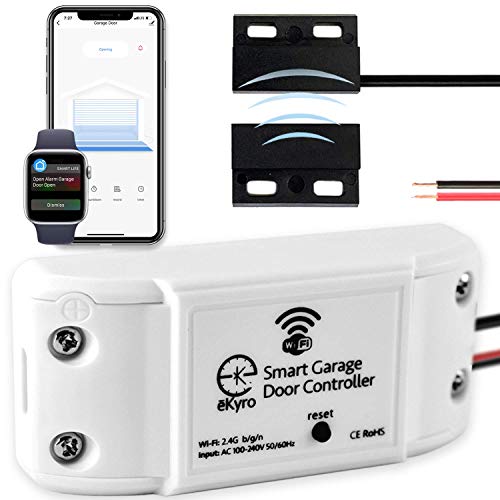
eKyro Smart Garage Door Opener – Universal WiFi Remote Controller Compatible with Alexa, Google Home, iPhone, Siri, Android, Door Left Open Alert, Door Security Systems, Updated Model
🧠 SMARTEN YOUR GARAGE: Universal adapter connects to existing openers & connects to WiFi to allow monitoring and…
As an affiliate, we earn on qualifying purchases.
As an affiliate, we earn on qualifying purchases.
Industry Leaders Supporting Aliro
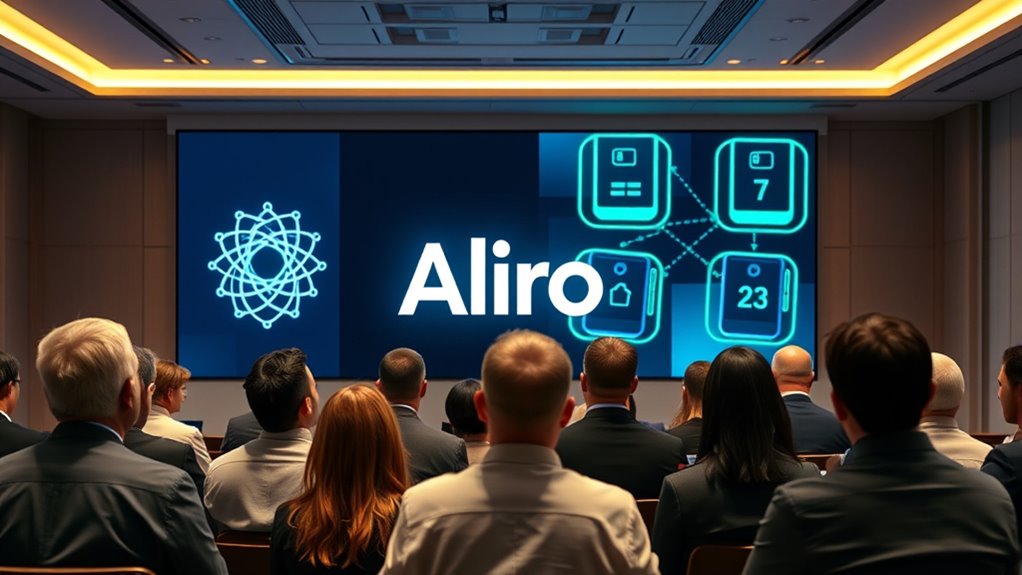
Leading technology and security companies have quickly embraced Aliro, recognizing its potential to unify and simplify mobile access standards. Major industry players see Aliro as a way to promote interoperability and reduce fragmentation. Companies like Apple, Google, Samsung, and Allegion support the standard, ensuring broad device compatibility. Their backing accelerates adoption across diverse sectors, from residential to enterprise. Here’s a snapshot of key supporters:
| Company | Role | Contribution |
|---|---|---|
| Apple | Mobile platform provider | Integrates Aliro into iOS |
| Samsung | Device manufacturer | Supports Aliro in wearables |
| Allegion | Access control solutions | Implements Aliro-enabled systems |
This collective support boosts Aliro’s credibility and adoption, making it the future of mobile access.
Technical Foundations of the Aliro Protocol

The technical foundations of the Aliro protocol establish a secure and standardized communication framework between access readers and user devices. This guarantees seamless, trusted interactions across diverse hardware and software environments. To achieve this, the protocol leverages:
- A unified application layer for consistent messaging
- NFC and Bluetooth transmission standards for versatile connectivity
- Asymmetric cryptography for robust credential authentication
- Secure key exchange mechanisms to prevent interception
- Device credential storage to reduce sharing risks
These elements work together to create a resilient and interoperable system, simplifying integration and enhancing security. By grounding itself in proven, industry-standard technologies, Aliro ensures compatibility across manufacturers while maintaining high privacy and data protection standards. This foundation makes mobile access secure, reliable, and easy to deploy.
How Aliro Simplifies Integration and Deployment
Aliro makes integrating new access devices much easier by ensuring broad compatibility across manufacturers and technologies. It simplifies setup and troubleshooting, so you spend less time on technical issues. With a unified standard, deployment becomes faster and more efficient, saving you both time and resources.
Streamlined Device Compatibility
By providing a unified communication protocol, Aliro makes it easier for device manufacturers and integration teams to guarantee compatibility across different hardware platforms. This standard ensures your devices work seamlessly with diverse readers and operating systems, reducing development time and testing efforts. You won’t need multiple proprietary solutions, making deployment smoother. With Aliro, you benefit from:
- Compatibility across NFC and Bluetooth transmission technologies
- Simplified device certification processes
- Reduced customization for different hardware types
- Consistent user experience regardless of device brand
- Easier updates and firmware management
This streamlined approach minimizes integration setbacks, accelerates deployment, and ensures your devices stay future-proof. Aliro’s interoperability helps you deliver reliable, secure access solutions without the usual compatibility headaches.
Reduced Integration Complexity
Because Aliro standardizes communication protocols across devices, integrating new access hardware becomes considerably simpler and faster. You no longer need to navigate multiple proprietary systems or develop custom integrations for each device. Instead, Aliro’s unified standard ensures compatibility between diverse manufacturers’ hardware and readers, reducing setup time and technical complexity. Its clear application layer streamlines communication, enabling quick deployment and easier troubleshooting. With Aliro, you can manage installations across various environments—be it residential, commercial, or industrial—without extensive reconfiguration. This decreased complexity minimizes deployment errors and shortens project timelines. As a result, you save on development costs and operational overhead, making your access control solutions more scalable and adaptable. Simplified integration ultimately accelerates your overall deployment process, delivering a more efficient, reliable access system.
The Impact of Aliro on Access Control Ecosystems
The introduction of Aliro is transforming access control ecosystems by fostering greater interoperability and simplifying integration across diverse devices and systems. You’ll notice how it lowers barriers, allowing manufacturers and providers to adopt a unified standard more easily. This shift results in smoother device management, reduced costs, and faster deployment. With Aliro, you can expect:
Aliro enhances interoperability, simplifies integration, and streamlines access control for a more flexible and scalable environment.
- Seamless integration across multiple hardware brands
- Simplified troubleshooting and maintenance
- Enhanced security through standardized protocols
- Broader device compatibility with smartphones and wearables
- Accelerated adoption of mobile access solutions
As a result, your access control environment becomes more flexible, scalable, and resilient. It promotes a more consistent user experience and reduces fragmentation, empowering you to upgrade or expand without being tied to proprietary systems.
Comparing Aliro to Other Wireless Communication Standards
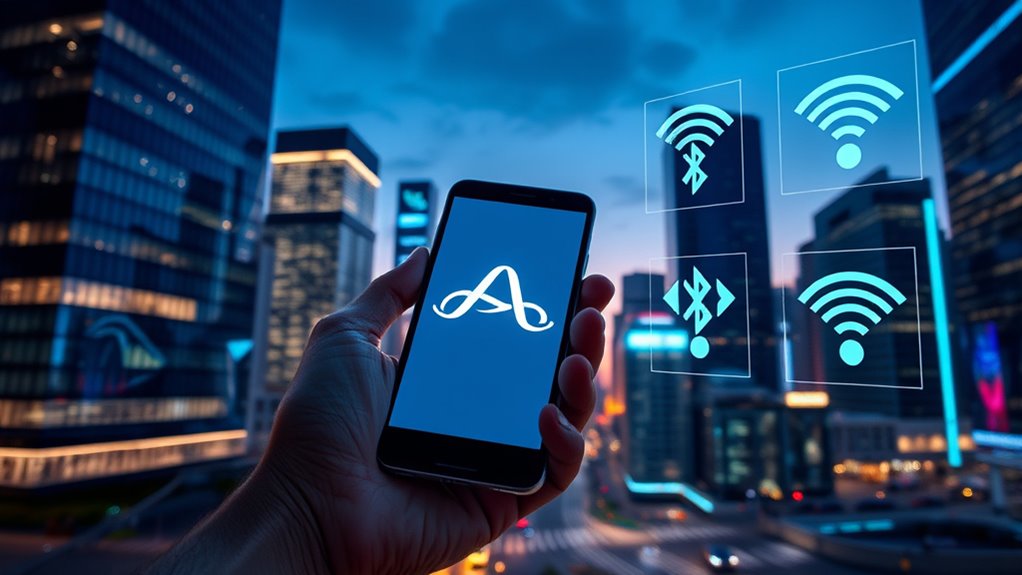
Aliro stands out among wireless communication standards by offering a unified, vendor-neutral protocol specifically designed for mobile access control. Unlike Bluetooth or NFC, which primarily serve other functions, Aliro combines both transmission methods into a single standard, ensuring broad compatibility. It’s built to support secure, encrypted communication tailored for access control, whereas standards like Wi-Fi focus on high-speed data transfer, not security for entry systems. Aliro emphasizes interoperability, allowing devices from different manufacturers to work seamlessly, reducing integration challenges. Additionally, it simplifies deployment by providing a standardized application layer, unlike proprietary solutions that vary widely. While standards like NFC or Bluetooth have been adopted for various uses, Aliro’s focus on unified, secure, and vendor-neutral access control sets it apart as a exhaustive solution.
Future Outlook and Opportunities for Aliro

As mobile access control continues to evolve, there are significant opportunities for Aliro to become the industry standard that unifies diverse systems and devices. You can expect Aliro to expand its reach, enabling seamless integration across new industries like healthcare, hospitality, and smart buildings. Its vendor-neutral approach positions it as the go-to protocol for future innovations. Opportunities include:
- Widespread adoption by global OEMs and service providers
- Integration with emerging IoT and smart city platforms
- Enhanced security features driven by advancing cryptography
- Support for additional wireless technologies and device types
- Development of user-centric, frictionless access experiences
Frequently Asked Questions
How Does Aliro Ensure Compatibility Across Different Device Manufacturers?
You can trust Aliro to guarantee compatibility across device manufacturers by acting as a vendor-neutral standard that enables different devices and readers to work seamlessly together. It supports multiple transmission technologies like NFC and Bluetooth and uses a standardized communication protocol, making integration easier. By focusing on interoperability and industry backing, Aliro allows you to use a variety of manufacturer devices without worrying about compatibility issues.
What Are the Main Privacy Protections Built Into Aliro?
Think of Aliro as a fortress guarding your privacy. It employs asymmetric cryptography, like a lock and key, to authenticate your credentials securely. Your data stays on your device, like a secret kept close, reducing sharing risks. It minimizes common security threats and prioritizes your privacy, acting as an invisible shield that guarantees your personal information remains protected, so you can access doors confidently without worry.
Can Aliro Support Legacy Access Control Systems?
Yes, Aliro can support legacy access control systems by integrating with existing hardware and infrastructure. It’s designed to be flexible, supporting various installation types and architectures, which means it can work alongside older systems during changeover periods. This compatibility allows you to upgrade gradually without replacing all your equipment at once, reducing costs and minimizing disruptions while still benefiting from the security and interoperability Aliro offers.
How Does Aliro Compare to Bluetooth or NFC Alone?
Imagine opening a door with your smartphone, no matter the brand or device type. Aliro offers a unified standard that outperforms Bluetooth or NFC alone by ensuring compatibility across different manufacturers and technologies. Unlike standalone NFC or Bluetooth, Aliro supports both transmission methods securely, simplifies integration, and provides a consistent user experience. This interoperability makes access control more flexible, reliable, and future-proof for diverse environments.
What Are the Future Plans for Expanding Aliro’s Capabilities?
You can expect Aliro to expand its capabilities by supporting more communication technologies, like Wi-Fi and emerging protocols, to enhance compatibility. Its future plans include integrating advanced security features, such as biometric authentication, to boost safety. Additionally, Aliro aims to improve user experience with seamless device pairing and management tools. The goal is to make mobile access more versatile, secure, and easy to implement across diverse environments.
Conclusion
So, here you are, thinking you need a bunch of different access apps, and along comes Aliro promising a universal solution. It’s funny how a single standard could simplify your life—yet, here’s hoping it truly delivers. With industry backing and solid security, Aliro might just make your access woes a thing of the past. Ironically, the future of seamless access is now within reach, and you might actually want to get on board.