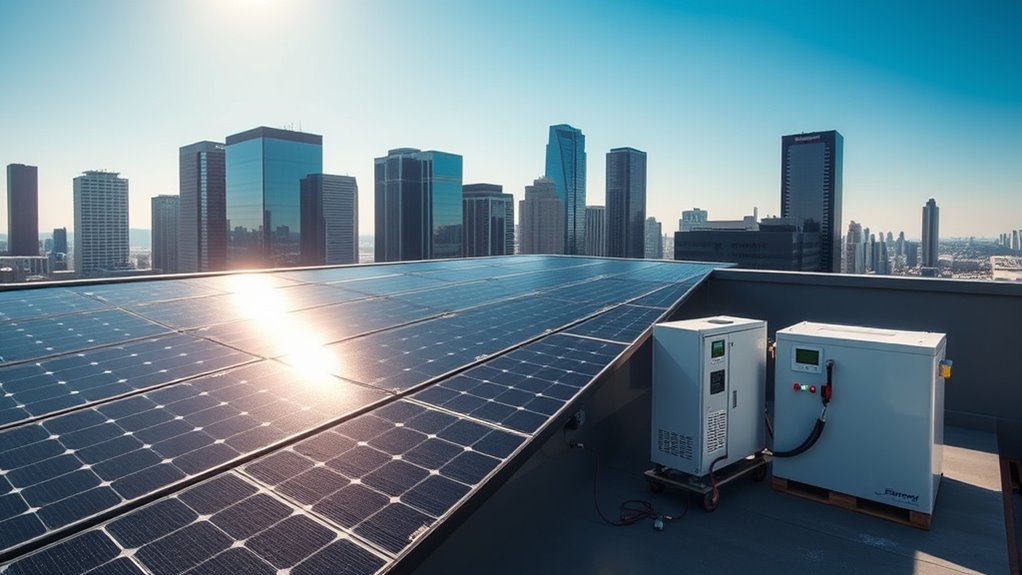

Installing a solar plus battery system in your apartment can cut energy costs, boost your independence, and make your home more resilient. Incentives from cities help reduce upfront costs, making it more affordable to harness solar power even in small spaces. Batteries store excess energy for nights or cloudy days, while smart technology optimizes your usage. When connected properly, you can feed surplus energy back to the grid and enjoy financial perks. Keep going, and you’ll discover how to maximize these benefits.
Key Takeaways
- Solar plus battery systems enable energy independence and backup power for apartment residents.
- Incentives reduce upfront costs, making solar and batteries more affordable for apartment dwellers.
- Proper grid integration and smart technology optimize energy use and maximize savings.
- Compatibility with existing apartment infrastructure and landlord approval are essential for installation.
- Feeding excess energy back to the grid can generate credits and additional financial benefits.
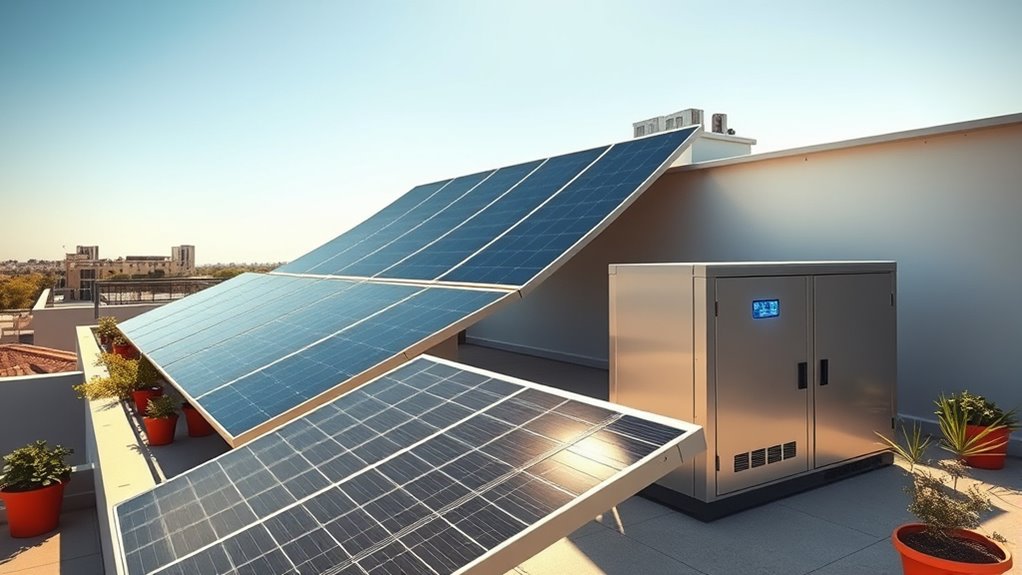
Living in an apartment doesn’t mean you have to miss out on the benefits of renewable energy. Many cities now offer renewable incentives that encourage residents to adopt cleaner power sources, making it easier to justify installing solar and battery systems even in small spaces. These incentives can substantially reduce your upfront costs, making it more affordable to harness the sun’s energy. Plus, with the right setup, you can contribute to a greener grid, supporting a more sustainable community. Grid integration is a key aspect here—your solar panels can feed excess energy back into the grid, earning you credits or payments, which helps offset your energy bills. This interconnected approach benefits both you and the broader electrical system, reducing reliance on fossil fuels.
Apartment living can benefit from renewable incentives, lowering costs and supporting a sustainable, interconnected energy system.
When you consider a solar plus battery system, you’re not just generating your own clean energy; you’re also gaining energy independence. The battery stores excess solar power generated during the day, so you can use it during cloudy periods or at night. This is especially valuable in apartments where rooftop space might be limited or shared. Depending on your building’s setup, you may need approval from your landlord or homeowners’ association, but many places now recognize the importance of renewable energy and are open to such installations. The key is to find systems that are compatible with your apartment’s electrical infrastructure and that can be easily integrated without major modifications.
Grid integration plays a pivotal role in maximizing your solar plus battery benefits. When your system is properly connected, it can intelligently interact with the utility grid, ensuring you draw power during peak demand times or when your battery is depleted. Some systems are equipped with smart technology that automatically manages energy flow, optimizing usage based on your consumption patterns and utility rates. This not only helps you save money but also reduces strain on the grid during high-demand periods, making your energy use more sustainable overall. Additionally, participating in demand response programs can provide extra financial incentives, further encouraging your involvement in renewable energy initiatives.
Furthermore, understanding the role of refrigeration cycle components in heat pump systems can help you better appreciate how energy-efficient appliances contribute to your home’s sustainability. In essence, with the right approach—leveraging renewable incentives, ensuring proper grid integration, and choosing adaptable systems—you can enjoy the advantages of solar and battery storage even within apartment living. It’s a smart, eco-friendly move that offers financial benefits, energy resilience, and a sense of contribution to a sustainable future. As technology advances and policies continue to support renewable energy adoption, your ability to harness solar power from a small space becomes increasingly feasible and rewarding.

Portable Solar Generator, 300W Portable Power Station with Foldable 60W Solar Panel,110V Pure Sine Wave 280Wh Battery Power Pack with USB DC AC Outlet for Camping Smart Devices RV Van Outdoor-Orange
Portable Generator with 60W Solar Panel Included: with a big battery pack, ZeroKor 300W power stations Generator are…
As an affiliate, we earn on qualifying purchases.
As an affiliate, we earn on qualifying purchases.
Frequently Asked Questions
How Much Does a Solar + Battery System Typically Cost for an Apartment?
A solar plus battery system for your apartment typically costs between $10,000 and $20,000. The cost breakdown includes equipment, installation, and permits, with pricing factors like system size, battery capacity, and local labor rates influencing the final price. You should consider potential incentives and rebates that can reduce costs. Ultimately, a customized quote will give you the most accurate estimate based on your specific energy needs and location.
Are There Any Government Incentives or Rebates Available for Apartment Solar Installations?
Think of government programs as your financial lighthouse guiding you through the stormy seas of solar costs. Yes, many offer incentives or rebates for apartment solar installations, helping you save money. These financial incentives can considerably reduce upfront expenses, making solar more accessible. Check local, state, or federal programs, as they often provide grants or tax credits that brighten your path to sustainable energy. Don’t miss out on these opportunities to power your apartment smarter.
How Long Does It Take to Install a Solar + Battery System in an Apartment?
Installation of a solar plus battery system in your apartment typically takes 4 to 8 weeks, depending on your apartment’s readiness and the complexity of the setup. The installation timeline involves permits, system design, and actual installation. Ensuring your apartment is ready—like proper wiring and space—can speed up the process. Work closely with your installer to keep the timeline on track and avoid delays.
Can Solar + Battery Systems Be Easily Relocated if I Move Apartments?
Imagine your solar system as a portable setup, like a backpack you can carry. While some systems are designed for permanent installation, others are more flexible and can be relocated easily if you move apartments. However, most solar + battery setups are semi-permanent, requiring some disassembly. If you plan to move often, opt for a lightweight, modular system that you can carry with you, making relocation much simpler.
What Maintenance Is Required for Solar Batteries in an Apartment Setting?
You’ll need to follow a regular maintenance schedule for your solar battery, focusing on keeping it clean and ensuring proper ventilation. Keep an eye on the battery’s health and performance, and consult the manufacturer’s guidelines. Typically, batteries have a lifespan of around 5-15 years, so monitoring the battery lifecycle helps prevent unexpected failures. Proper maintenance maximizes efficiency and extends the battery’s longevity, ensuring reliable energy storage in your apartment.

DOKIO 150W Portable Foldable Solar Panel Kit, Compact 21x20in Design 7.3lb with Standalone Controller and USB, Monocrystalline Charger for 12V Batteries, Power Stations, RV Camping Emergency Use
【COMPACT & TRAVEL-READY】 Folds down to 19.3×20.9×1.1in and just 7.3lb—light enough to pack, carry, and set up solo….
As an affiliate, we earn on qualifying purchases.
As an affiliate, we earn on qualifying purchases.
Conclusion
Thinking about switching to solar and battery storage for your apartment? It’s a smart way to save money, reduce your carbon footprint, and gain energy independence. With advancements making these systems more affordable and efficient, why not take control of your energy today? Isn’t it time you harnessed the power of the sun and stopped relying solely on grid energy? Make the switch now and enjoy a cleaner, more sustainable future right from your own home.
Home Battery Storage and Backup Power: Maximize Solar, Achieve Independence, and Survive Outages (The Sustainable Home Energy Series Book 8)
As an affiliate, we earn on qualifying purchases.
As an affiliate, we earn on qualifying purchases.

POWLSOJX Solar Grid Tie Micro Inverter MPPT Smart Micro PV System 180W 500W 700W DC 18V-50V to AC Output 120V/230V Auto (700W)
Powerful MPPT Algorithm: The product's built-in MPPT (Maximum Power Point Tracking) optimizes power collection from the solar panels…
As an affiliate, we earn on qualifying purchases.
As an affiliate, we earn on qualifying purchases.