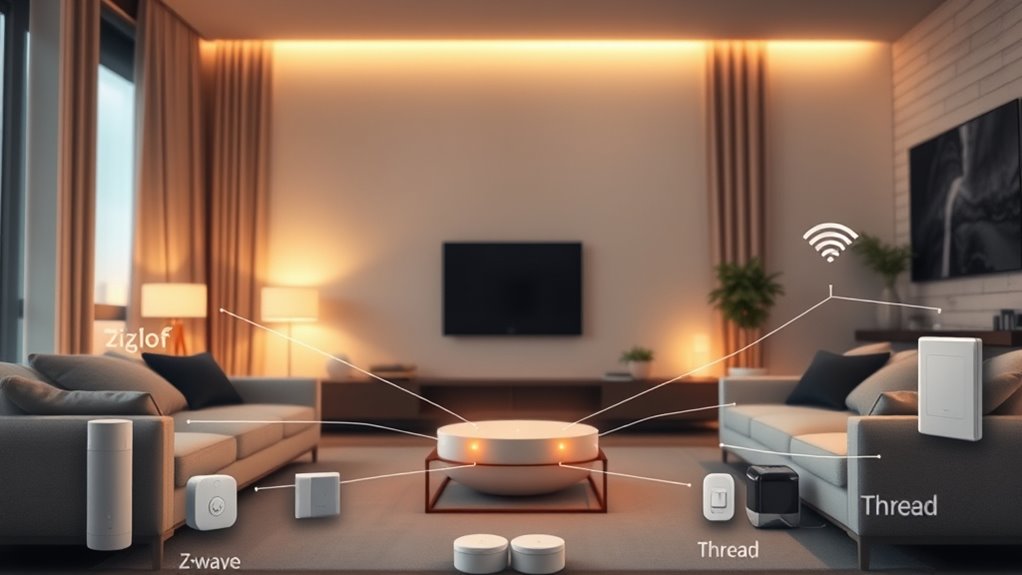

Smart home protocols like Zigbee, Z-Wave, and Thread connect your devices reliably with low power use. Zigbee and Z-Wave use mesh networks for wider coverage and stability, while Thread offers a secure, IP-based system that easily integrates with your Wi-Fi and Ethernet networks. Z-Wave reduces interference by operating on a different frequency. Understanding these protocols helps you choose the right setup for efficient, safe home automation—there’s a lot more to explore if you want to optimize your system.
Key Takeaways
- Zigbee, Z-Wave, and Thread all support mesh networking, enhancing connectivity and reliability in smart home devices.
- Zigbee and Thread are highly energy-efficient, ideal for battery-powered sensors and security devices.
- Z-Wave operates on a separate frequency to reduce wireless interference, improving network stability.
- Thread offers seamless integration with Wi-Fi and Ethernet, simplifying device setup and interoperability.
- All three protocols incorporate strong security features to protect user data and prevent unauthorized access.

Smart home protocols are the backbone of connected devices that make your home smarter, safer, and more efficient. When you choose the right protocol, you’re ensuring that your smart devices communicate seamlessly, which in turn optimizes energy efficiency and enhances security features. Each protocol offers unique advantages, so understanding how Zigbee, Z-Wave, and Thread operate can help you create a more reliable and responsive smart home environment.
Zigbee is renowned for its low power consumption, making it ideal for devices that need to run continuously without draining batteries quickly. This energy efficiency means your smart sensors, lights, and security devices can operate longer on a single charge, reducing maintenance and replacement costs. Zigbee’s mesh networking capability allows devices to connect directly to each other, extending the network’s range and improving reliability. This interconnectedness ensures your security features—like cameras, alarms, and door locks—remain responsive even if one device experiences connectivity issues. Plus, Zigbee’s robust security protocols help protect your data and prevent unauthorized access, giving you peace of mind. Additionally, Zigbee’s support for a wide range of device types makes it a versatile choice for comprehensive home automation.
Z-Wave is another popular protocol focused on home automation. It’s designed with simplicity and security in mind, making it easy to set up and manage. Z-Wave devices form a mesh network similar to Zigbee, which enhances reliability and range. Because it operates on a different frequency than Wi-Fi, Z-Wave avoids interference from other wireless devices, ensuring consistent performance for your security features. The protocol also emphasizes security, with encrypted communication to safeguard your sensitive data, such as security camera footage or control commands for smart locks. This focus on security features not only keeps your home protected but also prevents hacking attempts, giving you confidence in your connected home system.
Thread is a newer protocol built specifically for smart home devices, emphasizing energy efficiency and security. It’s designed to create a self-healing mesh network that’s scalable and reliable. Thread’s low-power operation benefits battery-powered devices like sensors and smart locks, extending their lifespan while maintaining strong security measures to keep your home data safe. Because Thread is IP-based, it integrates well with existing Wi-Fi and Ethernet networks, allowing for smoother communication and easier device setup. Its emphasis on security features, such as end-to-end encryption, ensures that your home remains protected from cyber threats. Plus, Thread’s focus on energy efficiency helps reduce overall power consumption, which is especially beneficial for battery-operated devices. Moreover, understanding the mesh networking capabilities of these protocols can help optimize your smart home’s connectivity and performance.
Frequently Asked Questions
Can Zigbee and Z‑Wave Devices Be Used Together?
Yes, you can use Zigbee and Z-Wave devices together, but there are some interoperability challenges to take into account. These protocols don’t natively communicate, so you’ll need a smart home hub or bridge that supports both to guarantee device compatibility. Without this, you might face difficulties in controlling devices seamlessly. To get the most out of your setup, choose a hub that integrates both protocols, making your smart home more unified.
Which Protocol Offers the Best Security Features?
You might worry about security gaps in smart home devices, but Z‑Wave offers the best protection. It uses advanced encryption standards to secure data and has robust vulnerability management, keeping your devices safe from threats. While Zigbee also provides good security, Z‑Wave’s focus on end-to-end encryption and frequent updates makes it the top choice for safeguarding your home network. Trust Z‑Wave to keep your smart home secure.
Is Thread Compatible With Existing Smart Home Devices?
Yes, Thread is compatible with many existing smart home devices, but you might face some interoperability challenges. Since it’s newer, some older gadgets may not support it directly, requiring bridges or hubs for seamless integration. While Thread’s protocol adoption is growing, it’s crucial to verify device compatibility beforehand. This way, you can guarantee your smart home ecosystem works smoothly without unexpected issues.
How Do Protocols Differ in Power Consumption?
You want to know how protocols differ in power consumption. Zigbee and Z‑Wave prioritize battery efficiency, using less energy to extend device life. Thread is designed for low energy consumption, making it ideal for battery-powered devices. By choosing a protocol with lower energy consumption, you guarantee your smart home devices last longer, reducing maintenance and saving energy. Feel confident that selecting the right protocol keeps your smart home efficient and sustainable.
What Is the Typical Range of Each Protocol?
You’ll find that Zigbee typically offers a range of about 10 to 100 meters, depending on the environment, while Z-Wave generally provides around 30 meters indoors. Thread has a similar range, usually around 10 to 20 meters. Signal strength impacts device compatibility and network reliability, so verify your devices are within these ranges for peak performance. Walls and obstacles can also weaken signals, affecting overall connectivity.
Conclusion
In the world of smart home protocols, choosing the right one can seem intimidating, but diving into details helps you decide. Zigbee, Z-Wave, and Thread each offer unique benefits, bridging your home’s needs with seamless simplicity. By understanding their strengths, you can create a connected, comfortable, and clever haven. So, take the time to test, tweak, and tailor your tech—turning your house into a smart sanctuary, one protocol at a time.