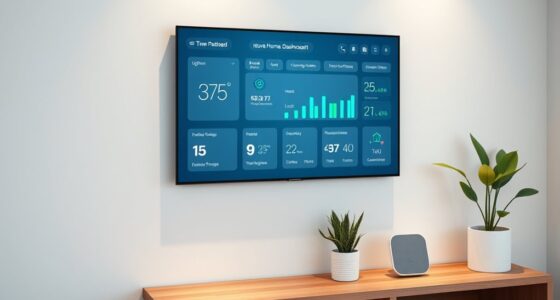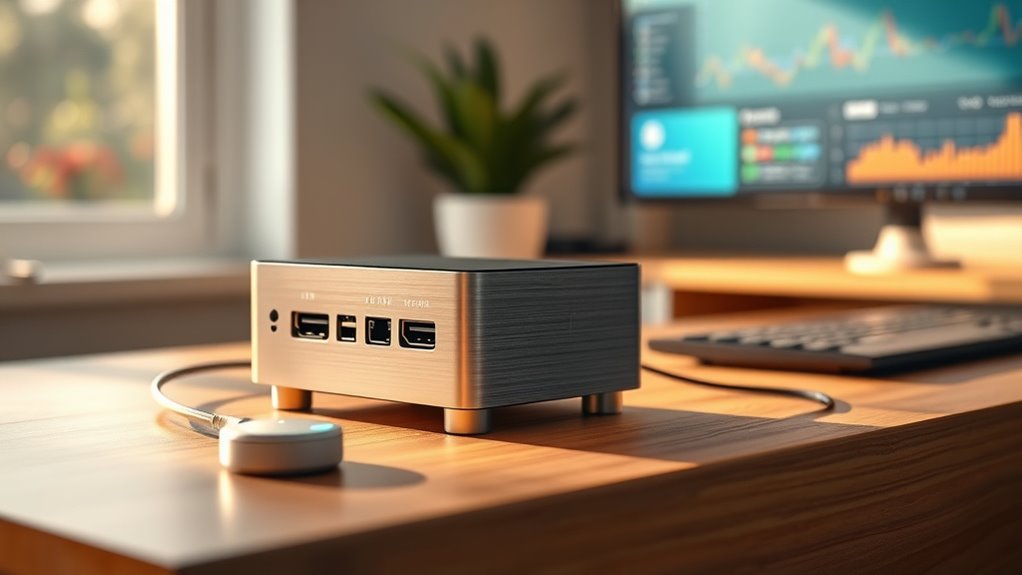

Mini‑PCs and Edge AI at home let you create a private, responsive smart environment by processing data locally instead of relying on cloud servers. They act as central hubs, running AI-powered routines, automations, and managing devices like cameras and thermostats with minimal latency. This setup improves privacy by keeping sensitive information inside your network and enhances security with proper safeguards. If you’re curious about making your home smarter and more secure, there’s plenty more to explore.
Key Takeaways
- Mini‑PCs serve as local hubs for processing smart home data, reducing reliance on cloud servers.
- Edge AI enables real-time automation and device control with minimal latency.
- Local data processing enhances privacy by limiting sensitive information transmission outside the home.
- Proper setup involves selecting compatible hardware, installing suitable OS, and configuring AI software.
- Integrating Mini‑PCs and Edge AI improves smart home responsiveness, security, and centralized management.
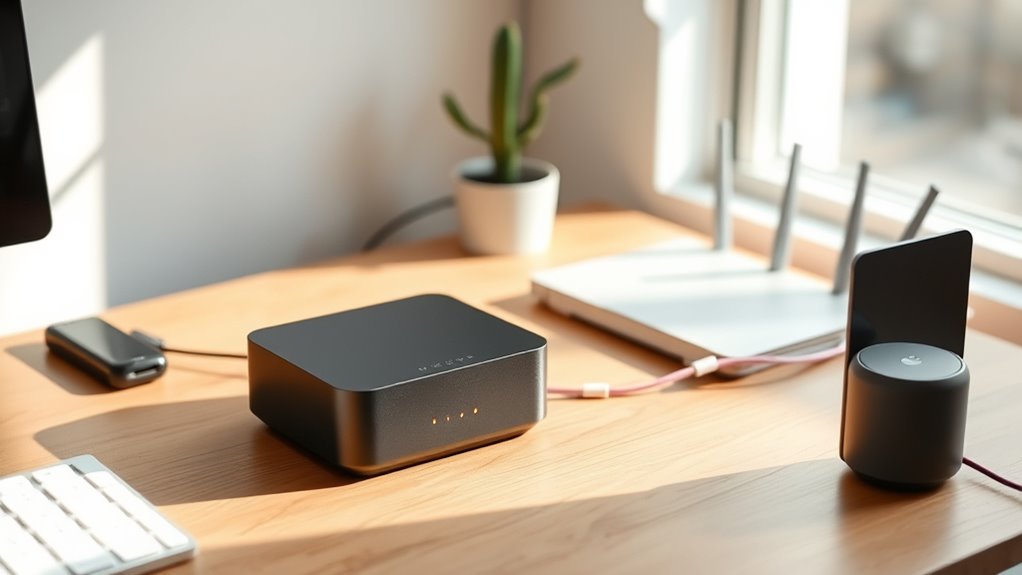
As smart homes become more common, mini-PCs and Edge AI are transforming the way you manage devices and data locally. These compact systems serve as powerful hubs that process information right where it’s generated, reducing reliance on cloud servers. With a mini-PC acting as the backbone of your smart home, you can run AI-powered applications, automate routines, and control devices seamlessly, all while keeping sensitive data close to the source. This local processing approach not only enhances efficiency but also offers a significant boost to your privacy. Instead of sending every bit of data to the cloud, which often raises privacy concerns, your mini-PC can analyze and act on information internally. That way, you retain better control over what data leaves your home, decreasing the risk of breaches or unauthorized access.
However, integrating mini-PCs and Edge AI into your smart home isn’t without its challenges. Privacy concerns are a primary consideration, especially since many smart devices continuously collect data—voice commands, security footage, and usage patterns. When data stays within your home, you minimize exposure to third-party servers, but you still need to guarantee the mini-PC itself is secure. Proper firewalls, encryption, and regular updates are essential to prevent potential vulnerabilities. You also want to be mindful of how much data your AI applications process locally versus what might still be sent to external services. Striking a balance between convenience and privacy requires understanding what data is necessary for your AI systems to function effectively. Additionally, being aware of bad lemon juice signs can help you maintain your device’s health and avoid potential issues with hardware or software malfunctions.
Furthermore, the setup process might seem intimidating at first. You’ll need to choose a compatible mini-PC, install the right operating system, and configure AI software tailored for local processing. Fortunately, many tech providers now offer user-friendly solutions designed specifically for smart home enthusiasts. Once configured, your mini-PC can serve as a centralized control point, integrating various smart devices—lights, thermostats, security cameras—and enabling complex automation routines that operate swiftly without relying on the cloud. This setup not only enhances privacy but also reduces latency, making your smart home more responsive.
Frequently Asked Questions
How Secure Are Mini-Pcs for Home AI Applications?
Mini-PCs can be quite secure for home AI applications if you implement proper security measures. You should use data encryption to protect your sensitive information and enable strong user authentication to control access. Regularly update your system and security patches, and disable unnecessary services. By staying vigilant and applying these best practices, you can markedly reduce risks and keep your home AI environment safe from cyber threats.
Can Mini-Pcs Support Multiple AI Models Simultaneously?
It’s not a matter of if, but when your mini-PC can support multiple AI models simultaneously. With proper resource allocation, you can achieve efficient multi-model processing, even on compact hardware. Modern mini-PCs, equipped with powerful CPUs and sufficient RAM, handle multiple AI tasks well. However, you’ll need to balance workloads carefully, like a gear in a well-oiled machine, to prevent overload and guarantee smooth performance.
What Is the Average Energy Consumption of Edge AI Mini-Pcs?
You’ll find that the average power consumption of edge AI mini-PCs ranges from 10 to 30 watts, depending on the model and workload. They’re designed for energy efficiency, so they use less power while delivering good performance. This low energy consumption helps you save on electricity bills and reduces your environmental footprint. To maximize energy efficiency, choose models with optimized hardware and power management features tailored for edge AI tasks.
How Easy Is It to Upgrade Mini-Pc Hardware for AI Tasks?
Upgrading your mini-PC for AI tasks is surprisingly straightforward, especially if it supports hardware customization. While compact, many models allow you to swap out RAM, storage, or even add a GPU for performance optimization. This blend of small size and upgradeability means you can enhance AI capabilities without sacrificing space. Just guarantee compatibility and follow manufacturer guidelines, turning your mini-PC into a powerful, tailored AI workstation with ease.
Are Mini-Pcs Compatible With Existing Smart Home Systems?
Yes, mini-PCs are generally compatible with existing smart home systems. They support smart home integration through common protocols like Wi-Fi, Zigbee, and Z-Wave, making it easy to connect with your devices. Just make certain the mini-PC has the right ports and software compatibility. You might need to update firmware or install specific apps, but overall, device compatibility and smart home integration are straightforward, enhancing your home automation experience.
Conclusion
Embracing mini-PCs and Edge AI at home is like opening a gateway to smarter living. They’re your tiny but mighty allies, turning your space into a hub of convenience and innovation. As you harness their power, you’ll find your home becoming a symphony of seamless automation and intelligence. So, step into this future—your smart home is ready to bloom, just like a well-tended garden bursting with endless possibilities.