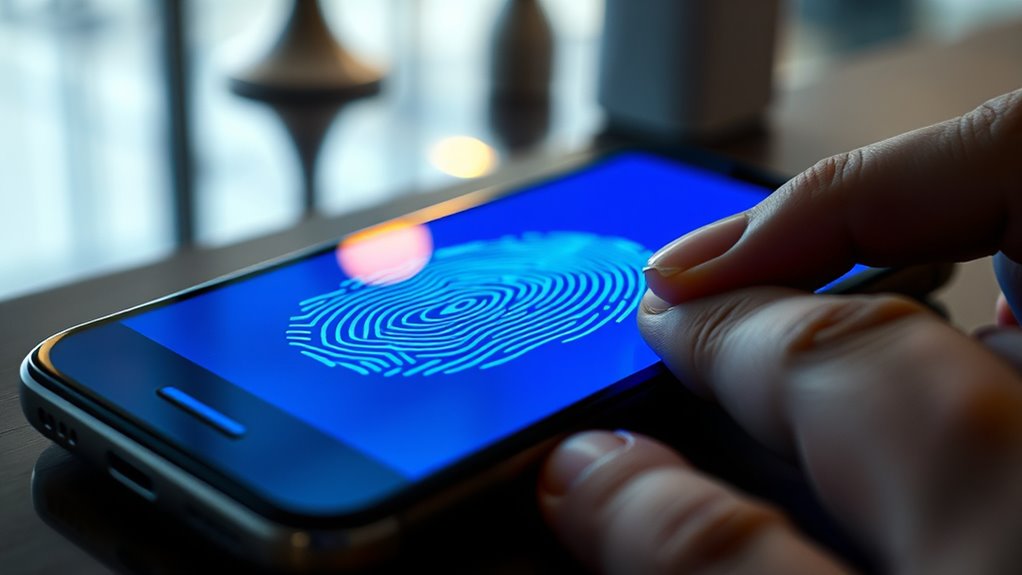
Biometrics on devices offer quick, reliable, and convenient access, making your login process faster and easier. They use unique physical features like fingerprints or facial recognition, which are hard to replicate, boosting security. However, there are concerns about privacy, data breaches, and environmental factors affecting accuracy. While these systems can be vulnerable to hacking, combining biometrics with other security measures can improve protection. To understand the full benefits and risks, you’ll want to explore more about how biometrics impact your security.
Key Takeaways
- Biometrics enable quick, reliable device access but are vulnerable to data breaches and cannot be changed if compromised.
- They offer seamless user experiences and reduce password dependency, increasing convenience and security.
- Environmental and technical factors can cause inaccuracies in facial or fingerprint recognition systems.
- Privacy concerns arise from storing sensitive biometric data, which can be misused or hacked.
- Combining biometrics with multi-factor authentication enhances security but adds complexity for users.
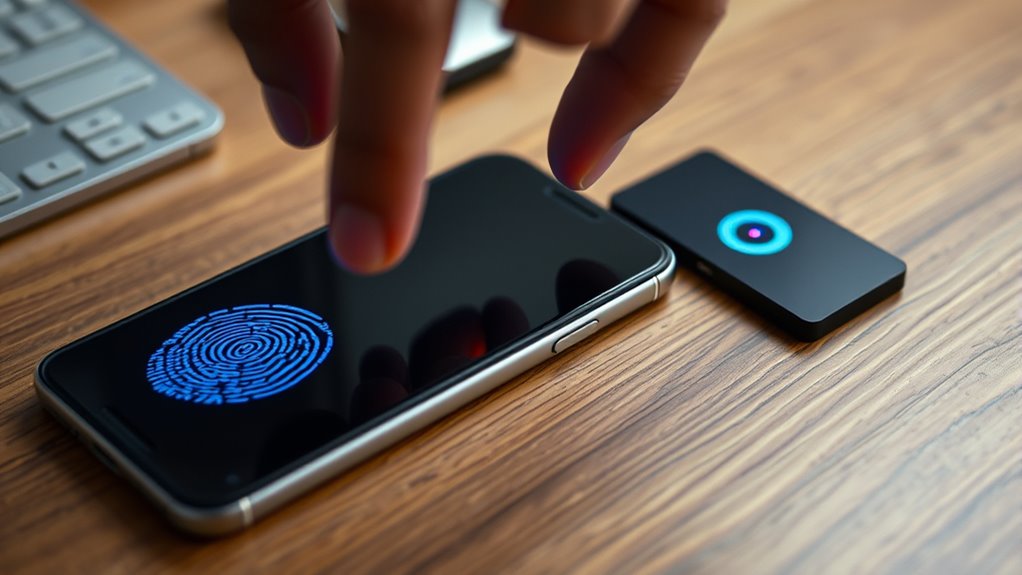
Biometrics on devices have become an essential part of modern security, offering a quick and reliable way to open your phone or authenticate transactions. Unlike traditional passwords or PINs, biometric methods like fingerprint scanners, facial recognition, and iris scans rely on unique physical features that are difficult to duplicate. This convenience has made device access faster and more seamless for you, reducing the hassle of remembering complex passwords. However, as you adopt these technologies, you should also consider the privacy concerns that come with storing biometric data. Unlike passwords, biometric data is inherently linked to your body, so if this data gets compromised, it’s not something you can change. Companies storing this information often face scrutiny over how securely it’s protected and who has access to it. If a breach occurs, the potential for misuse and identity theft increases, raising questions about how well your biometric information is safeguarded.
Alongside privacy issues, technological challenges also play a significant role in the effectiveness of biometric security. Despite rapid advancements, biometric systems are not infallible. Environmental factors can influence facial recognition accuracy, such as poor lighting or changes in your appearance—like growing a beard or wearing glasses. Fingerprint scanners, while generally reliable, can sometimes struggle with wet or dirty fingers, leading to frustration when trying to unlock your device. Furthermore, biometric systems must strike a balance between security and user convenience; overly strict measures might reject legitimate users, while lenient ones could be vulnerable to spoofing attempts. Developers constantly update algorithms to improve accuracy, but glitches and false positives still happen. These technological challenges make you question whether biometric security is truly foolproof or if it’s just an additional layer that might sometimes fail when you need it most. Additionally, the security of biometric data depends heavily on the measures taken by companies to protect it, which varies widely across providers.
Despite these concerns, many users still embrace biometric security for its speed and ease of use. Still, it’s essential to stay informed about the potential risks and limitations. While biometric data offers a personalized security solution, it’s not immune to hacking or misuse. You should weigh the benefits of convenience against the privacy risks and technological shortcomings. Employing additional security measures, like multi-factor authentication, can help mitigate vulnerabilities. Ultimately, understanding both the advantages and drawbacks of biometric technology helps you make more informed decisions about how much trust you place in these systems. As technology continues to evolve, so will the methods to protect your biometric information, but vigilance remains vital in safeguarding your digital identity.
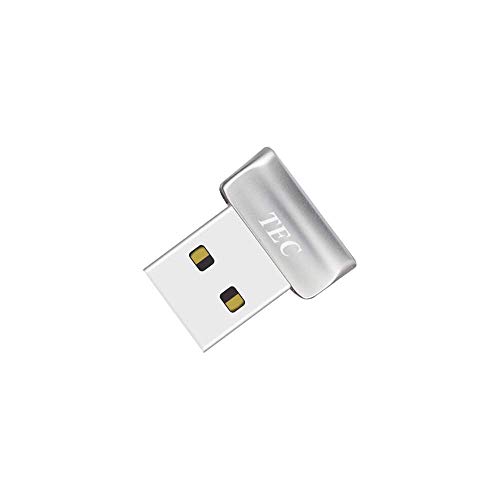
TEC Mini USB Fingerprint Reader for Windows 11/10 Hello, TEC TE-FPA2 Bio-Metric Fingerprint Scanner PC Dongle for Password-Free and File Encryption, 360° Touch Speedy Matching Security Key
Designed for Windows 10: Supports Windows Hello Authentication
As an affiliate, we earn on qualifying purchases.
As an affiliate, we earn on qualifying purchases.
Frequently Asked Questions
How Secure Are Biometric Data Storage Methods?
Biometric data storage methods are quite secure if you guarantee proper measures like data encryption and access controls are in place. Encryption scrambles your data, making it unreadable to unauthorized users, while access controls limit who can view or modify your biometric info. However, no system is entirely foolproof, so it’s crucial to stay updated on security practices and use devices with strong protections to keep your biometric data safe.
Can Biometrics Be Hacked or Spoofed Easily?
You might think biometrics are foolproof, but they can be hacked or spoofed. For example, a fake fingerprint or facial spoofing can trick some systems, especially if security measures aren’t robust. While advanced techniques make spoofing harder, no system is entirely immune. So, it’s wise to combine biometrics with other security methods to keep your data safer from malicious attempts.
What Are the Privacy Implications of Biometric Data Collection?
You might worry about privacy implications because your biometric data is sensitive. When companies collect this data, they often control it, raising concerns about data ownership. Without informed consent, you may not fully understand how your biometric info is used or shared. This can lead to misuse or breaches, making it essential for you to stay aware of privacy policies and demand transparency to protect your personal biometric information.
How Do Biometric Systems Perform in Harsh Environmental Conditions?
Biometric systems can struggle in harsh environments, as environmental resilience and hardware durability are critical. Extreme temperatures, humidity, dust, or water can impair sensor accuracy or cause malfunctions. You might notice delays or errors during use outdoors or in rugged conditions. To guarantee reliable performance, look for biometric devices specifically designed with ruggedized hardware and environmental resistance features, which help maintain accuracy and durability despite challenging environmental factors.
Are There Legal Restrictions on Biometric Use Across Countries?
You should know that legal restrictions on biometric use vary across countries, with some imposing strict laws due to privacy concerns. Legal barriers can limit how you collect, store, and share biometric data. Cross-border regulations often require compliance with multiple jurisdictions, making international deployment tricky. Always check local laws before implementing biometric systems, as non-compliance could lead to hefty penalties or legal action, especially when crossing borders.

ONWOTE Face Recognition & AcuSearch, 12MP NVR 16 Channel PoE Security Camera System, 12x 6MP Color Night Vision IP Cameras, 4K 6K 16CH Commercial NVR, Total 960ft Cables, Wired CCTV for Business Home
Facial Recognition– Recognizes people to reduce false alarms and save storage space. (Updated on 10/24/2025)
As an affiliate, we earn on qualifying purchases.
As an affiliate, we earn on qualifying purchases.
Conclusion
In summary, incorporating biometrics into your devices offers convenience and enhanced security, but it’s not without risks. Did you know that over 60% of users worry about privacy breaches with biometric data? While it’s a powerful tool, you should stay informed and cautious. Weigh the benefits against potential vulnerabilities to make smart choices. Ultimately, understanding both sides helps you use biometric technology responsibly and confidently, protecting your personal information every step of the way.

Iris USOA447 IRIScan Express 2 Portable Scanner
Highly portable USB-connected color scanner ideal for remote projects
As an affiliate, we earn on qualifying purchases.
As an affiliate, we earn on qualifying purchases.

Yubico – YubiKey 5C NFC – Multi-Factor authentication (MFA) Security Key and passkey, Connect via USB-C or NFC, FIDO Certified – Protect Your Online Accounts
POWERFUL SECURITY KEY: The YubiKey 5C NFC is the most versatile physical passkey, protecting your digital life from…
As an affiliate, we earn on qualifying purchases.
As an affiliate, we earn on qualifying purchases.