
EUDI Wallets are secure digital tools approved across the EU that help you verify your identity and manage official credentials across different countries. They enable you to log in safely without passwords, share verified information selectively, and access services like healthcare, travel, or banking easily. Backed by strong security and privacy rules, these wallets are designed to make cross-border interactions smoother. To discover how they’ll transform your digital life, continue exploring their features and benefits.
Key Takeaways
- EUDI Wallets are secure digital tools for managing and sharing verified identity credentials across EU countries.
- They enable password-free authentication using biometrics or device-based methods for faster, safer logins.
- Wallets support legally binding electronic signatures for secure online transactions and document signing.
- They facilitate cross-border identity verification for services like healthcare, travel, banking, and education.
- EUDI Wallets are regulated under EU law to ensure privacy, security, interoperability, and user control across member states.
As an affiliate, we earn on qualifying purchases.
Understanding the Legal Foundations of EUDI Wallets

The legal foundations of EUDI Wallets are established by Regulation (EU) 2024/1183, which amends the existing eIDAS framework. This regulation officially recognizes digital wallets as a legal means for digital identity verification across EU Member States. It requires member states to provide at least one EUDI Wallet and ensures mutual recognition of wallets issued elsewhere. The regulation came into force on May 20, 2024, and specifies detailed rules on wallet functions, data handling, interoperability, notifications, and certification standards. It establishes a clear legal basis for secure, cross-border digital identity solutions, ensuring that individuals and businesses can reliably use their wallets for official interactions. This legal structure aims to foster trust, security, and seamless digital services within the EU. digital identity verification is a key element supported by this regulation, emphasizing the importance of trustworthy online authentication methods. Moreover, the regulation promotes interoperability standards that facilitate seamless integration and consistent user experiences across different systems and countries. Additionally, the regulation aims to build public confidence in digital identity solutions by setting strict security and privacy requirements for wallet providers.
Key Features and Functionalities of the Digital Identity Wallet
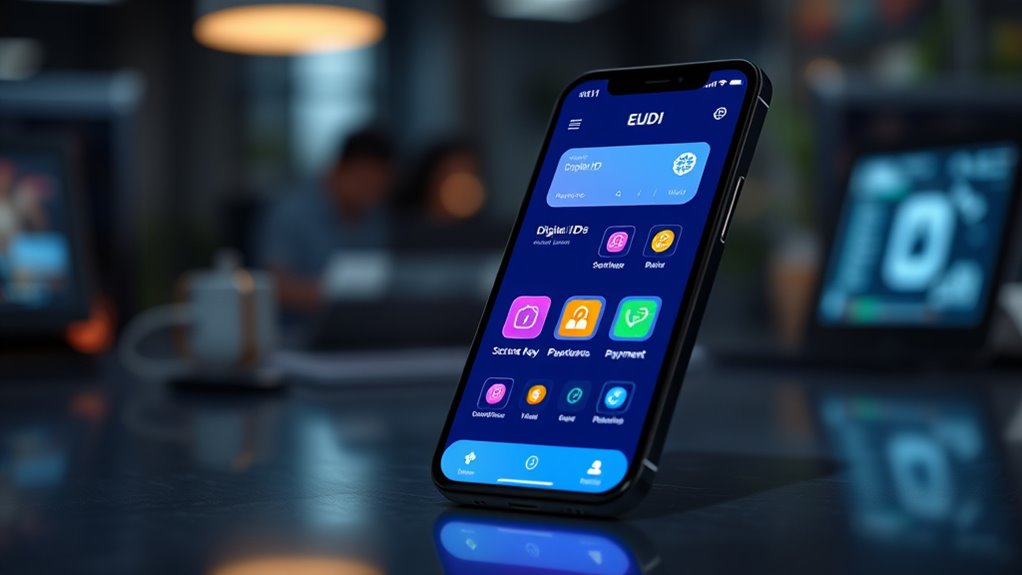
Your EUDI Wallet offers secure authentication methods that eliminate the need for passwords, making login processes faster and safer. It also allows you to manage and share verified credentials easily, ensuring your data stays under your control. With these features, you can confidently access services across the EU, knowing your identity is protected. empowering informed choices in digital identity management helps users build trust and security in their online interactions. Additionally, vetted products for safety ensure that your personal information remains protected during digital transactions. Incorporating robust security features similar to those used in nutritional verification can further enhance user confidence and vibrational alignment with safety, thereby boosting data integrity. Moreover, implementing trust-building measures can promote user confidence and foster a safer digital environment.
Secure Authentication Methods
Secure authentication methods form the backbone of the EUDI Wallet’s trusted identity verification. You’ll use advanced cryptography and multi-factor authentication to protect your data, ensuring only authorized access. The wallet enables password-free login, relying instead on secure biometric options or device-based authentication. When sharing your attributes, such as your ID or attestations, cryptographic protocols verify your identity without exposing unnecessary information. Electronic signatures created within the wallet are legally binding, backed by secure protocols that confirm authenticity and integrity. The system logs your interactions, providing transparency and control over your data. Notifications alert you to any suspicious activity or changes, strengthening your security. Overall, these methods create a robust, privacy-preserving environment, giving you confidence that your digital identity remains secure and under your control. Additionally, implementing encryption techniques ensures that your data remains confidential during storage and transmission. To further enhance security, the system incorporates trusted hardware modules that safeguard sensitive information at the hardware level. Incorporating industry best practices helps maintain the system’s resilience against emerging threats and vulnerabilities. Furthermore, continuous security assessments are essential to identify and mitigate potential vulnerabilities proactively.
Credential Management and Sharing
Credential management and sharing in the EUDI Wallet empower you to control your digital identity by securely storing, updating, and presenting verified attributes and attestations. You can add credentials from trusted issuers, such as government agencies or institutions, and keep them current. When needed, you selectively share only the relevant data, ensuring privacy and compliance with data minimization principles. The wallet enables you to generate legally binding electronic signatures using your credentials, making digital transactions secure and recognized across the EU. You also have full oversight of your interactions through an intuitive dashboard, allowing you to track data requests, approve sharing, or revoke access at any time. This system puts you in charge of your digital identity, fostering trust and seamless cross-border interactions.
How EUDI Wallets Support Cross-Border Services in the EU
EUDI Wallets make cross-border services in the EU much easier by enabling seamless border verification and identity checks. With interoperable technology, you can access services across countries without repeatedly showing physical IDs. This streamlines your experience and reduces delays at borders and in daily transactions. Incorporating practices like mindfulness can also enhance your overall experience by fostering a sense of calm and awareness during these processes. Recognizing that creativity can be cultivated through consistent effort may further improve your ability to adapt to new digital systems and navigate complex procedures smoothly. Additionally, the use of innovative designs in digital wallets can contribute to an improved user experience by making interfaces more intuitive and accessible. Emphasizing security measures ensures that your digital identity remains protected against potential threats, which is crucial in cross-border digital interactions. Developing a strong sense of self-awareness can help users better understand their digital needs and preferences, leading to more personalized and effective use of these wallets.
Seamless Border Verification
Have you ever wondered how cross-border travel within the EU could become smoother and more efficient? EUDI Wallets make this possible by streamlining border verification. Here’s how they support seamless travel:
- Digital Identity Verification: You can prove your identity instantly with a secure, mobile wallet, reducing the need for physical IDs.
- Interoperability: Wallets issued in one country are recognized across all EU member states, enabling smooth recognition at borders.
- Secure Data Sharing: Only necessary data is shared with border authorities, protecting your privacy while confirming your identity.
- Real-Time Validation: Borders can verify your credentials instantly through encrypted, certified protocols, speeding up processing.
- Enhanced Security Measures: Advanced filtration systems within digital wallets help prevent fraud and unauthorized access, further securing your travel data. Additionally, these systems are designed to comply with personality assessment standards, ensuring reliable identification and data protection. Incorporating efficient general ledger coding practices can also aid organizations in managing the data securely and accurately. This integration minimizes delays, enhances security, and simplifies your travel experience across the EU. Moreover, integrating biometric verification enhances the accuracy and security of identity confirmation during border checks, aligning with the latest somatic therapy practices that emphasize physical and mental safety measures.
Simplified Cross-Border Access
Thanks to the interoperable design of EUDI Wallets, accessing cross-border services within the EU becomes much easier. You can seamlessly use your wallet for identity verification, healthcare, banking, and travel across member states without juggling multiple IDs or documents. The system recognizes your wallet from any country, enabling quick, trusted access to services. This interoperability reduces delays and simplifies procedures, making cross-border interactions smoother. Additionally, digital credentials are securely stored within the wallet, further enhancing user convenience. The system also supports interoperability standards, which ensure compatibility and secure data exchange across different platforms and countries.
Practical Applications: From Healthcare to Travel
The practical applications of EUDI Wallet span a wide range of sectors, transforming how you access services across the EU. You can:
- Access healthcare services seamlessly, such as sharing medical records or requesting prescriptions digitally.
- Use your wallet for travel, enabling secure identity checks at borders without physical IDs.
- Open bank accounts or apply for education programs across borders with verified credentials.
- Sign legally binding contracts or authenticate your identity online, reducing paperwork and delays.
These applications streamline your interactions with public and private services, making your digital identity more versatile and reliable. The EUDI Wallet simplifies everyday tasks, enhances security, and promotes cross-border convenience, all while maintaining your control over data sharing and privacy.
Designing for Security, Privacy, and User Accessibility
Designing the EUDI Wallet with security, privacy, and user accessibility in mind is essential to guarantee trusted and inclusive digital identities. You’ll want robust cryptography, strong authentication, and clear consent mechanisms to protect data and ensure user confidence. Privacy-by-design principles limit data sharing to what’s necessary, while accessibility features ensure all users, including those with disabilities or low tech skills, can easily use the wallet. Consider the following key aspects:
| Aspect | Focus | Goal |
|---|---|---|
| Security | Cryptography, multi-factor authentication | Prevent unauthorized access, ensure data integrity |
| Privacy | Data minimization, user control over info | Protect user privacy, enable informed consent |
| Accessibility | Inclusive design, simple interfaces | Maximize usability for all users |
| Transparency | Logging, notifications | Build trust, give users control over data flow |
Current Progress and Challenges in Deployment
Efforts to deploy the EUDI Wallet across EU Member States are making steady progress, but several challenges remain. First, interoperability between national systems is still under development, risking fragmentation. Second, varying levels of digital infrastructure and user readiness slow adoption. Third, legal and regulatory differences across countries create compliance hurdles. Fourth, security concerns around data protection and authentication methods need ongoing attention. These issues highlight the complexity of achieving a seamless, secure, cross-border digital identity system. While pilot projects test wallet functionalities, full-scale deployment depends on resolving these technical, legal, and infrastructural challenges. Progress hinges on collaboration among Member States, clear standards, and addressing disparities in digital maturity. Overcoming these obstacles is essential for realizing the wallet’s potential across Europe.
The Future Impact of EUDI Wallets on Digital Identity in Europe
As EUDI Wallets become more widely adopted across Europe, they are poised to revolutionize digital identity by enabling seamless, secure, and cross-border verification of individual and business credentials. This innovation will streamline access to public and private services, reducing reliance on physical IDs and manual processes. You’ll experience faster, more trustworthy authentication for activities like opening bank accounts, applying for jobs, or traveling within the EU. The wallets’ interoperability ensures your credentials are recognized across borders, fostering a unified digital market. Privacy and security are prioritized, giving you control over your data. Over time, this technology will foster greater trust, efficiency, and inclusion, making digital identity a reliable backbone for personal, commercial, and governmental interactions throughout Europe.
Frequently Asked Questions
How Will EUDI Wallets Ensure Data Privacy Across Different Countries?
You can trust that EUDI wallets protect your data privacy by using privacy-by-design principles, only sharing what’s necessary for each interaction. They rely on strong cryptography and multi-factor authentication to secure your information. You control what data you disclose, and the system logs all activities for transparency. Cross-border interoperability ensures your privacy is maintained across countries, making your digital identity safe and private wherever you go in the EU.
What Measures Are in Place to Prevent Identity Theft Using EUDI Wallets?
You’re protected from identity theft with the EUDI Wallet’s strong cryptography and multi-factor authentication, making it hard for hackers to access your data. The wallet only shares necessary information, thanks to privacy-by-design principles. Additionally, secure protocols verify the authenticity of electronic attestations, and logs track all interactions. These measures work together to keep your identity safe, giving you control over what info you share and ensuring your data stays secure across borders.
Can Users Access EUDI Wallets on Older or Low-Tech Smartphones?
You might face challenges accessing EUDI wallets on older or low-tech smartphones because these devices may lack the necessary security features, processing power, or compatible apps. While efforts aim to make wallets accessible across various devices, the EU emphasizes security and interoperability, which often require modern hardware and software. To guarantee full functionality and security, upgrading your device or using a compatible, up-to-date smartphone is recommended for maximum access.
How Will EUDI Wallets Be Integrated With Existing Physical ID Systems?
You’ll find that EUDI wallets integrate with existing physical ID systems through secure digital verification processes. They complement physical IDs by allowing you to prove your identity digitally, especially for cross-border and online services. Governments are working to guarantee interoperability, so your wallet can seamlessly link with physical ID databases and trusted authorities. This integration boosts convenience, reduces reliance on physical documents, and enhances security across various identification and authorization scenarios.
What Support Exists for Users With Disabilities or Limited Digital Skills?
You’ll find that the EUDI Wallet is designed with inclusivity in mind, offering features like simplified interfaces and accessibility options tailored for users with disabilities or limited digital skills. It emphasizes user-centric, easy-to-maneuver designs, ensuring everyone can manage their credentials comfortably. Additionally, regulations require interoperability and support for assistive technologies, so you can access services confidently, whether you’re tech-savvy or need extra help navigating digital identity solutions across the EU.
Conclusion
As you explore EUDI wallets, it’s clear they’ll transform how you manage your digital identity across Europe. While some believe they could centralize personal data too much, others argue they’ll enhance security and convenience. Whether they become a trusted standard or face hurdles, one thing’s certain: their success hinges on balancing innovation with privacy. If you stay informed and engaged, you’ll be ready to navigate this evolving digital landscape confidently.