Li-Fi, enabled by the IEEE 802.11bb standard, uses light signals from LEDs for high-speed, secure wireless communication, complementing Wi-Fi’s radio-based network. It’s perfect for environments needing interference-free links, like hospitals or factories, but requires line-of-sight and can be affected by obstacles. Together, Li-Fi and Wi-Fi create versatile, hybrid networks that optimize speed, security, and coverage. Exploring more reveals how these technologies are shaping the future of wireless connectivity.
Key Takeaways
- IEEE 802.11bb standard integrates Li-Fi with Wi-Fi, enabling seamless hybrid wireless networks using light and radio signals.
- Light-based networking offers high-speed, secure data transfer ideal for environments requiring interference-free communication.
- Li-Fi complements Wi-Fi by providing localized, high-capacity links, especially in RF-sensitive or obstructed areas.
- Environmental factors and line-of-sight requirements limit Li-Fi coverage, making it a specialized addition to traditional Wi-Fi.
- Combined, Li-Fi and Wi-Fi enhance network capacity, security, and flexibility across diverse applications and environments.
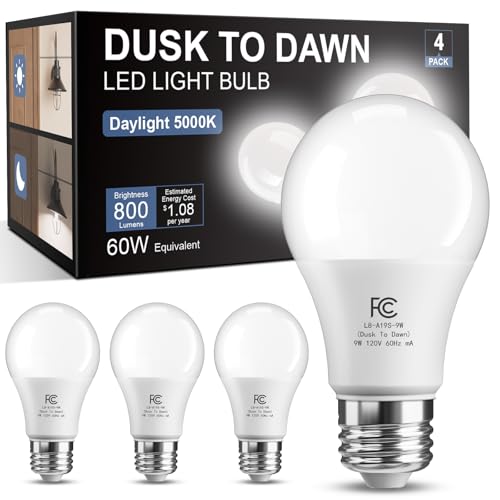
TJOY Dusk to Dawn Light Bulbs Outdoor, Light Sensor A19 LED Light Bulb, Automatic on/Off Photocell Bulb for Outdoor Porch Lighting, 60W Equivalent, Energy Efficient 9W, Daylight 5000K,E26 Base, 4 Pack
- Dusk to Dawn Auto On/Off: Automatic lighting based on sunlight detection
- Energy Efficient Design: Consumes only 9W for 60W brightness
- Long-lasting Performance: Over 15,000 hours of use
As an affiliate, we earn on qualifying purchases.
As an affiliate, we earn on qualifying purchases.
Understanding the Basics of Li-Fi Technology
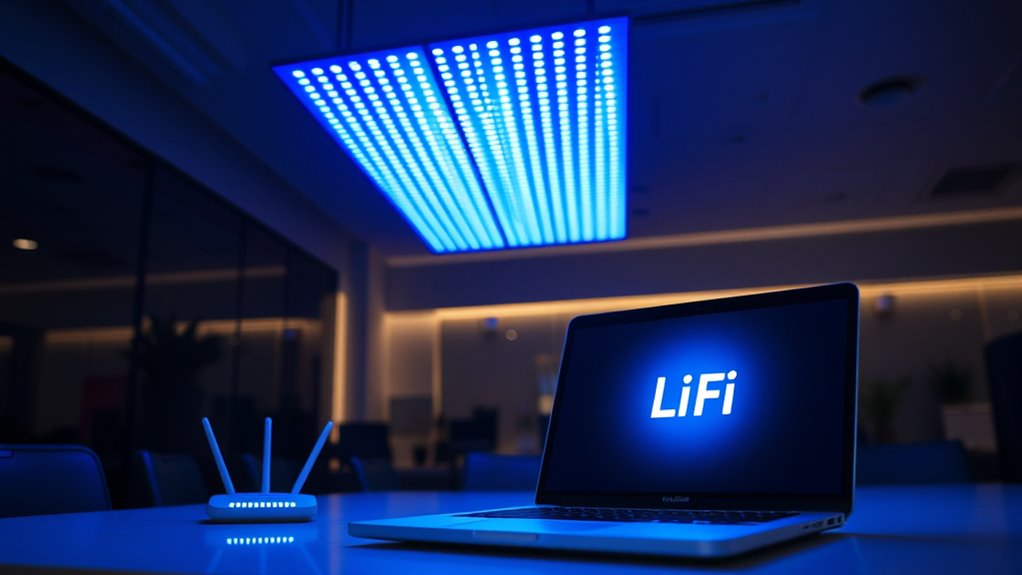
Li-Fi, short for Light Fidelity, is a wireless communication technology that transmits data using visible and near-infrared light waves. Instead of radio signals, it relies on LED lights to send information, creating a line-of-sight connection between devices and light sources. When LEDs flicker rapidly, they encode data that your device detects and decodes into usable information. Since light waves travel at high speeds, Li-Fi can offer incredibly fast data transfer rates, surpassing traditional Wi-Fi in many cases. It’s also more secure because light signals can’t penetrate walls, limiting access to physical space. Li-Fi’s integration with existing lighting systems makes it a promising technology for high-speed, secure, and interference-free wireless communication within confined areas. Additionally, ongoing research into AI Security helps ensure that Li-Fi networks remain resilient against potential vulnerabilities. The use of light-based communication technology also reduces electromagnetic interference, making it suitable for sensitive environments like hospitals or laboratories. Furthermore, advancements in light modulation techniques are continually improving the efficiency and reliability of Li-Fi systems.
The Development and Role of IEEE 802.11bb Standard

You should understand how the IEEE 802.11bb standard was developed through a collaborative process involving industry leaders and research institutions. This effort aimed to create a universal protocol that guarantees Li-Fi systems can work seamlessly with existing Wi-Fi networks. By emphasizing compatibility, the standard supports integration and future-proofing in the evolving wireless landscape. Additionally, the standard considers the diverse applications of light-based networking in various environments.
Standardization Process Overview
The standardization process for IEEE 802.11bb began with the formation of dedicated working groups within the IEEE 802.11 task force, aiming to establish a universal protocol for light-based wireless communication. These groups coordinated industry input, technical specifications, and interoperability requirements. They conducted extensive discussions, drafts, and revisions to address technical challenges like line-of-sight and interference. Stakeholders, including companies and researchers, contributed to shaping the standard. The process involved rigorous testing and consensus-building before final approval. This collaborative approach assured broad compatibility across devices and systems. The table below highlights key phases and participants in this development:
| Phase | Activities | Participants |
|---|---|---|
| Initiation | Defining scope and requirements | IEEE, industry partners |
| Draft Development | Technical specifications and drafts | Working groups, contributors |
| Review & Approval | Testing, revisions, consensus | IEEE members, stakeholders |
| Publication | Final standard release | IEEE, industry, academia |
Industry Collaboration Efforts
Industry collaboration has been pivotal in shaping the IEEE 802.11bb standard, bringing together a diverse range of stakeholders from academia, industry, and research institutions. You’ll find that companies like pureLiFi and Fraunhofer HHI played essential roles, contributing technical expertise and real-world insights. These partnerships fostered a shared vision for integrating light-based communication into existing wireless ecosystems, guaranteeing interoperability and practical deployment. By working together, stakeholders developed consensus on technical specifications and performance benchmarks, accelerating standardization efforts. Collaboration also helped address challenges like coexistence with Wi-Fi, spectrum management, and device compatibility. This unified approach ensures Li-Fi technology can evolve cohesively within the broader wireless landscape, promoting innovation and facilitating industry-wide adoption. Overall, such teamwork is vital for advancing light-based networking toward commercial viability.
Compatibility With Wi-Fi
The IEEE 802.11bb standard plays a crucial role in guaranteeing that Li-Fi technology can seamlessly integrate with existing Wi-Fi networks. It promotes interoperability by aligning protocols within the 802.11 suite, enabling devices to switch smoothly between light-based and radio-frequency communications. This compatibility allows Li-Fi to complement Wi-Fi, enhancing network capacity and speed without disrupting current infrastructure. You can expect:
- Coexistence of RF and optical communication within a unified framework
- Use of standard Wi-Fi protocols for device compatibility
- Support for hybrid networks leveraging both Wi-Fi and Li-Fi
- Compatibility with existing Wi-Fi security and management features
- Facilitated integration with optical fiber and LED lighting systems
- The development of standardized communication protocols ensures consistent performance and security across diverse implementations. Additionally, advancements in light-based data transmission are paving the way for more robust and efficient hybrid networks. Moreover, the interoperability standards foster seamless operation across diverse device ecosystems, ensuring reliability and user convenience. The integration process benefits from automation features that simplify device configuration and management, further promoting widespread adoption. This design ensures that Li-Fi enhances, rather than replaces, Wi-Fi, offering flexible, high-speed connectivity options.
Technical Benefits of Light-Based Data Transmission
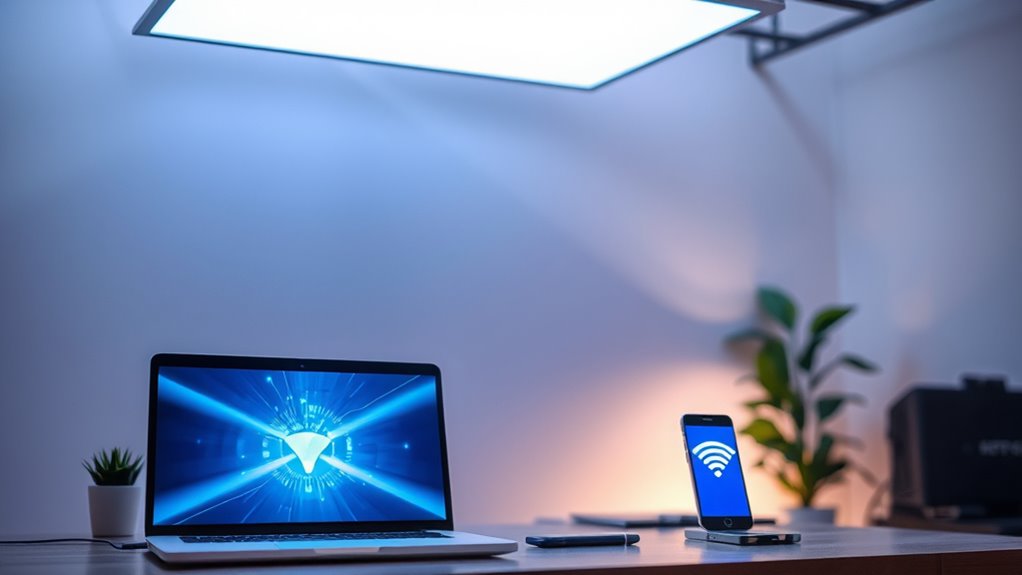
Light-based data transmission offers several compelling technical advantages that set it apart from traditional radio-frequency methods. First, it provides much higher data speeds—up to 9.6 Gbit/s—enabling rapid downloads and streaming. The visible and near-infrared spectrum offers abundant bandwidth, reducing congestion common in radio frequencies. Since light doesn’t penetrate opaque objects, your data remains confined, enhancing security and minimizing eavesdropping risks. You can also leverage existing LED lighting infrastructure for data transfer without visible flicker, making implementation straightforward. Moreover, light signals typically have lower latency, ensuring faster responses, which is crucial for real-time applications. Additionally, the security benefits of light-based communication make it an attractive option for sensitive data transmission. The use of specific light frequencies can also influence brainwave patterns, potentially opening new avenues for integrated communication and health monitoring. Overall, this technology enables faster, more secure, and efficient wireless communication, especially in environments where RF interference or security is a concern.
Challenges and Limitations of Implementing Li-Fi

Implementing Li-Fi faces significant challenges because it relies on a clear, unobstructed line of sight between devices and light sources. Obstacles like furniture or people can easily block signals, disrupting connections. You also encounter mobility issues, as device orientation affects signal stability, especially without omnidirectional antennas. Signal penetration is limited; walls and opaque objects prevent coverage across multiple rooms. Ambient light, atmospheric conditions, and electromagnetic interference can further degrade data quality. Additionally, integrating Li-Fi requires retrofitting existing lighting infrastructure and compatible device components, which can be costly and complex. Coverage limitations can hinder effective deployment in dynamic environments, similar to the limitations seen in other wireless technologies when faced with physical barriers. Moreover, the need for specialized hardware and infrastructure upgrades can slow down widespread adoption, posing a significant implementation challenge. The cultural significance of certain lighting environments may also influence acceptance and feasibility of deployment in various settings. To ensure reliable operation, careful planning and consideration of infrastructure compatibility are essential when deploying Li-Fi systems.
Practical Applications and Use Cases for Li-Fi

Li-Fi technology finds practical applications in environments where high-speed, secure wireless connections are essential. In hospitals, it enables fast, interference-free data transfer for medical devices and sensitive information, while preventing RF interference with equipment. Factories benefit from Li-Fi’s high bandwidth for real-time automation and control, especially in areas with heavy machinery or electromagnetic interference. Offices can use Li-Fi to provide secure, high-speed links for data-intensive tasks, reducing congestion on traditional Wi-Fi networks. In aircraft cabins and medical facilities, where RF emissions are restricted, Li-Fi offers an ideal wireless alternative. Additionally, it supports smart lighting systems that transmit data through existing LED infrastructure, facilitating seamless integration with IoT devices. These applications demonstrate Li-Fi’s potential to enhance security, speed, and reliability in critical and high-demand environments. Personal empowerment techniques can help professionals develop the confidence and resilience needed to implement and adapt to emerging technologies like Li-Fi effectively. Furthermore, the development and adoption of wireless communication standards such as Wi-Fi 802.11bb underscore the importance of standardized protocols to ensure compatibility and interoperability across devices and industries. As the technology matures, integration with other networks can enhance overall connectivity and expand its applicability in various sectors. Moreover, understanding juice packaging and storage can be beneficial in maintaining the quality and safety of consumables in operational settings. Recognizing the role of standardized protocols promotes smoother integration and broader adoption of innovative solutions like Li-Fi.
Seamless Integration With Existing Wireless Networks

Seamless integration between Li-Fi and existing wireless networks is essential for widespread adoption, and the IEEE 802.11bb standard facilitates this by ensuring compatibility within the 802.11 protocol family. This compatibility allows Li-Fi to complement Wi-Fi, providing high-speed, secure connections where needed. It enables devices to switch smoothly between RF and optical links, optimizing performance and coverage. The standard supports interoperability, making it easier for manufacturers to develop hybrid systems. Automation in business and other technological innovations are also driving the development of integrated networking solutions. To ensure security and reliability, understanding potential risks associated with new standards is important for both developers and users.
Future Trends and Industry Impact of Light-Driven Connectivity
The adoption of the IEEE 802.11bb standard signals a significant shift toward light-driven connectivity that could reshape how wireless networks operate. You’ll see faster, more secure data transmission in environments where radio frequency congestion is a concern. Industry trends point to Li-Fi becoming a key component of heterogeneous networks, complementing Wi-Fi and 5G rather than replacing them. Advances in optoelectronics and miniaturized light antennas will make devices more versatile and easier to integrate into everyday settings. As the technology matures, expect broader adoption in critical sectors like healthcare, industrial automation, and smart cities. Li-Fi’s potential to ease spectrum congestion and enhance security will drive industry investment and innovation, ultimately transforming the future landscape of wireless communications. Additionally, ongoing research into vetted light-based communication standards will ensure reliable and interoperable systems across diverse applications. Furthermore, improvements in light modulation techniques will facilitate higher data rates and more robust signal integrity in various environments.
Comparing Li-Fi and Wi-Fi: Complementary Technologies

You’ll find that Li-Fi and Wi-Fi excel in different areas, making them naturally complementary. Li-Fi offers higher speeds and more bandwidth, but it’s limited by coverage and line-of-sight requirements, while Wi-Fi provides broader mobility and better obstacle penetration. Together, they can create a seamless, secure, and efficient wireless ecosystem that leverages each technology’s strengths.
Speed and Bandwidth
How do Li-Fi and Wi-Fi compare when it comes to speed and bandwidth? Li-Fi boasts potential data rates from 10 Mbit/s up to 9.6 Gbit/s, surpassing most Wi-Fi standards. Its use of visible and near-infrared light enables vast bandwidth availability, reducing congestion on radio frequencies. Wi-Fi typically offers speeds from a few hundred Mbps to several Gbps, depending on the standard, but faces spectrum limitations. Li-Fi’s high throughput suits data-heavy tasks in confined areas, while Wi-Fi’s broader range supports mobility. Consider these points:
- Li-Fi supports ultra-high speeds, ideal for demanding applications
- Uses light spectrum for abundant bandwidth and less interference
- Wi-Fi offers reliable, widespread connectivity
- Li-Fi’s line-of-sight limits its coverage
- Both can complement each other within integrated networks
Coverage and Mobility
Li-Fi and Wi-Fi serve complementary roles in coverage and mobility, leveraging their distinct strengths to create more versatile wireless networks. Wi-Fi excels at providing broad, seamless coverage across large areas and supports mobility through omnidirectional signals, allowing devices to move freely without losing connectivity. In contrast, Li-Fi’s line-of-sight requirement limits its coverage to specific zones, making it ideal for high-density, confined environments. While Wi-Fi offers consistent connectivity despite obstacles and device orientation changes, Li-Fi’s performance depends on a clear light path. Together, they enable hybrid networks where Wi-Fi ensures mobility and extensive coverage, and Li-Fi provides ultra-fast, secure links within specific spaces. This synergy enhances overall network flexibility, filling coverage gaps and optimizing data transfer based on context and location.
Security and Interference
While both Li-Fi and Wi-Fi facilitate wireless communication, they differ considerably in their security and susceptibility to interference. Li-Fi’s use of visible and near-infrared light makes it inherently more secure since signals can’t pass through opaque objects or walls. This limits unauthorized access but also means it’s vulnerable to line-of-sight disruptions. Wi-Fi, on the other hand, is more prone to interference from other radio signals and physical obstacles, affecting reliability. To understand their differences better:
- Li-Fi’s confined signal reduces eavesdropping risks.
- Wi-Fi’s radio frequency signals can be intercepted beyond physical boundaries.
- Ambient light or atmospheric conditions can degrade Li-Fi signals.
- Wi-Fi is more susceptible to congestion from multiple devices.
- Both technologies require security protocols, but Li-Fi’s physical constraints add an extra layer of protection.
Frequently Asked Questions
How Does Li-Fi Handle Device Mobility and Movement?
You might find that Li-Fi handles device mobility and movement with some limitations. Since it relies on line-of-sight, if you move your device out of the light beam, the connection drops. To maintain stability, your device needs to stay within the light’s direct path. While some solutions use multiple light sources or sensors to improve mobility, overall, Li-Fi works best in fixed or controlled environments.
What Are the Cost Implications of Deploying Li-Fi Infrastructure?
Thinking like a modern pioneer, deploying Li-Fi can be cost-effective if your building already has energy-efficient LED lighting. You’ll need to invest in specialized photodetectors and compatible devices, which can add upfront costs. However, the infrastructure costs may be lower than installing extensive wired networks or upgrading to high-end Wi-Fi systems. Keep in mind, ongoing maintenance and device compatibility are key factors influencing your overall expenses.
Can Li-Fi Work Effectively in Outdoor or Sunlight-Rich Environments?
Li-Fi struggles in outdoor or sunlight-rich environments because sunlight creates interference, making it harder for signals to remain stable. You’ll need clear line-of-sight and possibly special filters or shielding to reduce ambient light effects. While it can work, its effectiveness drops outdoors, especially in bright conditions. To overcome this, you might combine Li-Fi with other wireless tech or use it in shaded or controlled indoor areas.
How Secure Is Li-Fi Compared to Traditional Wi-Fi Networks?
Think of Li-Fi as a shining fortress, where light acts as an unbreakable wall. It’s more secure than Wi-Fi because the signals stay confined within the illuminated space, preventing outsiders from eavesdropping. Unlike radio waves, light doesn’t easily pass through walls or obstacles, making interception almost impossible. So, you can trust Li-Fi to protect your data better, especially in sensitive environments like hospitals or corporate offices.
What Standards Ensure Interoperability Between Li-Fi and Existing Wireless Systems?
You can rely on IEEE 802.11bb standards to guarantee interoperability between Li-Fi and existing wireless systems. These standards are designed within the 802.11 suite, making Li-Fi compatible with Wi-Fi protocols. This means your devices can seamlessly switch or coexist between light-based and radio-frequency networks, enabling integrated, high-speed, and secure connectivity. The standards promote smooth integration, allowing Li-Fi to complement Wi-Fi rather than replace it, boosting overall network flexibility.
Conclusion
As you explore light-based networking, you might wonder if Li-Fi could truly replace Wi-Fi. While some claim Li-Fi’s speed and security make it superior, it’s more likely to complement existing networks rather than replace them entirely. Light-based tech’s unique advantages suggest a future where both work together, enhancing connectivity in specific environments. Embracing this synergy could open faster, more secure connections—proving that light might just illuminate the future of wireless communication.